The Portuguese subjunctive, demystified (with examples that actually help)
The Portuguese subjunctive isn't as scary as textbooks make it seem. Here's how Brazilians actually use it, with examples you'll recognize.
The subjunctive gets a bad reputation. Textbooks introduce it around chapter 14, bury it under conjugation tables, and label it "advanced." Learners take one look and decide they'll deal with it later. Later never comes.
Here's the thing: Brazilians use the subjunctive constantly. Not sometimes. Constantly. If you're skipping it, you're skipping a huge chunk of everyday speech. The good news? Once you get the feel for what it does, the rules stop feeling arbitrary.
What the subjunctive actually is
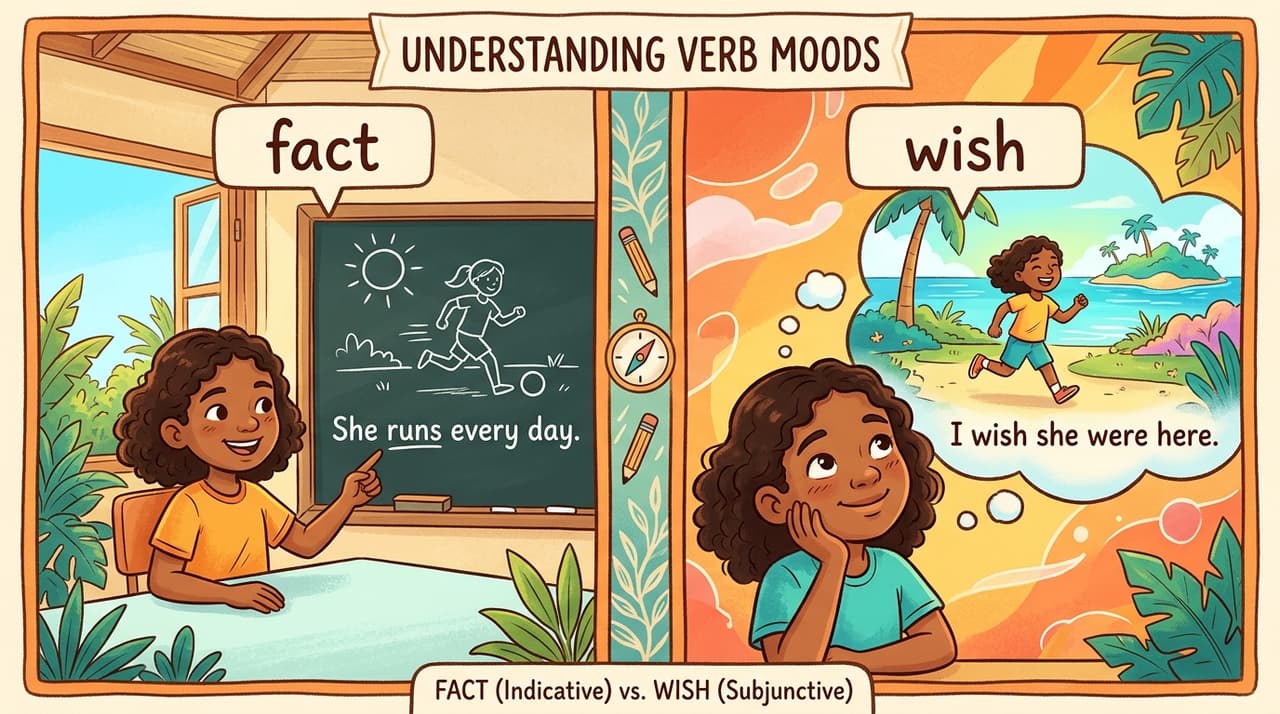
Forget the grammar-book definition for a second. The subjunctive is a mood, not a tense. It doesn't tell you when something happens. It tells you how the speaker feels about it.
Indicative = this is real, factual, definite. Subjunctive = this is uncertain, wished for, hypothetical, emotional, or subjective.
Compare these two:
- Ele fala português. (He speaks Portuguese. Fact. Indicative.)
- Espero que ele fale português. (I hope he speaks Portuguese. Wish, uncertainty. Subjunctive.)
Same verb, two different forms, two different vibes. The first is a statement about reality. The second lives in the space of "I don't know yet, but I'd like it to be true." Reality vs. not-quite-reality.
The three tenses you actually need
Portuguese has six subjunctive forms if you count everything. In practice, three do most of the work in Brazilian speech.
1. Present subjunctive (for wishes, doubts, and things that haven't happened yet)
Use it after expressions like espero que, quero que, duvido que, é possível que, tomara que.
- Quero que você venha. (I want you to come.)
- Tomara que dê certo. (Let's hope it works out.)
- Duvido que ele saiba. (I doubt he knows.)
The pattern to memorize: verbs ending in -ar swap to -e endings, and verbs ending in -er/-ir swap to -a endings. Falar becomes fale. Comer becomes coma. Partir becomes parta. Yes, they basically switch teams.
2. Imperfect subjunctive (for hypotheticals and polite requests)
This one shows up whenever you're talking about something that isn't real, especially with se (if).
- Se eu tivesse dinheiro, eu viajaria. (If I had money, I'd travel.)
- Se ela soubesse, ela contaria. (If she knew, she'd tell.)
- Eu queria que você viesse. (I wish you would come. Softer, more polite than quero que venha.)
Brazilians use the imperfect subjunctive to soften requests all the time. Queria instead of quero. It's the difference between "I want a coffee" and "I'd like a coffee."
3. Future subjunctive (Portuguese's secret weapon)
This one barely exists in Spanish anymore, but Portuguese kept it alive and healthy. You use it after quando, se, enquanto, and assim que when talking about future actions.
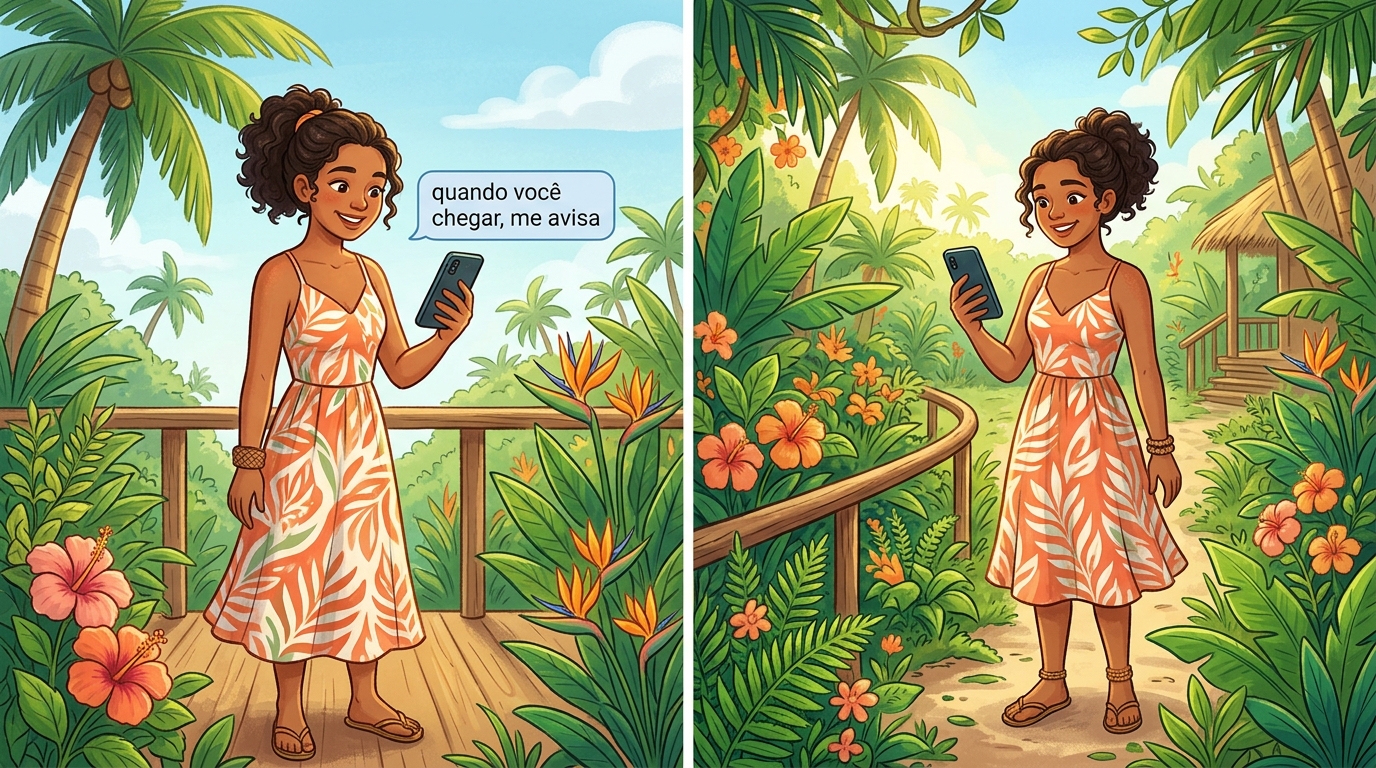
- Quando você chegar, me avisa. (When you arrive, let me know.)
- Se eu puder, eu vou. (If I can, I'll go.)
- Assim que ele terminar, a gente sai. (As soon as he finishes, we'll leave.)
English uses the present tense here ("when you arrive"), which is why English speakers keep saying quando você chega and sounding a little off. It's not wrong-wrong, but it's not what Brazilians say.
The triggers that give it away
Instead of memorizing rules, memorize triggers. Certain words and phrases pull the subjunctive out of the verb that follows. Learn the triggers, and your brain starts flipping the switch automatically.
| Trigger phrase | Meaning | Example |
|---|---|---|
| espero que | I hope that | Espero que você goste. |
| quero que | I want that | Quero que ele fique. |
| duvido que | I doubt that | Duvido que chova. |
| é bom que | it's good that | É bom que você veio. (Wait, this one's indicative in some cases. See below.) |
| talvez | maybe | Talvez ele venha. |
| tomara que | hopefully | Tomara que dê certo. |
| para que | so that | Explico para que você entenda. |
| antes que | before | Vamos antes que chova. |
One small trap: some triggers can go either way depending on whether the speaker is treating something as fact or as possibility. É bom que ele veio (fact, he came, and that's good) vs. É bom que ele venha (I hope he comes). The subjunctive keeps things open. The indicative closes them.
This is exactly the kind of thing where flashcards with full example sentences beat conjugation tables. You need to see the trigger and the subjunctive together enough times that your brain stops treating them as separate things. Decko is built for this: instead of drilling fale, fales, fale, falemos, you learn espero que você fale as one chunk, in context, spaced out over time so it actually sticks.
The mistakes English speakers make
A few patterns show up constantly with learners.
Using the indicative after quando for future events. Quando eu chego em casa, eu ligo. Sounds like you're describing a habit. What you probably meant: Quando eu chegar em casa, eu ligo. (When I get home, I'll call.)
Forgetting the subjunctive after talvez. Talvez ele vem is a common slip. It should be talvez ele venha. Talvez means "maybe," and maybe = not certain = subjunctive.
Overusing que + indicative for wishes. Eu quero que você vem feels natural if you're translating from English. It's Eu quero que você venha. Wanting something isn't the same as it being true.
If you've spent time on other Romance languages, some of this transfers. Spanish speakers already have most of the instinct, though the future subjunctive is a Portuguese specialty that will trip them up.
The one thing that makes it click
Stop trying to conjugate on the fly. You'll never be fast enough to compute the ending in real time while also thinking about what you want to say.
Instead, learn full phrases. Espero que dê certo. Quando você puder. Se eu soubesse. Tomara que sim. These are the building blocks Brazilians actually use. Once you have twenty or thirty of them locked in, the pattern starts generating itself. You'll hear quando ele and your mouth will reach for the subjunctive form before your brain finishes the thought.
Not knowing the rules. Feeling them. That's what fluency actually looks like.
Ready to put this into practice? Decko uses spaced repetition and conjugation drilling to make vocabulary stick. Start learning Brazilian Portuguese with flashcards that actually work.
Try Decko Free