The personal infinitive: Portuguese's secret weapon that English speakers keep missing
The personal infinitive is one of Portuguese's most useful grammar features, and English has nothing like it. Here's how it works and when to use it.
Portuguese has a grammar feature that Spanish speakers envy and English speakers usually don't even notice exists. It's called the personal infinitive, and once you get it, a lot of Portuguese sentences that felt weird will suddenly make sense.
Here's the short version: in Portuguese, the infinitive (the "to do" form of a verb) can be conjugated. Yes, conjugated. The thing that's supposed to be unchanging changes. If that sounds bizarre, good, because it means you're paying attention.
What the personal infinitive actually is
A regular infinitive in Portuguese is what you'd expect: falar (to speak), comer (to eat), partir (to leave). These are the dictionary forms.
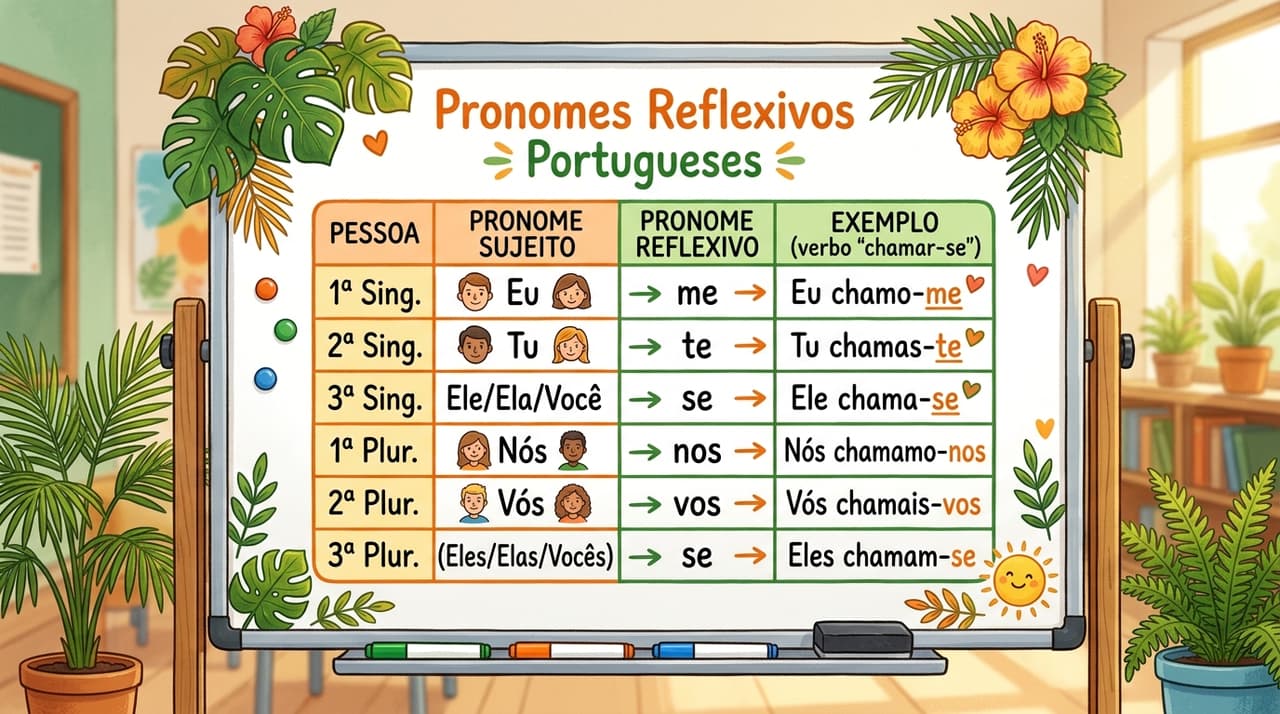
The personal infinitive takes those same forms and adds endings to mark who's doing the action:
| Person | falar | comer | partir |
|---|---|---|---|
| eu | falar | comer | partir |
| você/ele/ela | falar | comer | partir |
| nós | falarmos | comermos | partirmos |
| vocês/eles/elas | falarem | comerem | partirem |
Notice something? The eu and você forms look identical to the regular infinitive. The magic happens with nós (add -mos) and vocês/eles (add -em). That's it. Two endings to learn.
For irregular verbs like ser, estar, ir, ter, the personal infinitive is completely regular. Ser becomes sermos and serem. Ir becomes irmos and irem. No surprises. This is one of the few times Portuguese cuts you a break, so take it.
When you actually use it
The personal infinitive shows up in a few specific situations, and once you learn the patterns, you'll start noticing it everywhere.
After prepositions, when the subject is different from the main verb's subject. This is the big one.
- É importante estudarmos todos os dias. (It's important that we study every day.)
- Antes de saírem, fechem a porta. (Before you all leave, close the door.)
- Depois de comermos, vamos ao cinema. (After we eat, we're going to the movies.)
Compare that with English, which forces you into a subordinate clause with "that we" or "before you." Portuguese just conjugates the infinitive and moves on. Cleaner. Faster. Kind of elegant, honestly.
With impersonal expressions. Things like é bom, é melhor, é preciso, é difícil.
- É melhor vocês irem agora. (It's better if you all go now.)
- É difícil eles entenderem. (It's hard for them to understand.)
When the personal infinitive replaces a subjunctive clause. This is where Brazilians often prefer it because it's less clunky. Instead of É importante que nós estudemos (which uses the present subjunctive), most people just say É importante estudarmos. Same meaning, fewer syllables. If you've been sweating the subjunctive, the personal infinitive is sometimes your escape hatch.
When you don't use it
Here's where learners get twisted up. If the subject of the infinitive is the same as the main verb's subject, you use the regular infinitive. No personal ending needed.
- Quero falar português. (I want to speak Portuguese.) → Same subject, both are eu.
- Eles precisam sair cedo. (They need to leave early.) → Same subject, both are eles.
But watch what happens when the subject shifts:
- Quero que eles falem português. (I want them to speak Portuguese.) → Different subjects, so you'd use the subjunctive here.
- É importante eles falarem português. (It's important for them to speak Portuguese.) → Different subjects, so personal infinitive works.
The rule of thumb: same subject, plain infinitive. Different subject after a preposition or impersonal expression, personal infinitive.
Why this feature is a gift
I resisted the personal infinitive for a long time. It looked like extra work. But after banging my head against enough sentences that wouldn't parse, I realized it's often easier than the alternatives. You get to sidestep the subjunctive in a lot of contexts, and you avoid the awkward English-style construction of stacking "that" clauses.
Compare these two ways of saying "After we finished eating, we left":
- Depois que terminamos de comer, saímos. (Uses a full subordinate clause.)
- Depois de terminarmos de comer, saímos. (Uses personal infinitive. Tighter.)
Both are correct. The second one sounds more natural in written Portuguese and in careful speech. In casual conversation, Brazilians mix both, but the personal infinitive shows up constantly in things like news broadcasts, contracts, and novels. If you want to read a Brazilian newspaper without getting confused, you need this.
The tricky thing about the personal infinitive is that you don't drill it, you absorb it. Textbook exercises help you understand the mechanics, but the pattern only sticks after you've seen it in a hundred real sentences.
That's exactly the kind of grammar that flashcards can quietly lock in without you noticing. Decko lets you build a deck of real example sentences with the personal infinitive, so instead of memorizing rules you're pattern-matching to actual Portuguese. After enough repetitions spaced out over weeks, your ear starts flagging when a personal infinitive should show up, without you having to think about it.

A few real-world examples to notice
Start hunting for the personal infinitive in Brazilian content. Once you know it's there, you'll spot it constantly:
- Signs: Favor não fumarem aqui. (Please don't smoke here, addressed to a group.)
- News: É preciso os políticos assumirem a responsabilidade. (It's necessary for the politicians to take responsibility.)
- Casual speech: Antes de vocês chegarem, a gente já tinha comido. (Before you all arrived, we'd already eaten.)
You can also try building your own. Take a sentence like "It's important to study every day." Ask: who's studying? If it's a group including you, it becomes É importante estudarmos todos os dias. If it's them, É importante eles estudarem todos os dias.
The personal infinitive won't make you fluent by itself, and honestly it's not the sexiest topic to study. But it's one of those features that separates someone who learned Portuguese from a phrasebook from someone who actually understands how the language moves. And it's easier than it looks, which is more than you can say for most Portuguese grammar.
Ready to put this into practice? Decko uses spaced repetition and conjugation drilling to make vocabulary stick. Start learning Brazilian Portuguese with flashcards that actually work.
Try Decko Free