The Social Rules Brazilians Never Explain to Foreigners
Learn the unspoken social rules in Brazil that no one tells foreigners, plus the Portuguese phrases you need to navigate them.
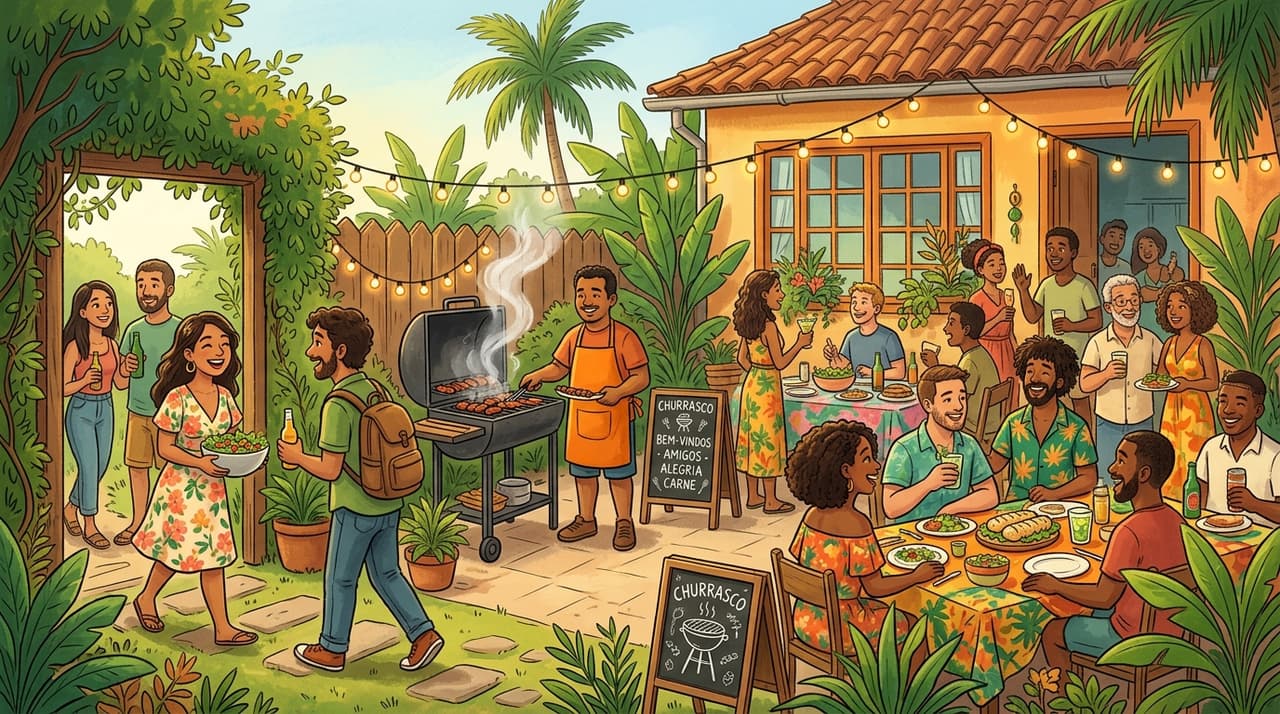
I'd been in São Paulo for about three days when I committed my first major social crime. A colleague invited me to a dinner party at 8 PM. I showed up at 8:05, thinking I was being polite. The host answered the door in a towel.
Brazilians operate by a completely different social code than most English speakers are used to. And the tricky part? Nobody sits you down and explains it. They just expect you to absorb it, the way you absorb humidity in Rio. Here are the unwritten rules that will save you from awkward moments, plus the Portuguese you need to handle each one.
Arriving "On Time" Is Arriving Too Early
In most of the US, UK, or Australia, showing up at the stated time is baseline politeness. In Brazil, it's almost rude. For social events, 30 to 60 minutes late is standard. For a house party, an hour late is perfectly normal.
The phrases you need:
| Portuguese | English |
|---|---|
| Que horas começa de verdade? | What time does it really start? |
| Posso chegar mais tarde? | Can I arrive later? |
| Já tem gente aí? | Are people already there? |
That last one is gold. Texting "já tem gente aí?" to the host before leaving your house is a completely normal move. It lets you gauge whether anyone has actually shown up yet.
One important exception: business meetings, doctor's appointments, and anything involving a set schedule still follow clock time. Don't stroll into a job interview 40 minutes late and blame it on culture.
Physical Closeness Is Not Optional
Brazilians stand closer, touch more, and hug harder than almost any culture on earth. A 2019 cross-cultural study published in the Journal of Cross-Cultural Psychology by Sorokowska et al. confirmed what anyone who's been to Brazil already knows: Brazilians maintain some of the shortest interpersonal distances in the world during conversations, averaging around 40 cm between acquaintances.
Here's what this looks like in practice. When you meet someone socially, women greet everyone (men and women) with one or two kisses on the cheek depending on the city. In São Paulo, it's one kiss. In Rio, it's two. Men shake hands and often pull each other into a half-hug (that back-pat thing). Stepping backward during a conversation is read as cold or standoffish.
Phrases for navigating this:
| Portuguese | English |
|---|---|
| Prazer em te conhecer | Nice to meet you |
| Um beijo ou dois aqui? | One kiss or two here? |
| Desculpa, ainda estou me acostumando | Sorry, I'm still getting used to it |
Asking "um beijo ou dois?" with a smile when you're new to a city is charming, not weird. People will laugh and tell you the local custom.
You Will Be Fed, and You Will Not Refuse
Hospitality in Brazil is aggressive in the best possible way. If you visit someone's home, you will be offered coffee, food, or both. Refusing feels like a rejection of the person, not just the food.
The magic word here is cafezinho (little coffee). It's not really about the coffee. It's a social ritual. Accepting a cafezinho is accepting connection. Even if you don't drink coffee, consider taking the cup and having a few sips.
| Portuguese | English |
|---|---|
| Aceito sim, obrigado/a | Yes, I'll have some, thank you |
| Que cheiro bom! | What a great smell! |
| Tá delicioso | It's delicious |
| Posso repetir? | Can I have seconds? |
Asking "posso repetir?" is one of the highest compliments you can give a Brazilian cook. Their face will light up.

The "No" That Sounds Like "Yes"
This one trips up English speakers constantly. Brazilians are culturally inclined to avoid direct refusal. A "vamos marcar" (let's set a date) often means "this will never happen." A "quem sabe" (who knows) usually means no. And "depois a gente combina" (we'll figure it out later) is the polite Brazilian way of letting something die quietly.
This isn't dishonesty. It's a communication style called "high-context communication," where preserving social harmony matters more than being blunt. If you've read about false friends in Portuguese, you know that words don't always mean what you think. The same goes for entire sentences.
Learn to read between the lines:
| What they say | What they probably mean |
|---|---|
| Vamos marcar! | Probably won't happen |
| Quem sabe... | No |
| Depois a gente combina | Let's quietly forget this |
| Vou tentar aparecer | I'm not coming |
| Com certeza! (with enthusiasm) | Actually yes |
The real test? If someone pulls out their phone and starts actually choosing a date, that's genuine. Everything else is social lubrication.
Titles and Formality Are Alive and Well
Portuguese has a built-in formality system that English mostly lost centuries ago. The difference between você (you, informal) and o senhor/a senhora (you, formal) matters. Using "você" with an older person you've just met can land wrong, especially outside of major cities.
A good rule of thumb: use "o senhor" or "a senhora" with anyone visibly older than you until they tell you otherwise. They'll often say "pode me chamar de você" (you can call me você), and that's your green light to relax.
This connects to how ser and estar work differently in Portuguese. The language has built-in layers that English doesn't, and formality is one of the biggest.
| Portuguese | English |
|---|---|
| O senhor poderia me ajudar? | Could you help me? (formal) |
| A senhora primeiro | You first, ma'am |
| Pode me chamar de você | You can call me "você" |
Plans Are Fluid, and That's Fine
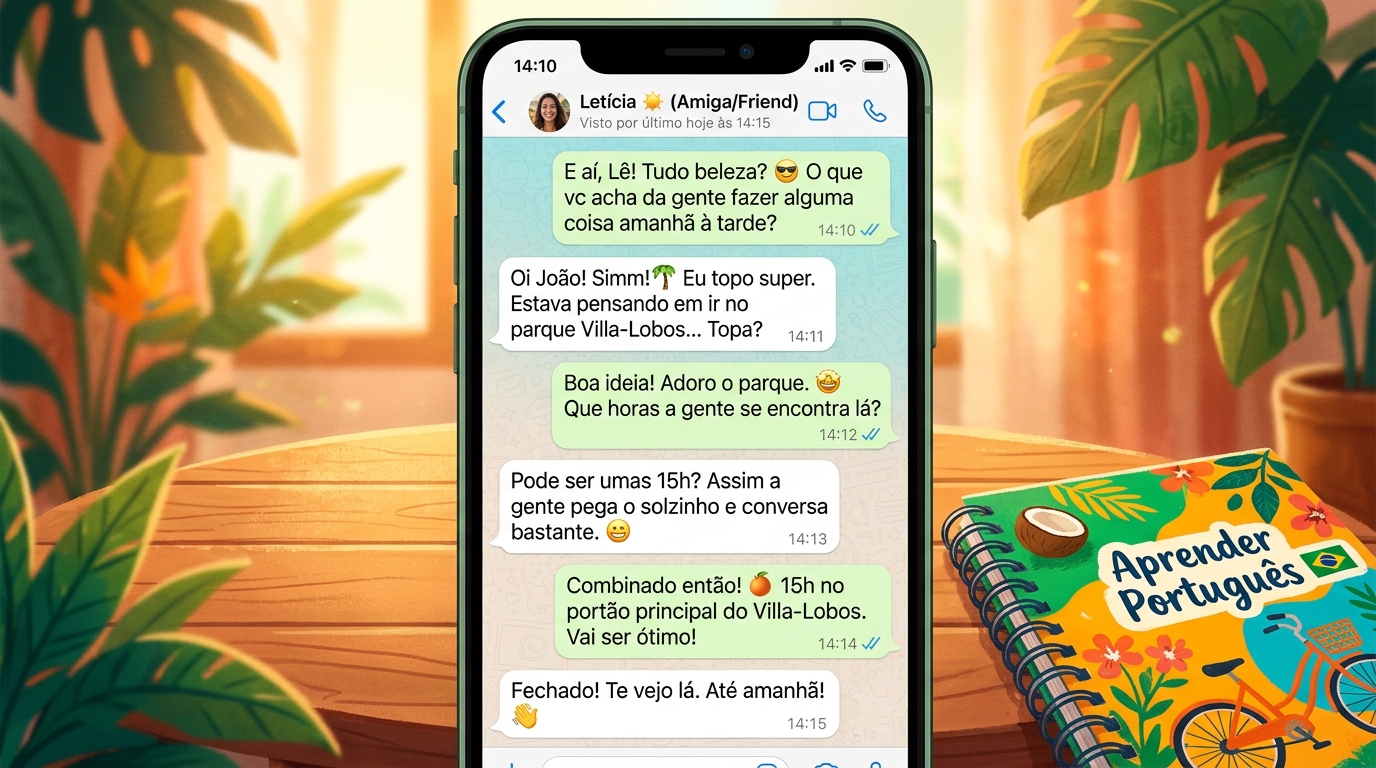
Brazilians make plans loosely. A friend might say "vamos à praia amanhã" (let's go to the beach tomorrow) and then text you the next day with a completely different plan, or no plan at all. This isn't flaky. It's flexibility.
The best approach is to hold your plans lightly and confirm the day of. A quick "ainda tá de pé?" (still on?) is the standard confirmation text.
| Portuguese | English |
|---|---|
| Ainda tá de pé? | Still on? |
| Bora? | Let's go? / We doing this? |
| Mudou alguma coisa? | Did anything change? |
| Tô a caminho | I'm on my way |
The Shortcut to Actually Learning These Phrases
Reading about cultural rules is useful. But internalizing the phrases so they come out naturally when you're standing in someone's kitchen being offered your third cafezinho? That takes repetition. Spaced repetition, specifically. If you want to lock these phrases into long-term memory, try Decko for free. It uses spaced repetition to help you remember Portuguese vocabulary right when you're about to forget it.
One Last Rule: Relax
Brazilians are genuinely some of the most forgiving people when it comes to foreigners making social mistakes. If you butcher a greeting, laugh about it. If you show up on time, they'll tease you. If you accidentally call someone "você" when you should have said "a senhora," they'll probably just smile.
The effort to speak Portuguese and respect local customs goes a long way. Brazilians notice when a gringo is trying, and they reward it with warmth, patience, and probably more food than you can handle.
Just don't show up on time.
Ready to put this into practice? Decko uses spaced repetition and conjugation drilling to make vocabulary stick. Start learning Brazilian Portuguese with flashcards that actually work.
Try Decko FreeRelated Articles

Why Brazilian Carnival isn't just a party (and the words you need to survive it)
6 min read
Regional accents in Brazil: how Portuguese sounds different across the country
6 min read

Brazilian football vocabulary: the language of the beautiful game
6 min read