Ordering food in Brazil: how to sound like a local at any restaurant
The real Portuguese phrases Brazilians use when ordering food, from botecos to fancy restaurants. Skip the textbook and eat like a local.
The first time I tried to order food in São Paulo, I said eu quero um sanduíche, por favor and the waiter looked at me like I'd just recited a poem. Not rude, just amused. Nobody actually talks like that.
Brazilian restaurant Portuguese has its own rhythm, and textbook phrases will get you fed but they'll also mark you instantly as someone who learned from a book. Here's what people actually say, from the corner boteco to the sit-down restaurant where you're trying to impress your date's parents.
The phrase that unlocks 80% of ordering
Forget eu quero. It's not wrong, exactly, but it lands a little blunt. What Brazilians actually use is:
Vou querer... (literally "I'm going to want") Pra mim, um... ("for me, a...") Me vê um... ("get me a...", informal but extremely common)
So instead of eu quero um café, you'd hear:
- Vou querer um café. (I'll have a coffee.)
- Pra mim, um café com leite. (For me, a coffee with milk.)
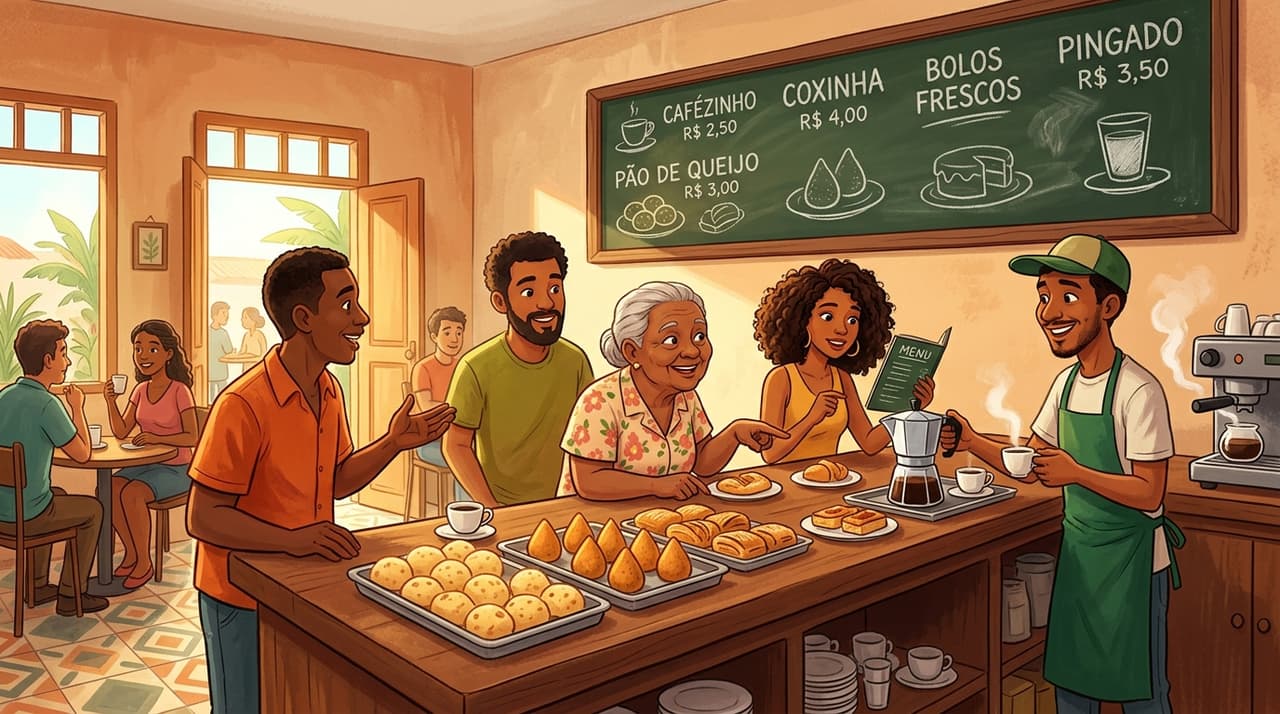
- Me vê um pingado, chefe. (Get me a small coffee with a splash of milk, boss.)
That last one is peak boteco energy. Chefe (boss) is what you call the guy behind the counter even though he's not your boss and you've never met him. It's just friendly.
Walking in and getting a table
If the place has a host, you'll usually just say how many people:
- Mesa pra dois, por favor. (Table for two, please.)
- Tem mesa pra quatro? (Is there a table for four?)
If you're at a boteco or lanchonete (snack bar), you often just sit down. Someone will come. Or you order at the counter first, get a little paper ticket, and take it to a second counter to pick up your food. This system is called senha (ticket) and it confuses everyone the first time. Just watch what other people do.
Reading the menu without panicking
A few words that show up constantly:
| Portuguese | English |
|---|---|
| Entrada | Appetizer |
| Prato principal | Main course |
| Acompanhamento | Side dish |
| Sobremesa | Dessert |
| Bebida | Drink |
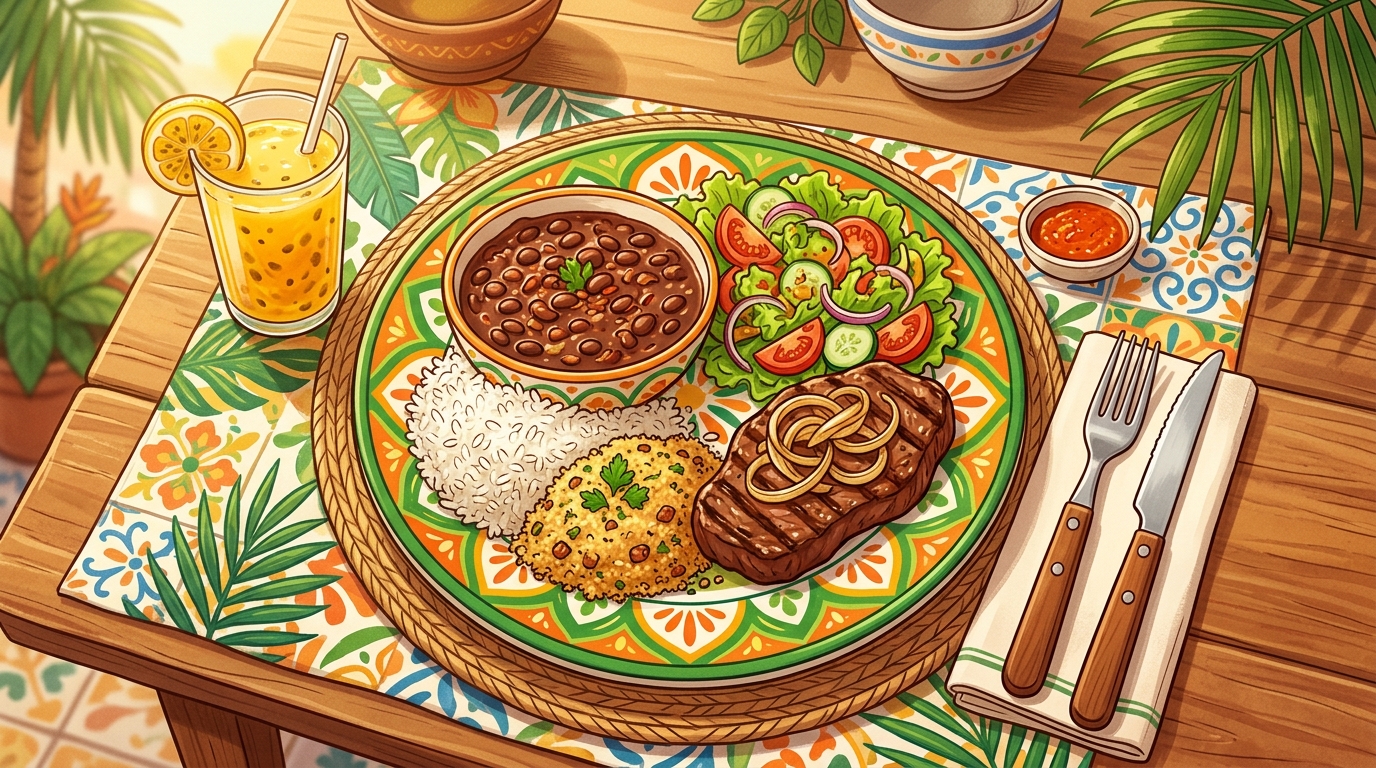
| Executivo / Prato feito (PF) | Lunch special, usually rice, beans, meat, salad |
| Porção | Shareable plate, usually fried stuff and beer |
| À vontade | All-you-can-eat |
| Rodízio | All-you-can-eat where they bring food to you |
| Por quilo | Buffet, priced by weight |
Por quilo restaurants are a whole thing in Brazil. You grab a plate, load it up at the buffet, and they weigh it at the register. Cheap, fast, and you get to try a bit of everything without committing.
If you're learning Portuguese seriously, food vocabulary is one of those areas where you get constant real-world practice. A good flashcard habit turns these words from things you look up into things you actually reach for when the waiter is standing there waiting. Fifteen minutes a day and you'll stop freezing at menus.
Asking questions without sounding weird
Things you'll want to ask:
- O que vem com isso? (What comes with that?)
- Vem com arroz? (Does it come with rice?)
- É pra quantas pessoas? (How many people is that for?) Critical for porções, which are usually huge.
- Tem opção vegetariana? (Is there a vegetarian option?)
- Vocês têm...? (Do you have...?) Note it's vocês, plural, when talking to the restaurant.
- O que você recomenda? (What do you recommend?)
One thing that trips people up: the word for menu is cardápio, not menu. You can say menu and people will understand, but cardápio is the actual word. Me traz o cardápio? (Can you bring me the menu?)
The drink situation
This is where it gets fun. Brazilians have very specific drink orders and abbreviate everything.
- Chopp (draft beer, pronounced "shoppy")
- Long neck (bottled beer, the small kind)
- Latão (big can of beer)
- Guaraná (the national soda, not just Coke's cousin)
- Suco natural (fresh fruit juice, worth ordering)
- Suco de caixinha (juice from a box, avoid if you can)
- Água com gás / sem gás (sparkling / still water)
- Caipirinha (you know this one, but ask for de limão (lime) unless you want to experiment)
A very common exchange:
- Waiter: Pra beber? (To drink?)
- You: Uma água sem gás, gelada. (A still water, cold.)
Gelada (cold) is important. Room temperature water is a real risk in Brazil and it will disappoint you.
Paying the bill
Here's where a small phrase saves you real awkwardness:
- A conta, por favor. (The bill, please.)
- Pode trazer a conta? (Can you bring the bill?)
- A gente vai dividir. (We're going to split it.)
- Aceita cartão? (Do you take card?)
About tipping: most restaurants automatically add 10% de serviço (10% service charge) to the bill. It's technically optional, but paying it is standard. If the service was terrible you can ask dá pra tirar o serviço? (can you remove the service charge?), but this is rare and mildly confrontational. Usually you just pay.
At a boteco, tipping isn't really a thing beyond rounding up. Nobody expects 20% on top of a beer.
The phrase I use most
After years of eating in Brazil, the single most useful phrase I've learned is tá bom assim (that's good like that / that's enough).
Waiter pouring your beer? Tá bom assim. Someone asking if you want more rice? Tá bom assim, obrigado. Trying to end a rodízio before you explode? Tá bom assim, pode parar. (That's enough, you can stop.)
It's polite, it's soft, and it works everywhere. Combine it with valeu (thanks, informal) or obrigado/obrigada (thanks, standard) and you're basically fluent in restaurant Portuguese. Or at least fluent enough that the waiter won't give you that amused look anymore.
Now go eat something.
Ready to put this into practice? Decko uses spaced repetition and conjugation drilling to make vocabulary stick. Start learning Brazilian Portuguese with flashcards that actually work.
Try Decko Free