Brazilian music genres and the Portuguese they teach you
From samba to sertanejo, Brazilian music is one of the best Portuguese teachers you'll ever find. Here's what each genre actually teaches you.
I learned more conversational Portuguese from a single Tim Maia album than I did from three months of grammar drills. That's not a flex, it's almost embarrassing. But it points at something real: Brazilian music isn't just background ambiance, it's a ridiculously efficient way to pick up the language because each genre comes with its own vocabulary, its own emotional register, and its own slang.
The trick is knowing what each genre actually teaches. Funk carioca will not prepare you for a job interview. Bossa nova will not help you survive a baile in Rio. Picking the right genre for what you want to learn matters more than people admit.
Here's a rough map.
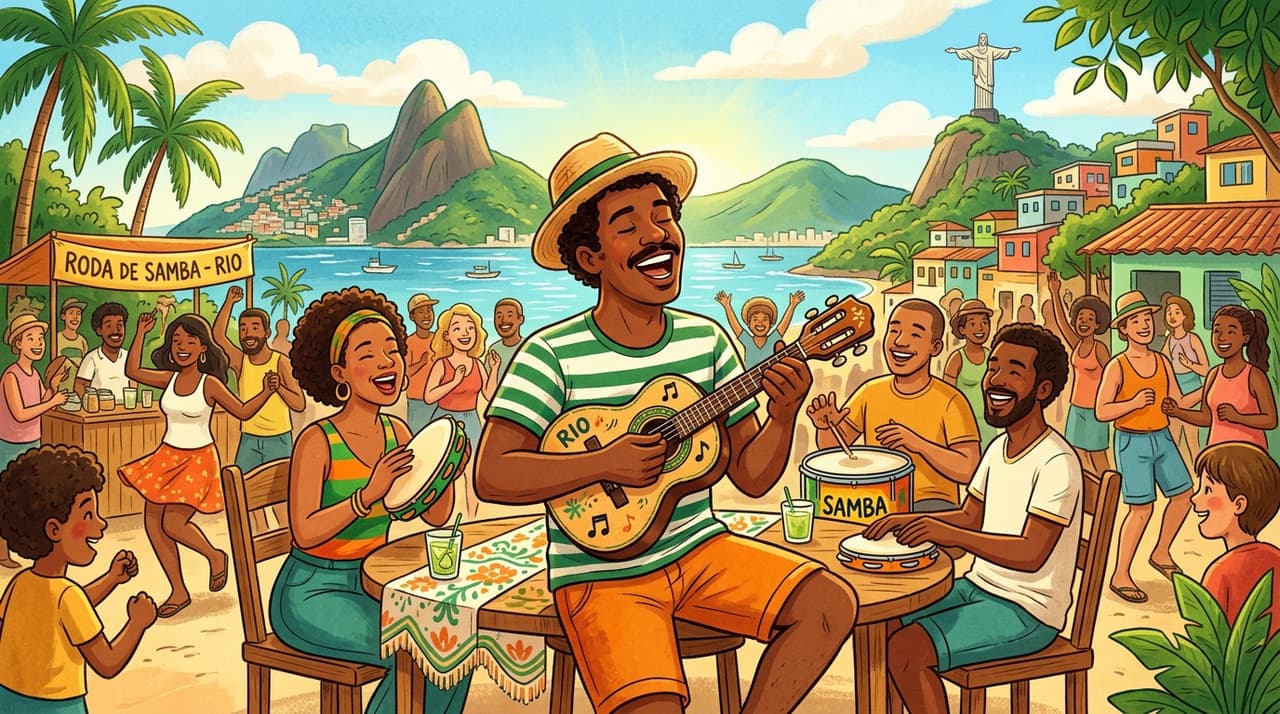
Samba: the everyday Portuguese of joy and heartbreak
Samba is where you learn the language of feelings, friendship, and the bittersweet stuff in between. The vocabulary is rich but not obscure. You'll hear words like saudade (that famous untranslatable longing), coração (heart), alegria (joy), and malandragem (a kind of streetwise cleverness that's almost a personality type in Rio).
Listen to Cartola, Beth Carvalho, or Zeca Pagodinho if you want the classics. For something more current, try Maria Rita. The lyrics tend to be clearly enunciated, which is a gift for learners. A song like "O Mundo é um Moinho" is basically a poetry lesson disguised as music.
What samba teaches you: emotional vocabulary, idiomatic phrases, the rhythm of spoken Portuguese, and a surprising amount of philosophy.
Bossa nova: slow, clean, learner-friendly
If samba is the heart, bossa nova is the whisper. The genre was practically invented for people who wanted to hear every syllable. João Gilberto's voice sits so close to the microphone you can hear him breathing, and the lyrics come at a pace your brain can actually keep up with.
This is the genre to start with if you're a beginner. Songs like "Águas de Março" by Tom Jobim and Elis Regina are a vocabulary list set to music, literally just nouns: pau (stick), pedra (stone), caco de vidro (shard of glass), peixe (fish). Beautiful, weirdly meditative, and useful.
What bossa nova teaches you: clear pronunciation, everyday nouns, the soft musicality of carioca Portuguese.
MPB: the literary middle ground
MPB stands for Música Popular Brasileira, which is a vague label covering everyone from Chico Buarque to Caetano Veloso to Marisa Monte. This is where Portuguese gets literary. Chico Buarque writes songs the way other people write novels, and listening to him is closer to reading good fiction than consuming pop music.
The vocabulary stretches you. You'll meet subjunctive moods, complex sentence structures, and metaphors that make you stop the song and look things up. Worth it. If you can understand a Chico Buarque lyric without subtitles, your Portuguese is doing fine.
Sertanejo: country Portuguese, and a lot of it
Sertanejo is the most popular genre in Brazil right now, by a wide margin. If you want to talk to actual Brazilians about music they actually listen to, you need at least passing familiarity with names like Marília Mendonça, Henrique e Juliano, or Jorge e Mateus.
The vocabulary leans rural and romantic. Lots of amor (love), coração, cerveja (beer), saudade again, and a fair amount of regional slang from the interior. The pronunciation is different too. You'll hear the famous caipira R (a kind of retroflex sound) that you won't find in Rio or São Paulo. This is great exposure if you plan to travel beyond the coast.
If you're putting together a flashcard deck from song lyrics, a tool like Decko handles this nicely. You paste the line, add the translation, and the spaced repetition does the heavy lifting. Music lyrics are sticky in memory anyway, so the words tend to come back fast.
Funk carioca: the slang firehose
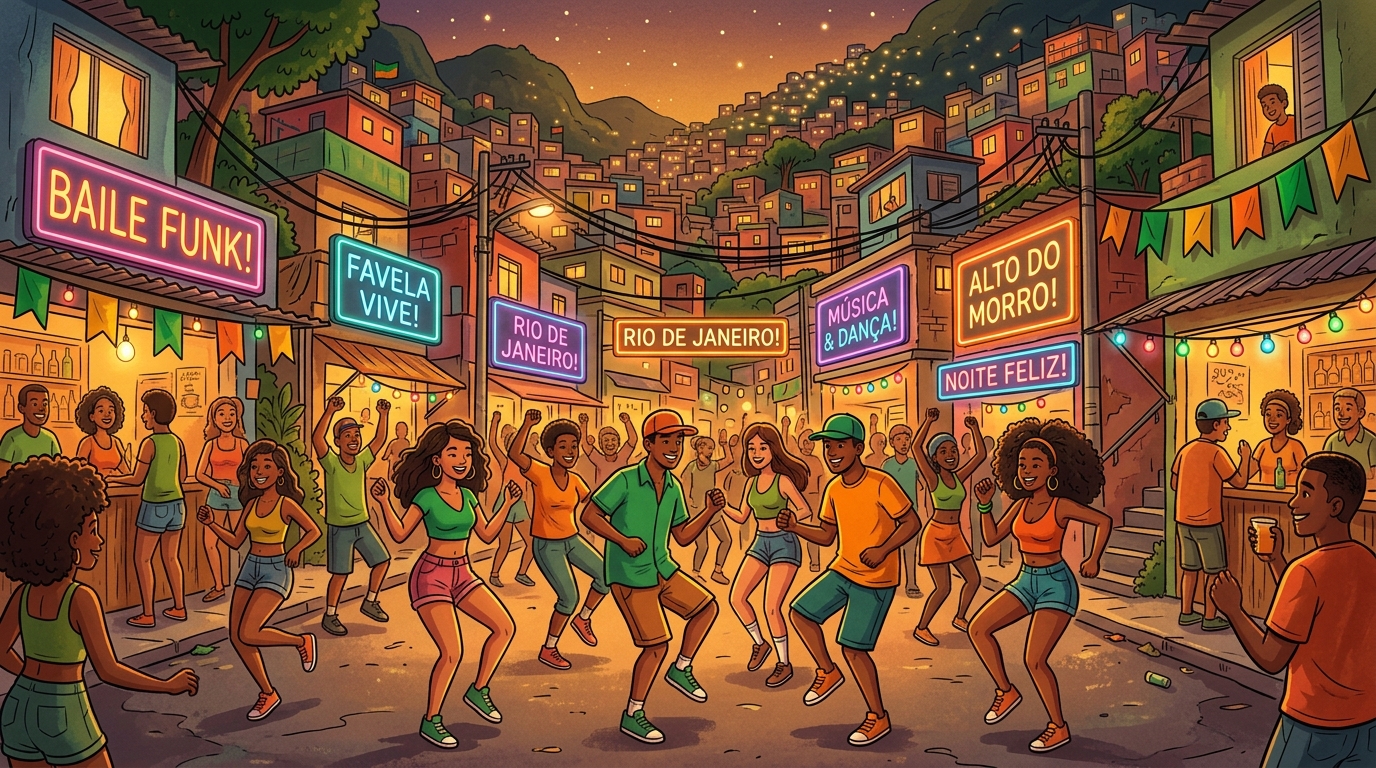
Funk is the genre your Portuguese teacher won't assign and your Brazilian friends won't shut up about. It's loud, often crude, and full of slang that's evolving faster than dictionaries can track. You'll learn words like mina (girl), cria (someone from the neighborhood), bolado (annoyed or suspicious), and about 400 expressions I shouldn't put in a blog post.
Is it useful? Honestly, yes. If you want to understand how young Brazilians actually talk, you need this. Anitta, Ludmilla, and MC Kevin are good starting points. Just maybe don't quote the lyrics at dinner with your host family. For more on the slang side of things, our piece on Brazilian slang you won't find in textbooks covers a lot of overlap.
Forró, axé, pagode: the regional flavors
Quick tour of the rest:
- Forró (Northeast): teaches you northeastern accents, rural vocabulary, dance terms. Try Luiz Gonzaga for classics or Falamansa for something newer.
- Axé (Bahia): high-energy, party-focused, lots of imperative verbs (levanta!, pula!, dança!). Ivete Sangalo is the gateway drug.
- Pagode: the rowdier, more casual cousin of samba. Group vocals, beach-party vibes, conversational lyrics. Grupo Revelação and Sorriso Maroto are everywhere.
How to actually learn from music
Passively listening doesn't do much. Your brain treats unfamiliar Portuguese the same way it treats instrumental music: as pleasant noise. To get the vocabulary to stick, you need to do something with the lyrics.
What works for me:
- Pick one song. Just one. Loop it for a week.
- Read the lyrics in Portuguese first, guess at meaning.
- Then check the translation, note 5 to 10 words you didn't know.
- Put those words in your flashcard app, ideally with the lyric line as context.
- Sing along badly. The motor memory of pronouncing the words helps.
The context part matters. A word learned inside a lyric you actually love sticks way better than the same word on a vocabulary list. There's good research on emotional encoding and memory, and music basically cheats the system by giving every word a tune to ride on.
Start with bossa nova if you're a beginner. Move to MPB and samba as your ear improves. Add sertanejo when you want to sound like you actually live in Brazil. Save funk for when you're ready to be confused and delighted and maybe slightly scandalized.
And if you find yourself, six months in, humming "Garota de Ipanema" while you make coffee, you're doing it right.
Ready to put this into practice? Decko uses spaced repetition and conjugation drilling to make vocabulary stick. Start learning Brazilian Portuguese with flashcards that actually work.
Try Decko FreeRelated Articles
Why Brazilian Carnival isn't just a party (and the words you need to survive it)
6 min read
Regional accents in Brazil: how Portuguese sounds different across the country
6 min read

Brazilian football vocabulary: the language of the beautiful game
6 min read