São Paulo
Studying Portuguese? Decko turns these phrases into smart flashcards that adapt to your memory.
Try free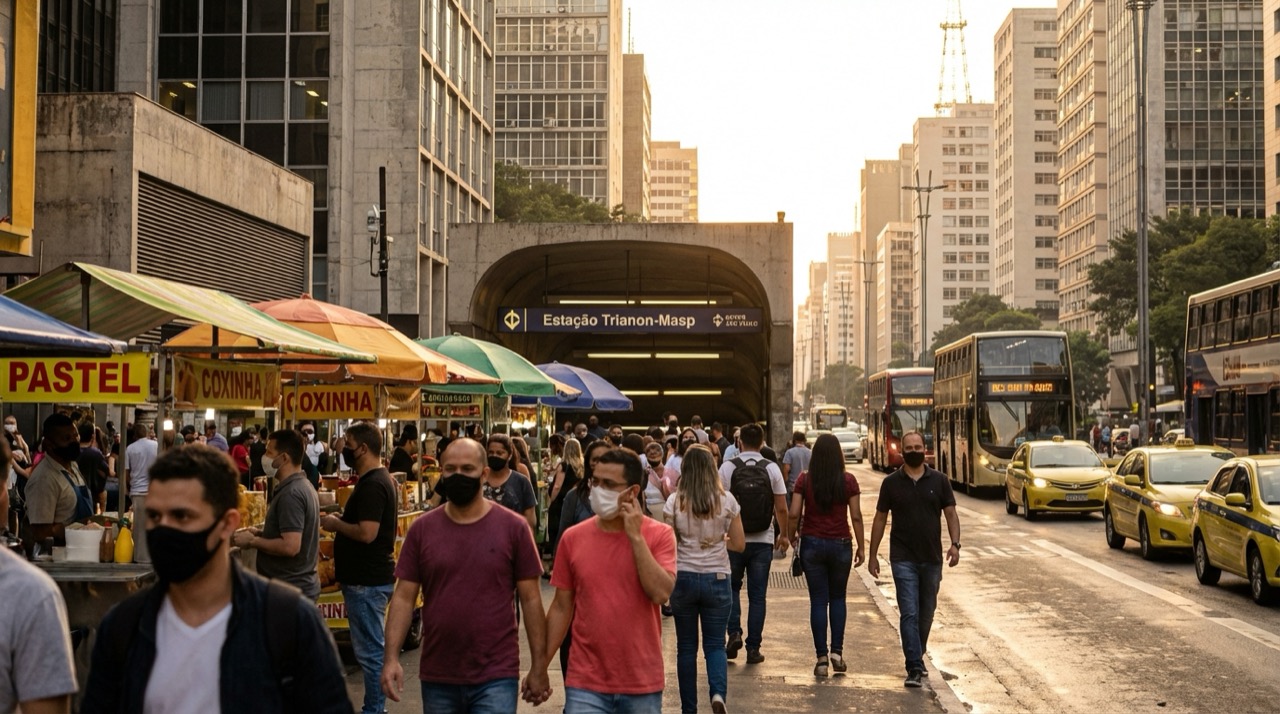
São Paulo moves fast and locals speak fast. Paulistanos appreciate directness and efficiency. Master these phrases to navigate the city like a local, from hailing Ubers to ordering at a padaria.
E aí, mano, tudo certo?
Hey bro, everything good?
/ee ah-EE, MAH-noo, TOO-doo SEHR-too/
Casual greeting among friends. 'Mano' (short for 'irmão', brother) is the quintessential Paulista word.
Você pode me indicar o metrô mais perto?
Can you point me to the nearest metro?
/voh-SEH POH-dee mee in-dee-KAR oo meh-TROH mais PEHR-too/
São Paulo's metro is clean, fast, and the best way to skip the traffic. Look for the red 'M' signs.
Quanto tempo de Uber até lá?
How long by Uber to get there?
/KWAN-too TEM-poo jee OO-ber ah-TEH lah/
Everyone in SP measures distance in time, not kilometers. Rush hour can triple the estimate.
Tem Wi-Fi aqui?
Is there Wi-Fi here?
/teng wai-FAI ah-KEE/
Essential for cafés and coworking spots. Most places have free Wi-Fi. Ask for the 'senha' (password).
Paulistanos have a distinct way of speaking. The accent is faster and more clipped than other regions, and the slang is everywhere. Learn these and you'll go from tourist to local in no time.
Mano / Mina
Bro / Girl (casual)
/MAH-noo / MEE-nah/
The most Paulista words in existence. 'Mano' for guys, 'mina' for girls. Used constantly among friends: 'Mano, cê viu isso?'
Mó legal!
So cool! / Really great!
/maw leh-GOW/
'Mó' is Paulista shorthand for 'muito' (very). You'll hear it everywhere: 'mó caro' (super expensive), 'mó longe' (really far).
Da hora!
Awesome! / Cool!
/dah OH-rah/
Classic Paulista approval. 'Esse restaurante é da hora!' (This restaurant is awesome!). A bit retro but still widely used.
Trampo
Work / Job
/TRAM-poo/
Informal word for work. 'Saí do trampo tarde' (I left work late). SP is Brazil's business capital, so you'll hear this a lot.
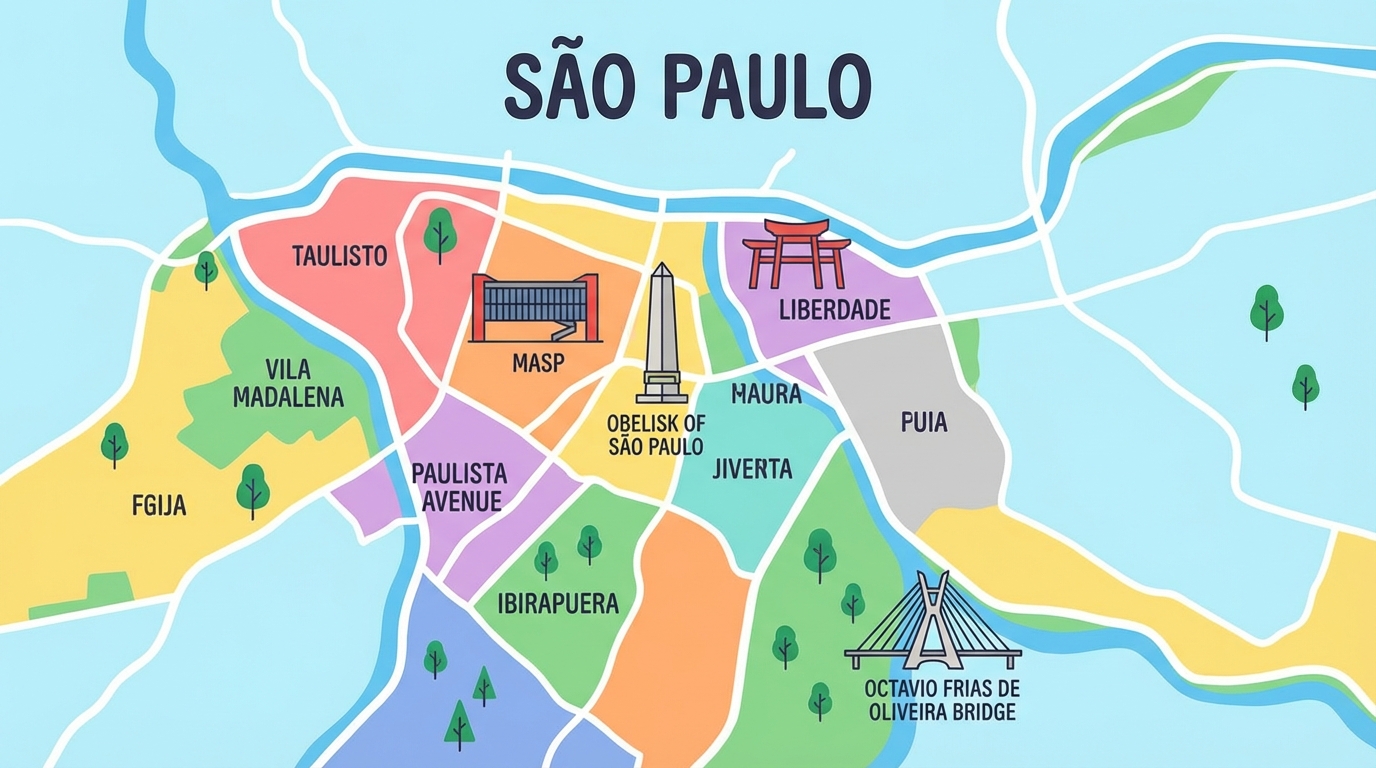
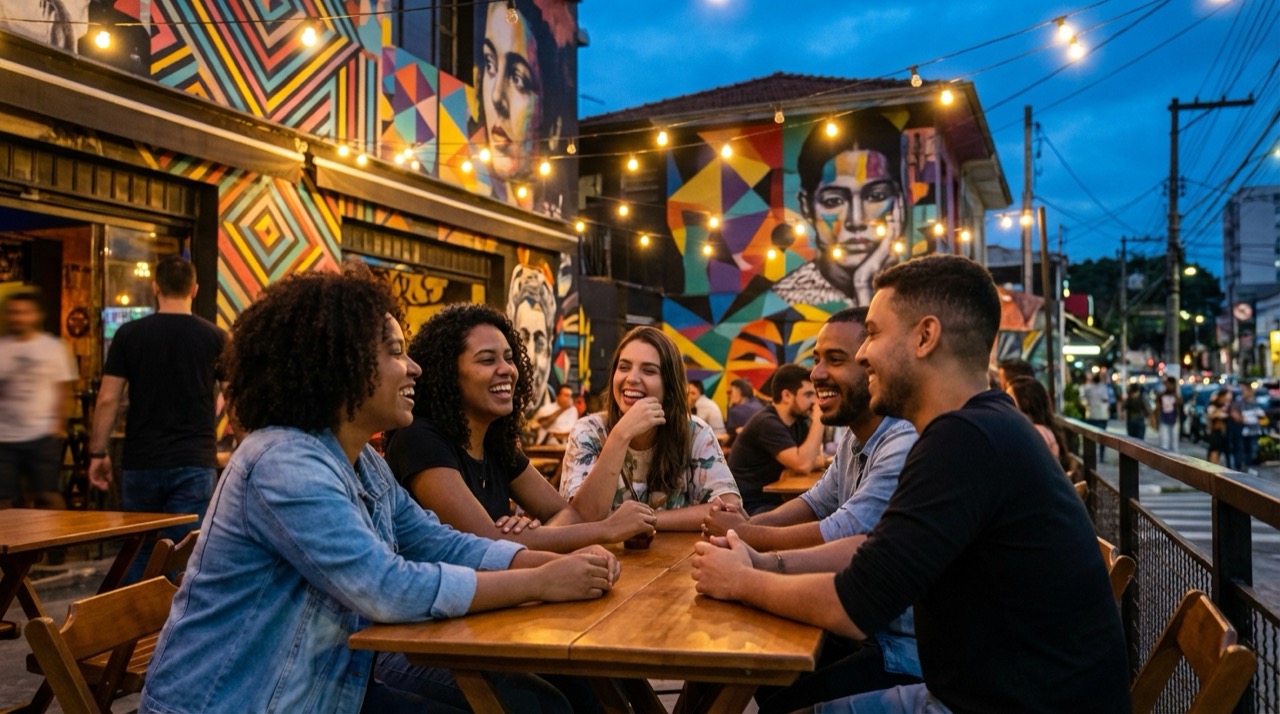
São Paulo is a city of neighborhoods, each with its own personality. You could spend weeks exploring and still only scratch the surface. These five are essential for visitors.
Vila Madalena
The bohemian heart of SP. Narrow streets packed with street art, independent galleries, vinyl record shops, and some of the city's best bars. Saturday afternoons here are legendary, with live music spilling out of every corner. Beco do Batman, an alley covered floor-to-ceiling in graffiti, is the neighborhood's unofficial museum.
'Vamo pra Vila?' is how locals suggest heading to Vila Madalena. Nobody uses the full name.
Liberdade
Home to the largest Japanese community outside Japan, plus significant Chinese and Korean populations. The red torii gates and Japanese lanterns lining the streets make it visually stunning. The weekend street fair sells everything from takoyaki to mochi. Liberdade is also packed with affordable Asian restaurants and bubble tea spots.
'Feira da Liberdade' refers to the famous weekend market. 'Vou passar na feira' means 'I'm going to stop by the market.'
Jardins
São Paulo's most upscale district, home to designer boutiques on Rua Oscar Freire, fine dining, and leafy tree-lined streets. This is where the city's business elite eat lunch and where you'll find SP's best international restaurants. Jardins also has excellent museums and the iconic Avenida Paulista runs along its northern edge.
'Jardins' is always plural. Saying 'no Jardim' (singular) marks you as an outsider. It encompasses Jardim Paulista, Jardim América, and Jardim Europa.
Pinheiros
The neighborhood that bridges bohemian Vila Madalena and upscale Jardins. Pinheiros is a foodie paradise with an incredible concentration of restaurants, craft breweries, and specialty coffee shops. The Mercado de Pinheiros is a gourmet market worth exploring. It's also a hub for startups and creative agencies.
'Vou almoçar em Pinheiros' (I'm going to have lunch in Pinheiros) is something you'll say often. The area around Rua dos Pinheiros is the restaurant hub.
Centro Histórico
The original heart of São Paulo, both gritty and grand. The Catedral da Sé, Pinacoteca, and Edifício Itália are here, along with chaotic street markets and the stunning Theatro Municipal. Centro is undergoing revitalization, and many of SP's most important cultural institutions call it home. It's raw, real, and full of energy.
'Centro' alone is enough. 'Vou pro Centro' (I'm heading downtown). Be aware that 'Centro Velho' (Old Center) and 'Centro Novo' (New Center) refer to different sides of Vale do Anhangabaú.
Want to actually remember these phrases?
Save them to your flashcard deck and Decko will quiz you at the perfect time using spaced repetition.
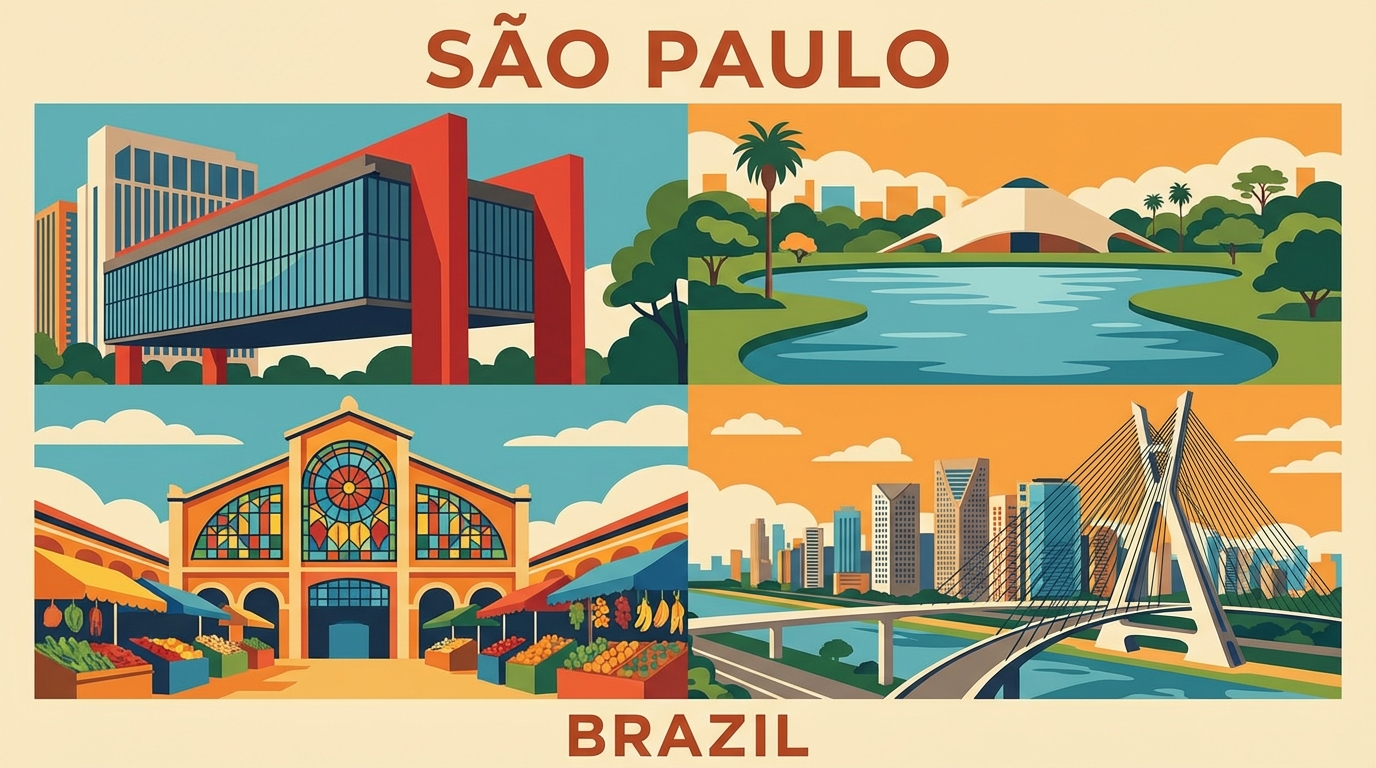
São Paulo is not a beach city or a postcard destination. Its beauty lies in world-class museums, incredible food, a thriving arts scene, and the raw energy of 12 million people living together. These are the places you should not miss.
Avenida Paulista
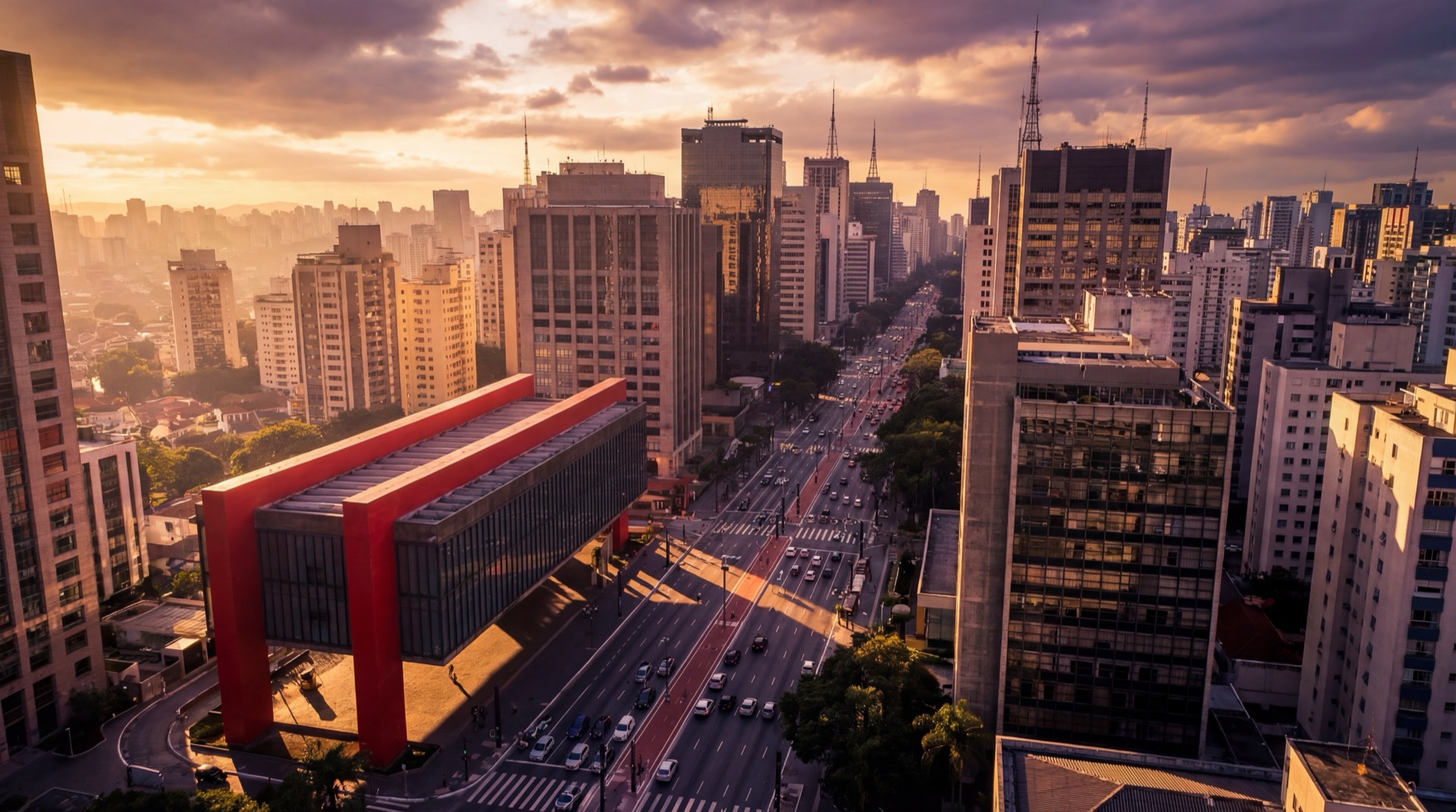
The symbolic heart of São Paulo. This 2.8km boulevard is lined with skyscrapers, cultural centers, and some of Brazil's most important institutions. On Sundays, the entire avenue closes to cars and fills with street performers, food vendors, and hundreds of thousands of people walking, skating, and cycling. It's SP at its most alive.
'A Paulista tá aberta hoje' (Paulista is open today) means the Sunday car-free event. 'Vamos passear na Paulista?' (Let's stroll on Paulista?) is a classic Sunday plan.
MASP (Museu de Arte de São Paulo)
The most important art museum in the Southern Hemisphere, suspended dramatically above the ground on four red pillars. The permanent collection includes Rembrandt, Van Gogh, Monet, Picasso, and major Brazilian artists. The open plaza underneath hosts an antiques fair every Sunday. Free admission on Tuesdays.
'Vou no MASP' (I'm going to MASP). Pronounced 'MAS-pee'. 'Terça é grátis' (Tuesday is free) is a local tip everyone knows.
Parque Ibirapuera
São Paulo's green lung and the most visited park in South America. Designed by Oscar Niemeyer, it has jogging paths, lakes, museums (MAM, Afro Brasil), and hosts major events. On weekends, families, runners, skaters, and musicians fill the park. The sunset view from the lake is a peaceful escape from the city's intensity.
'Ibira' is the local shorthand. 'Vou correr no Ibira' (I'm going for a run at Ibira). Everyone uses this abbreviation.
Mercado Municipal (Mercadão)
A cathedral of food housed in a gorgeous 1930s building with stained glass windows. Famous for the massive mortadela sandwich and the pastel de bacalhau (cod pastry). The upper floor has restaurants; the ground floor is a maze of tropical fruits, spices, dried meats, and cheeses. Come hungry and bring cash for the smaller vendors.
Locals call it 'Mercadão' (big market), never the full name. 'Vamos no Mercadão comer um pastel?' (Let's go to Mercadão for a pastel?) is a classic SP outing.
Pinacoteca do Estado
São Paulo's oldest art museum, housed in a stunning 19th-century building in the Jardim da Luz. The permanent collection focuses on Brazilian art from the 19th century to present. The building itself, with its exposed brick and modern glass renovations by Paulo Mendes da Rocha, is as impressive as the art inside. The surrounding park is lovely for a pre-visit walk.
'Pinacoteca' is tricky to pronounce: 'pee-nah-koh-TEH-kah'. 'Entrada gratuita aos sábados' (Free entry on Saturdays) is the local hack.
Beco do Batman
A narrow alley in Vila Madalena covered entirely in vibrant street art and graffiti. The murals change constantly as artists paint over old works with new ones. It's become one of SP's most photographed spots and a symbol of the city's thriving urban art scene. Best visited during the day for photos, then stay in Vila Madalena for evening drinks.
'Beco' means alley. It's named after a Batman image that was one of the first paintings there. 'Vou tirar foto no Beco do Batman' (I'm going to take photos at Beco do Batman).
Edifício Itália
One of the tallest buildings in SP, with a restaurant and bar on the top floor offering panoramic views of the entire city. On a clear day, you can see the Serra da Cantareira mountains to the north. The Terraço Itália restaurant requires reservations, but you can visit the bar for drinks with the view. Evening visits are spectacular.
'Vista panorâmica' means panoramic view. 'Vamos tomar um drink no Terraço Itália' (Let's have a drink at Terraço Itália) is a classic SP date suggestion.
Catedral da Sé
A massive neo-Gothic cathedral in the heart of Centro that took 40 years to build. One of the largest churches in the world, it can hold 8,000 people. The interior is impressive with its soaring columns and stained glass. The Praça da Sé in front is the official center of the city, where the zero-kilometer marker for São Paulo is located.
'Sé' refers to both the cathedral and the surrounding area/metro station. 'Desce na Sé' (Get off at Sé) is one of the first directions you'll hear using the metro.
Rua Augusta
A street with two personalities. The upper part (Jardins side) is polished with boutiques and cafés. Cross the Avenida Paulista and the lower part transforms into SP's most eclectic nightlife strip, with underground clubs, rock bars, drag shows, and late-night food joints. It's raw, diverse, and unapologetically São Paulo. Nightlife here peaks after midnight.
'A Baixa Augusta' (Lower Augusta) refers to the nightlife-heavy section below Paulista. 'A Augusta tá bombando' (Augusta is popping) means it's busy on a night out.
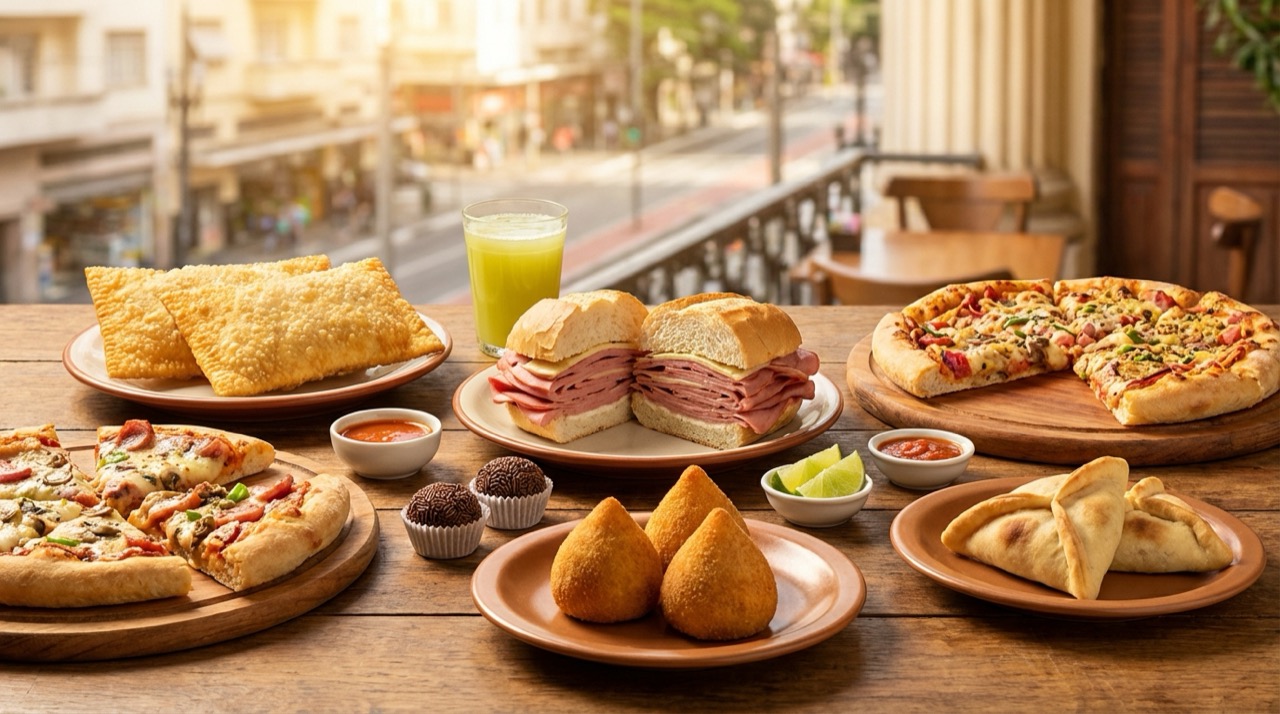
São Paulo is the food capital of Brazil and arguably of all of South America. With communities from Italy, Japan, Lebanon, and every Brazilian state, the city's food scene is staggeringly diverse. These are the dishes that define SP eating.
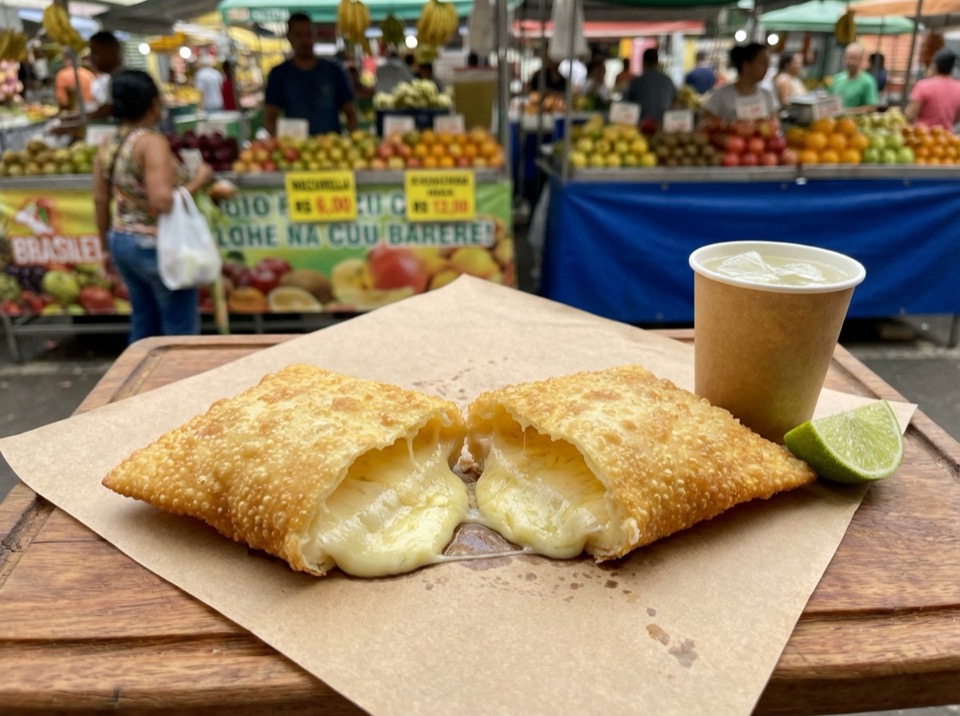
Pastel de Feira
A deep-fried thin pastry pocket filled with everything from ground beef ('carne') to cheese ('queijo') to palm hearts ('palmito'). Found at every street market (feira) across the city, served piping hot with a side of sugarcane juice. The Mercadão version with cod (bacalhau) is famous, but locals swear by their neighborhood feira stalls.
How to order
'Me vê um pastel de queijo e um caldo de cana.' (Give me a cheese pastel and a sugarcane juice.) At the Mercadão: 'Um pastel de bacalhau, por favor.'
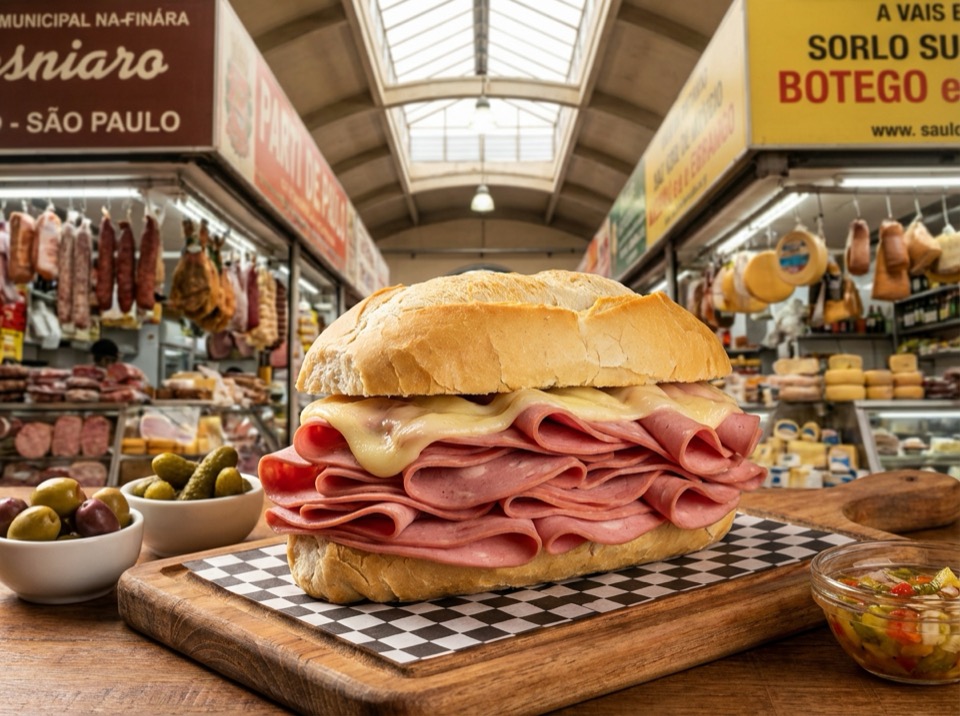
Sanduíche de Mortadela
The signature sandwich of the Mercado Municipal. A soft Italian bread roll stacked absurdly high with thin slices of mortadela, melted provolone cheese, and a smear of mustard. It's massive, messy, and magnificent. The traditional spot is Bar do Mané inside the Mercadão, but several vendors compete for the title.
How to order
'Um sanduíche de mortadela com queijo, por favor.' Add 'bem caprichado' (extra generous) if you want them to pile it high. 'Pode botar mostarda?' for mustard.
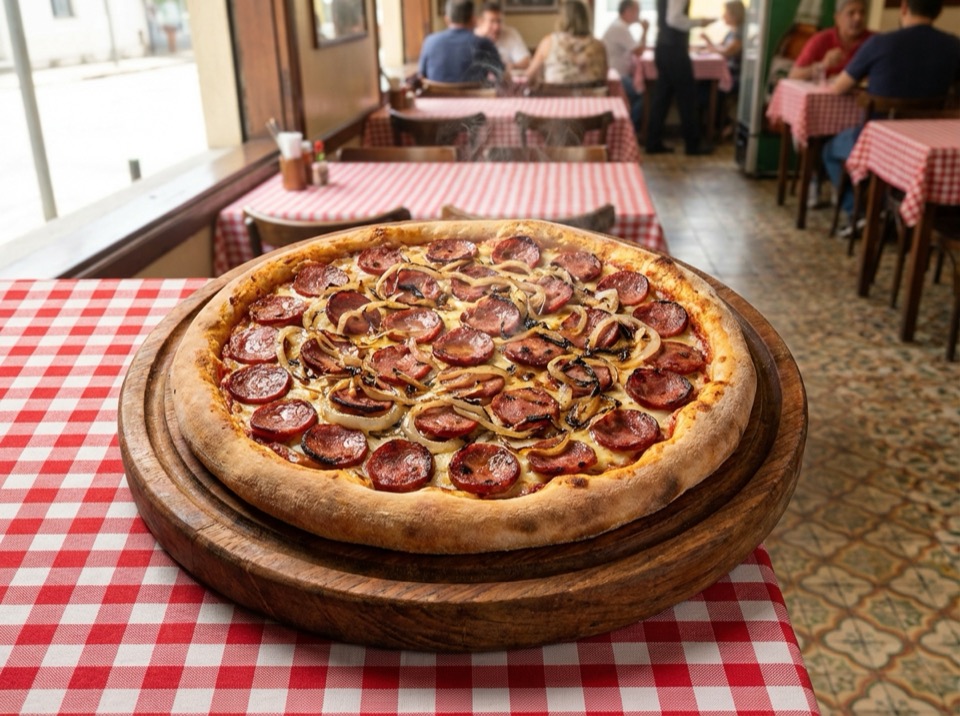
Pizza Paulistana
SP has more pizzerias per capita than any city in the world, including in Italy. Paulista-style pizza has a thick, bready crust, generous toppings, and is always shared. The uniquely SP flavor is 'pizza de calabresa' (pepperoni-style cured sausage with onions). Pizza night is traditionally Thursday. Try Bráz, Leggera, or a neighborhood spot.
How to order
'Uma pizza de calabresa pra dividir.' (A calabresa pizza to share.) 'Meia calabresa, meia margherita' for half-and-half. Pizza in SP always comes unsliced; the waiter cuts it at the table.
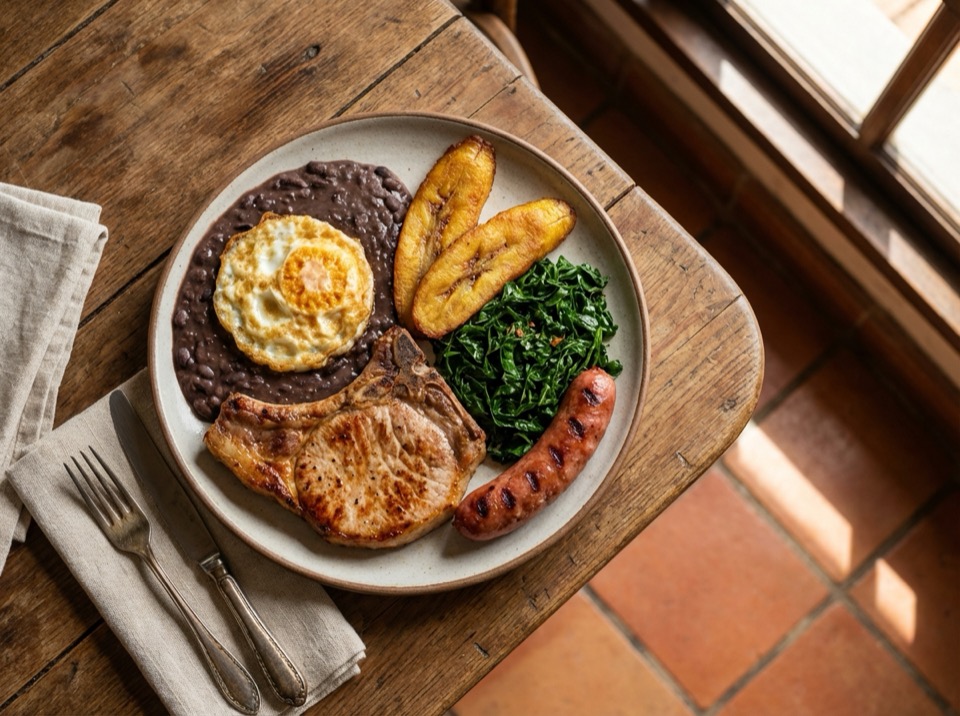
Virada Paulista
The state dish of São Paulo: a hearty plate of tutu de feijão (creamy mashed beans with cassava flour), pork chop (bisteca), fried banana, braised kale (couve), fried egg, and linguiça (sausage). It's comfort food that fuels the working class. Found at traditional restaurants and 'botecos' (neighborhood bars) across the city.
How to order
'Uma virada paulista, por favor.' At a boteco, you might also say 'Tem virada hoje?' (Do you have virada today?) since some places only serve it on specific days.
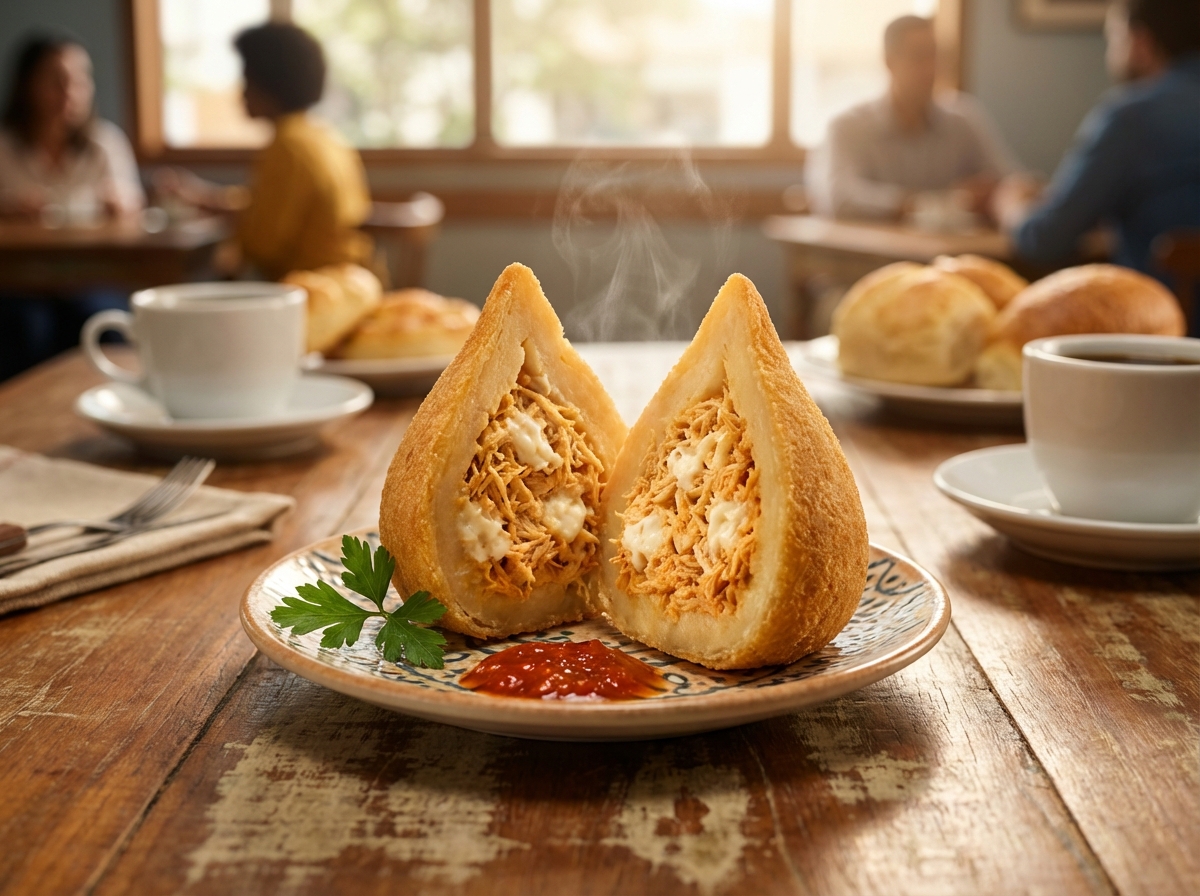
Coxinha
Brazil's most beloved snack, and SP does it best. A teardrop-shaped dough filled with seasoned shredded chicken, breaded and deep-fried until golden. The perfect coxinha has a thin, crunchy shell and a creamy, slightly spiced filling. Found in every padaria (bakery) and lanchonete (snack bar). Some places offer catupiry (cream cheese) coxinhas.
How to order
'Uma coxinha, por favor.' For variety: 'Tem coxinha de catupiry?' (Do you have cream cheese coxinha?). 'Quero duas, bem quentinhas.' (I want two, nice and hot.)
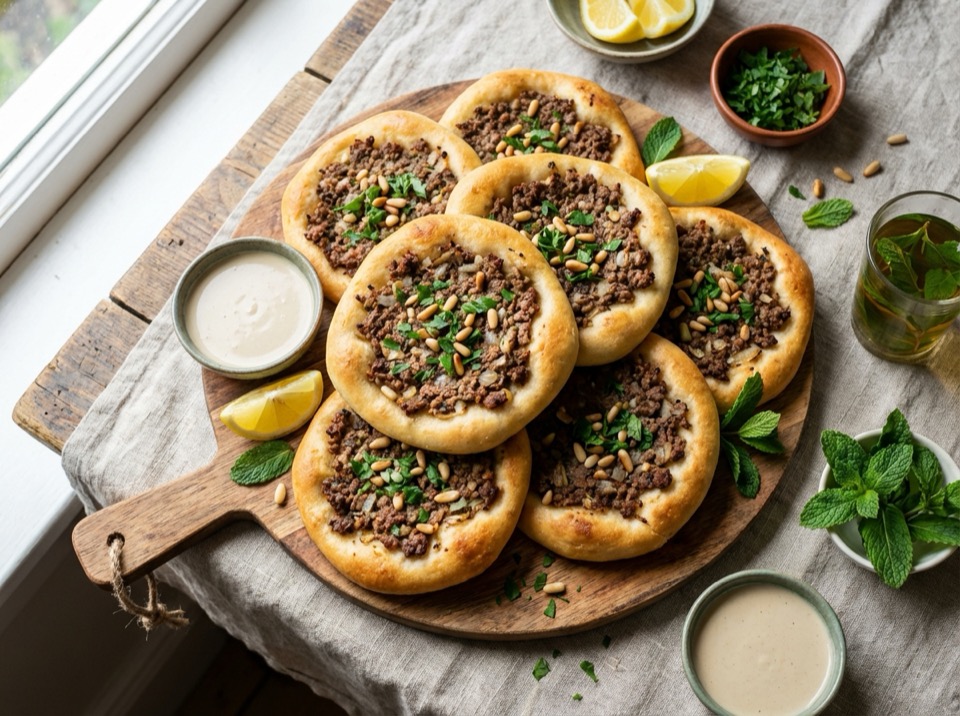
Esfiha
São Paulo's large Lebanese community brought esfihas (small open-faced meat pies) and the city made them its own. The classic is 'esfiha de carne' with seasoned ground beef, but cheese and spinach versions are popular too. Habib's chain democratized them as fast food, but traditional bakeries like Bráz Elettrica serve elevated versions.
How to order
'Três esfihas de carne e duas de queijo, por favor.' (Three meat and two cheese esfihas.) 'Esfiha aberta ou fechada?' (Open or closed?) is a question you'll hear. Aberta is traditional.
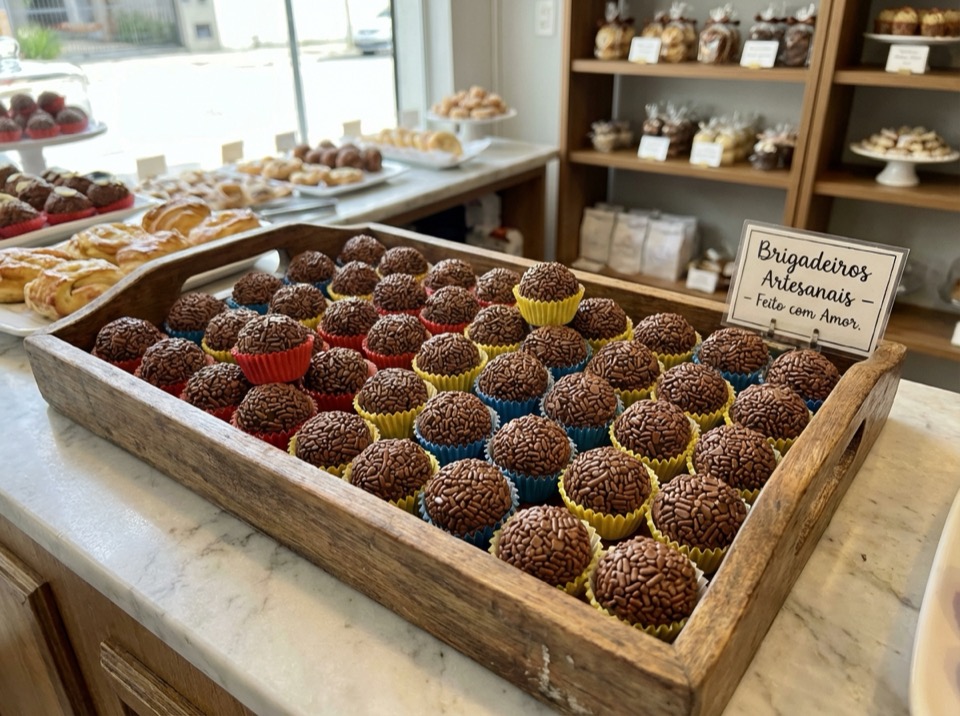
Brigadeiro
Brazil's national sweet, and SP's padarias and docerias (sweet shops) perfect it. A chocolate truffle made from condensed milk, cocoa powder, and butter, rolled in chocolate sprinkles. Every birthday party, every celebration, every 'I need comfort food' moment involves brigadeiros. Gourmet versions come in dozens of flavors: pistachio, passion fruit, churros.
How to order
'Quero três brigadeiros, por favor.' At a doceria: 'Quais sabores tem?' (What flavors do you have?). 'Um brigadeiro gourmet de pistache' for pistachio gourmet brigadeiro.
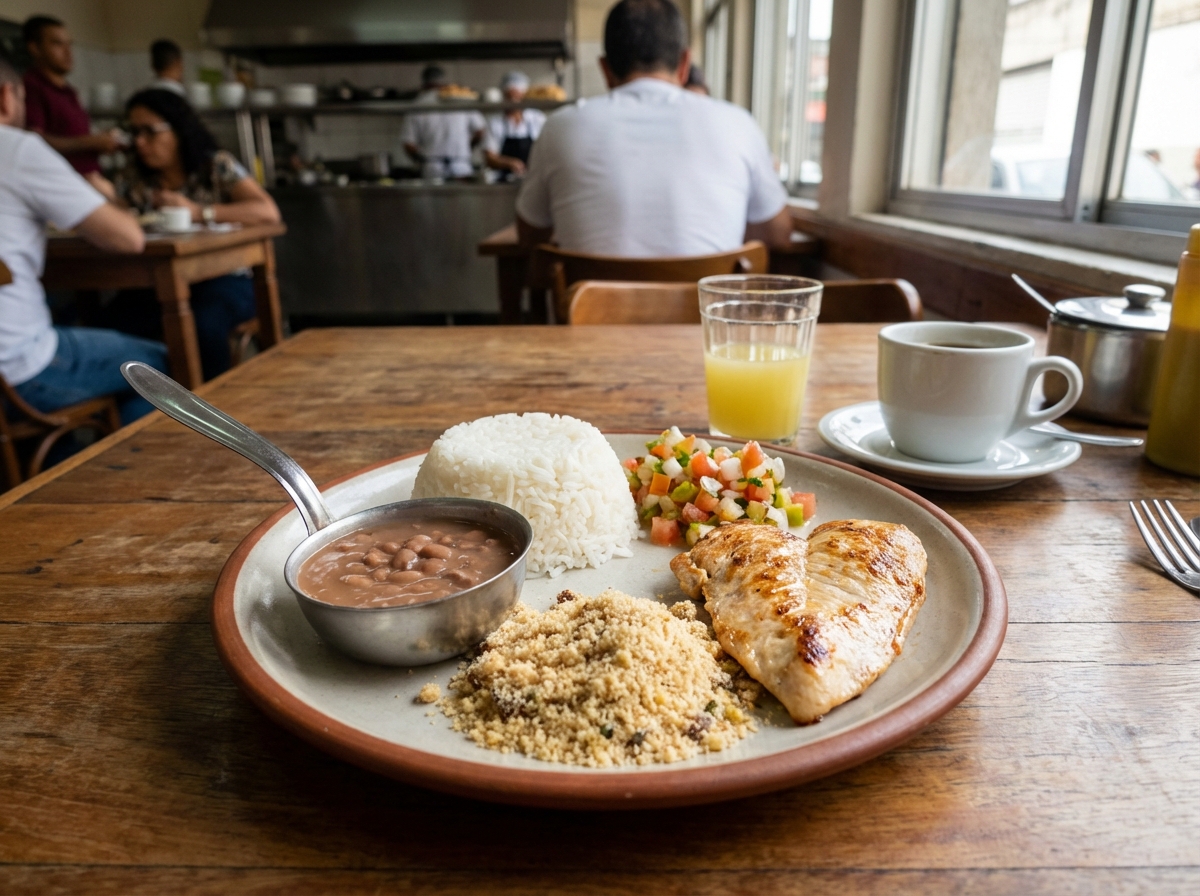
Almoço Comercial (Business Lunch)
Not a dish but an institution. Almost every restaurant in SP offers a fixed-price lunch deal (PF, 'prato feito') or a buffet by weight ('por quilo'). For R$20-40 you get a complete meal: rice, beans, salad, a protein, and often dessert and coffee. This is how Paulistanos eat every workday. It's the best value meal in the city.
How to order
'Qual é o prato do dia?' (What's today's special?). At a por-quilo buffet, grab a plate and serve yourself. 'Quanto tá o quilo?' (How much per kilo?) At sit-down: 'Tem PF?' (Do you have a fixed-price lunch?)
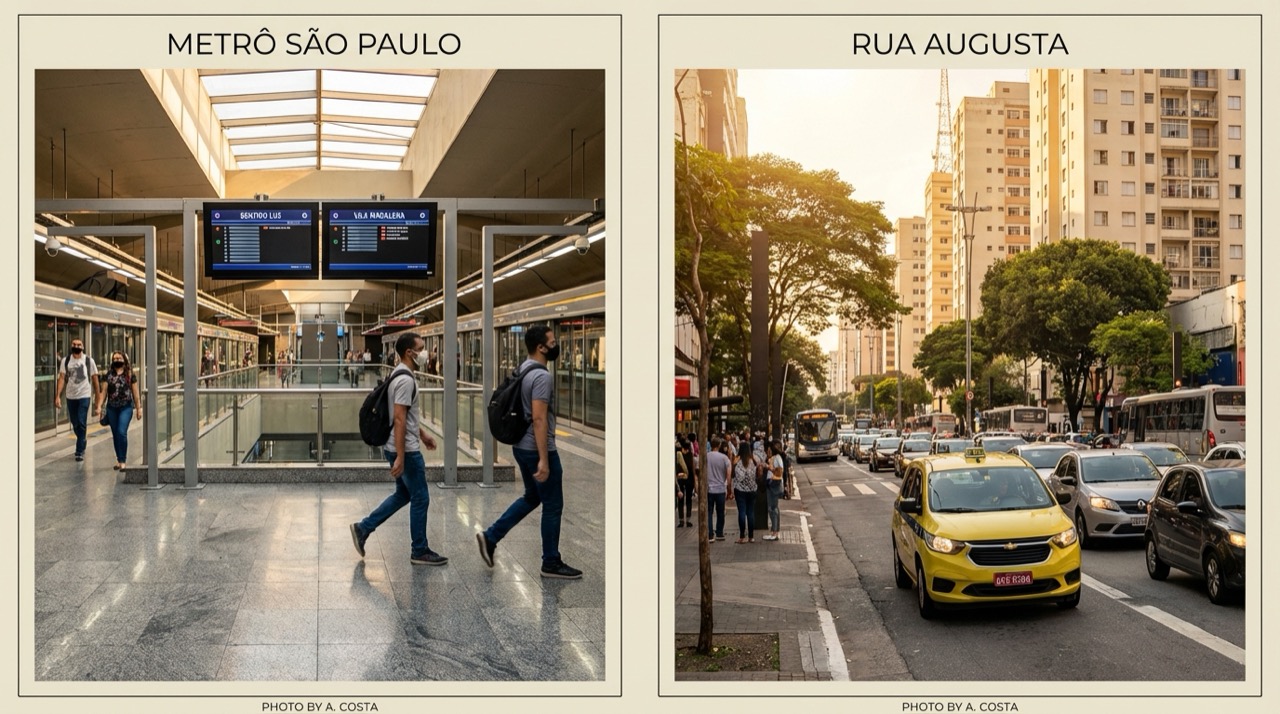
São Paulo is massive and traffic is legendary. On a bad day, the city records 300+ km of traffic jams. The metro is your best friend, Uber is your backup, and walking works great within neighborhoods. Never plan to drive across the city during rush hour.
Metrô (Metro/Subway)
Clean, fast, safe, and affordable. Six lines cover the main areas. Lines are identified by color and number (Linha 1-Azul, Linha 2-Verde, Linha 3-Vermelha, Linha 4-Amarela, Linha 5-Lilás, Linha 15-Prata). Rush hour (7-9am, 5-7pm) is extremely packed. The Bilhete Único card works on metro and buses with free transfers within 3 hours.
- Buy a 'Bilhete Único' card at any station for R$4.40 per ride with bus transfers included.
- Avoid Linha 3 (Red) during rush hour if possible. It's the most crowded line in the system.
- Use the metro map app. 'Próxima estação' means next station. 'Transferência' means transfer point.
- Women-only cars are available during peak hours. Look for the pink signs.
Ônibus (Buses)
SP's bus network is enormous with over 1,300 routes. Useful for reaching areas the metro doesn't cover, but routes can be confusing and traffic makes timing unpredictable. The SPTrans app or Google Maps are essential for planning bus routes. Pay with Bilhete Único or cash (exact change only).
- Google Maps is the best way to find bus routes in real time.
- Board at the front door, exit at the back. 'Desce na próxima!' (Getting off at the next stop!) is what you shout.
- Bus lanes ('faixa exclusiva') make some routes surprisingly fast during rush hour.
- Night buses ('corujão') run key routes after midnight for late-night returns.
Uber / 99 (Ride-hailing)
The default choice for most Paulistanos. Both Uber and the Brazilian app 99 work well. Rides are affordable compared to most global cities, but surge pricing during rush hour and rain can double or triple the price. Always check estimated time. A 5km ride can take 10 minutes or 50 minutes depending on traffic.
- Have both Uber and 99 installed. Compare prices, as they fluctuate independently.
- When it rains, prices spike and wait times increase dramatically. Plan ahead or take the metro.
- Share your ride status with someone. 'Tô no Uber, chego em 15 minutos' (I'm in an Uber, arriving in 15 minutes).
- Tip is not expected but appreciated. 'Pode ficar com o troco' (Keep the change) if paying cash.
A Pé (Walking)
Within neighborhoods, walking is often the best option. Vila Madalena, Jardins, Pinheiros, and Liberdade are all very walkable. The city has been improving sidewalks and pedestrian infrastructure, especially on Avenida Paulista (car-free Sundays). Just be aware of uneven sidewalks and pay attention to your surroundings.
- SP sidewalks are notoriously uneven. Watch your step, especially at night.
- Sunday on Avenida Paulista is a must-do walking experience. The whole avenue becomes a pedestrian park.
- Wear comfortable shoes. Even 'walkable' neighborhoods involve hills.
- Carry a small umbrella. SP weather is unpredictable, and afternoon rain showers are common year-round.

São Paulo is Brazil's business and cultural powerhouse. It moves faster and is more formal than the rest of the country. Understanding the local culture will help you connect with Paulistanos, whether you're here for work, travel, or both.
Do
- Try to speak some Portuguese. Even basic attempts are deeply appreciated and will change how people treat you.
- Accept invitations to eat. Food is how Paulistanos bond. Refusing a lunch or dinner invitation can feel like a personal rejection.
- Take the metro when possible. You'll experience the real city and save hours stuck in traffic.
- Explore beyond the tourist trail. SP's best experiences are in neighborhood bars, local padarias, and Sunday street fairs.
- Ask locals for restaurant recommendations. Paulistanos take food seriously and love sharing their favorite spots.
Avoid
- Don't compare São Paulo unfavorably to Rio de Janeiro. It's a genuine rivalry and Paulistanos are fiercely proud of their city.
- Don't flash expensive jewelry, phones, or cameras on the street, especially in Centro or near transit stations.
- Don't expect the city to be walkable from neighborhood to neighborhood. Distances are deceptive. Use metro or Uber between areas.
- Don't underestimate the rain. Afternoon storms can cause flash flooding. If locals are heading indoors, follow them.
- Don't skip the padaria. The humble bakery is the social hub of every neighborhood. Go for coffee and a pão de queijo in the morning.
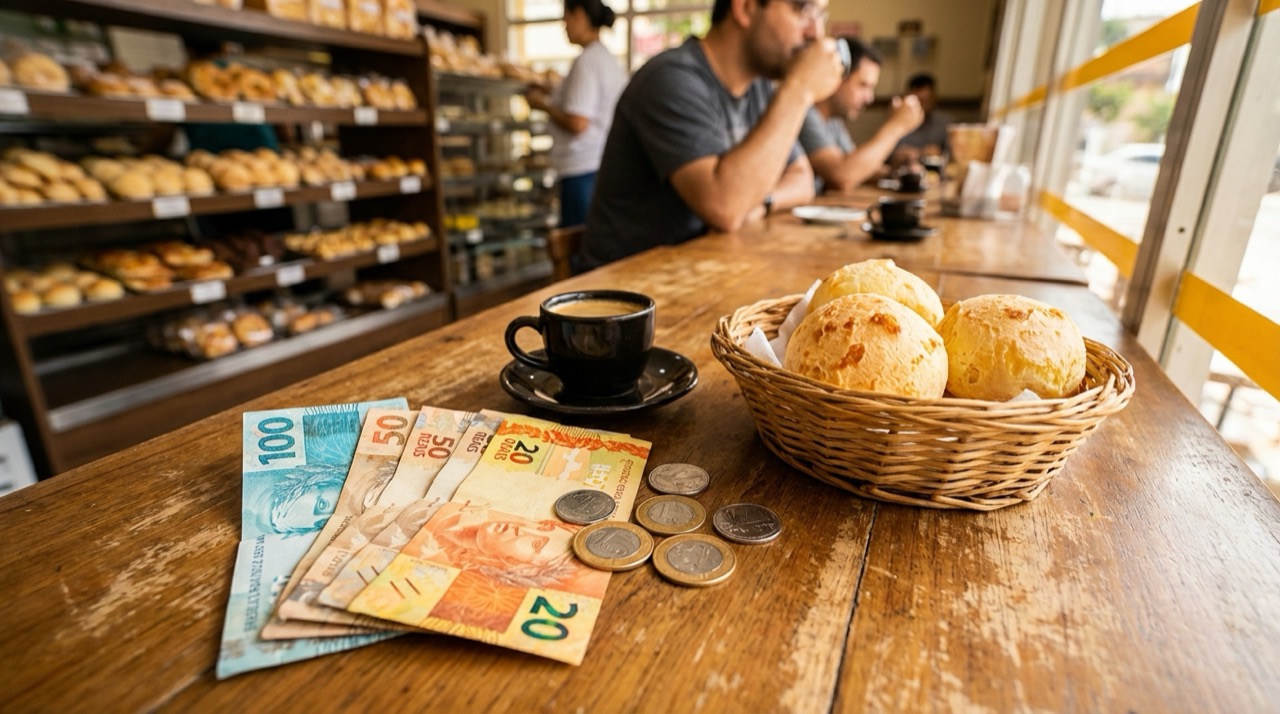
São Paulo offers excellent value if you know where to look. The 'almoço comercial' (business lunch) tradition means you can eat extremely well for cheap on weekdays. Public transport is affordable, and many of the city's best museums have free entry days.
Typical Prices
Money-Saving Tips
- Weekday business lunches (almoço comercial) are the best value meals in the city. R$25-35 for a full plate with drink and dessert.
- Most major museums have a free entry day: MASP on Tuesdays, Pinacoteca on Saturdays, MAM on Tuesdays.
- Buy a Bilhete Único card for transit. One fare covers metro + bus transfers within 3 hours.
- Padarias are cheaper than cafés for coffee and snacks. They're also more authentically Paulista.
- Avoid eating inside the Mercadão if you're on a budget. The food is tourist-priced. Go for the experience but eat in the surrounding streets.
- Happy hour ('happy hour' is used in Portuguese too) usually runs 5-8pm with discounted drinks and free appetizers at many bars.
- Street fairs (feiras) on weekends are great for cheap produce, pastels, and local atmosphere. Every neighborhood has one.
- Download the 99 app alongside Uber. The Brazilian competitor often has lower prices, especially for longer rides.
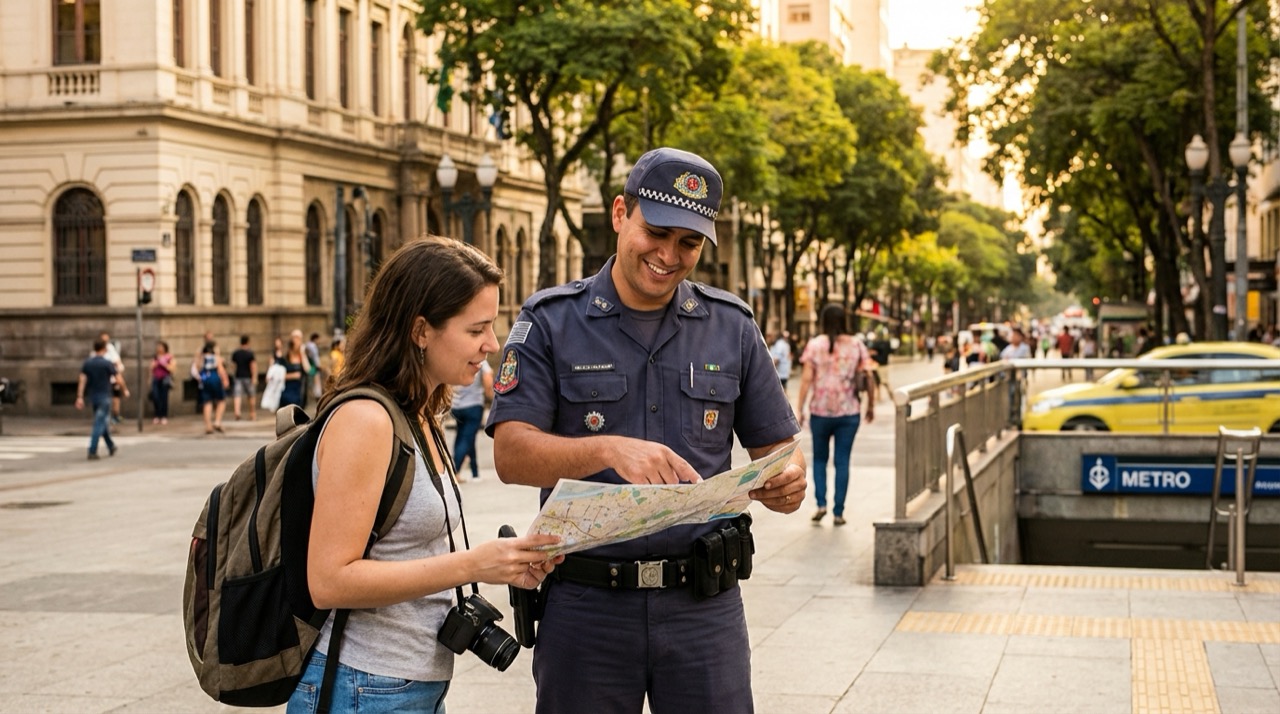
São Paulo is a big city with big-city issues. Most visitors have zero problems, but awareness is key. Learn these phrases for peace of mind, and follow the common-sense tips locals use every day.
Me ajuda, por favor!
Help me, please!
/mee ah-JOO-dah, por fah-VOR/
General call for help. Paulistanos are quick to assist if they see someone in genuine need.
Preciso de um hospital / farmácia.
I need a hospital / pharmacy.
/preh-SEE-zoo jee oom os-pee-TOW / far-MAH-see-ah/
SP has excellent hospitals. For non-emergencies, pharmacies ('Drogaria São Paulo', 'Droga Raia') are everywhere and pharmacists can advise on basic issues.
Cadê a delegacia mais perto?
Where is the nearest police station?
/kah-DEH ah deh-leh-GAH-see-ah mais PEHR-too/
If you need to file a report, look for a 'delegacia'. Tourist police stations exist near major attractions. You can also file reports online via 'Delegacia Eletrônica'.
Ligue para o 190, por favor.
Please call 190 (police emergency).
/LEE-gee PAH-rah oo SEN-too ee noh-VEN-tah/
190 is police. 192 is ambulance (SAMU). 193 is fire department. These are the three emergency numbers to know.
Não estou me sentindo bem.
I'm not feeling well.
/nowng es-TOH mee sen-TEEN-doo beng/
Useful in any situation where you need medical attention. Follow up with what's wrong: 'Estou com febre' (I have a fever), 'Estou tonto(a)' (I'm dizzy).
Fui roubado(a).
I've been robbed.
/fwee hoh-BAH-doo (hoh-BAH-dah)/
Report to the nearest delegacia. Bring your passport or ID. 'Roubaram meu celular' (They stole my phone) or 'Roubaram minha carteira' (They stole my wallet).
Essa área é segura?
Is this area safe?
/EH-sah AH-ree-ah eh seh-GOO-rah/
A good question to ask hotel staff or locals. They'll give honest advice about where to walk at different times of day.
Pode chamar um Uber pra mim?
Can you call an Uber for me?
/POH-jee shah-MAR oom OO-ber prah ming/
If your phone is dead or you feel unsafe, ask a shop owner, restaurant staff, or hotel reception to call a ride for you. People are generally happy to help.
Onde tem um caixa eletrônico seguro?
Where is there a safe ATM?
/ON-jee teng oom KAI-shah eh-leh-TRON-ee-koo seh-GOO-roo/
Use ATMs inside banks or shopping malls, never standalone machines on the street. 'Dentro do shopping' (inside the mall) is the safest option.
Estou com a embaixada no telefone.
I have the embassy on the phone.
/es-TOH kong ah em-bai-SHAH-dah noo teh-leh-FOH-nee/
For serious situations. Save your embassy's emergency number before arriving. Most embassies/consulates are in the Jardins or Itaim Bibi area.
Community Tips

Ready to learn Portuguese for real?
Take these São Paulo phrases with you. Decko uses spaced repetition to make sure you actually remember them when you need them.
Free forever. No credit card required.