
Rio de Janeiro
Studying Portuguese? Decko turns these phrases into smart flashcards that adapt to your memory.
Try free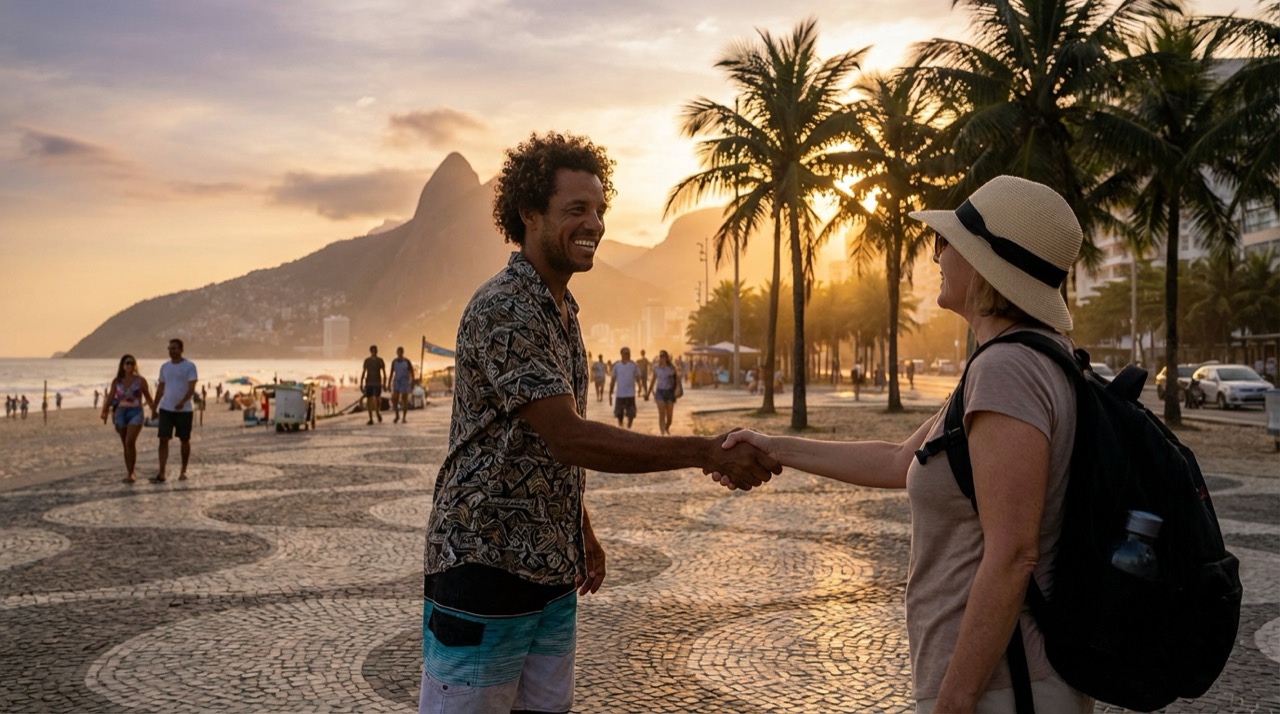
Cariocas (Rio locals) are famously warm and informal. Greetings often involve a kiss on each cheek. Even basic Portuguese goes a long way here. Drop the textbook formality and lean into the relaxed vibe.
E aí, beleza?
Hey, what's up? / Everything good?
/ee ah-EE, beh-LEH-zah/
The classic carioca greeting. Works with strangers, friends, anyone. Just say it with a smile.
Tudo tranquilo?
Everything chill?
/TOO-doo tran-KWEE-loo/
Another casual greeting. Reply with 'Tudo tranquilo' or just 'Tranquilo'.
Qual é?
What's up? / What's the deal?
/kwow EH/
Very informal. Used among friends as a greeting, or to ask 'what's going on?' Tone matters: friendly vs. confrontational.
Fala, mano!
Hey, bro! / Speak!
/FAH-lah, MAH-noo/
Casual male-to-male greeting. 'Mano' is short for 'irmão' (brother). Very common among younger cariocas.
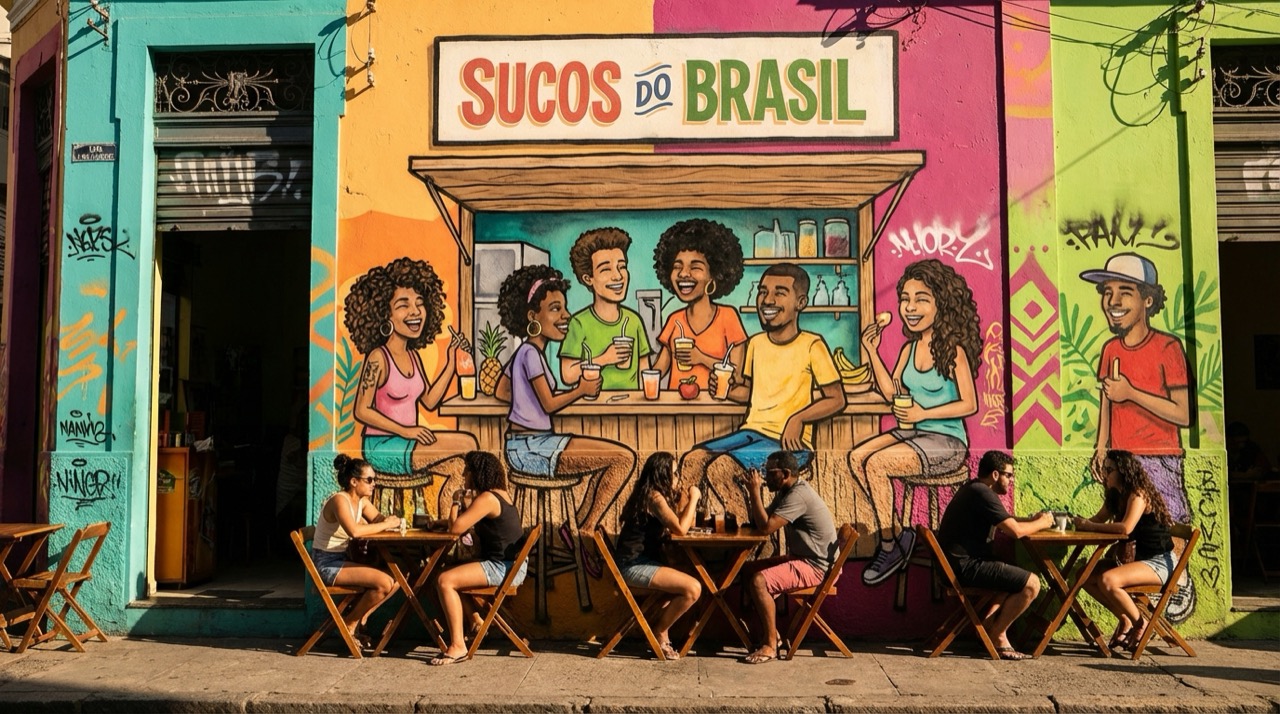
Carioca slang is colorful, expressive, and everywhere. Rio has its own rhythm of speech: words get shortened, syllables get dropped, and 's' at the end of words often sounds like 'sh'. Learning even a few slang words will get you huge smiles from locals.
Tá ligado?
You know? / You get it?
/tah lee-GAH-doo/
Filler phrase used constantly, like 'you know what I mean?' in English. Literally 'are you connected?'
Mermão
Bro / Dude
/mer-MOWN/
Contraction of 'meu irmão' (my brother). Used between friends regardless of actual relation. Very Rio.
Caraca!
Wow! / No way! / Damn!
/kah-RAH-kah/
General exclamation of surprise. Can be positive or negative depending on context and tone.
Sinistro!
Awesome! / Insane! / Sick!
/see-NEESH-troo/
Despite literally meaning 'sinister', this is a positive compliment in Rio slang. 'Esse açaí tá sinistro!' (This açaí is amazing!)
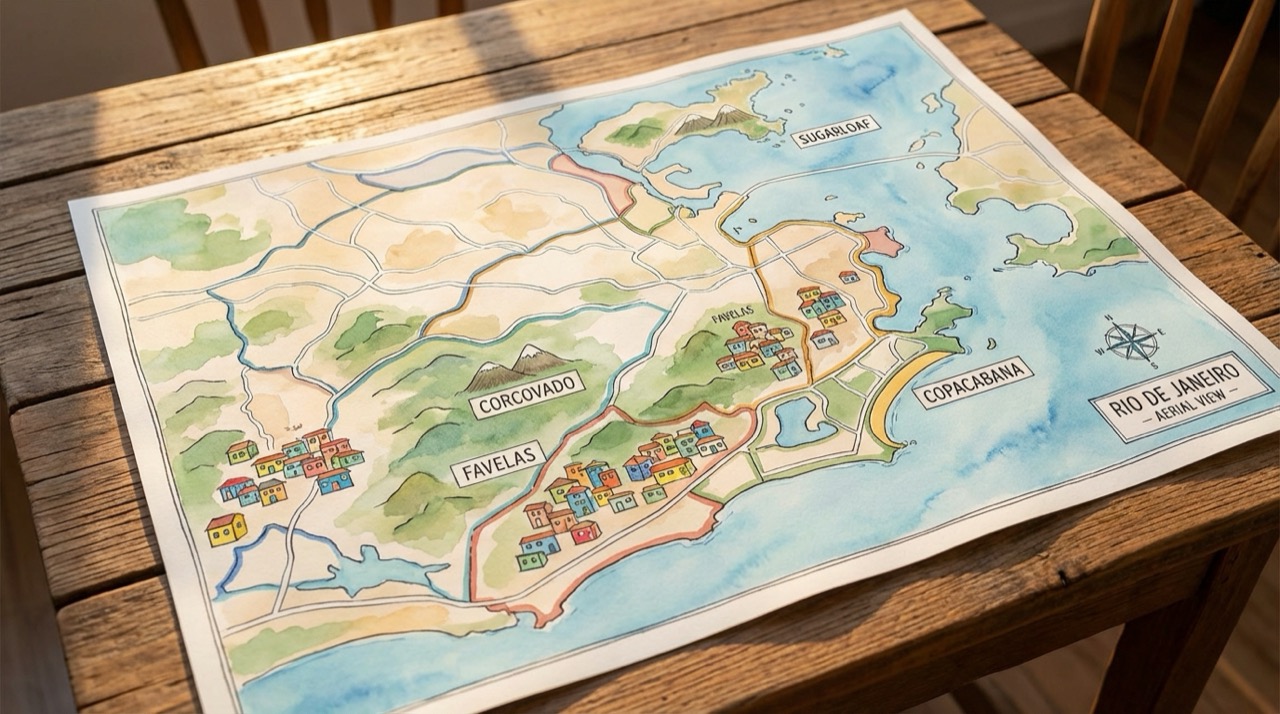
Rio is a city of distinct bairros (neighborhoods), each with its own personality. From the beachfront glamour of Copacabana to the bohemian streets of Santa Teresa, where you stay shapes your entire experience.
Copacabana
The world-famous crescent beach lined with a mosaic boardwalk. Dense, energetic, and tourist-friendly, Copacabana is where most first-time visitors stay. The beach is the social hub: locals play futevôlei (footvolley), vendors sell biscoito Globo and mate gelado, and the atmosphere stays lively from dawn to well past midnight. The side streets are packed with affordable restaurants, juice bars, and bakeries.
At the beach, you will hear vendors calling out 'Olha o mate! Olha o biscoito!' (Look, mate tea! Look, biscuits!). To buy, just wave them over and say 'Me vê um mate' (Give me a mate).
Lapa
Rio's beating nightlife heart. The iconic Arcos da Lapa (Lapa Arches) aqueduct towers over streets that come alive after dark with samba clubs, forró dance halls, and open-air bars. Friday and Saturday nights, the streets close to traffic and become a massive outdoor party. During the day, Lapa is quieter but has great street art, record shops, and the famous Escadaria Selarón staircase nearby.
At samba clubs, ask 'Tem roda de samba hoje?' (Is there a samba circle today?). To invite someone to dance: 'Quer dançar?' (Want to dance?)
Santa Teresa
A hilltop bohemian village inside the city. Cobblestone streets wind past colonial mansions converted into art studios, boutique guesthouses, and cozy restaurants. The yellow bonde (historic tram) clatters through the narrow streets. Santa Teresa has the best views of downtown Rio, a thriving local art scene, and a pace that feels wonderfully separate from the beach chaos below.
The tram is called 'bonde' (BON-jee). Ask locals 'Onde pega o bonde?' (Where do you catch the tram?). Buy tickets at the station, not on board.
Leblon
Rio's most upscale beach neighborhood. Quieter and more polished than Copacabana, Leblon has excellent restaurants, trendy bars, and a beautiful stretch of beach that is popular with families and locals. The Baixo Leblon area around Rua Dias Ferreira is one of the best dining streets in the city. Less touristy, more residential, and a great base for exploring Ipanema and the Dois Irmãos trail.
In upscale restaurants, the waiter may ask 'Vão querer a sugestão do chef?' (Would you like the chef's suggestion?). Reply 'Sim, por favor' or 'O que você recomenda?' (What do you recommend?)
Botafogo
A young, creative neighborhood sandwiched between Copacabana and the city center. Botafogo has exploded with craft breweries, specialty coffee shops, coworking spaces, and innovative restaurants. The views of Sugarloaf Mountain from Botafogo Beach and Praia Vermelha are iconic. It feels more like the 'real' Rio where locals actually live, work, and hang out, without the tourist markup.
Botafogo is a craft beer hub. At bars, ask 'Quais IPAs vocês têm no tap?' (What IPAs do you have on tap?). Or simply 'Me indica uma cerveja boa' (Recommend me a good beer).
Want to actually remember these phrases?
Save them to your flashcard deck and Decko will quiz you at the perfect time using spaced repetition.
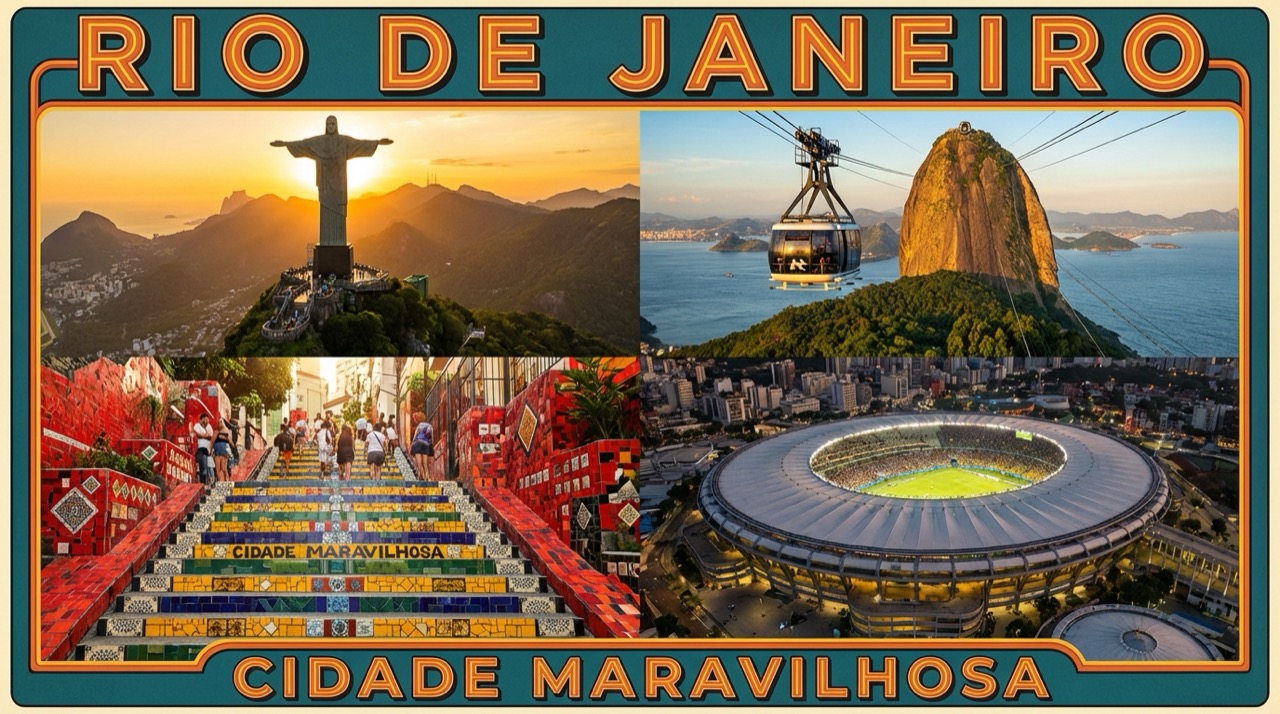
Rio's landmarks are genuinely spectacular. From mountaintop statues to mosaic staircases, the city delivers on the postcard promise. Visit the big hitters early in your trip when energy is high, and save the neighborhood wandering for later.
Cristo Redentor (Christ the Redeemer)
The 30-meter Art Deco statue of Christ stands atop Corcovado mountain at 710 meters, arms outstretched over the city. One of the New Seven Wonders of the World. The panoramic view from the top covers the entire city, both coastlines, and the surrounding mountains. Get there by cog train from Cosme Velho or van from Paineiras.
Buy tickets online: 'Quero comprar ingresso para o Cristo' (I want to buy a ticket for the Christ). At the top: 'Pode tirar uma foto minha?' (Can you take my photo?)
Pão de Açúcar (Sugarloaf Mountain)
The iconic granite peak rising 396 meters above Guanabara Bay. Two cable car rides take you up: first to Morro da Urca (a great stop with a bar and live music events), then to the summit. The sunset view from the top is considered one of the best in the world. For the adventurous, there are rock climbing routes up the face.
At the ticket booth: 'Dois ingressos para o bondinho, por favor' (Two tickets for the cable car, please). 'Bondinho' is what locals call the cable car.
Escadaria Selarón
A vibrant mosaic staircase of 215 steps connecting Lapa to Santa Teresa, covered in over 2,000 tiles collected from more than 60 countries. Created by Chilean artist Jorge Selarón, who worked on it from 1990 until his death in 2013. The steps are free to visit and best photographed in the morning before crowds arrive.
To locals nearby: 'Como chego na Escadaria Selarón?' (How do I get to the Selarón Staircase?). It is near the intersection of Rua Joaquim Silva and Rua Pinto Martins in Lapa.
Maracanã Stadium
The legendary football temple that hosted two World Cup finals (1950 and 2014) and the 2016 Olympics. Even if you are not a football fan, attending a Flamengo match here is an unforgettable experience. The crowd energy, chanting, and flares create an atmosphere unlike any stadium in the world. Guided tours are available on non-match days.
At the stadium: 'Onde fica a minha entrada?' (Where is my entrance?). To join the chanting, the most common cheer is 'Mengão!' (Big Flamengo!). Buy tickets on the club website or at the bilheteria (ticket office).
Jardim Botânico
A 140-hectare oasis of tropical plants founded in 1808, featuring over 6,500 species. The avenue of royal palm trees is stunning. Tucked into the base of Corcovado, the garden is a cool, shaded escape from the beach heat. Look for toucans, marmosets, and the giant water lilies in the lake. Allow 2 to 3 hours to explore properly.
At the entrance: 'Um ingresso inteiro, por favor' (One full-price ticket, please). If you are a student with ID: 'Tem meia-entrada para estudante?' (Is there a half-price student ticket?)
Praia de Ipanema
Arguably Rio's most beautiful beach, immortalized by the bossa nova song 'Garota de Ipanema'. The beach is informally divided into sections called postos (lifeguard posts). Posto 9 is the young and trendy crowd, Posto 8 attracts the LGBTQ+ community. The sunset behind Dois Irmãos mountains draws applause from beachgoers. Stronger waves than Copacabana make it popular with bodyboarders.
Beach vendors are a highlight. You will hear 'Olha o açaí! Olha o picolé!' Listen for 'Queijo coalho!' (grilled cheese on a stick). To buy: 'Me vê um, por favor' (Give me one, please).
Feira de São Cristóvão
A massive indoor market celebrating Northeastern Brazilian culture. Over 700 stalls sell regional food, forró music, handicrafts, and cachaça. Live bands play forró and baião every weekend. This is where you find the best carne de sol, baião de dois, and tapioca in Rio. Open Friday evening through Sunday night. A genuine cultural experience, not a tourist trap.
Try the regional food: 'Quero provar a carne de sol com manteiga de garrafa' (I want to try the sun-dried beef with butter). To ask about forró: 'Que horas começa o forró?' (What time does the forró start?)
Pedra da Gávea
One of the largest coastal monoliths in the world at 842 meters. The hike to the summit is challenging (about 3 to 4 hours round trip) and includes a rock scramble called the Carrasqueira that requires pulling yourself up with ropes. The reward is a 360-degree view of Rio from the mountains to the open Atlantic. Not for beginners. Bring water, sunscreen, and proper shoes.
Ask about trail conditions: 'A trilha tá tranquila hoje?' (Is the trail in good shape today?). At the trailhead: 'Precisa de guia?' (Do you need a guide?). Hiring a guide is recommended for first-timers.
Museu do Amanhã (Museum of Tomorrow)
A futuristic science museum designed by Santiago Calatrava, jutting out over Guanabara Bay in the revitalized Porto Maravilha area. Interactive exhibits explore sustainability, climate change, and the future of humanity. The architecture alone is worth the visit. The surrounding Praça Mauá has great views and the colorful VLT tram passes right by.
On Tuesdays, entry is free: 'Terça é gratuito, né?' (Tuesday is free, right?). The VLT (light rail) is the easiest way to get there: 'Qual VLT vai pro Museu do Amanhã?' (Which VLT goes to the Museum of Tomorrow?)
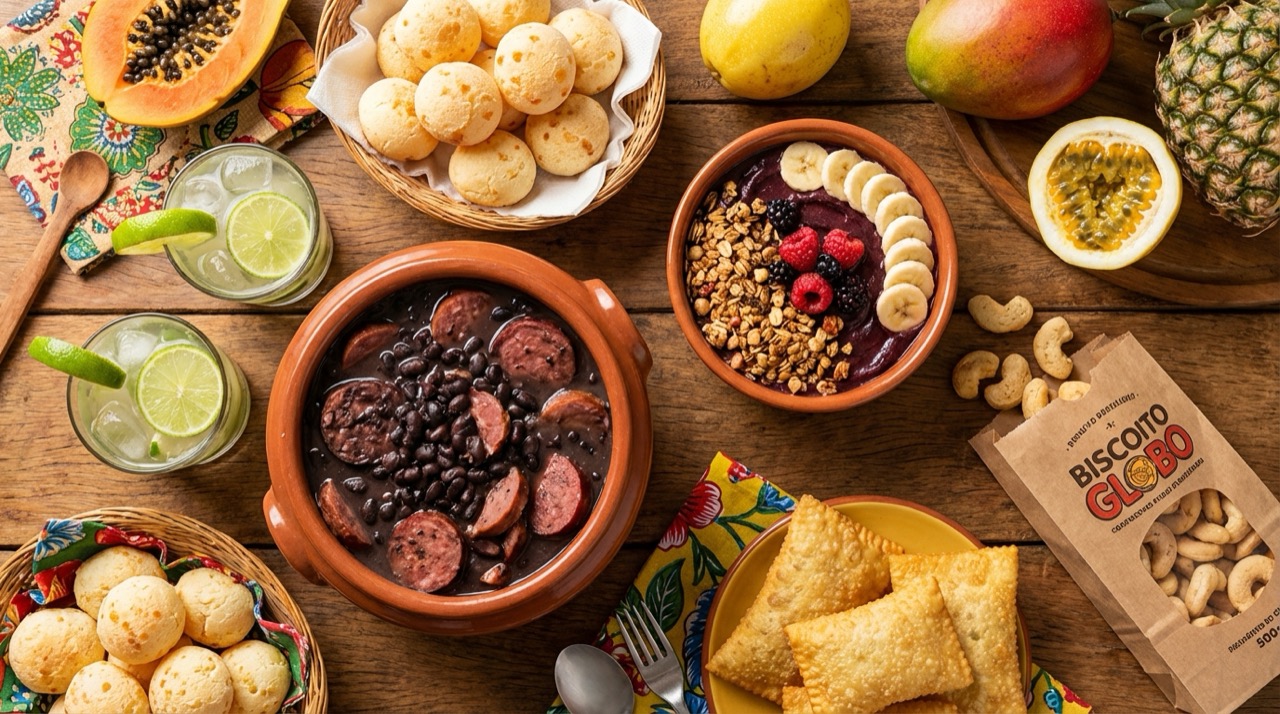
Rio's food scene runs from beachside vendors to world-class restaurants. Cariocas eat late: lunch from 12 to 3pm, dinner after 8pm. The 'por quilo' (pay-by-weight) buffet restaurants are excellent value for trying many dishes at once. Tipping is usually 10%, often already included on the bill as 'serviço'.
Dining Etiquette
- At sit-down restaurants, a 10% service charge ('serviço') is usually added to the bill automatically. You do not need to tip beyond that, but you can round up if service was great.
- In 'por quilo' (pay-by-weight) restaurants, load your plate, weigh it at the cashier, eat, and pay when leaving. These are great for trying many dishes cheaply.
- Beach vendors are a core part of the experience. Prices are slightly higher on the sand but haggling is not really a thing.
- At a boteco (casual bar/restaurant), it is normal to stand or sit on the sidewalk. Just order at the counter or flag the waiter.
- Brazilians eat pizza with a fork and knife. Picking it up with your hands is seen as a bit uncouth in sit-down restaurants.
- Lunch is the big meal of the day. Look for 'prato feito' or 'PF' (set lunch plate) at local restaurants for a filling, affordable meal with rice, beans, meat, salad, and farofa.
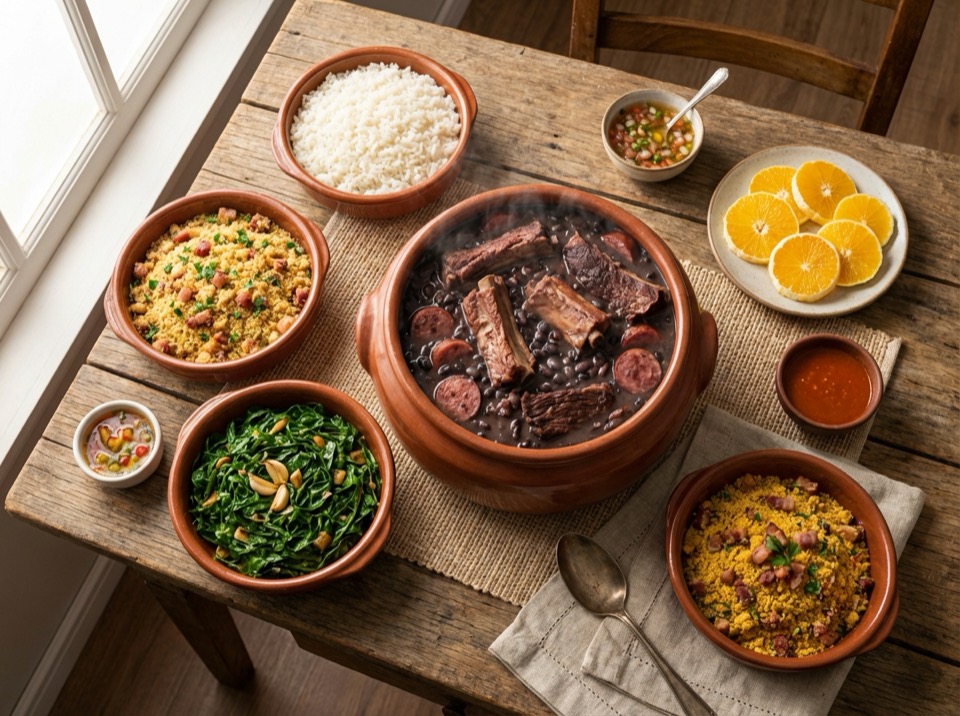
Feijoada
Brazil's national dish: a rich, slow-cooked black bean stew with pork (ribs, sausage, ears, tail). Served with white rice, farofa (toasted cassava flour), couve (shredded collard greens), and orange slices. Traditionally eaten on Wednesdays and Saturdays. Heavy, hearty, and deeply satisfying.
How to order
'Uma feijoada completa, por favor.' (A complete feijoada, please.) If it is your first time, say 'É minha primeira feijoada!' and the waiter will likely help you with the sides.
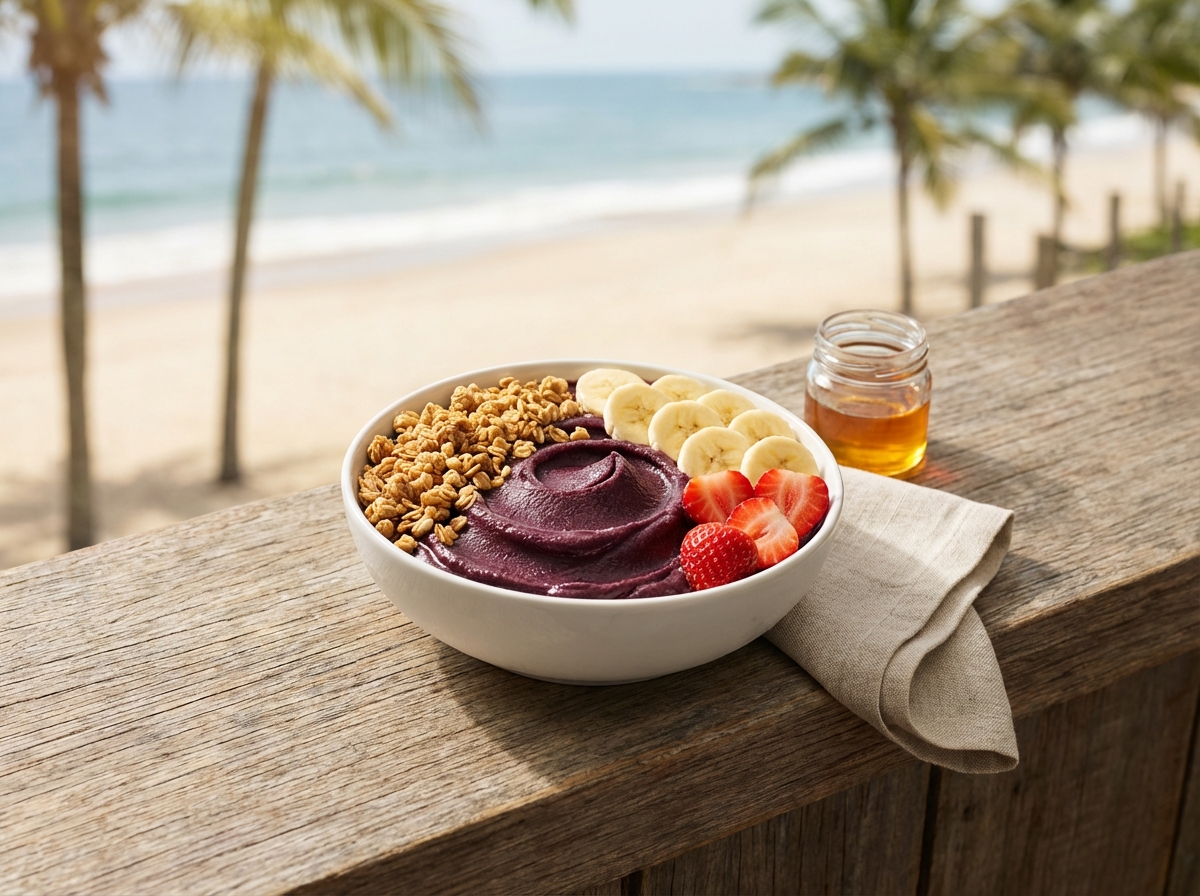
Açaí na tigela
Frozen açaí berry puree served in a bowl, topped with granola, banana, and sometimes strawberries, honey, or powdered milk. In Rio, açaí is thicker, less sweet, and more intense than what you find abroad. Cariocas eat it as a snack, post-beach fuel, or even a meal replacement. Available at juice bars on every block.
How to order
'Um açaí médio com granola e banana, por favor.' (A medium açaí with granola and banana, please.) For extra toppings: 'Pode colocar leite em pó?' (Can you add powdered milk?)
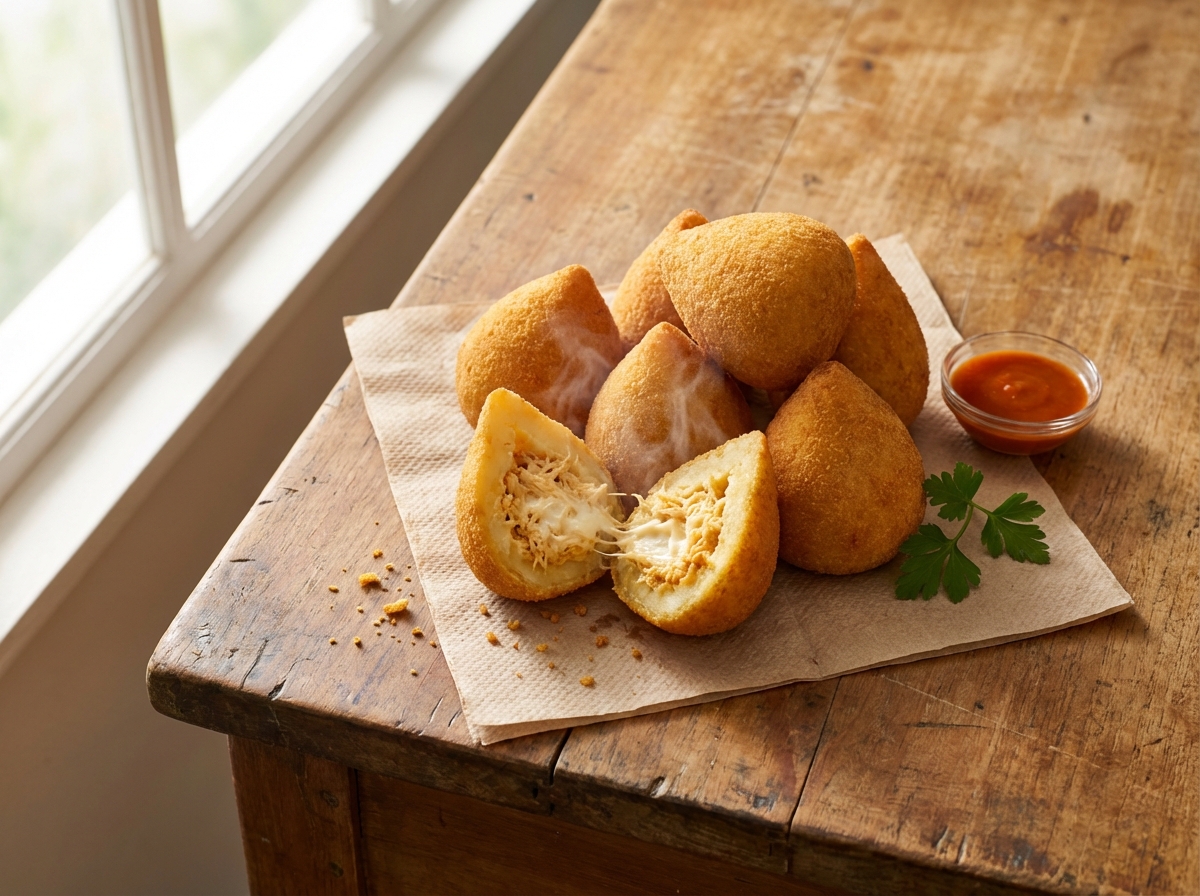
Coxinha
A teardrop-shaped deep-fried snack filled with shredded chicken in a creamy catupiry cheese sauce, coated in crispy batter. Found at every bakery (padaria), snack bar (lanchonete), and convenience store. The perfect on-the-go snack. Quality varies wildly, so ask locals for their favorite spot.
How to order
'Me vê uma coxinha, por favor.' (Give me a coxinha, please.) At a padaria, just point at the display case. If they have multiple types: 'Qual é a mais pedida?' (Which one is the most popular?)
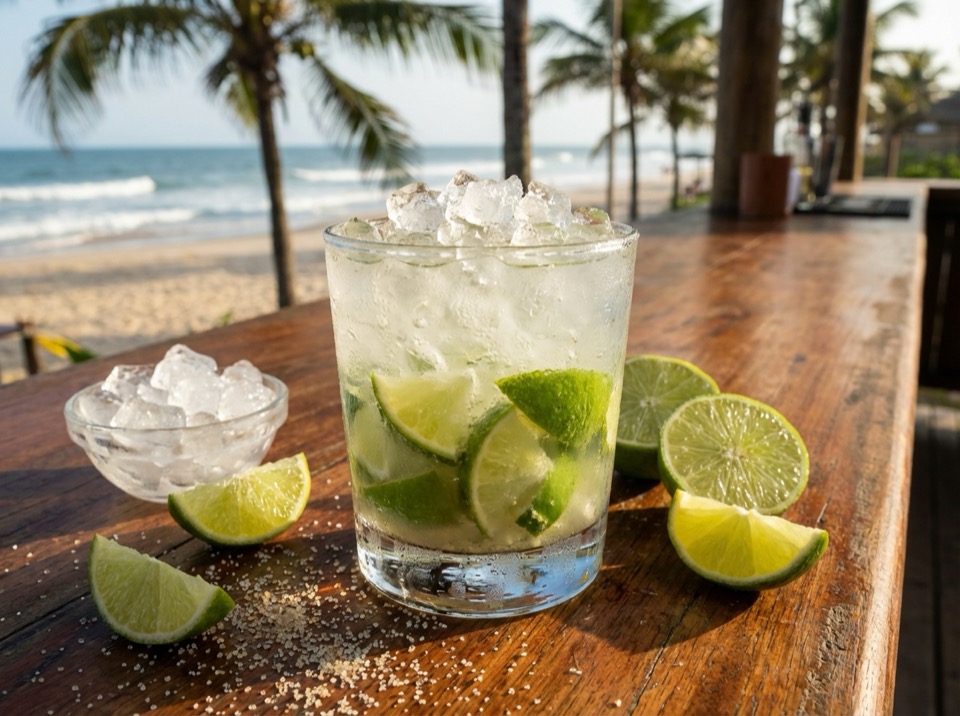
Caipirinha
Brazil's national cocktail: cachaça (sugarcane spirit), fresh lime, sugar, and crushed ice. Simple ingredients, incredible when made well. In Rio, you will also find variations with vodka (caipiroska) or with other fruits like passion fruit (maracujá), strawberry (morango), or kiwi. Best enjoyed at a boteco watching the sunset.
How to order
'Uma caipirinha de limão, por favor.' (A lime caipirinha, please.) For less sugar: 'Pode fazer com pouco açúcar?' (Can you make it with less sugar?) For a fruit variation: 'Tem caipirinha de maracujá?' (Do you have passion fruit caipirinha?)
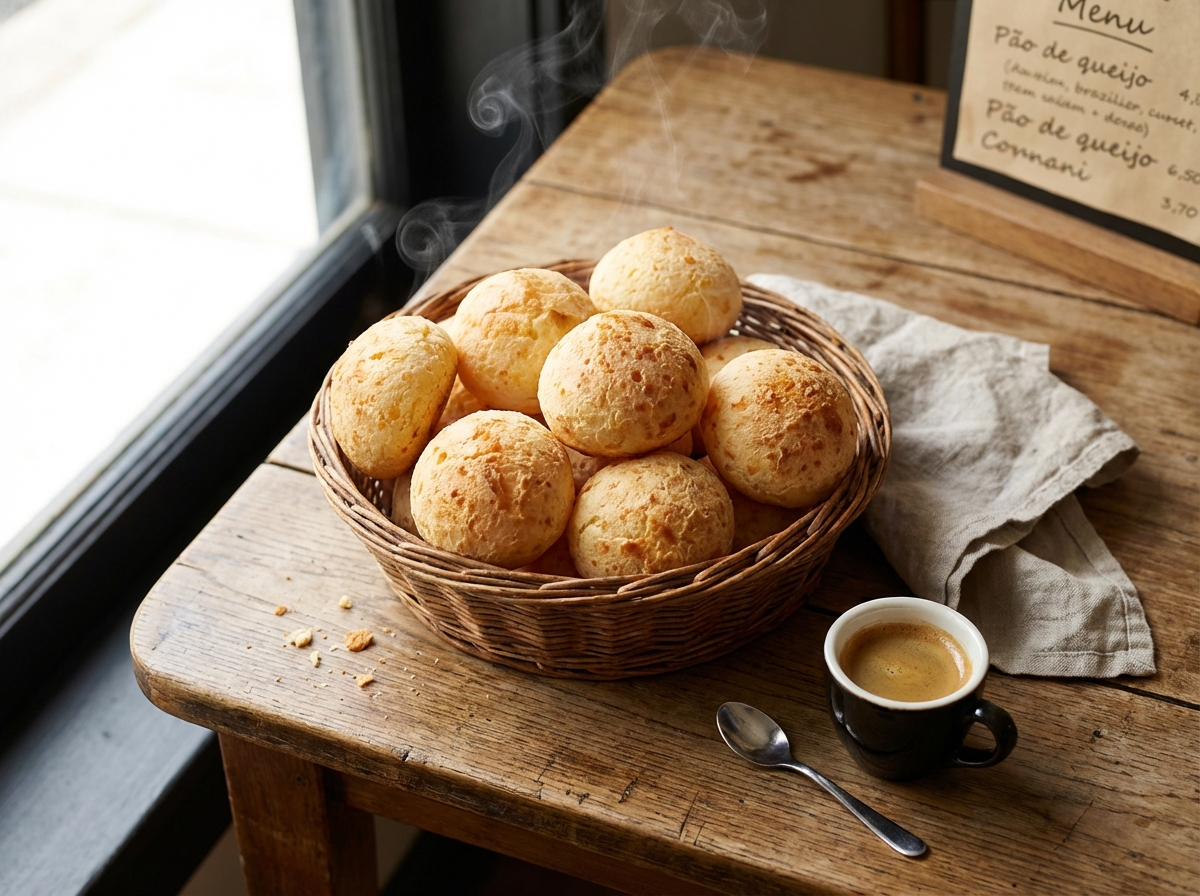
Pão de queijo
Small, chewy cheese bread balls made from tapioca flour and Minas cheese. Gluten-free by nature. Served warm, they are crispy on the outside and soft and stretchy inside. A staple of Brazilian breakfasts and snack time. Every padaria has them fresh from the oven throughout the day.
How to order
'Três pães de queijo, por favor.' (Three cheese breads, please.) At a padaria: 'Acabou de sair do forno?' (Did it just come out of the oven?) Fresh ones are worth waiting for.
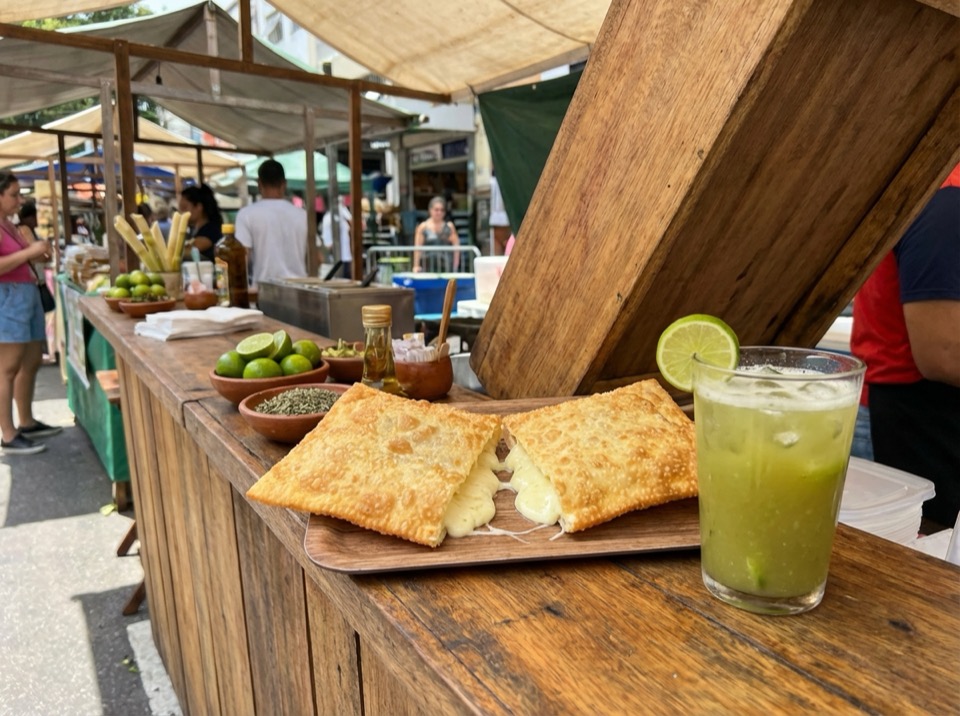
Pastel
A thin, crispy deep-fried pastry with various fillings: carne (ground beef), queijo (cheese), palmito (heart of palm), or camarão (shrimp). Best found at feiras (street markets) and pastelarias. The feira version, slightly greasy and served with sugarcane juice (caldo de cana), is the authentic experience.
How to order
'Um pastel de queijo e um caldo de cana, por favor.' (A cheese pastel and a sugarcane juice, please.) The classic combo. At feiras, also try: 'Tem pastel de camarão?' (Do you have shrimp pastel?)
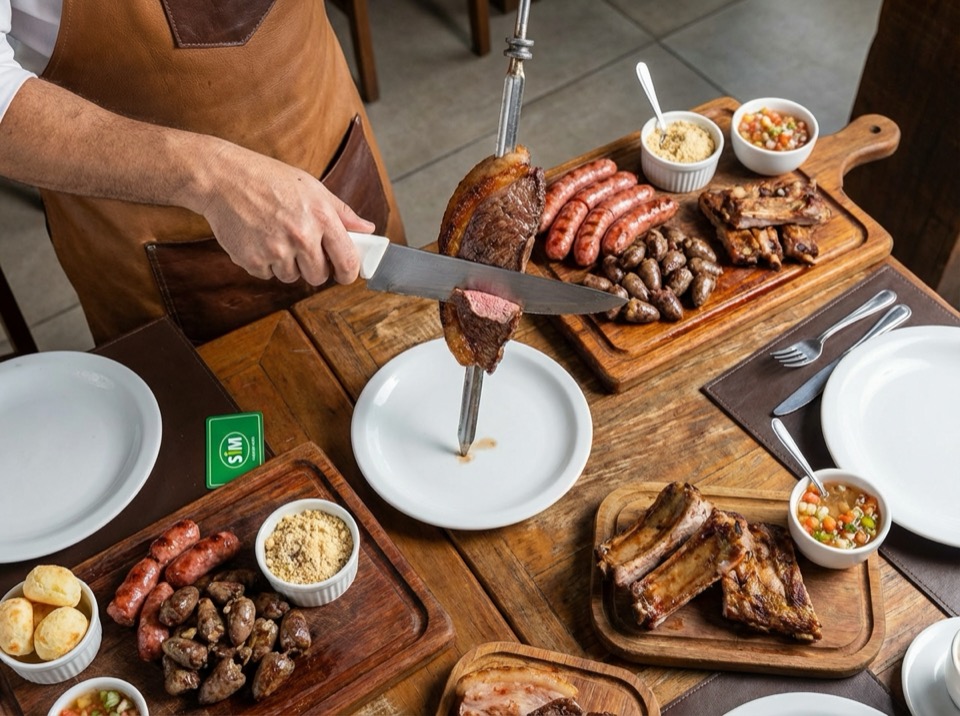
Churrasco
Brazilian barbecue is a social ritual, not just a meal. Rodízio (all-you-can-eat) churrascarias send waiters to your table with skewers of picanha (top sirloin cap), fraldinha (flank), linguiça (sausage), chicken hearts, and more. Flip your table card to green for more meat, red to stop. The salad bar is extensive and a meal in itself.
How to order
At a rodízio, the system is self-explanatory, but useful phrases: 'Mais picanha, por favor!' (More picanha, please!) 'Pode trazer mal passada?' (Can you bring it rare?). The green card means bring meat, red means stop.
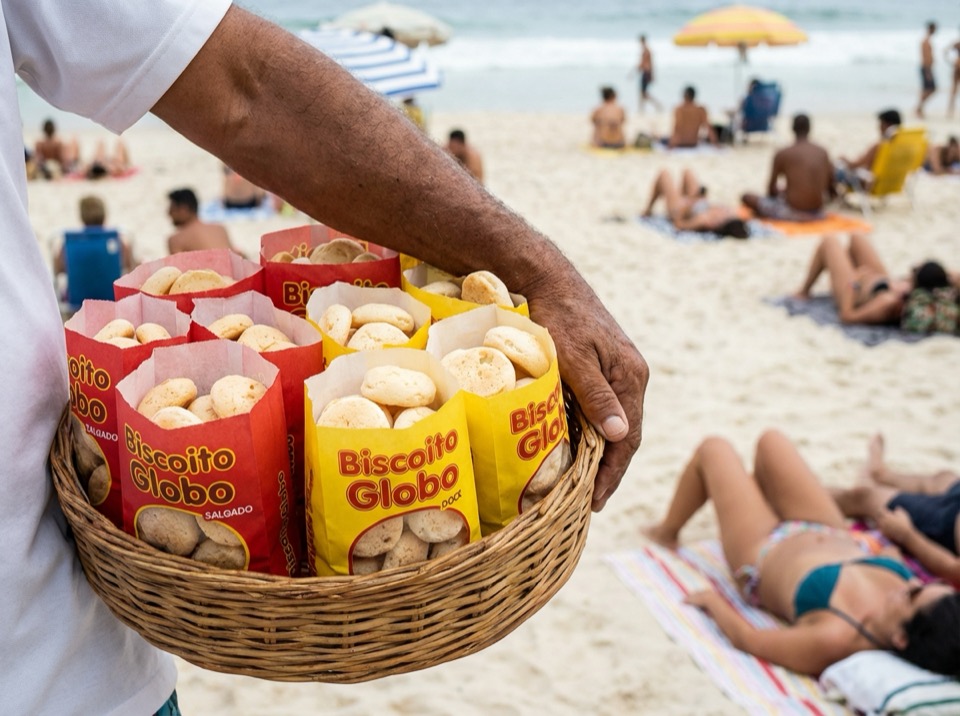
Biscoito Globo
The iconic crunchy, airy starch biscuits sold on every Rio beach. They come in two flavors: salgado (savory) and doce (sweet). Made from polvilho (tapioca starch), they are light, addictive, and the quintessential beach snack. Pair with mate gelado (cold mate tea) for the full carioca beach experience.
How to order
'Um Globo salgado e um mate, por favor!' (A savory Globo and a mate, please!) This is the classic beach combo. The vendor will bring them right to your beach chair.
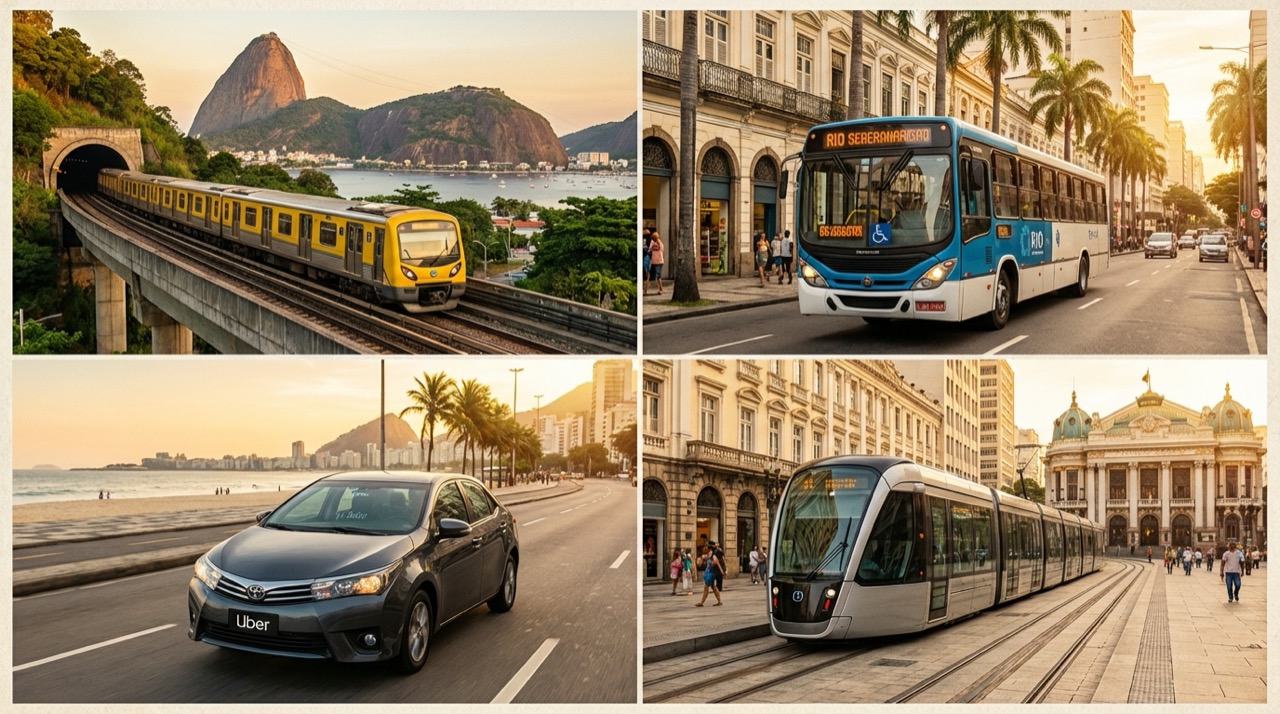
Rio is spread out between beaches, mountains, and bays, so you will need multiple transport types. The metro is the safest and fastest option for the main tourist corridor. Uber and 99 are cheap and widely used. Buses are an adventure but essential for reaching spots the metro does not cover.
Metro
Clean, air-conditioned, and safe. Two main lines cover the tourist corridor from Zona Norte through Centro to Copacabana, Ipanema, Leblon, and Barra da Tijuca (via MetrôRio + metro-surface integration). Runs from 5am to midnight (until 11pm on Sundays). Buy a reloadable Galeão/MetrôRio card or single-ride tickets at station machines.
- Say 'Um cartão unitário, por favor' (A single-ride card, please) at the ticket window
- Line 1 (orange) covers Zona Sul: Copacabana, Ipanema/General Osório, Botafogo, and Centro
- Line 4 connects Ipanema to Barra da Tijuca via Jardim Oceânico
- Avoid rush hour (7-9am, 5-7pm) when trains get very packed
- Women-only cars are available during peak hours (look for the pink signs)
- 'Com licença' (excuse me) is essential for squeezing through crowded cars
Bus
Extensive network covering the entire city. Regular buses are blue and have air conditioning on newer models. Frescão (executive buses) are more comfortable and run key tourist routes. Pay on board or use a Riocard. Buses display the destination on a sign above the windshield. Flag them down at bus stops by extending your arm.
- Ask 'Esse ônibus vai para Copacabana?' (Does this bus go to Copacabana?) before boarding
- Board at the front, exit at the back. Pay the cobrador (fare collector) sitting behind the turnstile
- Press the button and say 'Próxima, por favor!' (Next stop, please!) or 'Desce na próxima!' (Getting off next!)
- Google Maps is reliable for Rio bus routes. Check routes before heading out
- Avoid crowded buses with valuables visible. Keep bags in front of you
- The 'frescão' buses from Zona Sul to Centro and the airport are more comfortable and safer
Uber / 99
The most popular way to get around for tourists. Both Uber and 99 (a Brazilian app) work well throughout Rio. Prices are affordable compared to European or North American cities. Drivers rarely speak English, so having the destination typed in the app avoids communication issues. Cash payment is an option if you do not want to add a card.
- Download both Uber and 99. Compare prices as they vary throughout the day
- Use the chat feature to send your exact pickup pin if the location is confusing
- Say 'Pode ir pelo Waze, por favor' (Can you use Waze, please) if the driver's route seems off
- From the airport (GIG), Uber is much cheaper than official taxis. Follow signs to the rideshare pickup area
- Tipping is not expected but rounding up is appreciated: 'Pode ficar com o troco' (Keep the change)
- For safety, always confirm the license plate and driver name before getting in
BRT (Bus Rapid Transit)
Dedicated bus lanes connecting Barra da Tijuca to the rest of the city. Useful for reaching Barra, Recreio, and the Olympic Park area. Stations have platforms with turnstiles. Faster than regular buses on long distances but can be very crowded during rush hour.
- Use a Riocard or buy a ticket at the station. Same card works for metro and bus
- The TransOeste line connects Barra da Tijuca to Santa Cruz
- The TransCarioca line connects Barra to the international airport (Galeão/GIG)
- 'Qual BRT vai pro aeroporto?' (Which BRT goes to the airport?) is a useful phrase
- Service is less frequent on weekends. Check schedules in advance for Barra trips
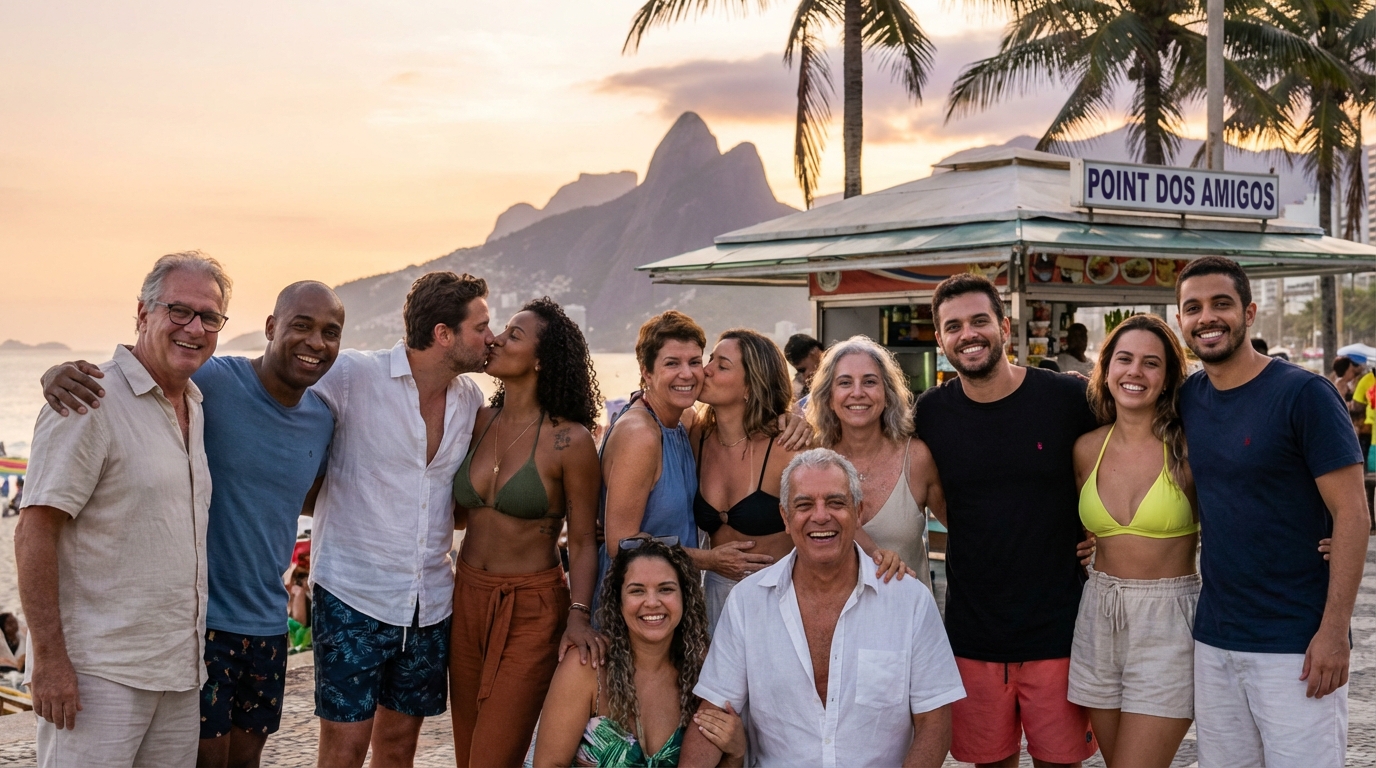
Cariocas are famously warm, open, and physically affectionate. Personal space is smaller, greetings are longer, and conversations are more animated than what most visitors expect. Lean into it. The biggest cultural mistake you can make in Rio is being cold or standoffish.
Do
- Greet people with a kiss on each cheek (women-to-women, women-to-men). Men shake hands or do the one-arm hug with a back pat.
- Learn a few words of Portuguese. Even 'obrigado/obrigada' and 'com licença' will change how people treat you. English is not widely spoken outside upscale tourist areas.
- Dress casually. Rio is relaxed. Flip-flops (Havaianas), shorts, and tank tops are perfectly acceptable almost everywhere except upscale restaurants.
- Try the local food fearlessly. Street food, feira food, and boteco snacks are part of the culture. 'Por quilo' restaurants are great for sampling everything.
- Be flexible with time. Brazilians operate on a more relaxed schedule. If someone says 'I'll be there at 8', expect 8:30 or later. This is cultural, not disrespectful.
- Carry small bills (R$5, R$10, R$20). Street vendors, beach vendors, and small shops often cannot break large notes.
- Join in on beach culture. Rent a chair, order from vendors, play frescobol (beach paddle ball). The beach is Rio's living room.
- Show enthusiasm and warmth. Cariocas love people who bring energy and are open to new experiences.
Avoid
- Do not flash expensive phones, cameras, or jewelry on the street, especially near the beach or in less touristy areas. Be discreet with valuables.
- Do not walk on the beach at night, especially in isolated stretches. Stick to well-lit, populated areas after dark.
- Do not use the 'OK' hand gesture (thumb and index finger forming a circle). In Brazil, this is an offensive gesture similar to giving someone the middle finger.
- Do not refuse food or drinks when offered by a host. Brazilians are generous and it is considered rude to decline without a good reason.
- Do not talk negatively about Brazilian football, samba, or carnival. These are deep points of cultural pride, even for people who do not personally follow them.
- Do not assume everyone speaks Spanish. Portuguese and Spanish are different languages, and Brazilians are sensitive about this distinction.
- Do not skip sunscreen. The tropical sun in Rio is intense, even on cloudy days. Locals apply it constantly.
- Do not take unauthorized photos inside favelas or of people without asking. If you visit a favela, go with a reputable community-led tour.
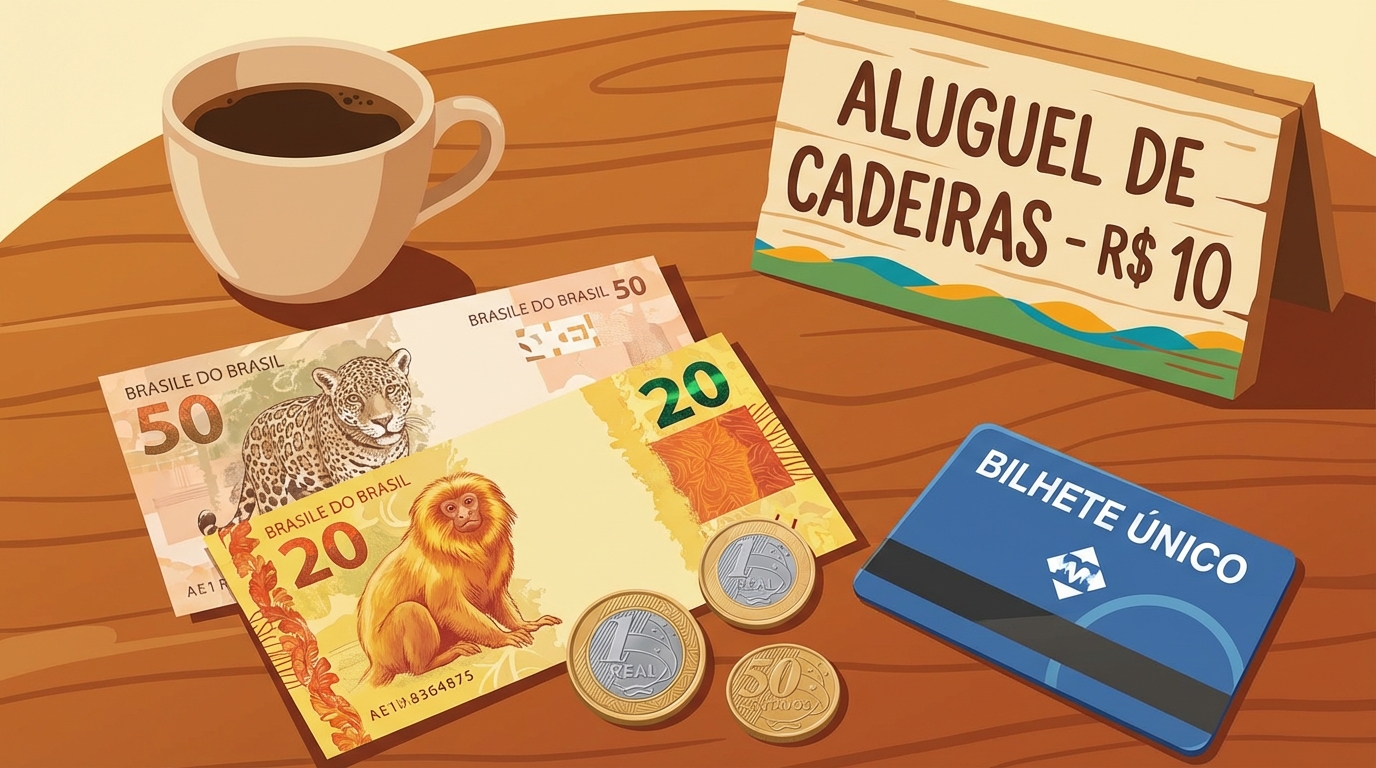
Rio is affordable by international standards, though prices vary hugely between tourist zones and local neighborhoods. Paying attention to where you eat and how you get around can stretch your budget significantly. Credit and debit cards (especially Visa and Mastercard) work almost everywhere, but some beach vendors and small shops are cash-only.
Typical Prices
Money-Saving Tips
- Eat at 'por quilo' (pay-by-weight) buffet restaurants for lunch. You get incredible variety for R$30-50, and the food is freshly made.
- The cafezinho (small, strong espresso) is a cultural institution. It costs R$3-6 at any padaria and is often offered for free after meals.
- Beach vendors have fixed-ish prices. A Globo biscuit is about R$5-8, mate gelado R$5-8, and a coconut water R$8-12. Prices rise closer to Ipanema and Leblon.
- Many museums offer free entry on Tuesdays, including the Museu do Amanhã and Museu de Arte do Rio (MAR).
- Use Uber or 99 instead of yellow taxis. Rideshare apps are consistently cheaper and you avoid fare disputes.
- Withdraw cash from Banco do Brasil or Bradesco ATMs inside bank branches for better exchange rates and more security. Avoid standalone ATMs on the street.
- Buy a Riocard (transport card) and load it with credit. It works on metro, bus, BRT, and VLT, and saves time at turnstiles.
- Avoid Copacabana's beachfront restaurants for meals. Walk one or two blocks inland for the same food at half the price.
- Supermarkets like Zona Sul and Mundial have great prepared food sections if you want a cheap dinner in your accommodation.
- Free activities in Rio are some of the best: hiking Dois Irmãos, walking the Lapa Arches area, watching sunset at Arpoador, and exploring street art in Santa Teresa cost nothing.

Rio is a big city with real safety considerations, but common sense goes a long way. Most tourist areas are well-patrolled and safe during the day. Knowing a few emergency phrases in Portuguese can make a critical difference since English is rarely spoken by police, paramedics, or pharmacy staff.
Socorro! / Me ajuda!
Help! / Help me!
/soh-KOH-hoo / mee ah-ZHOO-dah/
Use 'socorro' to call for help in an emergency. 'Me ajuda' is less urgent but still gets immediate attention.
Preciso de um médico.
I need a doctor.
/preh-SEE-zoo jee oom MEH-jee-koo/
At a hotel or pharmacy, this will get you directed to the nearest clinic or hospital.
Onde fica a farmácia mais próxima?
Where is the nearest pharmacy?
/ON-jee FEE-kah ah far-MAH-see-ah mais PROH-see-mah/
Pharmacies (farmácias) in Brazil can dispense many medications without a prescription. Drogaria and Drogasil are common chains.
Chama a polícia!
Call the police!
/SHAH-mah ah poh-LEE-see-ah/
Police emergency number: 190. For ambulance: 192 (SAMU). For fire: 193. The tourist police (DEAT) in Rio have English-speaking staff.
Fui roubado/roubada.
I was robbed. (male/female)
/fwee ho-BAH-doo / ho-BAH-dah/
Use this at a police station (delegacia) to file a report (boletim de ocorrência), which you will need for insurance claims.
Estou passando mal.
I am feeling sick / I am not well.
/esh-TOW pah-SAN-doo mow/
A general phrase that works for any illness. Brazilians will immediately try to help you sit down and offer water.
Sou alérgico/alérgica a...
I am allergic to... (male/female)
/sow ah-LEHR-zhee-koo / ah-LEHR-zhee-kah ah/
Essential for food allergies. Common ones: amendoim (peanuts), camarão (shrimp), glúten (gluten), lactose (lactose).
Onde fica o hospital mais próximo?
Where is the nearest hospital?
/ON-jee FEE-kah oo osh-pee-TOW mais PROH-see-moo/
Major tourist-area hospitals: Hospital Municipal Miguel Couto (Leblon), Hospital Copa D'Or (Copacabana). UPAs are public urgent care clinics.
Perdi meu passaporte.
I lost my passport.
/per-JEE mew pah-sah-POR-chee/
Go to the tourist police (Delegacia Especial de Apoio ao Turismo) in Leblon or Centro. Then contact your embassy/consulate.
Pode chamar um táxi / Uber para mim?
Can you call a taxi / Uber for me?
/POH-jee shah-MAR oom TAH-ksee / OO-ber PAH-rah meem/
Ask hotel staff, restaurant workers, or shopkeepers. They are usually happy to help, especially if you seem distressed.
Community Tips

Ready to learn Portuguese for real?
Take these Rio de Janeiro phrases with you. Decko uses spaced repetition to make sure you actually remember them when you need them.
Free forever. No credit card required.