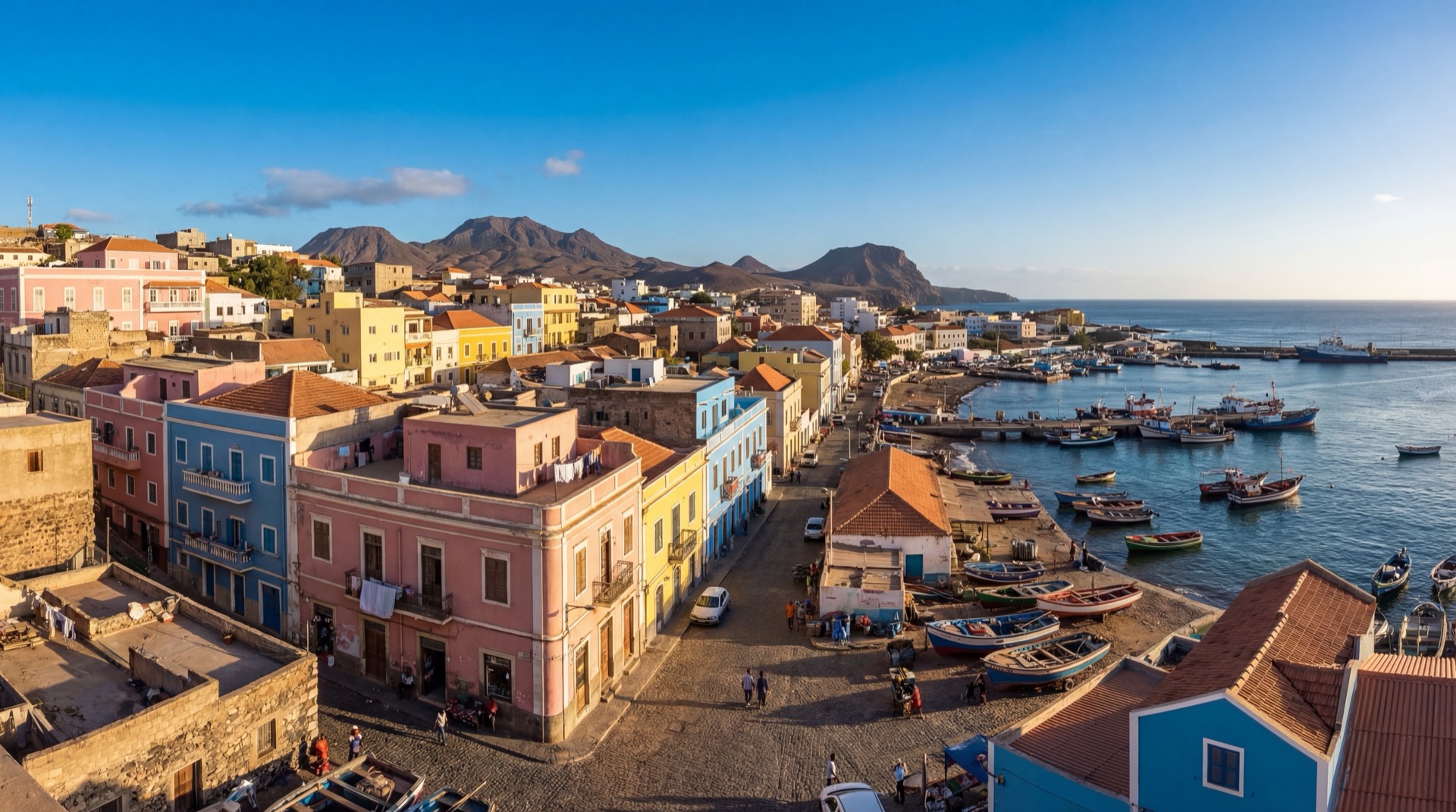
Praia
Studying Portuguese? Decko turns these phrases into smart flashcards that adapt to your memory.
Try free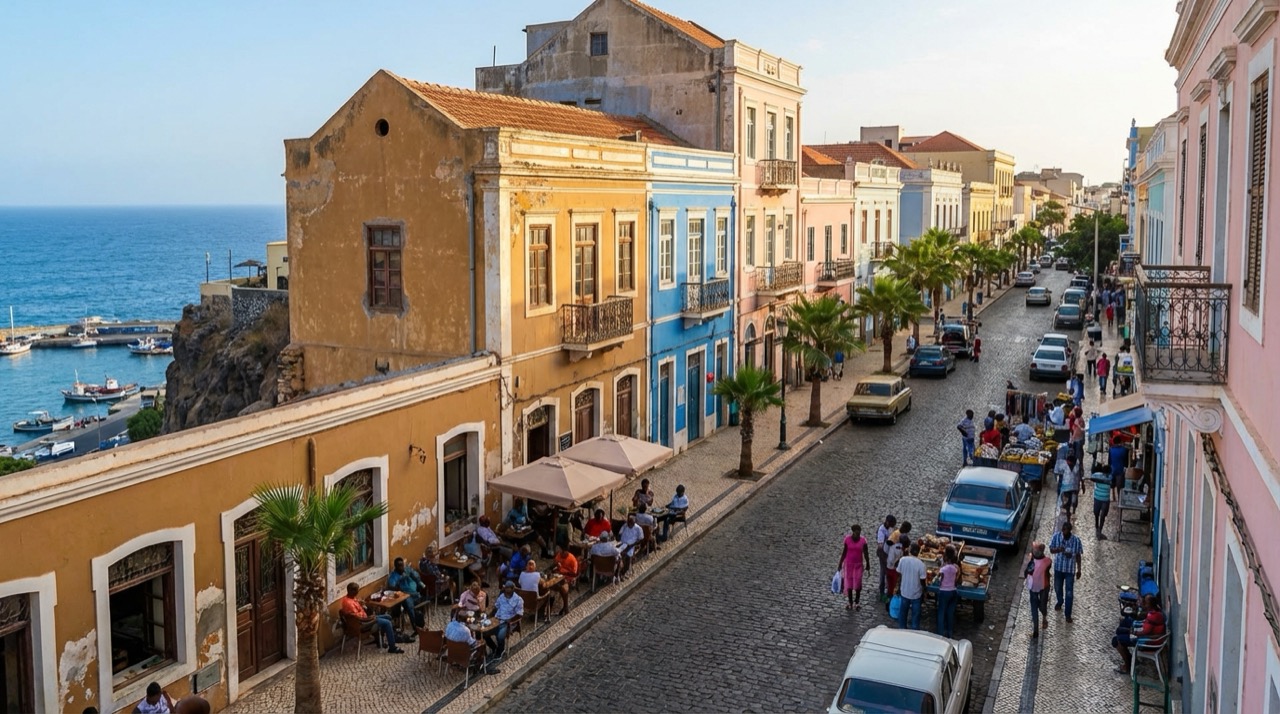
Cape Verdean Portuguese sits between European and Brazilian Portuguese, with heavy influence from Kriolu (Cape Verdean Creole), the true mother tongue of the islands. In Praia, daily conversation happens in Kriolu, but everyone speaks Portuguese and will happily use it with visitors. The Portuguese here has a melodic, rhythmic quality shaped by centuries of Creole influence. People are relaxed, friendly, and patient with language learners.
Bom dia, tudo dreto?
Good morning, everything alright?
/bom DEE-ah, TOO-doo DREH-too?/
The Cape Verdean twist on 'tudo bem'. 'Dreto' (straight/right) is used in Kriolu-influenced Portuguese.
Tudo bem, obrigado/a
All good, thank you
/TOO-doo bayn, oh-bree-GAH-doo/dah/
Standard response; Cape Verdeans are warm and expect greetings before business
Quanto é?
How much is it?
/KWAN-too eh?/
Used at markets and shops; prices are usually fair and less bargaining than mainland Africa
Onde fica...?
Where is...?
/ON-jee FEE-kah?/
Praia is compact; people will often walk you to your destination
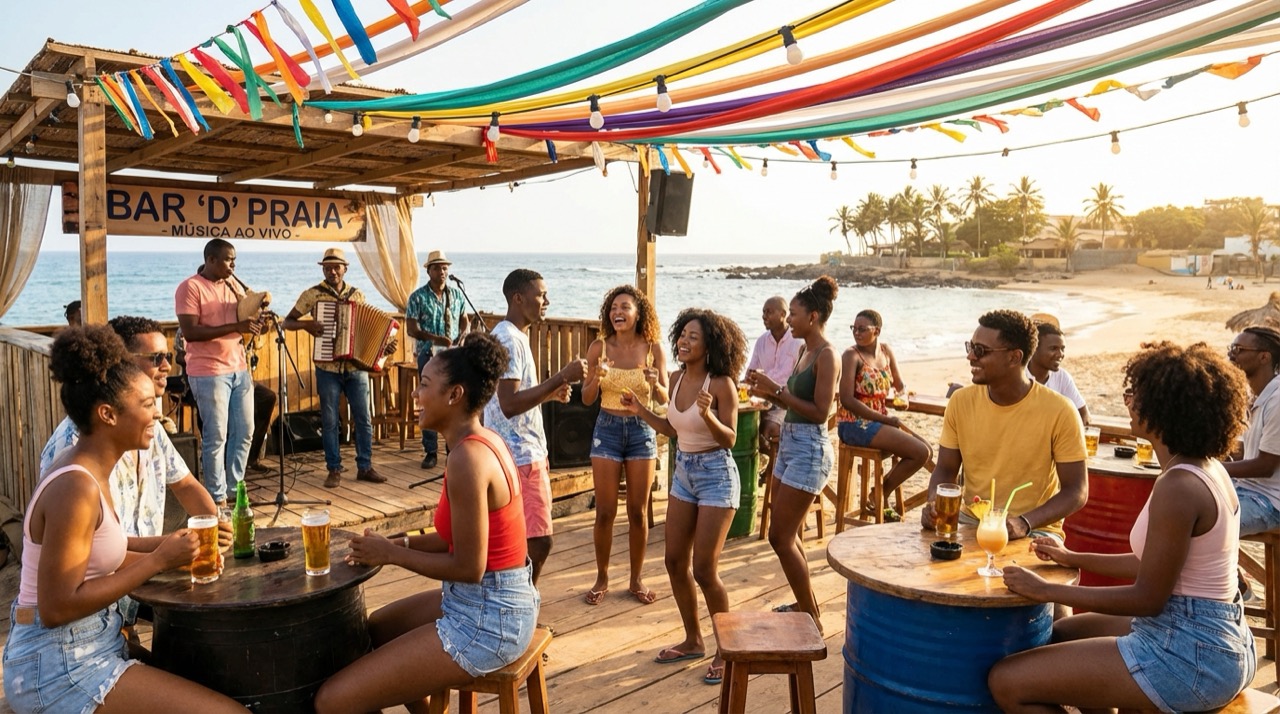
Cape Verdean Portuguese is uniquely flavored by Kriolu, the Creole language spoken daily across the archipelago. Kriolu words flow naturally into Portuguese conversation, creating a hybrid speech pattern that is distinctly Cape Verdean. Understanding these words unlocks not just language but the soul of the islands, from the 'morabeza' hospitality to the deep 'sodade' longing that defines the diaspora experience.
Morabeza
Warmth / hospitality / friendliness
/moh-rah-BEH-zah/
THE Cape Verdean word. It describes the islands' legendary hospitality. 'Cabo Verde é morabeza' defines the culture.
Sodade
Deep longing / nostalgia
/soh-DAH-jee/
The Cape Verdean version of 'saudade'. Central to the culture, famously expressed in Cesária Évora's music. Refers to longing for home, loved ones abroad, or the sea.
Kriolu
Cape Verdean Creole language
/kree-OH-loo/
The true language of Cape Verde. Portuguese-based creole with West African influences. Each island has its own dialect.
Nha
My / mine (Kriolu)
/nyah/
From Kriolu, frequently mixed into Portuguese speech. 'Nha amigo' = 'My friend'. Shows affection.
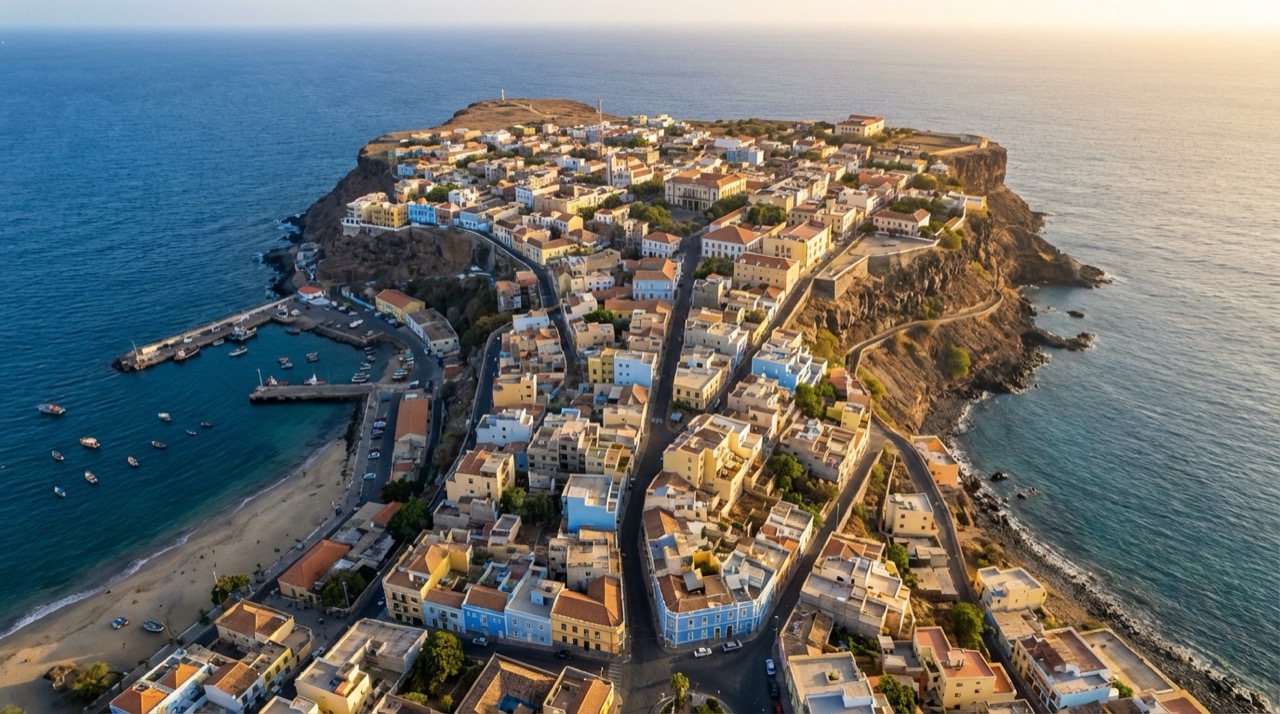
Praia is built on and around a plateau that rises above the Atlantic, giving the city a dramatic vertical character. The historic center sits on top of the Plateau (Platô), while newer neighborhoods spread along the coast and up into the surrounding hills. Small enough to feel intimate, diverse enough to reward exploration.
Platô (Plateau)
The historic heart of Praia, perched on a flat-topped cliff above the ocean. Colonial-era buildings, government offices, the main market (Mercado de Sucupira), restaurants, and the Alexandre Albuquerque square. Everything starts from here and most walks lead back to it.
Locals say 'Platô' not 'Plateau'. 'Vou ao Platô' (I'm going to the Plateau) is how you will hear it.
Sucupira
Named after the famous market, this area below the Plateau is the commercial engine of Praia. The Mercado de Sucupira is a sprawling maze of stalls selling everything from clothing and electronics to spices and grogue. Loud, colorful, and essential to experience.
'Sucupira' is the reference point. 'Perto da Sucupira' (near Sucupira) is how locals give directions for half the city.
Prainha
A small beach neighborhood tucked below the Plateau. The name means 'little beach' and it lives up to it: a crescent of sand popular with locals for swimming and socializing. Fishing boats come in daily, and small restaurants serve catch of the day.
'Prainha' is the diminutive of 'praia' (beach). 'Vamos à Prainha?' (Shall we go to Prainha?) is a common weekend suggestion.
Achada Santo António
A residential neighborhood above the Plateau, home to the Assembleia Nacional and several embassies. More modern than the Platô, with supermarkets, cafes, and a growing restaurant scene. Good base for visitors wanting a quieter location with easy city access.
Locals just say 'Achada' for short. 'Achada' means 'flat ground' in Cape Verdean Portuguese, describing the area's terrain.
Quebra Canela
The main beach area of Praia, recently renovated with a waterfront promenade. 'Quebra Canela' means 'break the shin' (referring to the steep descent from the Platô to the beach). Popular for swimming, evening walks, and watching spectacular sunsets over the Atlantic.
The name 'Quebra Canela' (break the shin) is a fun conversation starter. Ask locals about the origin and you will get a good story.
Want to actually remember these phrases?
Save them to your flashcard deck and Decko will quiz you at the perfect time using spaced repetition.
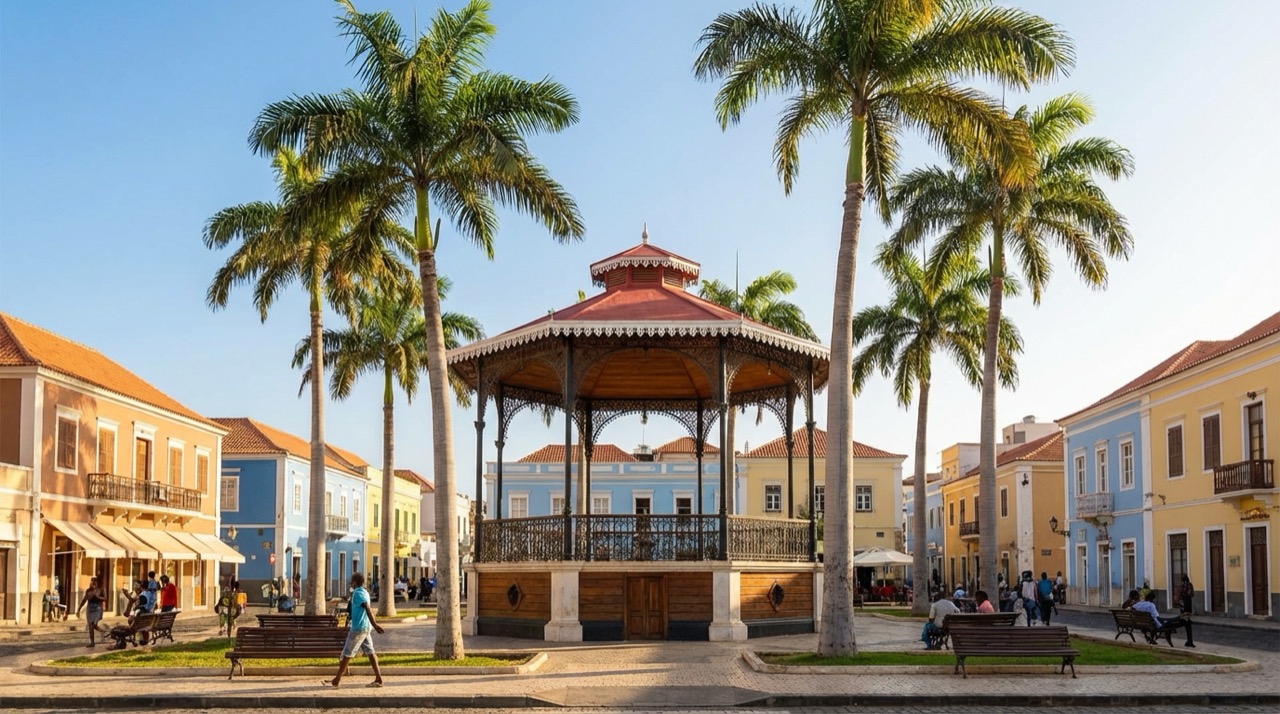
Praia may be smaller than other capital cities, but it punches above its weight in cultural depth. From the colonial Plateau to the stunning volcanic landscapes of Santiago island, from the history of the Atlantic slave trade to the living legacy of Cesaria Evora, there is more to discover than most visitors expect.
Mercado de Sucupira
Praia's sprawling central market and the beating heart of city commerce. Hundreds of stalls sell clothing, music, spices, grogue, crafts, and everyday goods. The atmosphere is vibrant, the bargaining is friendly, and the capulana fabrics are gorgeous.
'Quanto é?' (How much?) and 'É muito caro!' (It's too expensive!) are your bargaining essentials. Always smile while negotiating.
Praça Alexandre Albuquerque
The main square of the Plateau district, surrounded by colonial buildings, the old town hall, and the iconic bandstand. A pleasant place to sit, people-watch, and soak in the rhythm of Praia life. Often hosts cultural events and music on weekends.
Locals often just call it 'a Praça' (the square). 'Encontramo-nos na Praça' (Let's meet at the square) is common.
Museu Etnográfico da Praia
A small but well-curated museum showcasing Cape Verdean culture, from traditional instruments and farming tools to weaving, pottery, and festival costumes. Excellent for understanding the blend of African and Portuguese heritage that defines the islands.
'Museu' is pronounced 'moo-ZEH-oo'. 'Muito interessante!' (Very interesting!) is always appreciated by museum staff.
Cidade Velha (Ribeira Grande)
A UNESCO World Heritage Site just 15 minutes from Praia. The first European colonial settlement in the tropics (1462) and a major slave trade hub. The ruins of the cathedral, the slave pillory, and the Fortaleza Real de São Filipe tell a powerful and sobering story.
'Cidade Velha' means 'Old City'. This is a place for quiet reflection. 'Que história...' (What a history...) feels appropriate.
Fortaleza Real de São Filipe
A 16th-century fortress overlooking Cidade Velha, built to defend against pirate attacks. The views from the ramparts are breathtaking: the old settlement below, the valley, and the vast Atlantic. One of the most powerful historical sites in West Africa.
'Fortaleza' means fortress. 'Que vista incrível!' (What an incredible view!) says it all from the top.
Prainha Beach
Praia's most charming beach, a small crescent of golden sand below the Plateau cliff. Colorful fishing boats, calm water for swimming, and simple restaurants serving fresh catch. Authentic and unpretentious.
'Prainha' means 'little beach'. 'A água está boa?' (Is the water nice?) is a good opener with locals.
Serra Malagueta Natural Park
A mountainous natural park in the interior of Santiago island, about an hour from Praia. Hiking trails through lush volcanic landscapes, cloud forests, and terraced farms. Home to endemic bird species and stunning panoramic views.
'Serra' means mountain range. 'Há trilhos marcados?' (Are there marked trails?) is useful when planning a hike.
Tarrafal Beach
On the north coast of Santiago, about 70km from Praia. White sand, turquoise water, and a relaxed fishing village atmosphere. One of the most beautiful beaches in Cape Verde. Worth the day trip from Praia.
'Tarrafal' comes from a traditional fishing net. 'A praia é linda!' (The beach is beautiful!) is the universal reaction.
Grogue Distillery Visit
Several small grogue (sugarcane rum) distilleries operate on Santiago island, some using traditional trapiche (ox-powered press) methods. Visiting one gives you a taste of rural Cape Verdean life and the chance to try the freshest grogue possible.
'Grogue' is the Cape Verdean word for their sugarcane spirit. 'Posso provar?' (Can I taste?) is welcome at distilleries.
Mercado Municipal da Praia
The main municipal market near the Plateau, focused on fresh produce, fish, and everyday goods. Less touristy than Sucupira and gives a more authentic look at daily life. The fish section early in the morning is especially lively.
'Mercado' means market. 'O peixe é de hoje?' (Is the fish from today?) shows you know what fresh means.
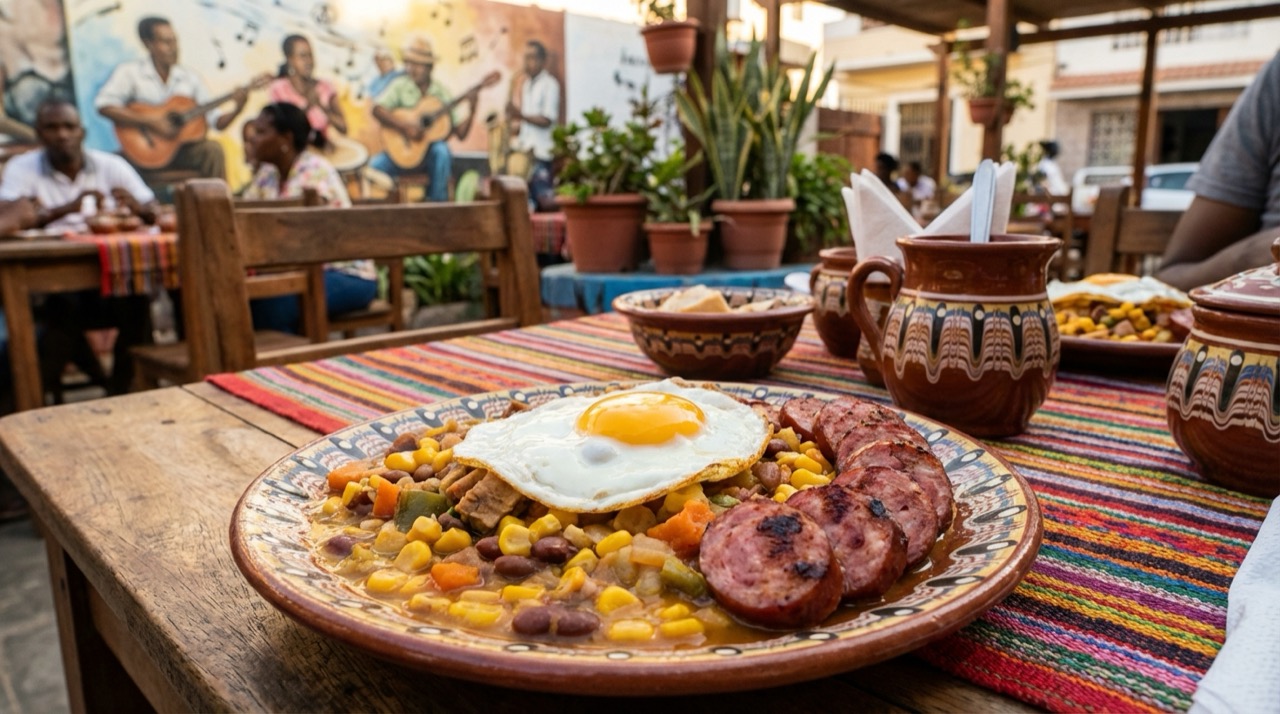
Cape Verdean cuisine is hearty, flavorful, and built around corn, beans, fresh fish, and whatever the volcanic soil can produce. The food reflects centuries of blending African, Portuguese, and Brazilian influences into something uniquely Cape Verdean. Every meal comes with a story, and cachupa is the foundation of it all.
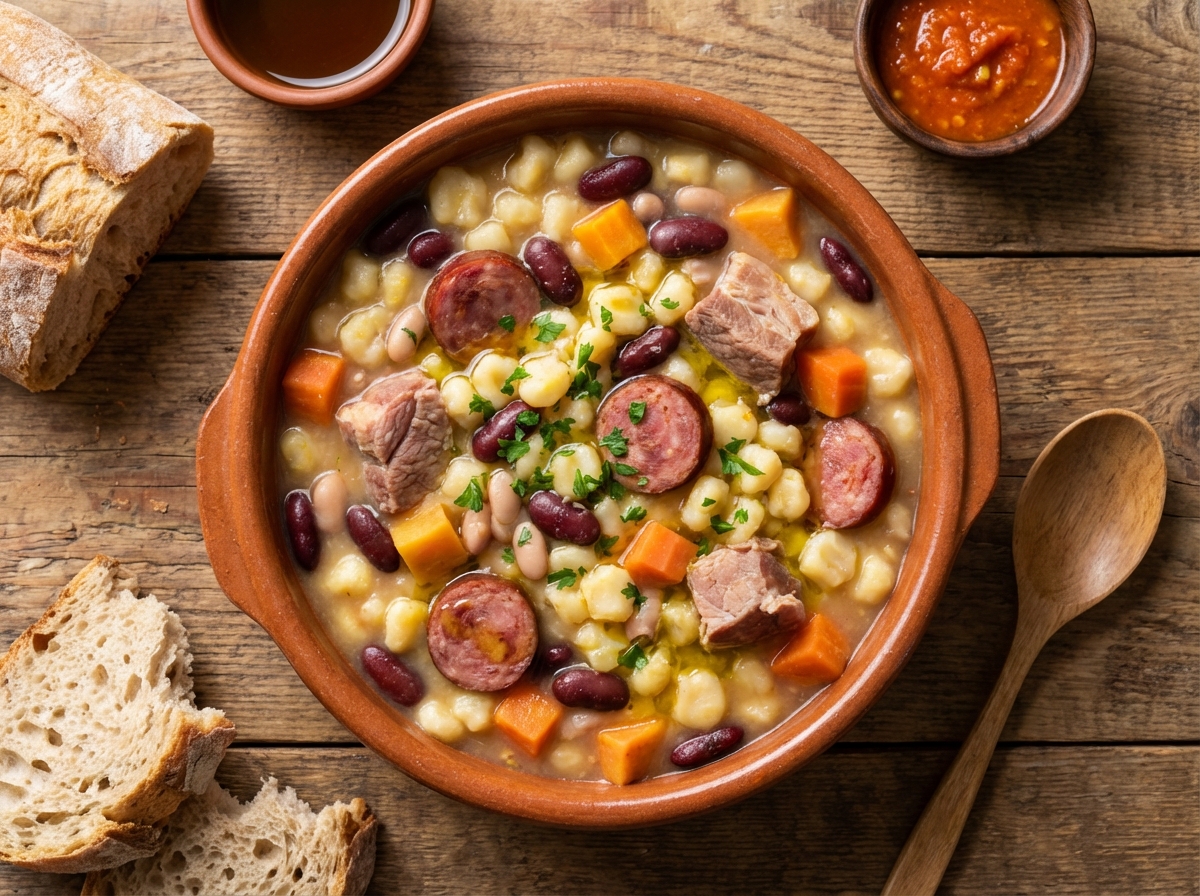
Cachupa
The national dish of Cape Verde and the soul of Cape Verdean cooking. A slow-cooked stew of hominy corn, beans, cassava, sweet potato, and whatever meat or fish is available. 'Cachupa rica' uses sausage, bacon, and multiple meats. 'Cachupa pobre' is the simpler, vegetable-focused version. Leftover cachupa fried up the next morning with a fried egg is 'cachupa guisada' and is the ultimate breakfast.
How to order
Queria cachupa rica, por favor. (I'd like the rich cachupa, please.) For breakfast: 'Tem cachupa guisada?' (Do you have fried cachupa?)
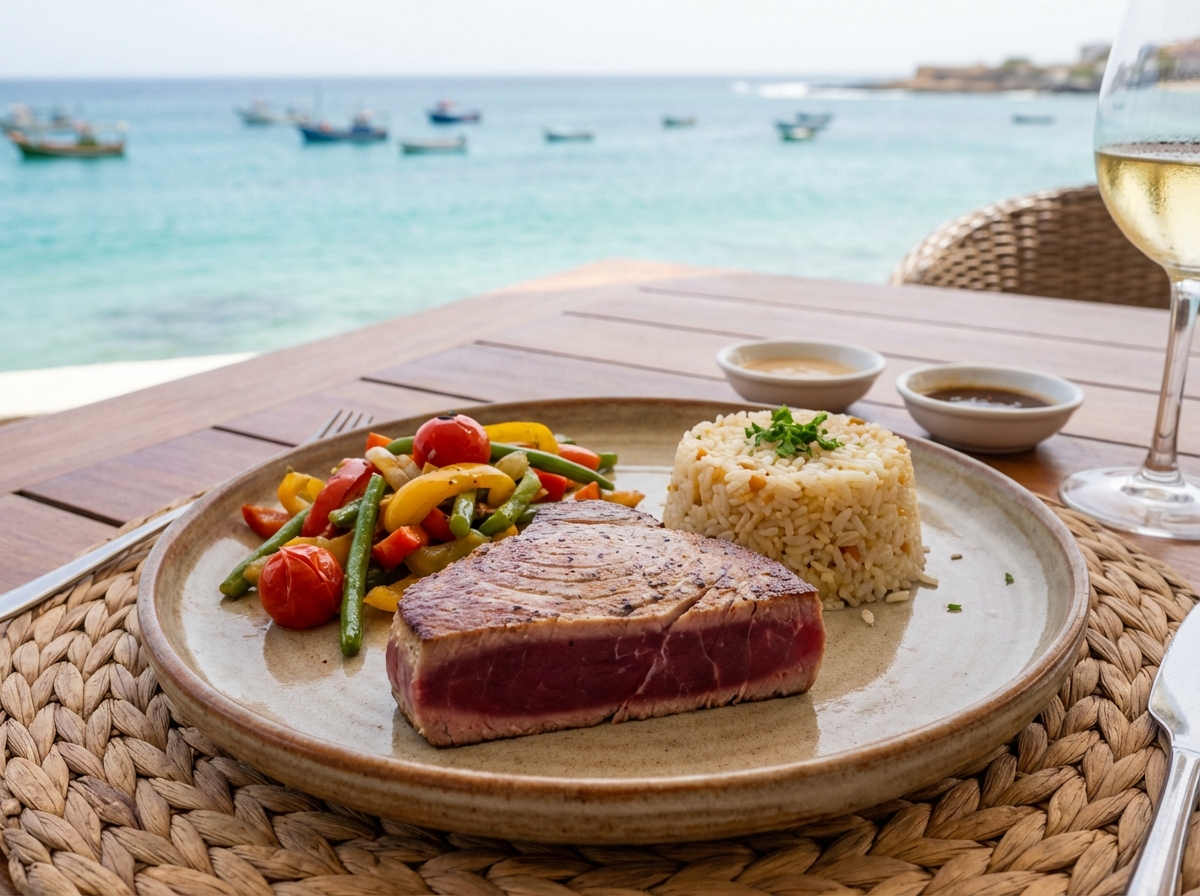
Atum (Fresh Tuna)
Cape Verde sits in the middle of the Atlantic tuna migration routes. Fresh tuna is grilled, fried, or served as a tartare. The quality is extraordinary: bright red, melt-in-your-mouth freshness that rivals anything in Japan.
How to order
Atum grelhado, mal passado, por favor. (Grilled tuna, rare, please.) 'Mal passado' keeps it tender.
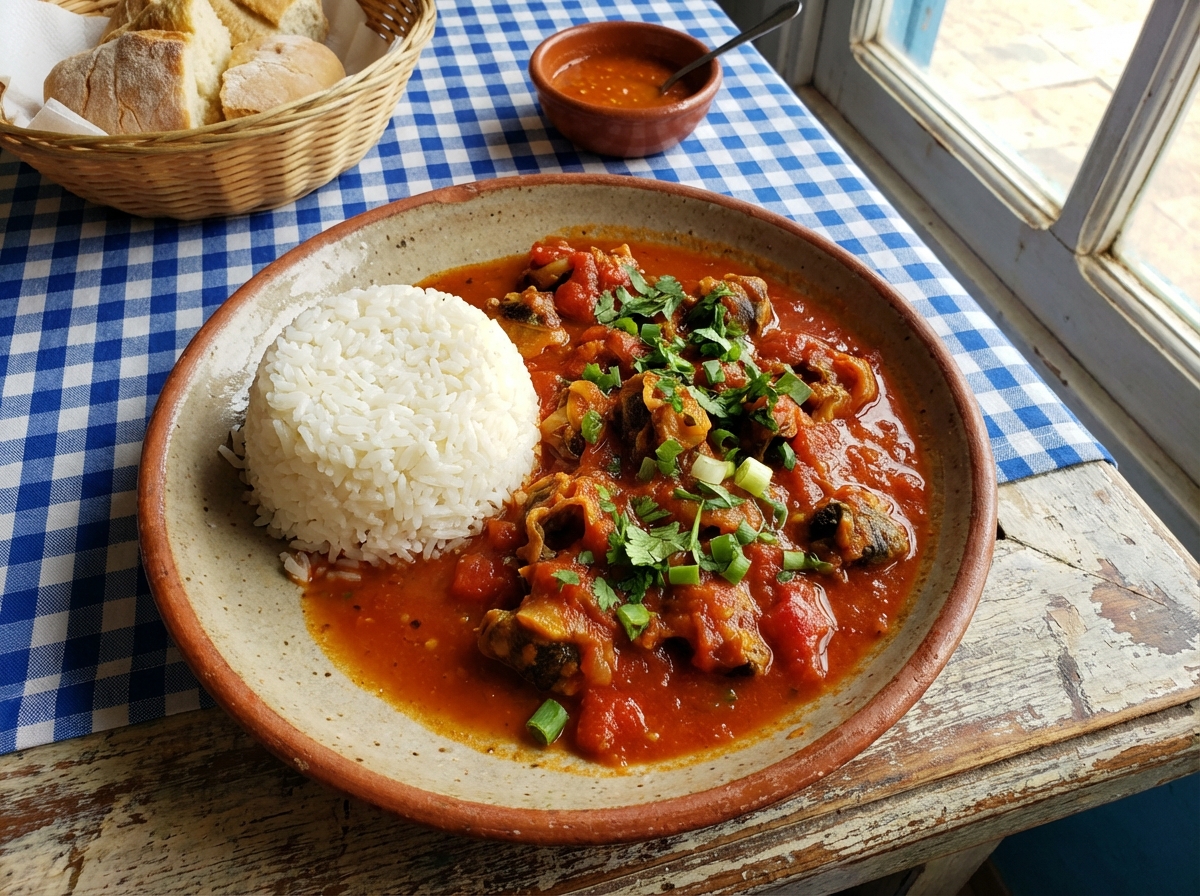
Buzio (Conch / Sea Snail)
A beloved Cape Verdean delicacy. Sea snails cooked in a rich tomato and garlic sauce, or grilled simply with butter and lemon. Chewy, briny, and packed with ocean flavor. Found at every seafood restaurant in Praia.
How to order
Tem buzio hoje? Queria no molho. (Do you have conch today? I'd like it in sauce.)
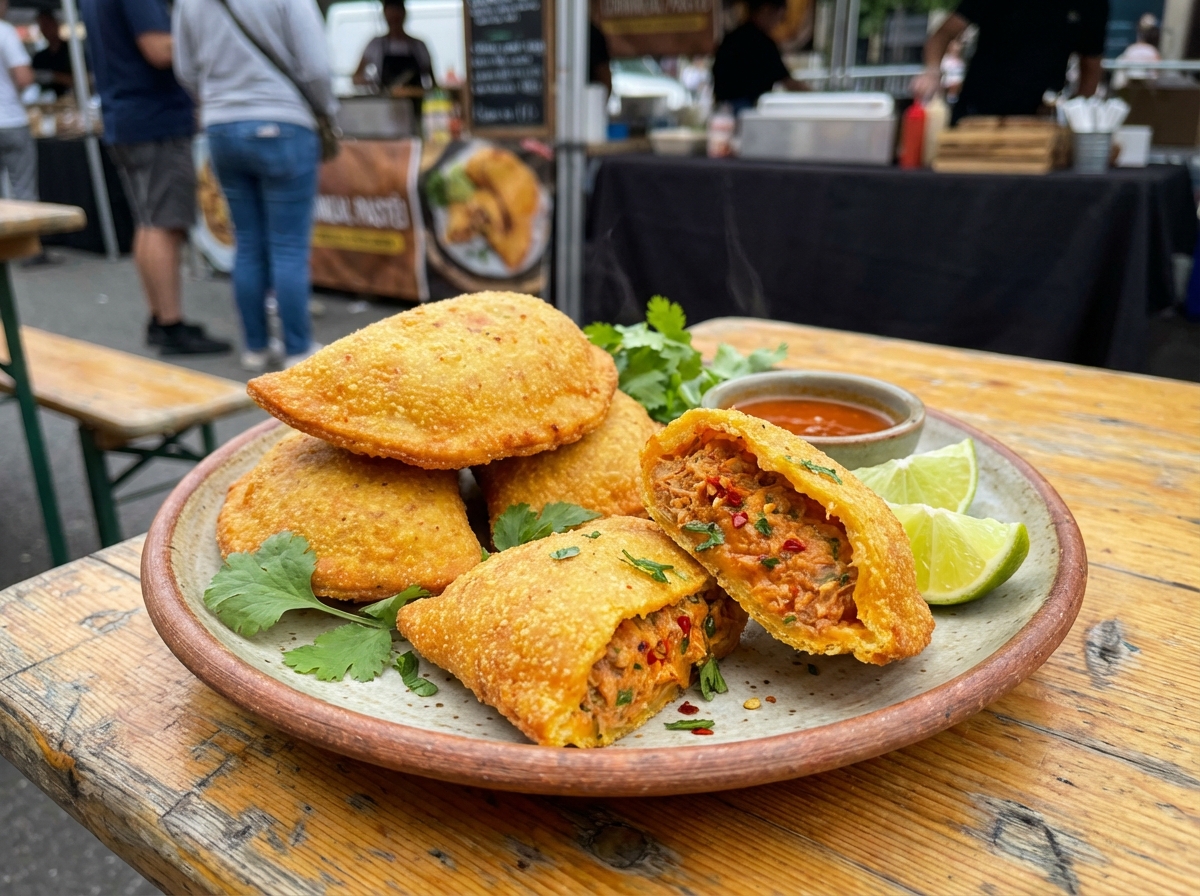
Pastel com Diabo Dentro
Literally 'pastry with the devil inside.' Deep-fried corn pastries stuffed with spicy tuna or other fish. The 'devil' is the piri-piri chili kick inside. A beloved street food found at markets and beach stalls across Praia.
How to order
Dois pastéis com diabo dentro, por favor. (Two devil pastries, please.)
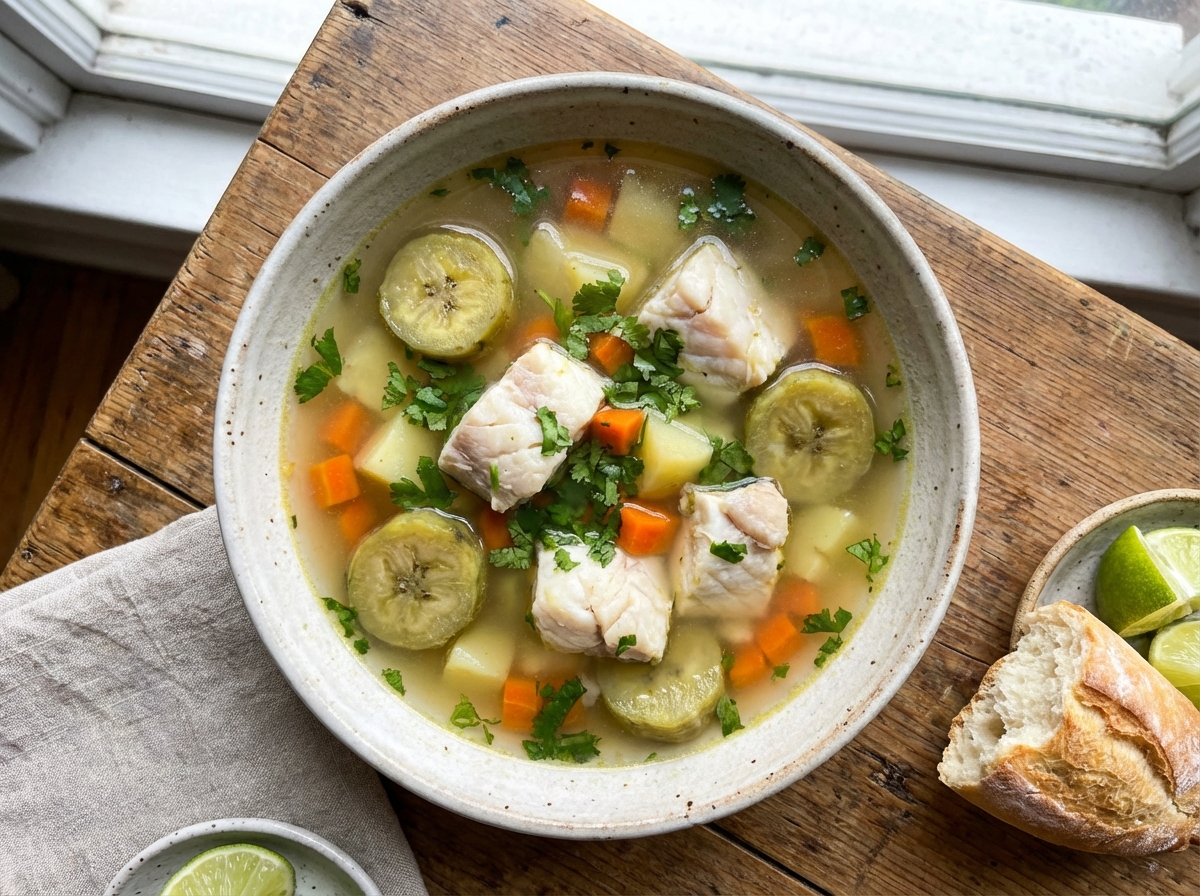
Caldo de Peixe
A hearty fish broth made with fresh catch, green banana, cassava, corn, and vegetables. A simple, comforting dish that showcases the freshness of Cape Verdean seafood. Perfect for lunch on a breezy day.
How to order
Um caldo de peixe, por favor. (A fish broth, please.)
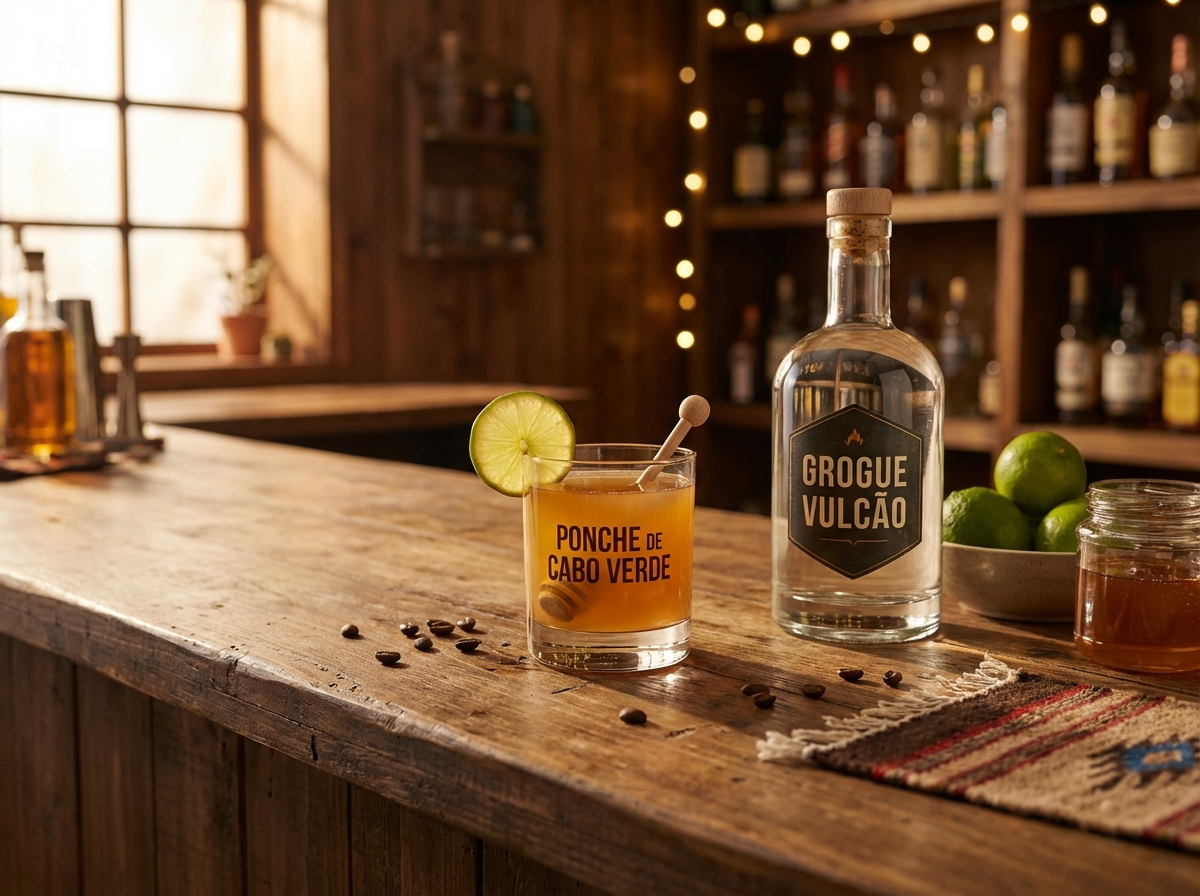
Grogue and Ponche
Grogue is Cape Verde's sugarcane spirit, distilled on every island. Ponche is grogue mixed with honey and lime, creating a smooth, sweet cocktail that is dangerously easy to drink. Both are essential to the Cape Verdean social experience.
How to order
Um ponche de mel e limão, por favor. (A honey and lime ponche, please.) For straight spirit: 'Um grogue, por favor.'
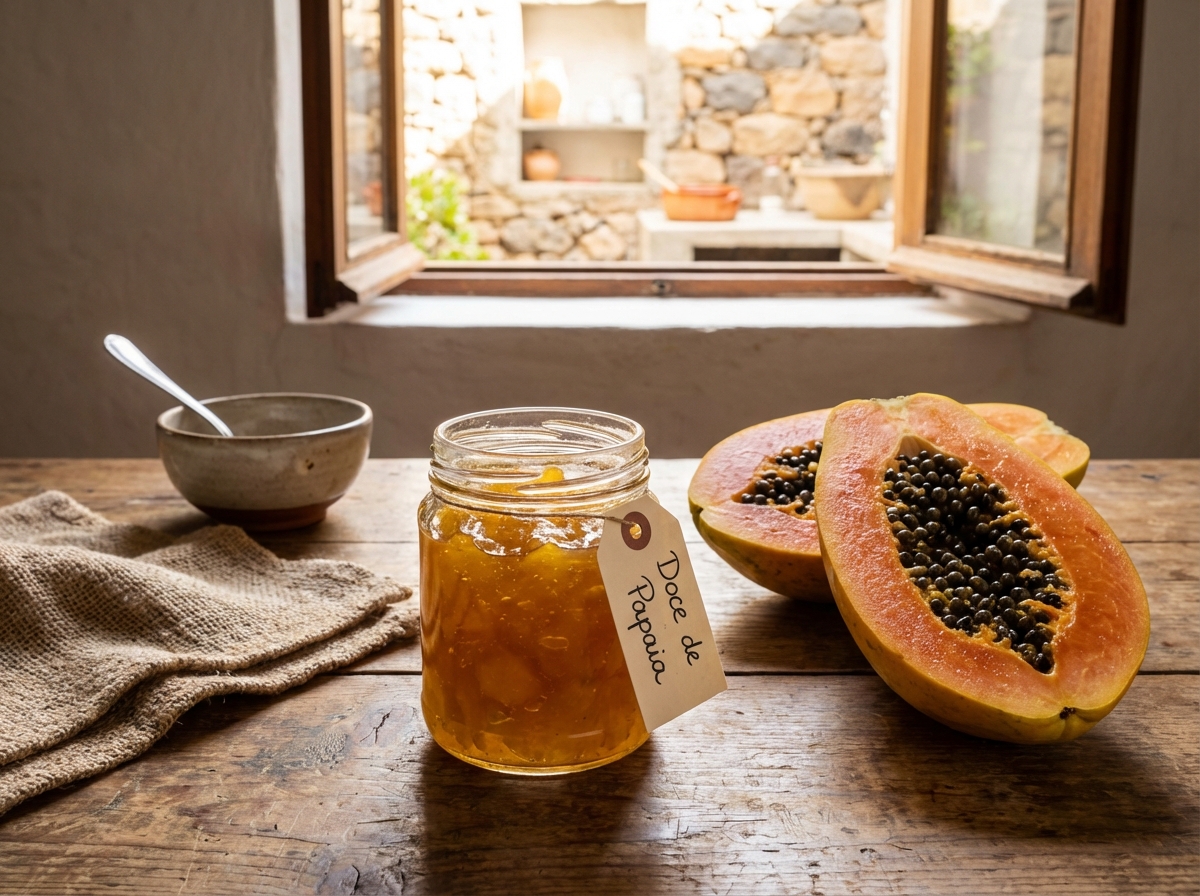
Doce de Papaia
Papaya jam/compote, a popular Cape Verdean dessert and preserve. Sweet, fragrant, and often homemade. Served with cheese or on its own after a meal. A taste of the tropical island life.
How to order
Tem doce de papaia como sobremesa? (Do you have papaya jam for dessert?)
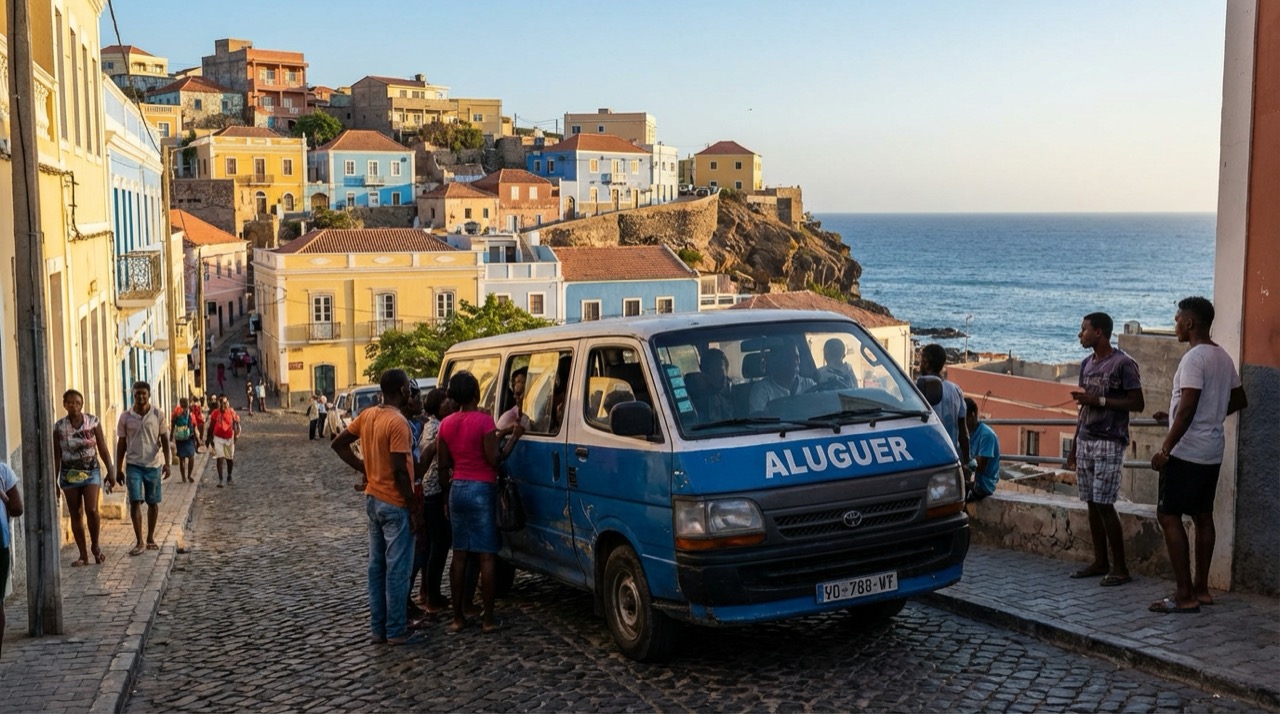
Praia is compact enough that many attractions are walkable, but the city is hilly and the heat makes transport welcome. Aluguers (shared vans) are the main public transport, while regular taxis are easy to find. For exploring Santiago island beyond Praia, you will need either an aluguer or a rental car.
Aluguer (Shared Van/Taxi)
The primary public transport in Praia and across Santiago island. White Toyota HiAce vans that follow fixed routes, departing when full. Inside Praia they function like minibuses; between cities they are shared long-distance taxis. Incredibly cheap and how locals get everywhere.
- Aluguers to other towns on Santiago leave from the Sucupira area
- They leave when full, not on a schedule, so be patient or arrive early
- Tell the driver your destination when boarding; pay when you arrive
- Fares are fixed and very low; ask a local if unsure of the price
- Say 'Paragem!' or 'Aqui, por favor!' (Here, please!) when you want to get off within Praia
Taxi
Regular taxis are easy to find in Praia, especially around the Platô, Sucupira market, and hotels. No meters, so agree on the price before getting in. Affordable by international standards and the most convenient option for visitors.
- Negotiate the fare before entering; ask your hotel what a fair price should be
- For a day trip around Santiago (Cidade Velha, Tarrafal), negotiate a day rate with a driver
- Most taxis are not metered; short trips within Praia cost 150-300 CVE
- Drivers are generally honest and friendly; many speak some English
Rental Car
Available at the airport and some hotels. The best option for exploring Santiago island at your own pace. Roads are generally good on main routes but can be rough on secondary roads. Driving is on the right side.
- Book in advance during peak tourist season (November to June)
- An international driving permit is recommended
- Roads to Cidade Velha and Tarrafal are paved and well-maintained
- Fuel stations are limited outside Praia, so fill up before heading out
Walking
The Platô and surrounding neighborhoods are very walkable, though the hills make it a workout. The city is safe for walking during the day. Early morning and late afternoon are the best times to explore on foot, when the heat is less intense.
- The Platô is flat on top and perfect for walking; the descents to Prainha and Sucupira are steep
- Carry water and wear sun protection; the Cape Verdean sun is strong
- The Quebra Canela waterfront promenade is excellent for evening strolls
- Walking from Platô to Cidade Velha is not practical (15km); take an aluguer instead
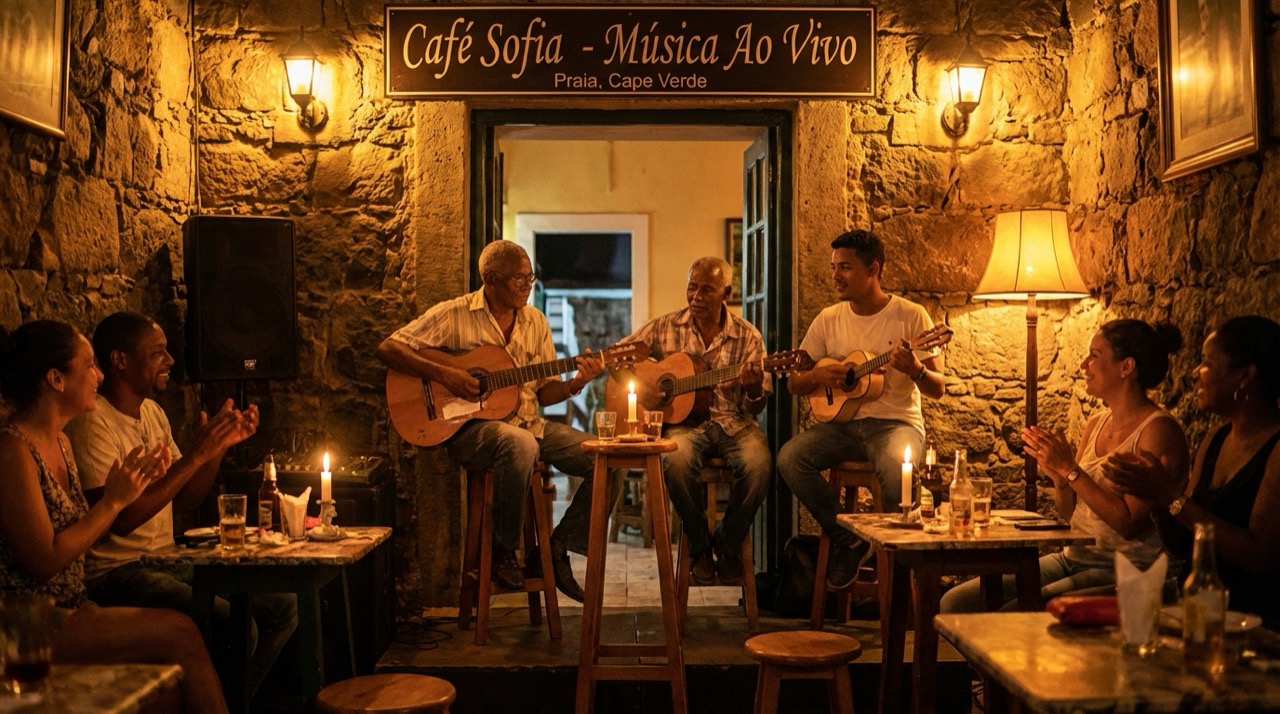
Cape Verdean culture is defined by 'morabeza' (warmth/hospitality), 'sodade' (deep longing), and music. The islands sit at the crossroads of Africa, Europe, and the Americas, and this blend creates a culture that is open, creative, and deeply welcoming. Music is not a hobby here; it is the fabric of life. From morna to funana to coladeira, every gathering becomes a musical event.
Do
- Embrace morabeza. If someone invites you to eat, drink, or listen to music, accept. Hospitality is the highest cultural value.
- Learn about morna music and Cesaria Evora. She is the musical soul of Cape Verde, and knowing her work shows deep respect.
- Greet people warmly and take time for conversation. Rushing through greetings is considered disrespectful.
- Try grogue (sugarcane spirit) and ponche (grogue with honey and lime). Refusing a drink offered in hospitality can seem cold.
- Attend a live music night. Ask your hotel or locals where morna, funana, or coladeira is being played. It will be a highlight of your trip.
- Learn a few Kriolu phrases. 'Nta stima Cabo Verde' (I love Cape Verde) will make people light up.
- Dress comfortably but neatly. Cape Verdeans take pride in appearance, even in the heat.
- Buy local crafts directly from artisans. The pano di terra (traditional woven cloth) makes a beautiful and meaningful souvenir.
Avoid
- Don't call Cape Verde a 'poor country' or compare it unfavorably to mainland Africa or Europe. National pride is strong and justified.
- Don't skip greetings. Always say 'Bom dia' or 'Boa tarde' before any request or transaction.
- Don't be surprised when events start late. 'Hora cabo-verdiana' (Cape Verdean time) is flexible. Relax into it.
- Don't ignore the history of slavery. Cape Verde was a major slave trade hub, and Cidade Velha tells that story. Approach with respect.
- Don't assume everyone speaks Portuguese at home. Kriolu is the daily language, and Portuguese is more formal/official.
- Don't litter. Cape Verdeans work hard to keep their islands clean, and littering is frowned upon.
- Don't photograph people without asking. A polite 'Posso tirar uma foto?' (Can I take a photo?) is always expected.
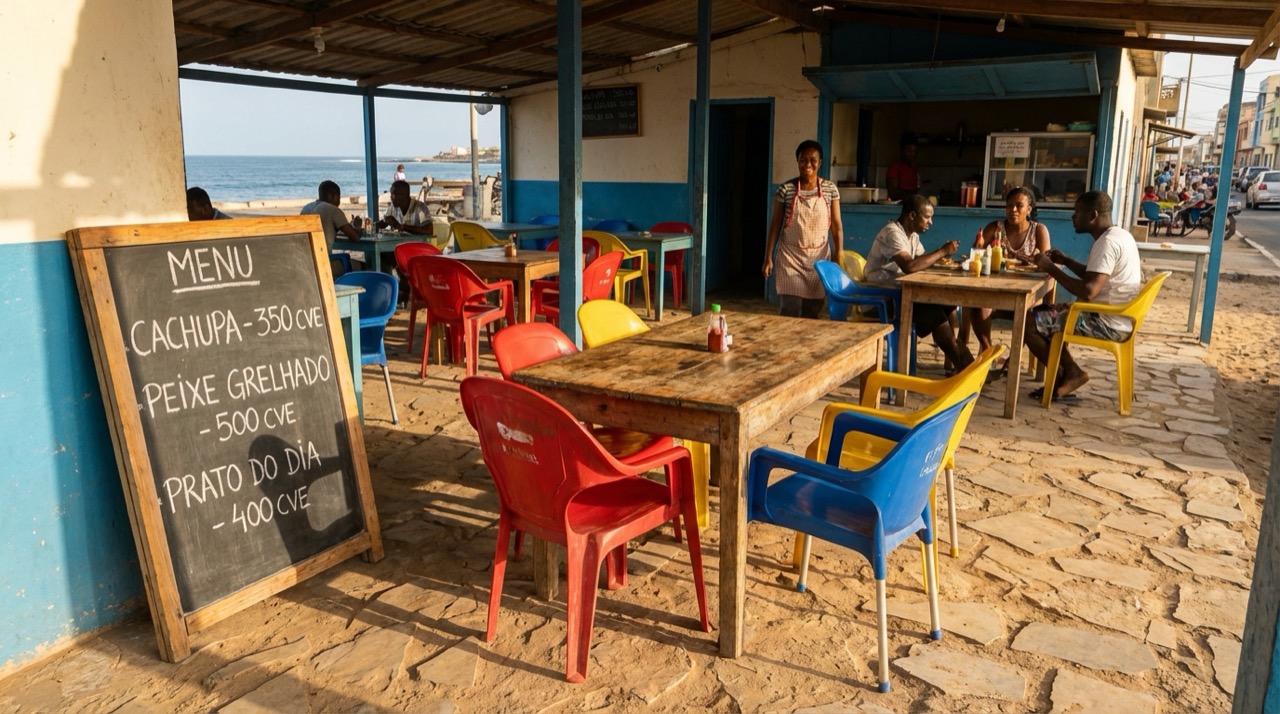
Cape Verde is moderately priced. Not as cheap as mainland West Africa, but very reasonable by European or North American standards. Local food is affordable and delicious, transport is cheap, and the best experiences (beaches, music, walking through Cidade Velha) cost little to nothing. Imported goods carry a premium since everything arrives by ship.
Typical Prices
Money-Saving Tips
- Eat cachupa. It is the cheapest, most filling, and most delicious meal on the island. A plate at a local restaurant costs under $5.
- Use aluguers for transport. At 40-60 CVE per ride, they are essentially free compared to taxis.
- Buy grogue directly from local producers rather than bars or tourist shops. A bottle costs under $5 at a distillery.
- The Mercado de Sucupira has better prices than tourist shops for souvenirs and pano di terra fabrics.
- Many of Praia's best attractions (Prainha Beach, Platô walking, street music) are free.
- Book accommodation at local pensões (guesthouses) rather than international hotels for 50-70% savings.
- Eat breakfast at local padarias (bakeries). Coffee and a pastry costs under $1.50.
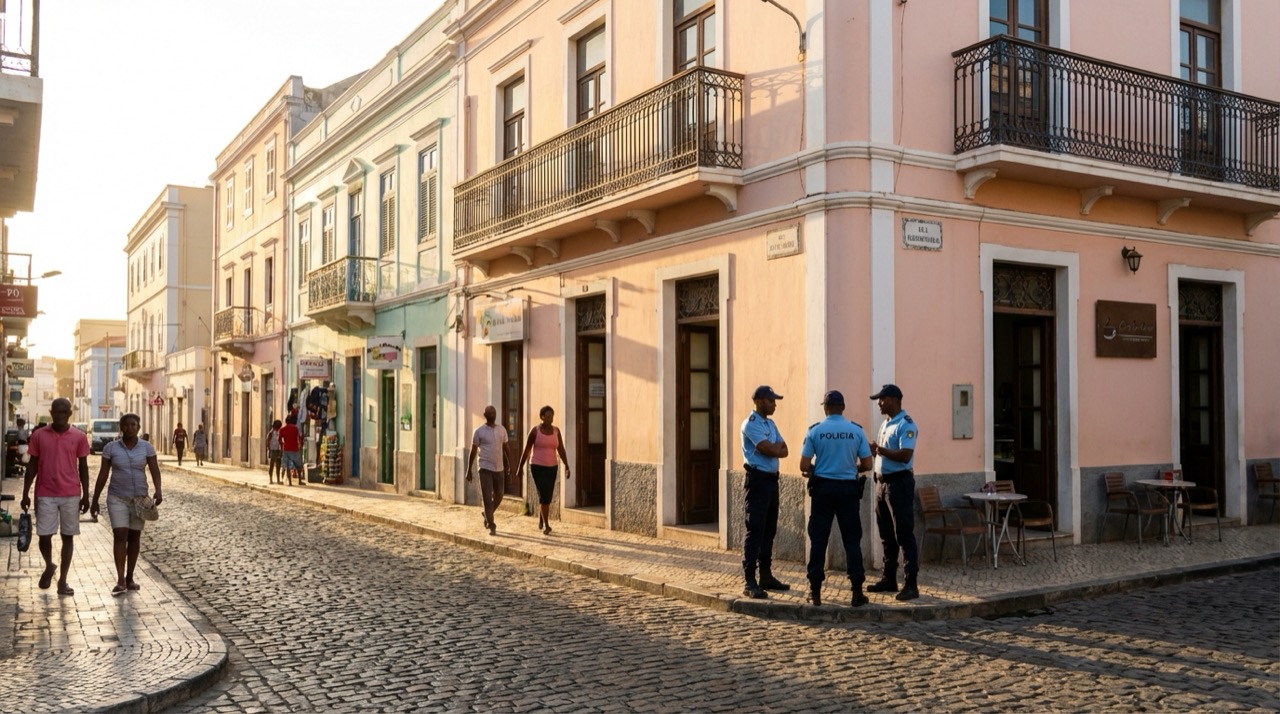
Cape Verde is one of the safest countries in West Africa, and Praia is generally safe for visitors. Petty theft can occur in crowded areas like Sucupira market and at night in some neighborhoods, but violent crime against tourists is rare. Use common sense: avoid poorly lit areas after dark, keep valuables out of sight, and stick to well-traveled routes. The emergency police number is 132.
Preciso de ajuda!
I need help!
/preh-SEE-zoo jee ah-ZHOO-dah!/
General emergency phrase; Cape Verdeans are quick to assist visitors
Chame a polícia!
Call the police!
/SHAH-mee ah poh-LEE-see-ah!/
Emergency number in Cape Verde is 132 for police
Preciso de um médico
I need a doctor
/preh-SEE-zoo jee oom MEH-jee-koo/
Hospital Agostinho Neto is the main hospital in Praia; private clinics offer faster service
Onde é a farmácia?
Where is the pharmacy?
/ON-jee eh ah far-MAH-see-ah?/
Pharmacies in Praia are well-stocked for basic medications
Roubaram-me!
I've been robbed!
/hoh-BAH-ram-mee!/
Report to police at the nearest esquadra; keep a copy of the report for insurance
Perdi o meu passaporte
I lost my passport
/per-JEE oo meh-oo pah-sah-PORT/
Contact your embassy or consulate. Keep a photocopy of your passport stored separately.
Não me sinto bem
I don't feel well
/now mee SEEN-too bayn/
Dehydration and sunburn are the most common health issues for visitors in Cape Verde
Sou alérgico/a a...
I'm allergic to...
/soh ah-LEHR-zhee-koo/kah ah.../
Fish and shellfish are in many dishes. Peanuts appear in some recipes like cachupa variations.
A água é segura?
Is the water safe?
/ah AH-gwah eh seh-GOO-rah?/
Tap water in Praia is generally safe but bottled water is recommended for visitors
Posso ligar para a minha embaixada?
Can I call my embassy?
/POH-soo lee-GAR PAH-rah ah MEE-nyah em-bye-SHAH-dah?/
Not all countries have embassies in Cape Verde; Portugal and Brazil can often assist EU/South American citizens
Community Tips

Ready to learn Portuguese for real?
Take these Praia phrases with you. Decko uses spaced repetition to make sure you actually remember them when you need them.
Free forever. No credit card required.