Medellín
Studying Spanish? Decko turns these phrases into smart flashcards that adapt to your memory.
Try free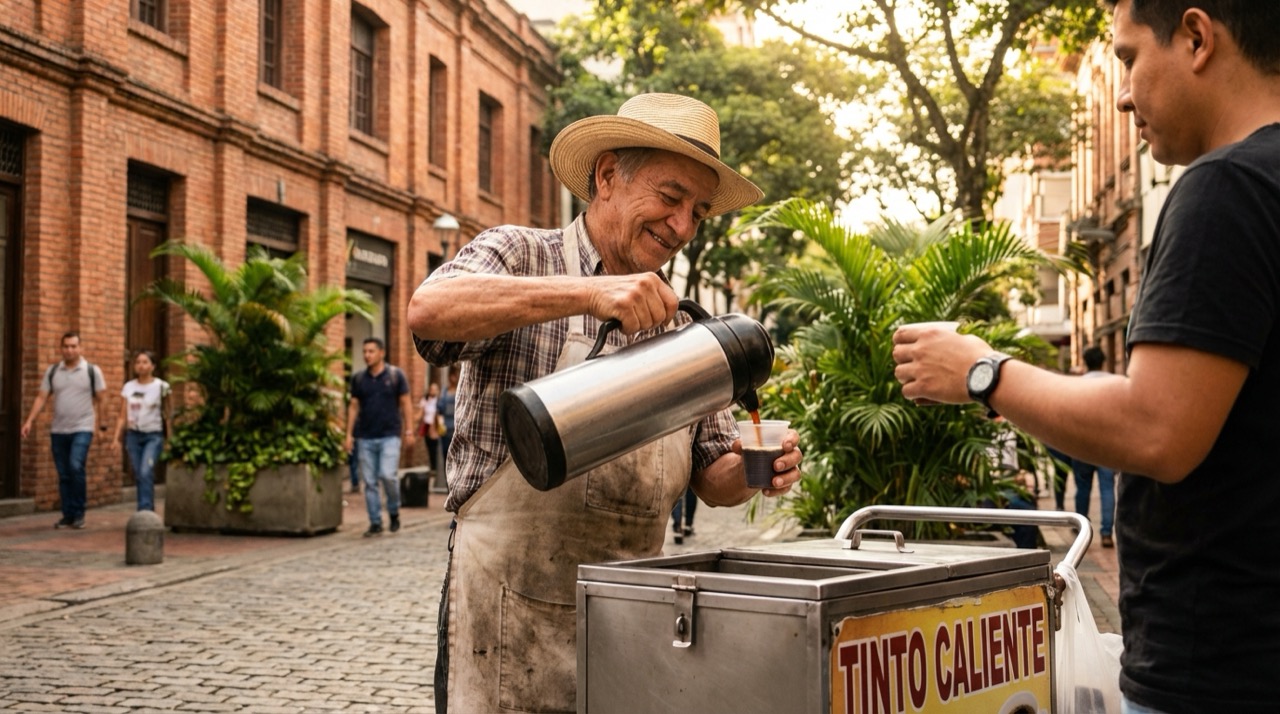
Paisa Spanish is one of the most distinctive accents in Colombia. Paisas speak with a melodic, sing-song intonation and are famous for their warmth, hospitality, and creative use of language. Unlike Bogotá where 'usted' dominates, Medellín mixes 'usted' with the archaic 'vos' form (voseo), which feels intimate and friendly. The word 'pues' is sprinkled into nearly every sentence. Expect to hear 'parce' (buddy) within five minutes of landing.
¡Quiubo, parce!
What's up, bro!
/kee-OO-boh PAR-seh/
The quintessential Paisa greeting. 'Quiubo' is a contraction of '¿Qué hubo?' (What happened?). Combined with 'parce' it is the most casual, friendly way to say hello in Medellín.
¿Bien o qué?
Good or what? (How are you?)
/bee-EN oh keh/
A very Paisa way to check in on someone. It sounds blunt in translation but the tone is warm and casual. The expected answer is 'Bien, ¿y vos?' (Good, and you?).
Con mucho gusto.
With great pleasure. / You're welcome.
/kon MOO-choh GOOS-toh/
The standard Colombian response to 'gracias'. In Medellín you will hear this from every shopkeeper, taxi driver, and server. It is deeply ingrained and genuine.
Regáleme un tinto, por favor.
Give me a black coffee, please.
/reh-GAH-leh-meh oon TEEN-toh por fa-VOR/
'Regáleme' (gift me) is the polite way to order anything in Colombia. A tinto is a small, usually sweetened black coffee served everywhere. Medellín takes its coffee culture seriously.
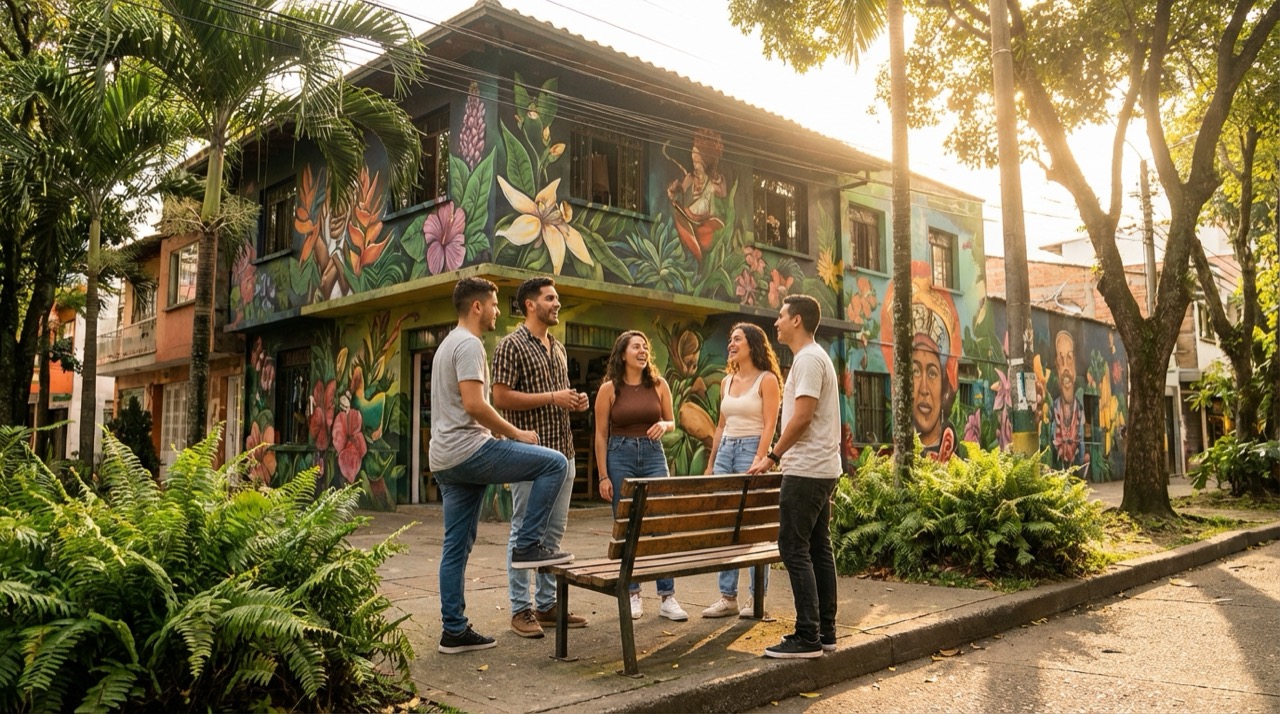
Paisa slang (parlache) is rich, inventive, and deeply tied to Antioqueño identity. Paisas are proud of their dialect and love when visitors pick up their expressions. The word 'pues' is the ultimate Paisa marker, appearing in almost every sentence as a filler, emphasis, or punctuation. Some expressions are used across Colombia, but many are distinctly from the mountains of Antioquia.
Parce / Parcero(a)
Buddy / Bro / Friend
/PAR-seh / par-SEH-roh/
The go-to word for addressing friends. Short form 'parce' is gender-neutral and universal. You will hear it dozens of times a day. 'Ey parce, ¿qué más?' (Hey dude, what's up?).
Pues
(filler word, added to everything)
/pwehs/
The defining word of Paisa speech. It appears at the end, middle, or beginning of sentences. 'Sí, pues' (yeah, sure), 'Vamos pues' (let's go then), '¿Qué más pues?' (what's up?). It is to Paisas what 'like' is to Californians.
¿Qué más?
What's up? / How are things?
/keh mahs/
The standard casual greeting among friends. Often combined with 'pues': '¿Qué más pues, parce?' It literally means 'what else?' but functions as 'how are you?'.
¡Bacano!
Cool! / Awesome!
/bah-KAH-noh/
Used across Colombia but especially loved in Medellín. 'Qué bacano el plan' (What a cool plan). Can describe things, places, people, or experiences. The opposite is 'maluco'.
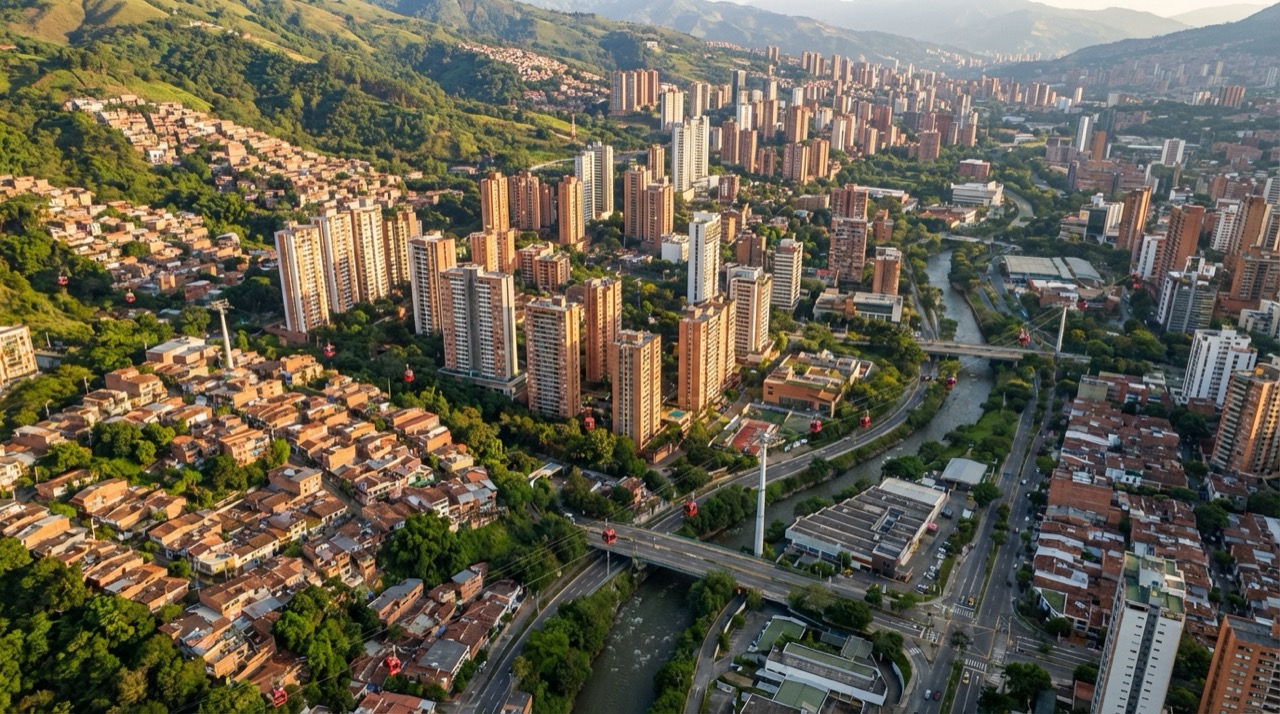
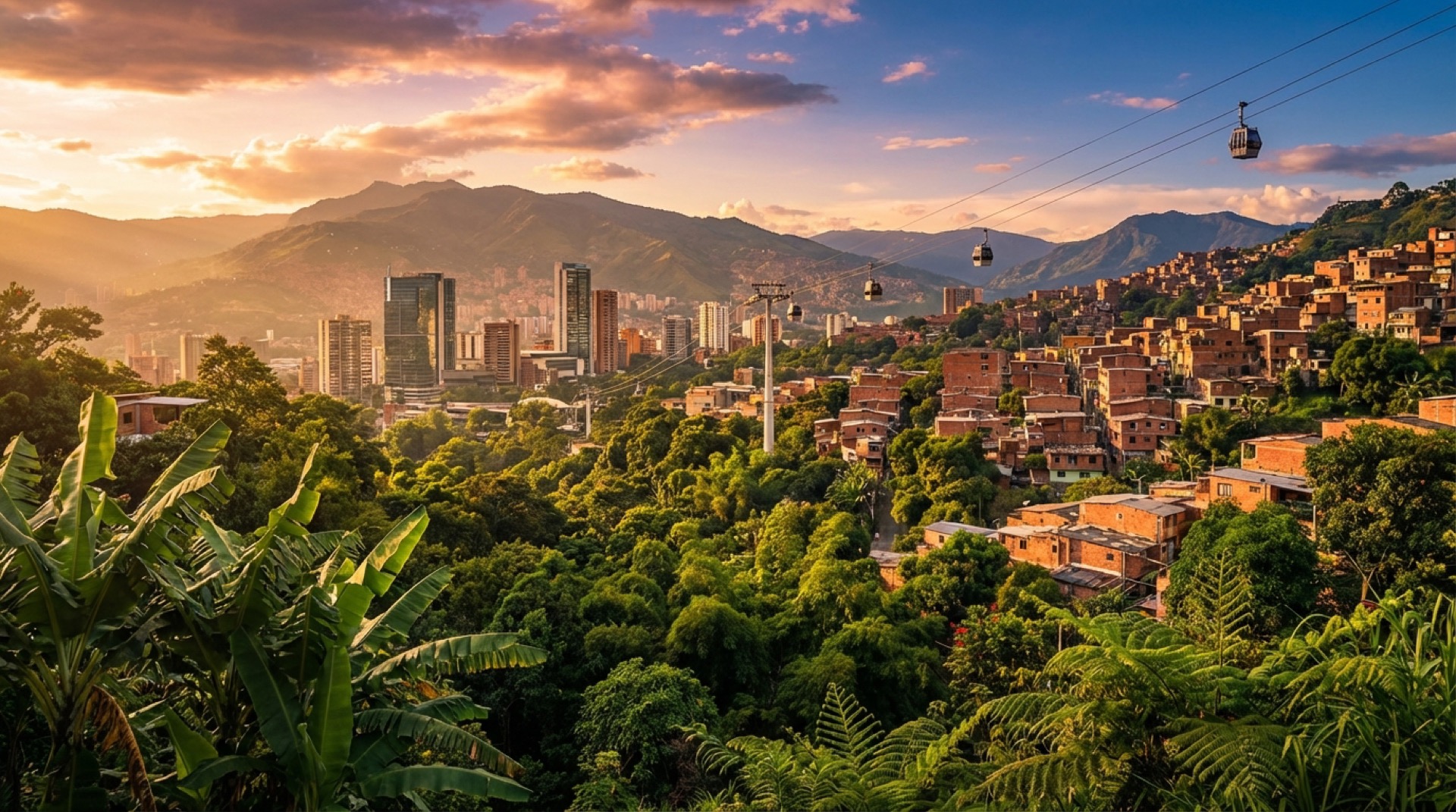
Medellín sits in the narrow Aburrá Valley, with neighborhoods climbing the steep hillsides on both sides. The city is organized into 16 comunas (districts) and 5 corregimientos (rural areas). The metro runs north-south through the valley floor, with Metrocable gondola lines reaching the hillside comunas. Most visitors stay in El Poblado or Laureles, but the real soul of Medellín is in the hillside barrios where Paisa culture thrives.
El Poblado
The upscale southern district where most tourists and expats settle. Tree-lined streets, international restaurants, rooftop bars, modern high-rises, and the famous Parque Lleras nightlife strip. Safe and walkable but can feel like a bubble disconnected from the real Medellín. Malls like El Tesoro and Santa Fe are here. Home to the 'Milla de Oro' (Golden Mile) business corridor.
'Vamos al Poblado' or just 'Poblado' is how locals refer to the area. Parque Lleras is the nightlife center. 'Vamos a Lleras' means going out for drinks and dancing.
Laureles
The local favorite across the river from El Poblado. More authentically Paisa, more affordable, with excellent restaurants, cozy cafes, and a vibrant nightlife scene on La 70 (Carrera 70). The Estadio metro station connects to the football stadium and the sports complex. Laureles has a neighborhood feel with tree-canopied streets and circular parks (glorietas) that Paisas are proud of.
'La 70' (la setenta) is the main strip in Laureles. 'Vamos a la 70' means heading to the restaurant and bar corridor on Carrera 70. It is the more local alternative to Parque Lleras.
Comuna 13 (San Javier)
Once the most dangerous neighborhood in Medellín, now a symbol of the city's transformation. The outdoor escalators (installed in 2011) connect the steep hillside streets and are surrounded by world-class graffiti and murals. Hip-hop and breakdancing performances happen daily. Local guides lead tours sharing stories of resilience. Easily reached via the San Javier metro station.
Always say 'la Comuna 13' with respect. Locals are proud of the transformation and prefer the narrative of resilience over the violent past. Ask for a 'tour de grafiti' at the base of the escalators.
Centro (Downtown)
The bustling commercial heart of Medellín. Chaotic, loud, and full of life. The Parque Berrío metro station drops you in the middle of it all. Plaza Botero with its giant Botero sculptures, the Museo de Antioquia, and Parque de las Luces are here. Street vendors sell everything from fruit to phone cases. Very busy during the day, quieter and less safe at night.
'El centro' can mean downtown or just 'the center of the action'. 'Voy al centro' means going downtown. Watch your belongings here and remember: no dar papaya.
Envigado
Technically a separate municipality but seamlessly connected to Medellín's south. A quieter, more traditional Paisa town with excellent food, a charming central park, and a strong sense of community. Known for its traditional fondas (taverns) and the best mondongo (tripe soup) in the region. Reachable via the Envigado metro station. Increasingly popular with expats seeking a calmer pace.
Envigado locals are called 'envigadeños' and are fiercely proud of their town identity. Saying 'Envigado es Envigado, no es Medellín' (Envigado is Envigado, not Medellín) will earn you local respect.
Want to actually remember these phrases?
Save them to your flashcard deck and Decko will quiz you at the perfect time using spaced repetition.
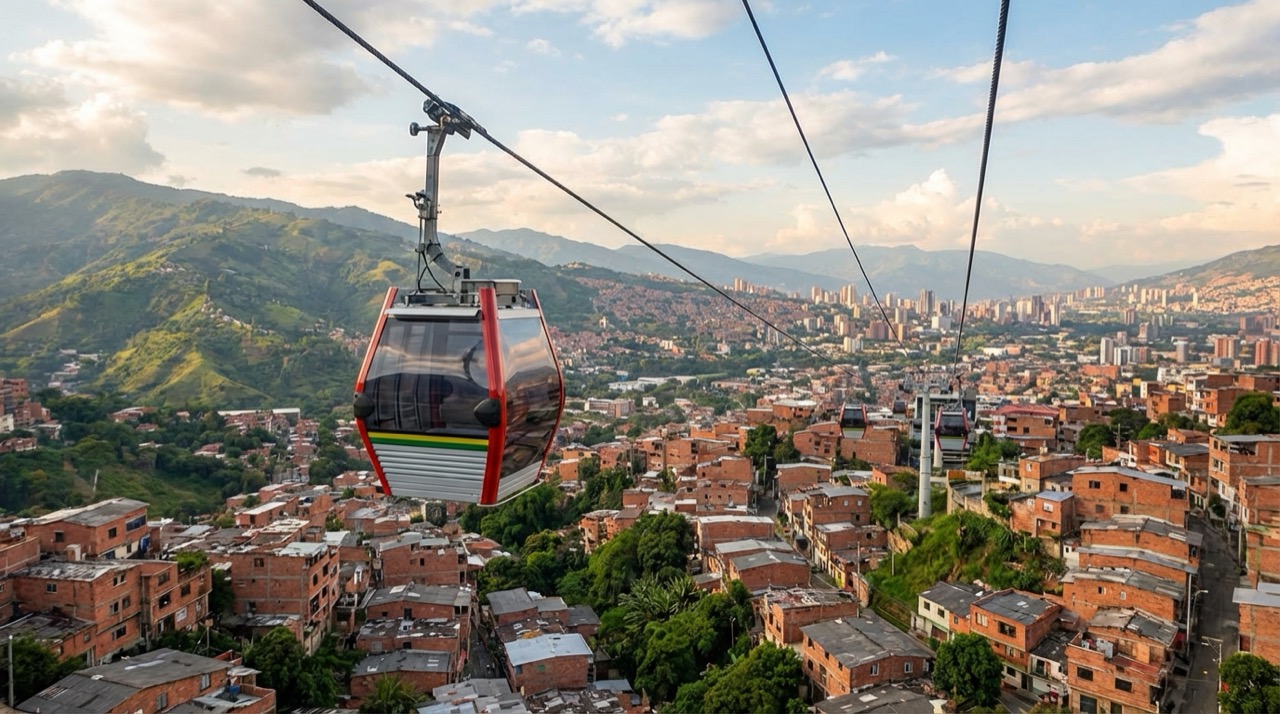
Medellín's appeal is not about ancient ruins or grand museums. It is about the energy of a city that reinvented itself. The urban innovation story, the street art, the gondola rides over hillside barrios, and the warmth of the Paisa people are what make it unforgettable. Add a day trip to the surreal Guatapé and you have one of the most complete experiences in South America.
Comuna 13 Graffiti Tour
A walking tour through the hillside streets of Comuna 13, led by local guides who grew up during the neighborhood's darkest years. The outdoor escalators (escaleras eléctricas) are flanked by stunning murals telling stories of resilience, displacement, and hope. Hip-hop performances, breakdancing, and street food at every turn. Easily the most impactful experience in Medellín.
Book a 'tour de grafiti en la Comuna 13'. Many guides offer tours in English and Spanish. Tipping your guide is expected and appreciated. Ask about 'la historia de transformación' (the transformation story).
Metrocable
Gondola cable car lines integrated into the metro system, originally built to connect hillside barrios to the valley floor. Lines J and K offer stunning panoramic views over the city and into the mountains. Ride Line K from Acevedo to Santo Domingo for the most dramatic views. It costs the same as a metro ticket. A symbol of Medellín's innovative approach to urban inequality.
'Vamos a montar el Metrocable' (Let's ride the Metrocable). Locals use the metro system with great pride. 'Cultura metro' refers to the collective civic pride Paisas have in keeping the system clean and orderly.
Plaza Botero
An open-air plaza in downtown Medellín featuring 23 large bronze sculptures by Fernando Botero, Medellín's most famous son. His signature style of voluminous, exaggerated figures fills the square. The Museo de Antioquia sits on one side. Free to visit, always bustling with locals and vendors. Touch the sculptures for good luck (everyone does).
Botero donated these works to his home city. Saying 'Botero es de Medellín' (Botero is from Medellín) to a Paisa will always get a proud response. The museum entrance is around $15,000 COP.
Parque Arví
A vast nature reserve in the mountains above Medellín, reached by taking the metro to Acevedo, then Metrocable Line L to the top. Dense cloud forest with hiking trails, butterfly gardens, and a weekend artisan market. The gondola ride alone takes 20 minutes and offers breathtaking views. A perfect half-day escape from the city.
'Vamos a Arví' is the shorthand. The Metrocable ride is part of the experience. Be prepared for cooler temperatures at the top. 'Hace fresco arriba' (It's cool up top) is what locals will tell you.
Museo de Antioquia
Medellín's premier art museum, housed in a beautiful Art Deco building next to Plaza Botero. Three floors of Colombian art spanning colonial to contemporary, with a major Botero collection. Also features rotating exhibitions of international work. Allow 2 hours.
'El Museo de Antioquia' or just 'el museo' in context. '¿Ya fuiste al museo?' (Have you been to the museum yet?). Wednesdays often have reduced entry.
Jardín Botánico
A lush 14-hectare botanical garden in the heart of the city, free to enter. The Orquideorama is a stunning wooden lattice structure that hosts events and shelters orchids, butterflies, and tropical birds. Iguanas roam freely. A peaceful oasis popular for picnics and weekend strolls. Adjacent to the Parque Explora science museum.
'El Botánico' is the local shorthand. 'Vamos al Botánico a caminar' (Let's go walk at the Botanical Garden). Free entry makes it a favorite date and family spot.
Pueblito Paisa
A replica of a traditional Antioqueño village perched on top of Cerro Nutibara, a small hill in the middle of the city. Cobblestone streets, a tiny church, and traditional facades give a sense of old Paisa life. The panoramic view of the city from the top is excellent. Small restaurants serve traditional food. Free entry.
'Subir al Pueblito Paisa' (going up to Pueblito Paisa). The hill is called Cerro Nutibara. It is an easy walk or a short taxi ride. 'La vista es una chimba' (The view is awesome), as locals would say.
Parque Lleras
The epicenter of Medellín's nightlife in El Poblado. A leafy park surrounded by bars, clubs, and restaurants that come alive after dark, especially on weekends. During the day it is a quiet park with outdoor cafes. At night it transforms into the city's biggest party zone. Very tourist-heavy but undeniably fun.
'Vamos a Lleras' is the invitation. For a more local experience, head to La 70 in Laureles instead. Paisas call partying 'rumbear'. '¿Vamos de rumba?' means 'shall we go out?'.
Guatapé & El Peñol (Day Trip)
A stunning day trip about 2 hours east of Medellín. El Peñol is a 220-meter granite monolith rising from a landscape of lakes and green islands. Climb the 740 steps to the top for one of the most photographed views in Colombia. The town of Guatapé is famous for its colorful 'zócalos' (decorative panels on building facades). Easily done as a guided tour or by public bus from Terminal del Norte.
'Vamos a Guatapé' is the day-trip invitation. The bus from Terminal del Norte costs around $15,000 COP each way. Locals say 'subir la piedra' (climb the rock). Count the 740 steps if you can.
Real City Walking Tour
Free walking tours depart daily from Parque Berrío and cover downtown Medellín's history, from its founding to the Escobar era to the remarkable urban transformation. Guides are passionate locals who share personal stories alongside city history. The tour covers Plaza Botero, Parque de las Luces, and hidden corners of Centro. Tips-based.
Ask for the 'tour gratis' at Parque Berrío. Guides speak English and Spanish. Tipping is the guide's income, so be generous if you enjoyed it. '¿A qué hora es el tour?' (What time is the tour?).
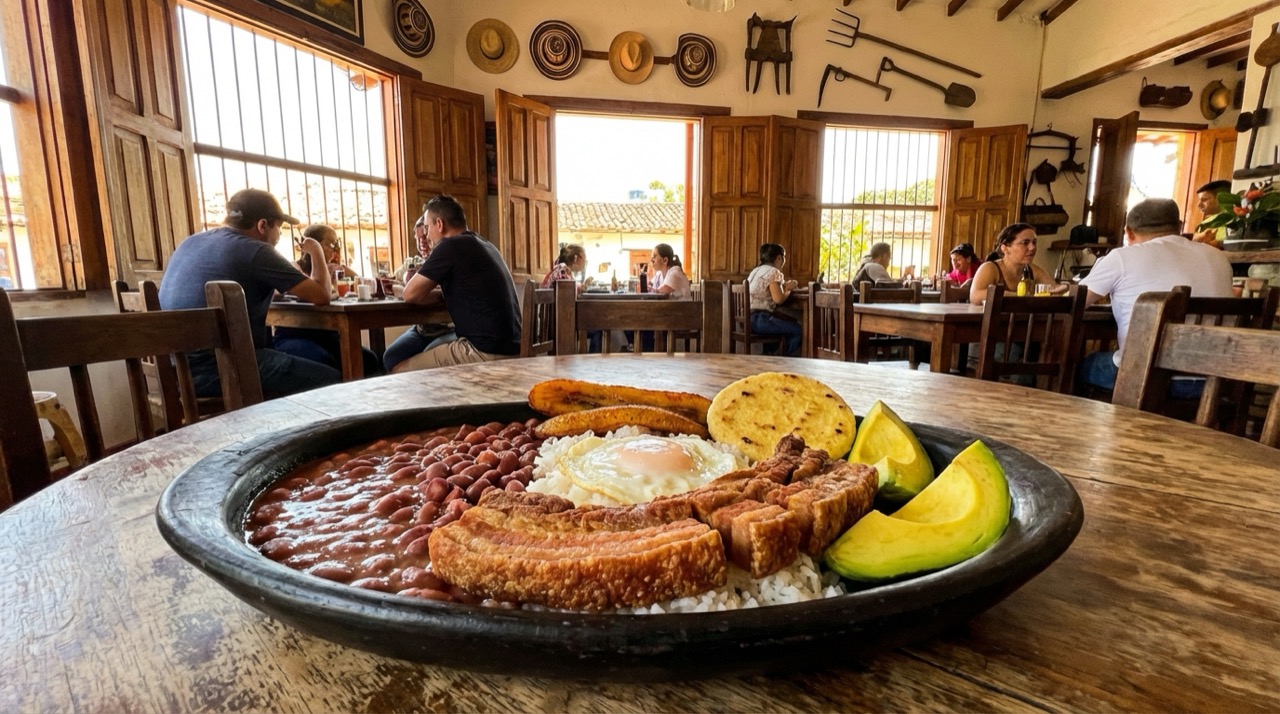
Paisa food is hearty mountain fare designed for hard-working farmers. Portions are enormous, flavors are bold, and beans and rice appear on almost every plate. Medellín's food scene has exploded in recent years with world-class restaurants in El Poblado and Laureles, but the soul of Paisa cooking is in the traditional fondas (taverns) and corrientazos (set lunches). Lunch is the main meal, eaten between 12 and 2 PM. Come hungry.
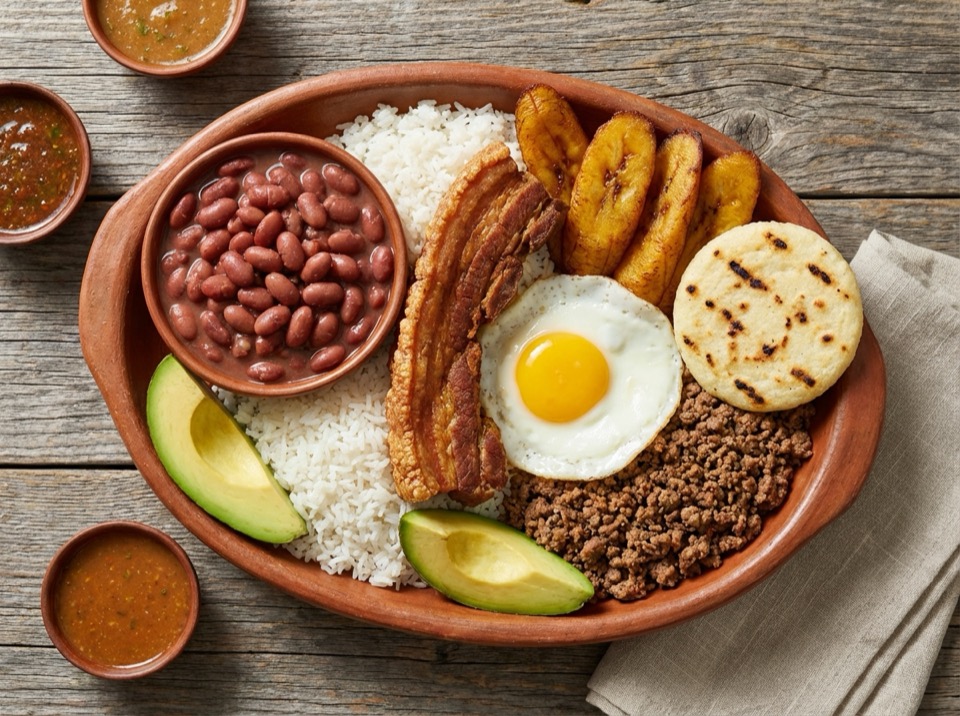
Bandeja Paisa
The crown jewel of Antioqueño cuisine and Colombia's national dish. A massive platter loaded with red beans cooked with pork, white rice, ground beef (carne molida), chicharrón (crispy pork belly), fried egg, sweet plantain (maduro), arepa, avocado, and a small salad. Originally a farmer's meal meant to fuel a full day of work. Sharing is acceptable because the portions are designed for giants.
How to order
'Una bandeja paisa, por favor.' It comes complete with everything. If you want less food, ask for 'media bandeja' (half portion). Many restaurants in Medellín serve it as a lunch special.
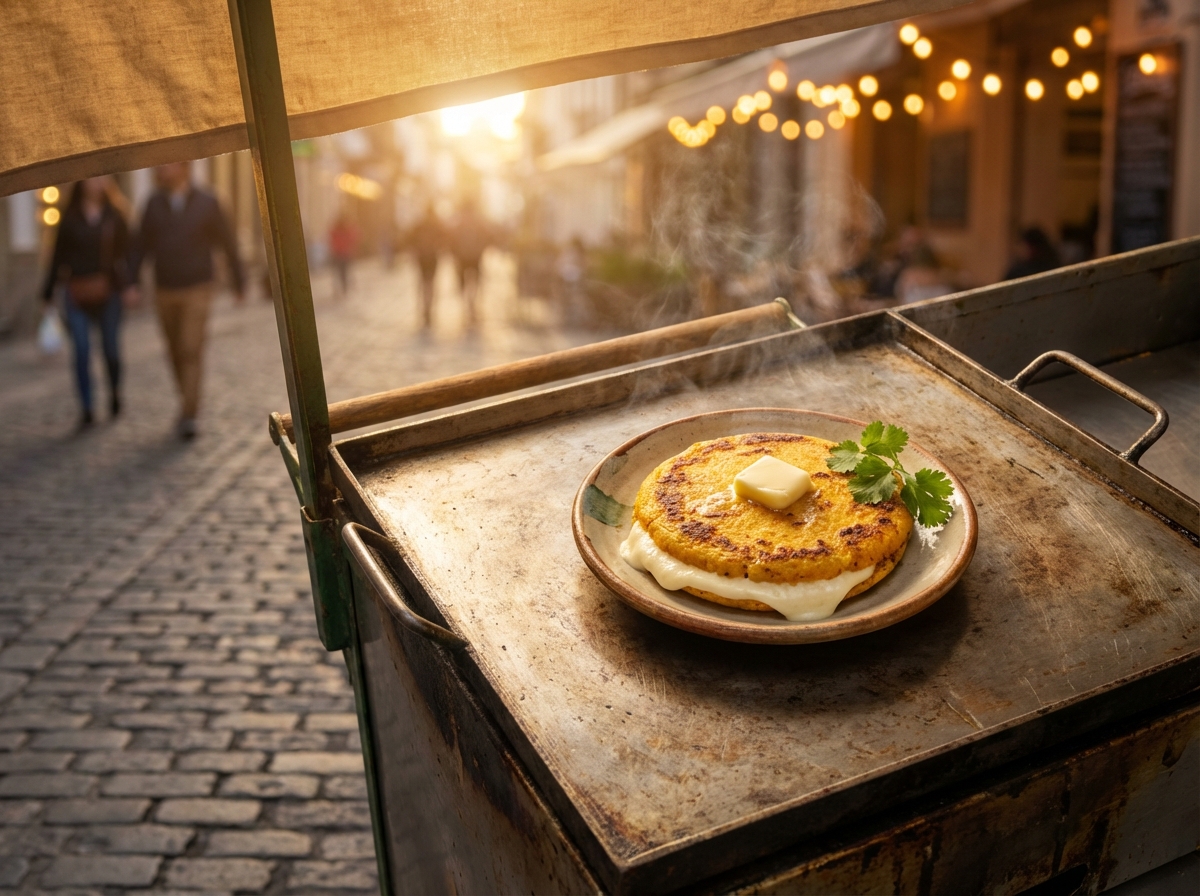
Arepa de Choclo con Quesito
A sweet corn arepa made from fresh choclo (corn), griddled until golden and slightly caramelized, filled or topped with soft white cheese (quesito) that melts into the sweet corn. The sweet-savory combination is addictive. Street vendors sell them from carts, especially in the mornings and evenings. Different from the regular corn arepa and uniquely Antioqueño.
How to order
'Una arepa de choclo con quesito, por favor.' At street carts, just point and nod. They are freshly made on the spot. Some vendors also offer 'arepa de chócolo' with butter only.
Empanada Antioqueña
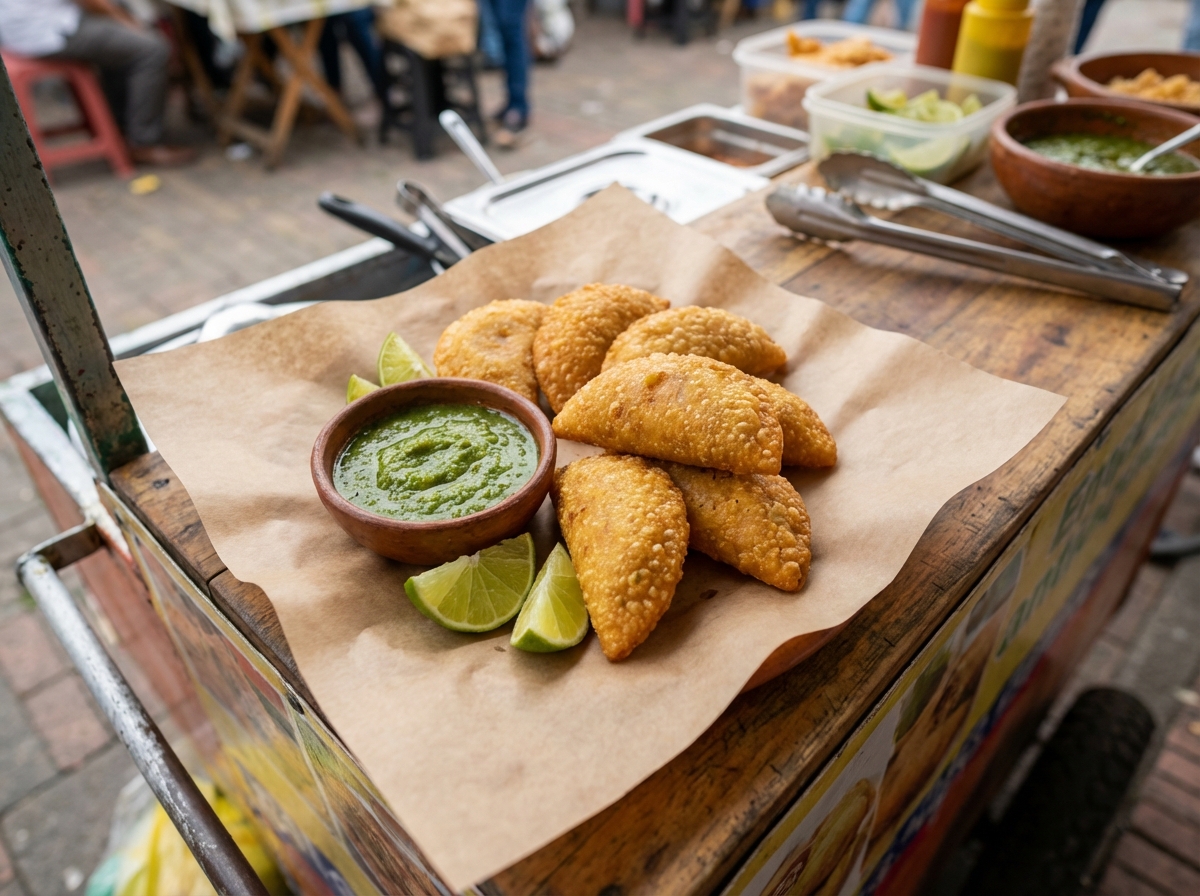
Medellín's version of the empanada is smaller, crunchier, and more intensely flavored than other Colombian varieties. Corn-based dough, deep-fried to a perfect golden crisp, filled with seasoned potato and shredded meat. Always served with ají (tangy green salsa) and a wedge of lime. Sold on every street corner for pocket change. The perfect snack at any hour.
How to order
'Regáleme dos empanadas con ají.' They come in 'de carne' (meat) or 'de pollo' (chicken). The ají should be free and plentiful. Squeeze the lime on top.
Mondongo
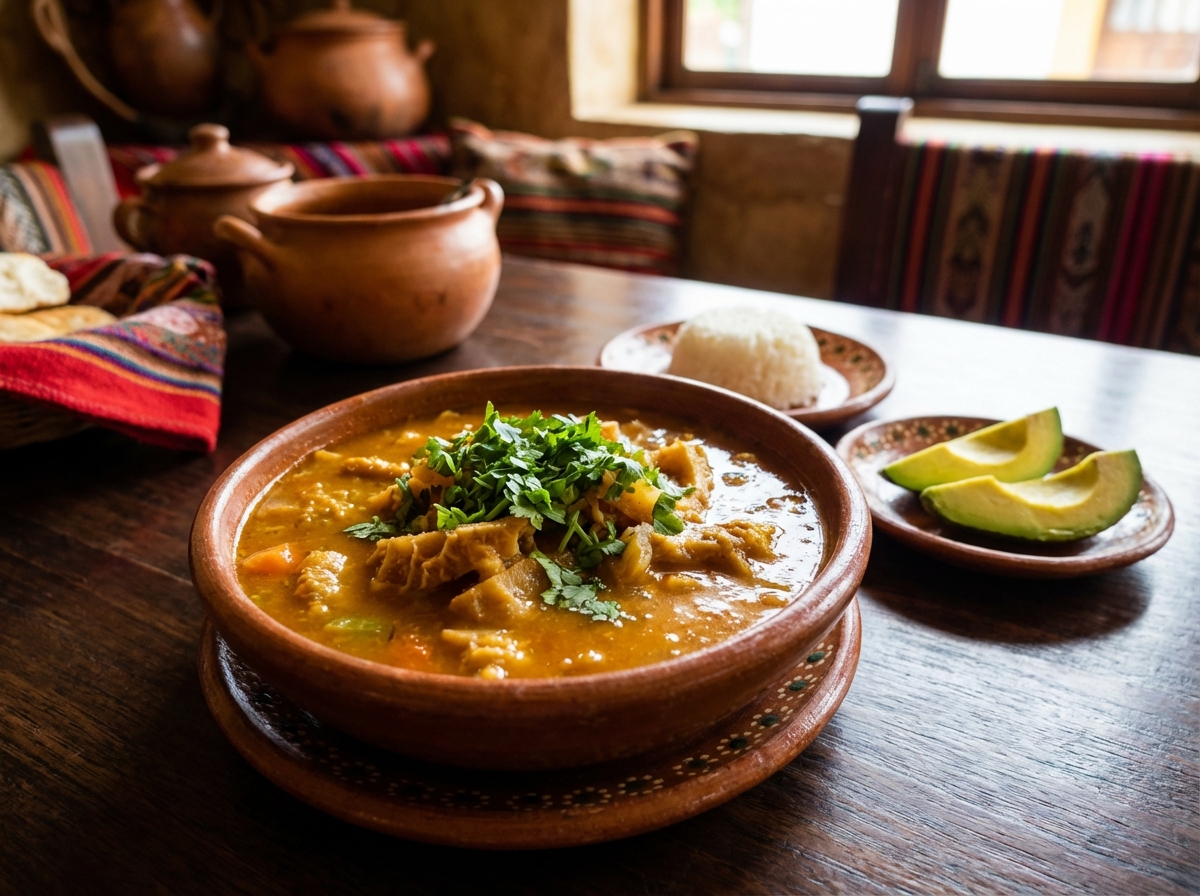
A rich tripe soup that is a Paisa institution, especially in Envigado. Slow-cooked pork tripe in a thick broth with potato, carrot, cilantro, and spices. Served with rice, avocado, and arepa on the side. It sounds intimidating but the long cooking renders the tripe tender and the broth is deeply flavorful. A hangover cure and Sunday tradition.
How to order
'Un mondongo, por favor.' Envigado is famous for its mondongo restaurants. 'Mondongo envigadeño' is the gold standard. If tripe scares you, try it anyway. You might be surprised.
Sancocho Antioqueño
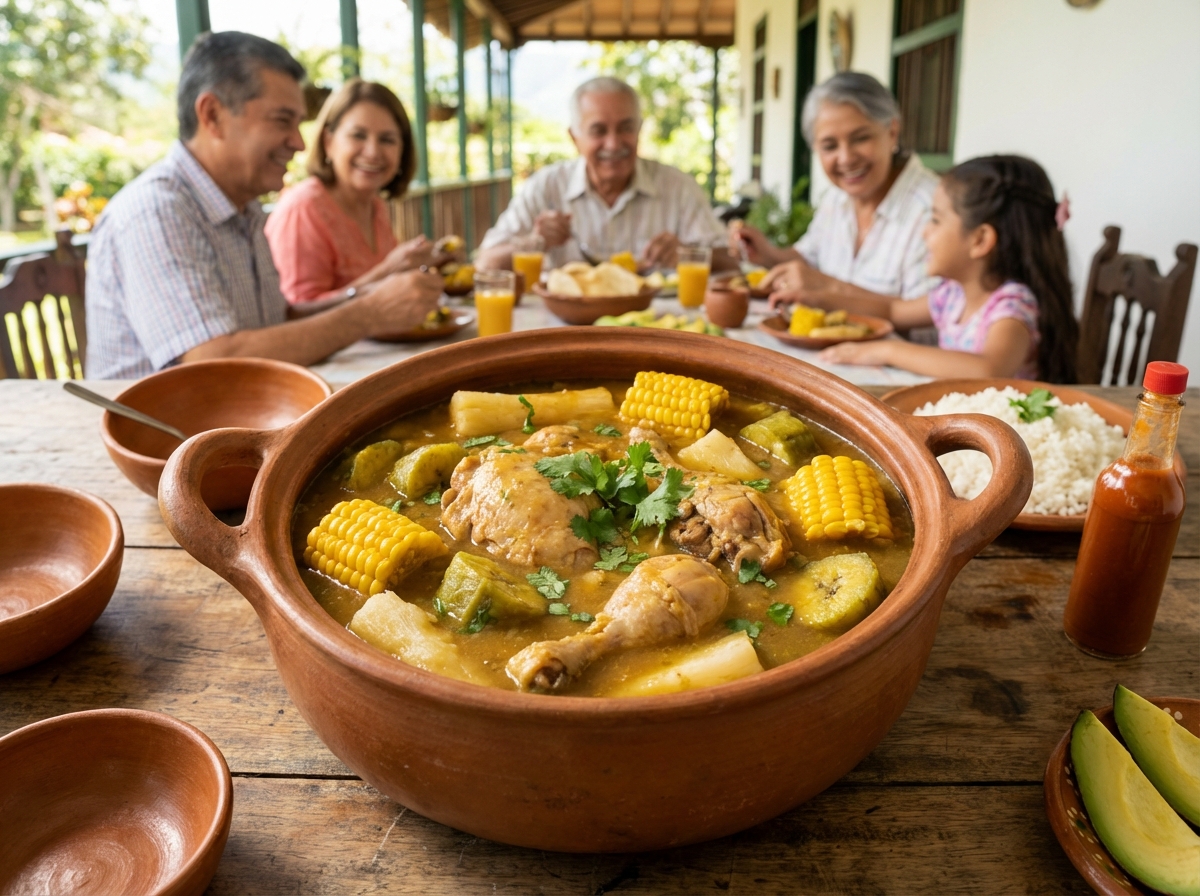
A hearty stew with chicken or beef, yuca (cassava), potato, plantain, and corn on the cob, slow-simmered in a rich broth. The Antioqueño version is heartier than coastal varieties and is the centerpiece of family gatherings, especially on Sundays. Often served at fincas (country farms) and traditional restaurants. Comes with rice, avocado, and arepa.
How to order
'Un sancocho, por favor.' Specify 'de pollo' (chicken) or 'de res' (beef). At fincas outside the city, sancocho is always the star. It is a communal dish meant for sharing.
Chicharrón
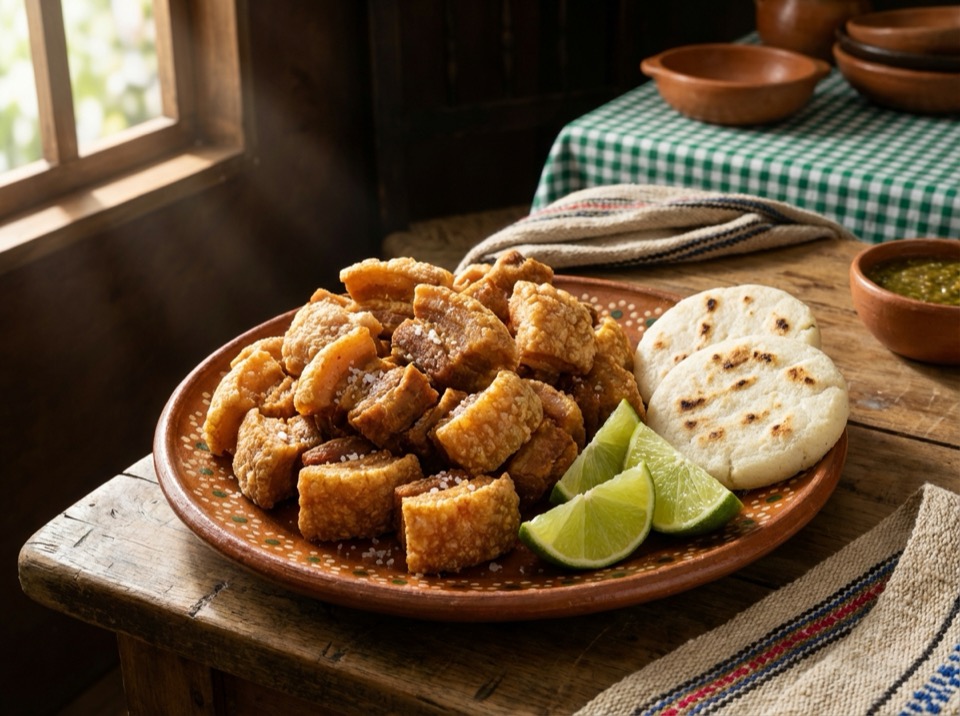
Crispy fried pork belly, a Paisa obsession. The skin is puffed and crackling, the fat is rendered, and the meat is juicy. Served as part of the bandeja paisa, as a standalone snack, or stuffed into an arepa. Street vendors sell chicharrón by weight. The best ones are from small family-run spots where the pork is freshly fried in large pots.
How to order
'Regáleme un chicharrón' for a piece, or 'una arepa con chicharrón' for the full combo. Ask for it 'bien tostadito' (extra crispy) if you like maximum crunch.
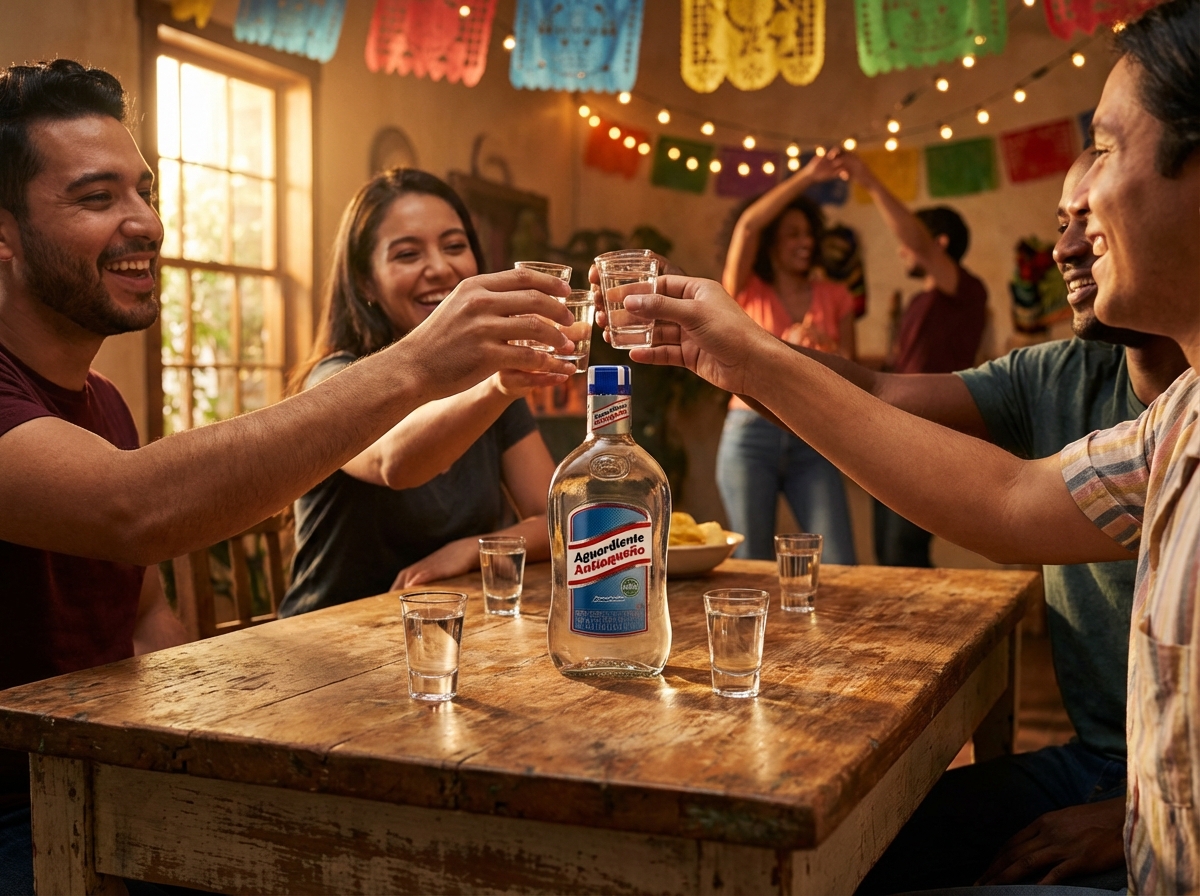
Aguardiente
Colombia's national spirit, an anise-flavored liquor made from sugarcane. The Antioqueño brand is the local favorite and the most popular in the country. Served in small shot glasses (copitas), always shared with friends. Rounds are communal: one bottle, many glasses. The licorice flavor is strong, so expect it. It is the fuel of every Paisa celebration.
How to order
'Una botella de Aguardiente Antioqueño, por favor' at bars and restaurants. For a single shot: 'un aguardiente' or 'un guaro'. The toast is '¡Salud!' Always clink glasses and make eye contact.
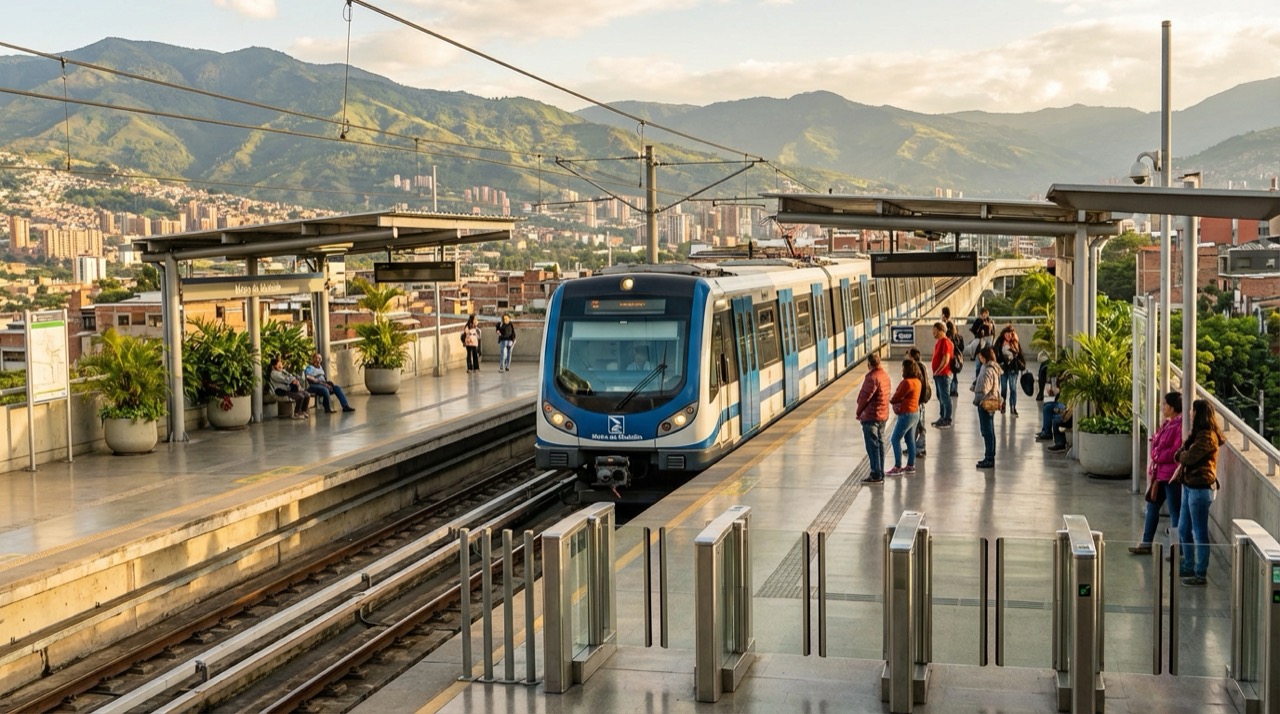
Medellín has the best public transport system in Colombia and one of the best in Latin America. The metro is the backbone, supplemented by Metrocable gondolas, tram, and feeder buses. It is clean, efficient, and a source of enormous civic pride. 'Cultura metro' is a real thing: Paisas keep the system tidy and orderly. Taxis and rideshares are affordable for anything the metro does not reach.
Metro
Colombia's only metro system and the pride of Medellín. Two main lines (A and B) run through the valley floor, connecting major neighborhoods. Clean, fast, and affordable. The Cívica card (rechargeable) works across all metro, Metrocable, and tram services. Rush hour (7-9 AM, 5-7 PM) gets crowded but never as bad as Bogotá's TransMilenio.
- Buy a Cívica card at any station. Load it with enough for several days. Each ride costs around $3,000 COP.
- 'Cultura metro' is taken seriously: no eating, no littering, stand on the right side of escalators. Locals will politely correct you if you break these norms.
- Line A runs north-south through the valley. Most tourist destinations are accessible from stations along this line.
- Transfer to Metrocable, tram, and feeder buses with the same Cívica card. Integrated transfers are free within a time window.
- The metro is generally very safe at all hours, but stay aware during rush hour when it gets packed.
Metrocable (Gondola)
Cable car gondolas that connect hillside neighborhoods to the metro system. Originally built for community access, now also a tourist attraction. Lines J, K, L, and M reach different hillside areas. Line K (to Santo Domingo) and Line L (to Parque Arví) are the most popular with visitors for their spectacular views.
- Line K to Santo Domingo offers the best city views. Line L continues to Parque Arví nature reserve.
- Same Cívica card as the metro. The ride is included in the integrated fare.
- Go early morning or late afternoon for the best light and fewer crowds.
- The gondolas are part of daily life for hillside residents, so be respectful and give priority to families with children and elderly riders.
Bus
An extensive bus network covers areas the metro does not reach. Routes can be confusing for visitors, but Google Maps and Moovit apps show real-time routes. Fares are cheap (around $2,800 COP). Buses range from modern articulated vehicles on main corridors to older buses on neighborhood routes.
- The Cívica card works on integrated feeder buses. Regular city buses accept cash or Cívica.
- Tell the driver your destination when boarding. They will let you know when to get off if you ask nicely.
- Bus routes are displayed on the front windshield. 'Circular Sur' and 'Circular Norte' are common loop routes.
- Avoid buses during peak rush hour if you can. They get very crowded on main corridors.
Uber / Taxi
Yellow taxis use meters in Medellín, and the starting fare is low. Uber, DiDi, and InDriver all operate widely. Rideshares are often cheaper than taxis and more convenient. Payment in cash is common. Most Paisas use rideshare apps daily.
- Taxis have meters. Make sure it is running. Minimum fare is around $5,500 COP.
- Uber and DiDi work well throughout the city. InDriver lets you negotiate the price.
- For the airport (José María Córdova, in Rionegro), the ride is about 45 minutes and costs $80,000-120,000 COP by taxi or rideshare.
- Tipping is not expected in taxis but rounding up is appreciated. In rideshares, tipping through the app is optional.
- At night, always use an app rather than hailing taxis on the street, especially in El Poblado and Laureles.
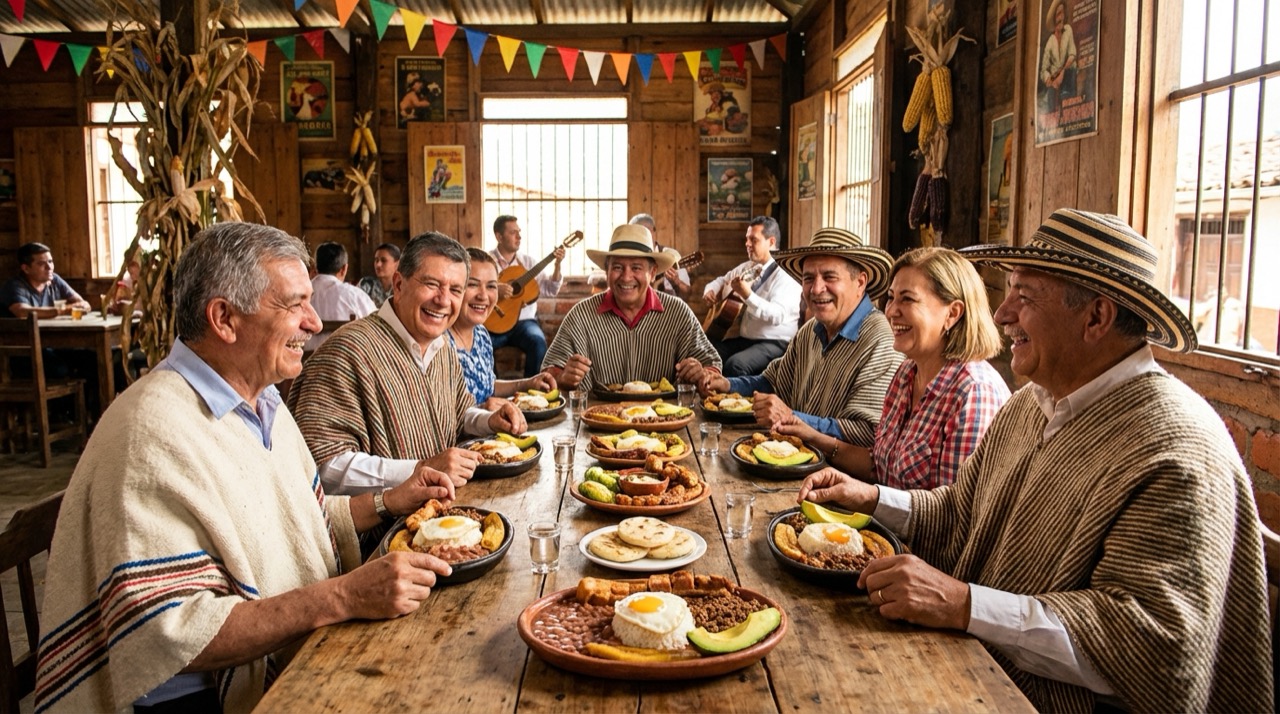
Paisas are widely considered the friendliest people in Colombia, and that is saying something in a country known for warmth. They are proud of their region (Antioquia), their accent, their food, and their city's transformation story. Hospitality is not performative here; strangers will invite you into their homes, insist on paying the bill, and go miles out of their way to help. Return the warmth and you will make friends for life.
Do
- Embrace the 'pues'. Sprinkle it into your sentences and watch Paisas light up. 'Sí, pues' and 'Bueno, pues' are easy starters.
- Compliment Medellín. Paisas are immensely proud of their city's transformation. Saying 'Medellín es increíble' (Medellín is incredible) or 'Qué bonita la ciudad' (What a beautiful city) is always well received.
- Try the voseo. Using 'vos' instead of 'tú' shows you are paying attention to Paisa culture. '¿Vos querés ir?' (Do you want to go?) instead of '¿Tú quieres ir?'.
- Drink the tinto. Coffee is central to Paisa identity. Accepting a tinto when offered is polite and social. Medellín is the gateway to Colombia's coffee region.
- Be warm and open. Paisas greet with a kiss on the cheek (women) or a firm handshake (men). Hug freely among friends. Physical warmth matches the verbal warmth.
- Appreciate the transformation narrative. Medellín went from one of the most dangerous cities in the world to a global model of urban innovation. Acknowledging this respectfully means a lot to locals.
Avoid
- Never glorify Pablo Escobar or narco culture. Many Paisas lost family members to the violence. Asking to visit Escobar's grave or posing at narco landmarks is deeply offensive to most locals. Let them bring it up if they want to.
- Do not call Medellín 'Med-uh-LINN'. The correct pronunciation is 'meh-deh-YEEN'. The double L is pronounced as Y in Latin American Spanish. Mispronouncing it marks you as a tourist instantly.
- Avoid being flashy with electronics or jewelry on the street. 'No dar papaya' applies here as much as anywhere in Colombia.
- Do not assume all of Medellín is El Poblado. Spending your entire trip in the expat bubble means missing the real city. Venture to Laureles, Centro, and the hillside barrios.
- Never refuse food or drink offered in someone's home. Paisa hospitality is sacred. Declining can offend, even if you are full. At minimum, take a sip or a bite.
- Do not discuss how cheap everything is in front of locals earning Colombian wages. What is cheap for you is normal cost of living for them.
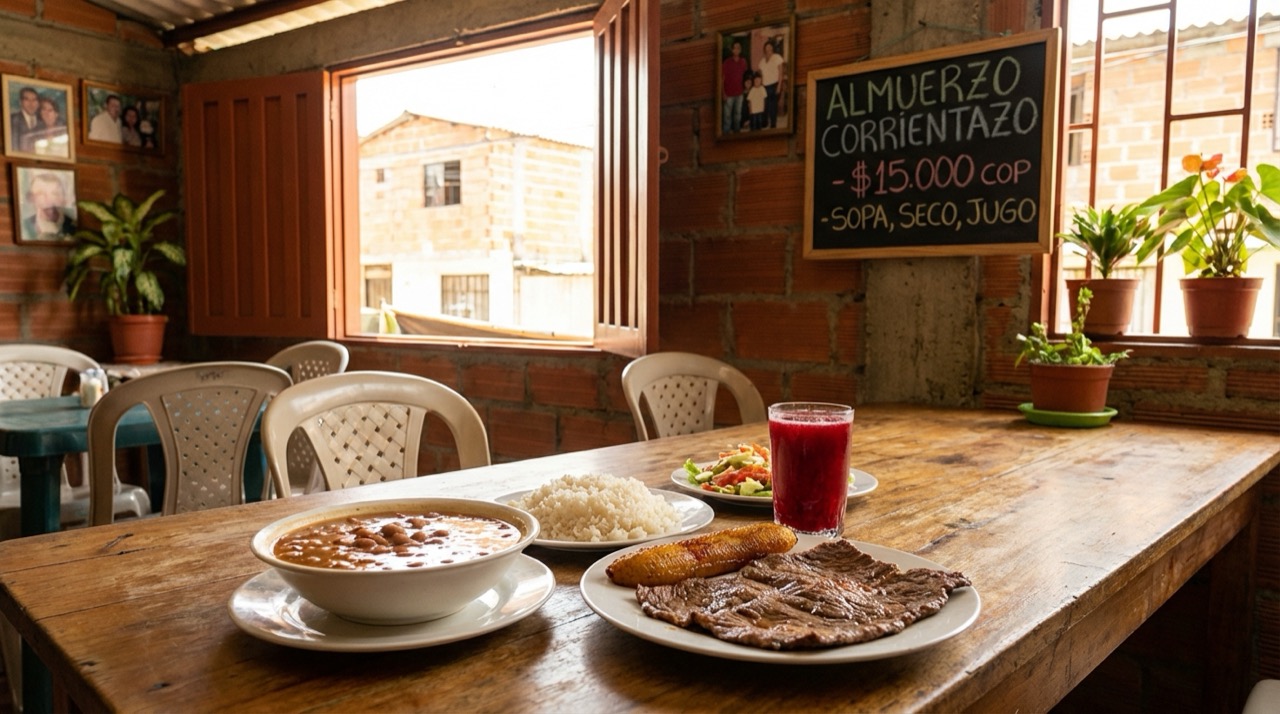
Medellín is remarkably affordable for international travelers. The Colombian peso stretches far, especially outside El Poblado. The corrientazo (set lunch) is your best friend for eating cheaply and well. The metro system is dirt cheap. Street food is safe and costs almost nothing. The main budget trap is the tourist-priced restaurants and bars in El Poblado. Cross the river to Laureles or eat in Centro for dramatically lower prices.
Typical Prices
Money-Saving Tips
- The corrientazo is the best budget hack. A full meal (soup, main plate with rice, beans, meat, plantain, and juice) for around $12,000-15,000 COP. Available in every neighborhood.
- El Poblado is the most expensive area. Laureles and Envigado offer the same quality food and nightlife for significantly less.
- Street food is safe, fresh, and incredibly cheap. Empanadas, arepas de choclo, and buñuelos are all under $5,000 COP.
- The metro system is the cheapest way to get around and reaches most tourist destinations. A single ride costs less than $1 USD.
- Coffee is paradoxically cheap in Colombia. A tinto at a street vendor costs $1,000-1,500 COP. Specialty cafes charge more but still less than international prices.
- The Guatapé day trip can be done cheaply via public bus from Terminal del Norte for around $15,000 COP each way, versus $80,000+ for a guided tour.
- Fondas (traditional Paisa taverns) serve the best and cheapest local food. Look for the ones packed with locals during lunch hour.
- Many cultural attractions are free: Jardín Botánico, Pueblito Paisa, Plaza Botero, and most Metrocable rides are included in regular metro fare.
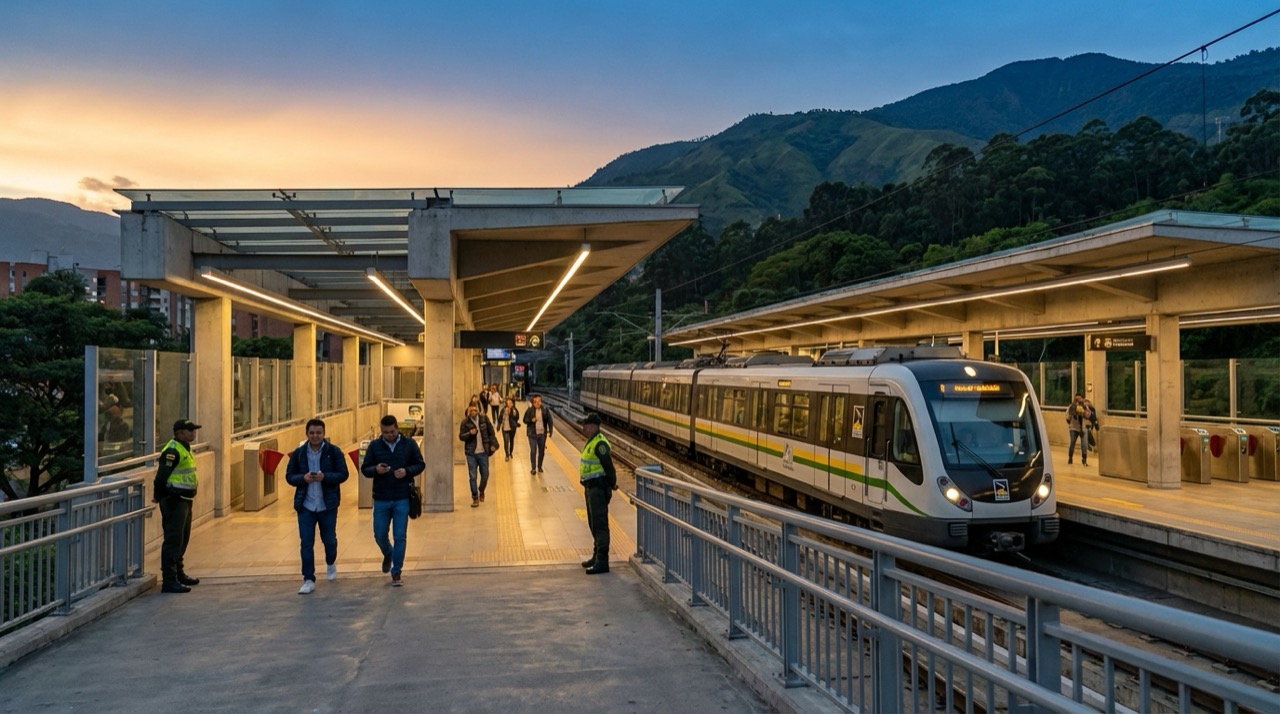
Medellín has transformed dramatically from its violent past but street smarts remain essential. The golden rule is still 'no dar papaya' (don't make yourself a target). Keep your phone out of sight on the street, use rideshare apps at night, and stay in well-traveled areas after dark. Tourist areas (El Poblado, Laureles, the metro system) are generally safe. Hillside barrios should be visited with a local guide during the day. The city's emergency number is 123.
¡Auxilio! / ¡Ayuda!
Help!
/owk-SEE-lee-oh / ah-YOO-dah/
Both work for emergencies. 'Auxilio' is more common in Colombia. Shout it loudly and people will respond. Paisas are quick to help strangers in distress.
Necesito ir al hospital.
I need to go to the hospital.
/neh-seh-SEE-toh eer ahl ohs-pee-TAHL/
Emergency rooms (urgencias) are required to treat everyone. Top hospitals include Clínica Las Américas, Hospital Pablo Tobón Uribe, and Clínica El Rosario.
¡Me robaron!
I was robbed!
/meh roh-BAH-ron/
Phone theft and pickpocketing are the most common crimes against tourists. Report to the nearest CAI (police booth) or call 123. File a report for insurance purposes.
¿Dónde queda el CAI más cercano?
Where is the nearest police station?
/DON-deh KEH-dah el kah-ee mahs sehr-KAH-noh/
CAI (Centro de Atención Inmediata) are small police posts located throughout the city. They are the first point of contact for reporting incidents.
Por favor, llame a la policía.
Please call the police.
/por fah-VOR YAH-meh ah lah poh-lee-SEE-ah/
Emergency number is 123 for all emergencies (police, ambulance, fire). From any phone, including without a SIM card.
Soy alérgico/a a...
I'm allergic to...
/soy ah-LEHR-hee-koh/kah ah/
Common allergens: maní (peanuts), mariscos (shellfish), huevo (egg), leche (milk). Medellín restaurants are generally attentive if you mention allergies clearly.
¿Es seguro caminar por aquí de noche?
Is it safe to walk around here at night?
/ehs seh-GOO-roh kah-mee-NAR por ah-KEE deh NOH-cheh/
A smart question to ask your hotel or hostel staff. They know the block-by-block reality. Trust their judgment over generic tourist advice.
No tengo nada de valor.
I don't have anything valuable.
/noh TEN-goh NAH-dah deh vah-LOR/
If confronted by a thief, comply and hand over what they ask for. Material things are replaceable. Do not resist or chase.
Necesito llamar a mi embajada.
I need to call my embassy.
/neh-seh-SEE-toh yah-MAR ah mee em-bah-HAH-dah/
Most embassies and consulates are in Bogotá, but many countries have honorary consuls in Medellín. Your hotel can help you find the right contact.
No me siento bien. Necesito un médico.
I don't feel well. I need a doctor.
/noh meh see-EN-toh bee-EN. neh-seh-SEE-toh oon MEH-dee-koh/
Medellín has excellent healthcare. Many doctors speak English in the major hospitals. For non-emergencies, pharmacies (droguerías) can recommend over-the-counter solutions.
Community Tips

Ready to learn Spanish for real?
Take these Medellín phrases with you. Decko uses spaced repetition to make sure you actually remember them when you need them.
Free forever. No credit card required.