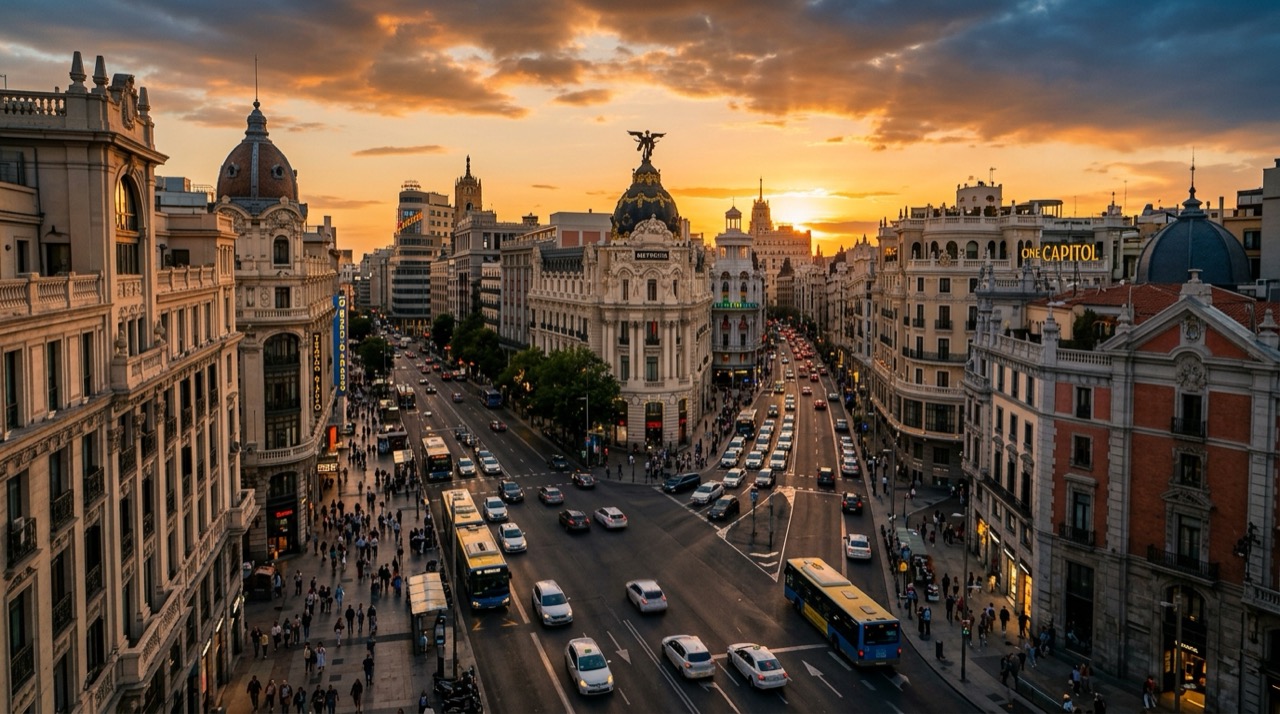
Madrid
Studying Spanish? Decko turns these phrases into smart flashcards that adapt to your memory.
Try free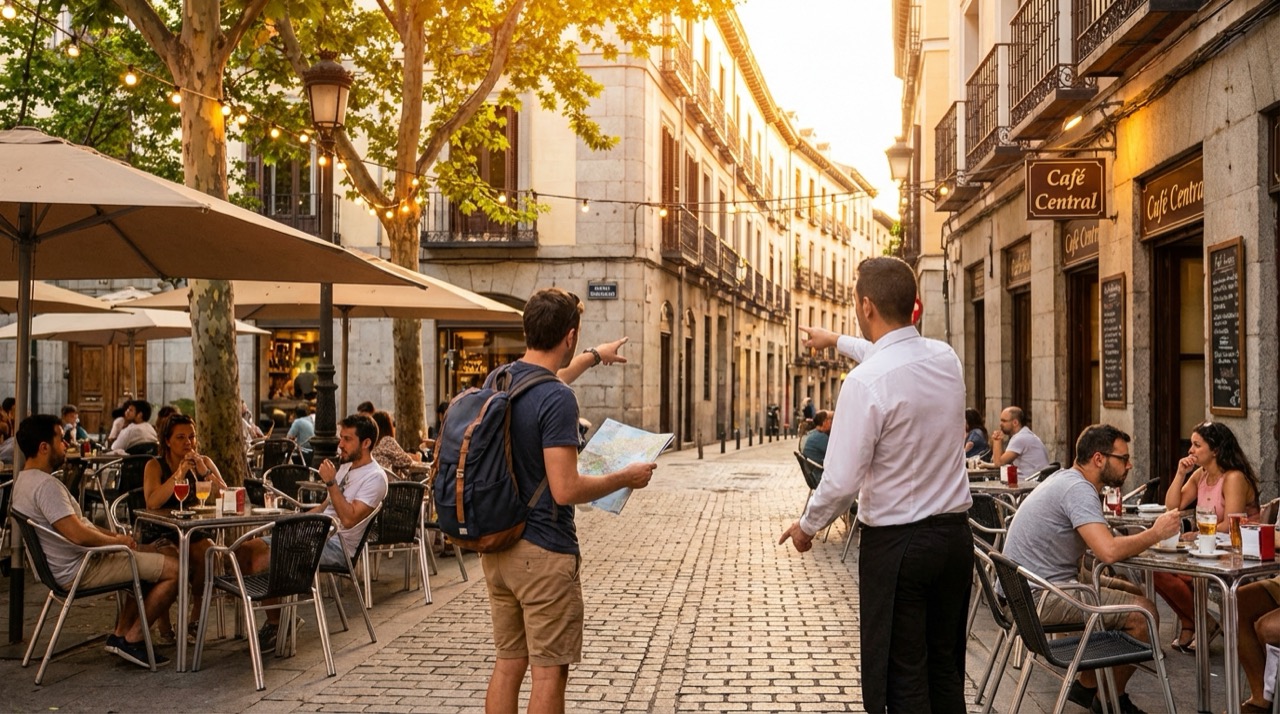
Madrid runs on Peninsular Spanish (castellano), which sounds quite different from Latin American Spanish. You will hear the 'th' sound for c/z (distincion), the vosotros form for 'you all', and locals speaking at what feels like double speed. These phrases will help you navigate the city from day one.
Hola, buenas
Hi, hey there
/OH-lah, BWEH-nahs/
The casual all-purpose greeting in Madrid. Works morning, noon, and night.
Perdona, ¿me puedes ayudar?
Excuse me, can you help me?
/pehr-DOH-nah, meh PWEH-dehs ah-yoo-DAHR/
Use 'perdona' (tu form) with strangers your age or younger. For older people, say 'perdone'.
¿Dónde está la boca de metro más cercana?
Where is the nearest metro entrance?
/DOHN-deh ehs-TAH lah BOH-kah deh MEH-troh mahs thehr-KAH-nah/
Metro entrances are called 'boca de metro' (mouth of the metro). Madrid's metro system is excellent.
¿Cuánto es?
How much is it?
/KWAHN-toh ehs/
Short and direct. Perfectly polite for shops, markets, and bars.
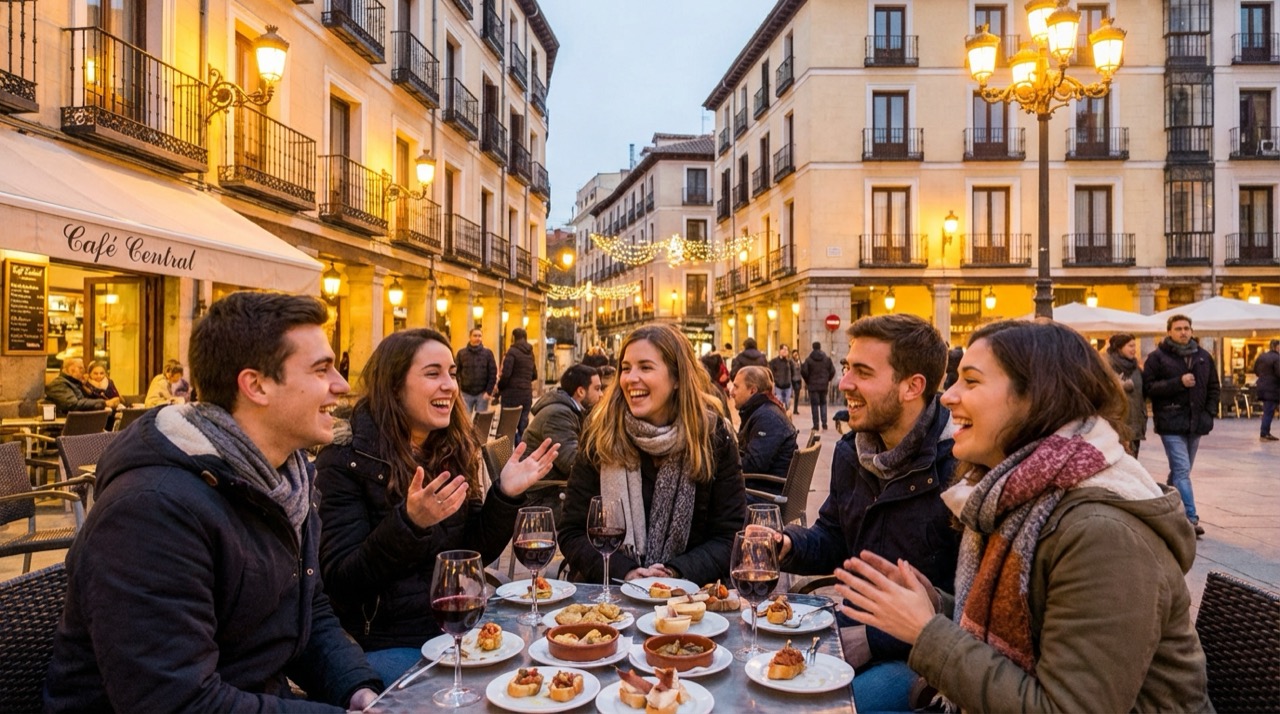
Madrileños have their own flavor of Spanish packed with slang, wordplay, and expressions you will never find in a textbook. The city's casual, direct communication style is part of its charm. Here is the local vocabulary you will hear on the street, in bars, and among friends.
Tío / Tía
Dude / Girl (casual address)
/TEE-oh / TEE-ah/
Used constantly between friends. 'Tío, ¿qué tal?' is basically 'Hey dude, what's up?'
Mola / Mola mucho
Cool / Really cool
/MOH-lah / MOH-lah MOO-choh/
The quintessential Madrid slang word. '¿Mola?' means 'Is it cool?' Used all the time.
Quedamos
Let's meet up
/keh-DAH-mohs/
Short for '¿Quedamos?' Means 'Shall we meet up?' Used to make plans casually.
Flipar
To be amazed / mind-blown
/flee-PAHR/
'Estoy flipando' means 'I can't believe it' or 'I'm blown away.' Very common.
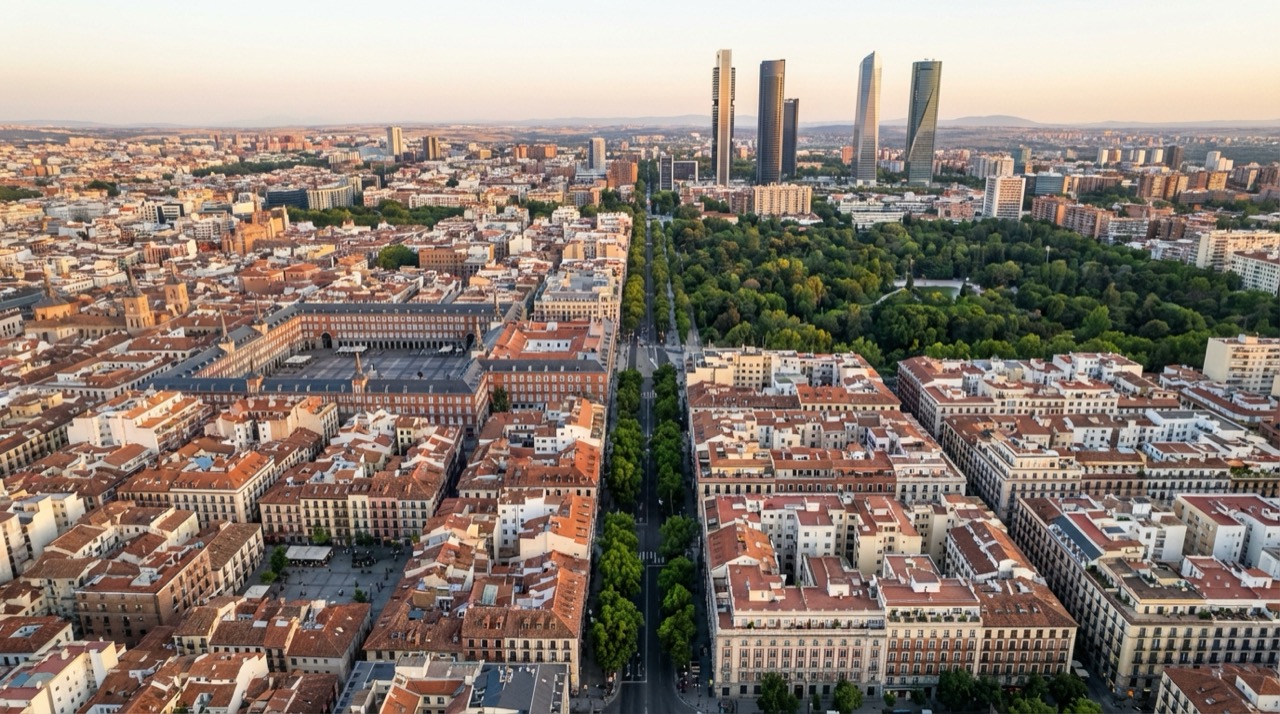
Madrid is a city of barrios, each with its own personality, rhythm, and crowd. The center is walkable and the metro connects everything else. Where you stay shapes your entire Madrid experience.
Malasaña
The hipster heart of Madrid. Narrow streets lined with vintage shops, craft beer bars, and independent cafes. Once the epicenter of La Movida (the 1980s cultural revolution), it still buzzes with creative energy and nightlife.
You will hear 'mazo' (a lot/very) more here than anywhere else in Madrid. It is peak Madrileño slang territory.
La Latina
The tapas capital of Madrid. Centered around Calle de la Cava Baja, this medieval-street neighborhood is where locals go for Sunday afternoon cañas. The famous El Rastro flea market runs every Sunday morning along its southern edge.
'Ir de cañas por La Latina' (going for beers around La Latina) is a classic Madrid Sunday plan. Say it and locals will approve.
Chueca
Madrid's LGBTQ+ neighborhood and one of the city's most vibrant areas. Packed with boutique shopping, excellent restaurants, and buzzing nightlife. The annual Orgullo (Pride) parade in June is one of Europe's largest.
'Chueca' is pronounced 'CHWEH-kah'. If you say it with English sounds, people will know you just arrived.
Lavapiés
Madrid's most multicultural neighborhood. A patchwork of cultures with incredible international food, art galleries, and alternative theater. Steep streets, no pretense, and some of the best-value dining in the city.
The name means 'wash your feet' (lava + pies). Legend says there was a fountain where people cleaned up before entering the old city.
Salamanca
The upscale district of Madrid. Wide tree-lined boulevards, luxury brands on Calle Serrano, and elegant architecture. A completely different Madrid from the gritty center. Great for window shopping and fine dining.
In posh Salamanca, you will hear more formal Spanish. 'Usted' (formal you) is used more often here than in casual Malasaña.
Want to actually remember these phrases?
Save them to your flashcard deck and Decko will quiz you at the perfect time using spaced repetition.
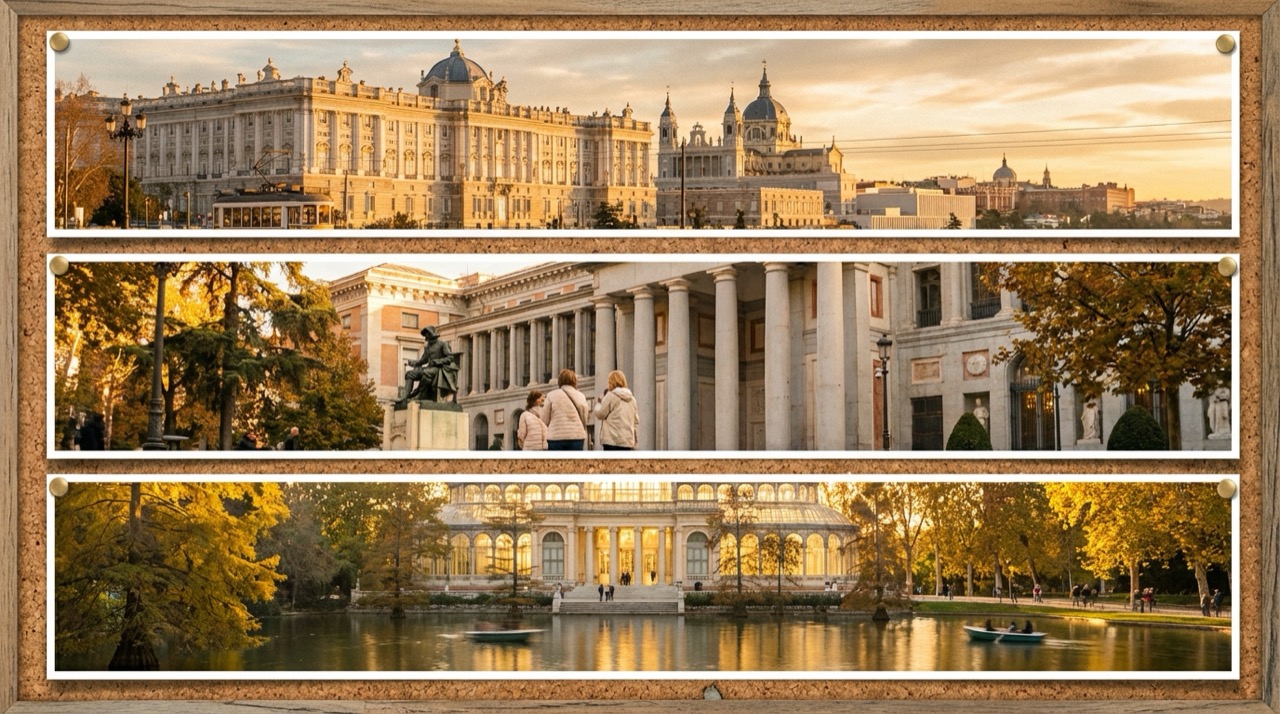
Madrid is packed with world-class museums, grand plazas, and green spaces. The big three museums alone could fill a week. Many attractions are free at specific times, so plan smartly and you can see the best of Madrid without spending much.
Museo del Prado
One of the world's greatest art museums. Home to masterpieces by Velazquez, Goya, El Greco, and Bosch. The 'Las Meninas' by Velazquez alone is worth the visit. Plan at least 2 to 3 hours.
Free entry Mon-Sat 6pm-8pm and Sun/holidays 5pm-7pm. Ask 'Entrada gratuita, por favor' (Free entry, please).
Parque del Retiro
Madrid's green lung. A 125-hectare park with a boating lake, crystal palace, rose garden, and shaded walking paths. Locals come here to escape the heat, jog, read, or row boats on the Estanque Grande.
'Retiro' means 'retreat.' Say '¿Vamos al Retiro?' (Shall we go to Retiro?) to suggest a park visit.
Palacio Real
The official residence of the Spanish royal family, though they do not actually live here. With over 3,000 rooms, it is the largest functioning royal palace in Europe. The changing of the guard happens the first Wednesday of each month.
Free for EU citizens and residents. Others can say '¿Cuánto cuesta la entrada?' (How much is the entry fee?).
Puerta del Sol
The geographic center of Spain (Km 0 marker is set in the pavement). This bustling plaza is where Madrileños gather for New Year's Eve to eat 12 grapes at midnight. Always crowded, always alive.
'Sol' is also a major metro station. When locals say 'Quedamos en Sol' (Let's meet at Sol), they mean the plaza.
Museo Reina Sofía
Spain's national museum of 20th-century art. The star is Picasso's 'Guernica,' a massive anti-war painting that hits harder in person than any photo can convey. Also excellent collections of Dali and Miro.
Free Mon-Sat 7pm-9pm and Sun 12:30pm-2:30pm. Photography is not allowed in the Guernica room.
Templo de Debod
An authentic 2,200-year-old Egyptian temple in the middle of Madrid. A gift from Egypt in 1968, it sits in a park with some of the best sunset views in the city. Go 30 minutes before sunset for the full experience.
'Atardecer' means sunset. 'Vamos a ver el atardecer en Debod' (Let's go watch the sunset at Debod) is a classic Madrid plan.
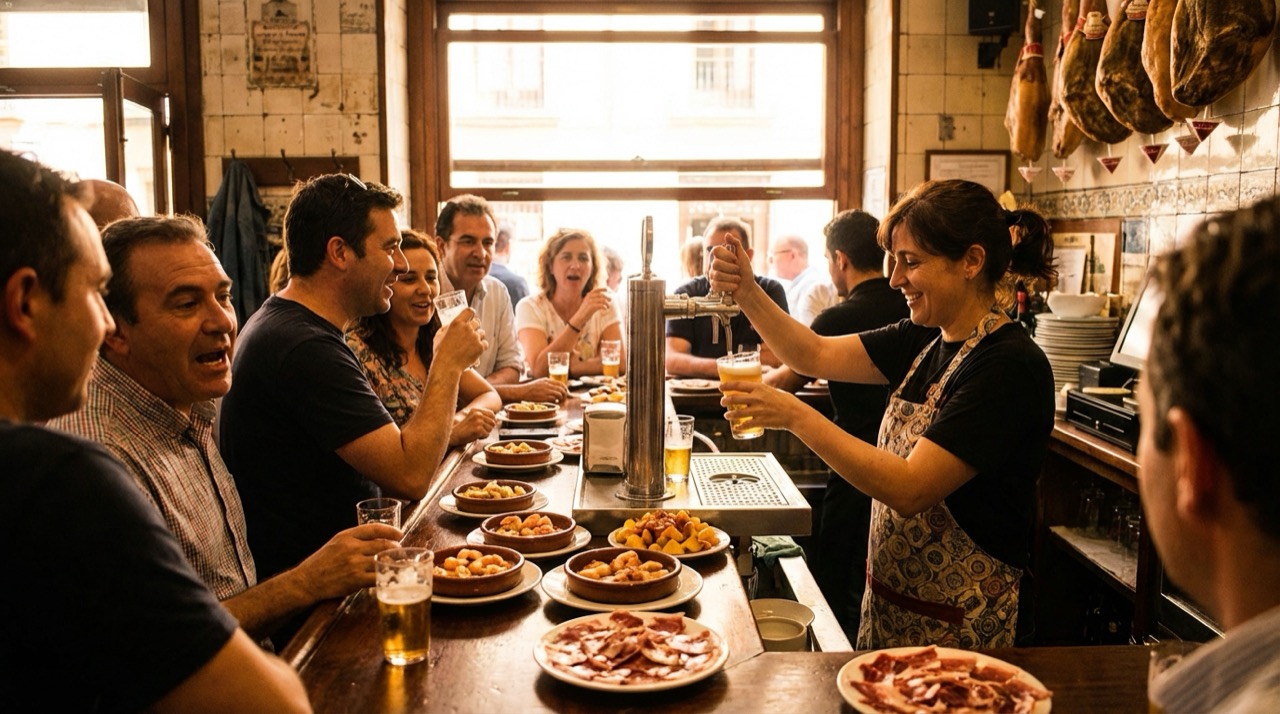
Madrid's food culture revolves around tapas, late meals, and social eating. Lunch is the main meal (2pm to 4pm), and dinner rarely starts before 9:30pm. Many bars serve a free tapa with every drink. The best meals here happen standing at a bar counter, not sitting at a white-tablecloth restaurant.
Dining Etiquette
- Tipping is not expected but rounding up or leaving 5-10% for good service is appreciated
- Lunch is 2pm to 4pm, dinner is 9:30pm to midnight. Eating at 7pm marks you as a tourist instantly
- Standing at the bar (barra) is often cheaper than sitting at a table (mesa) or terrace (terraza)
- Many traditional bars give a free tapa with each drink. Ask '¿Ponen tapa?' (Do you serve a tapa with the drink?)
- Bread is usually charged separately. Declining it is fine: 'Sin pan, gracias'
- Splitting the bill equally (hacer cuentas) is normal among friends. Asking for separate checks is less common
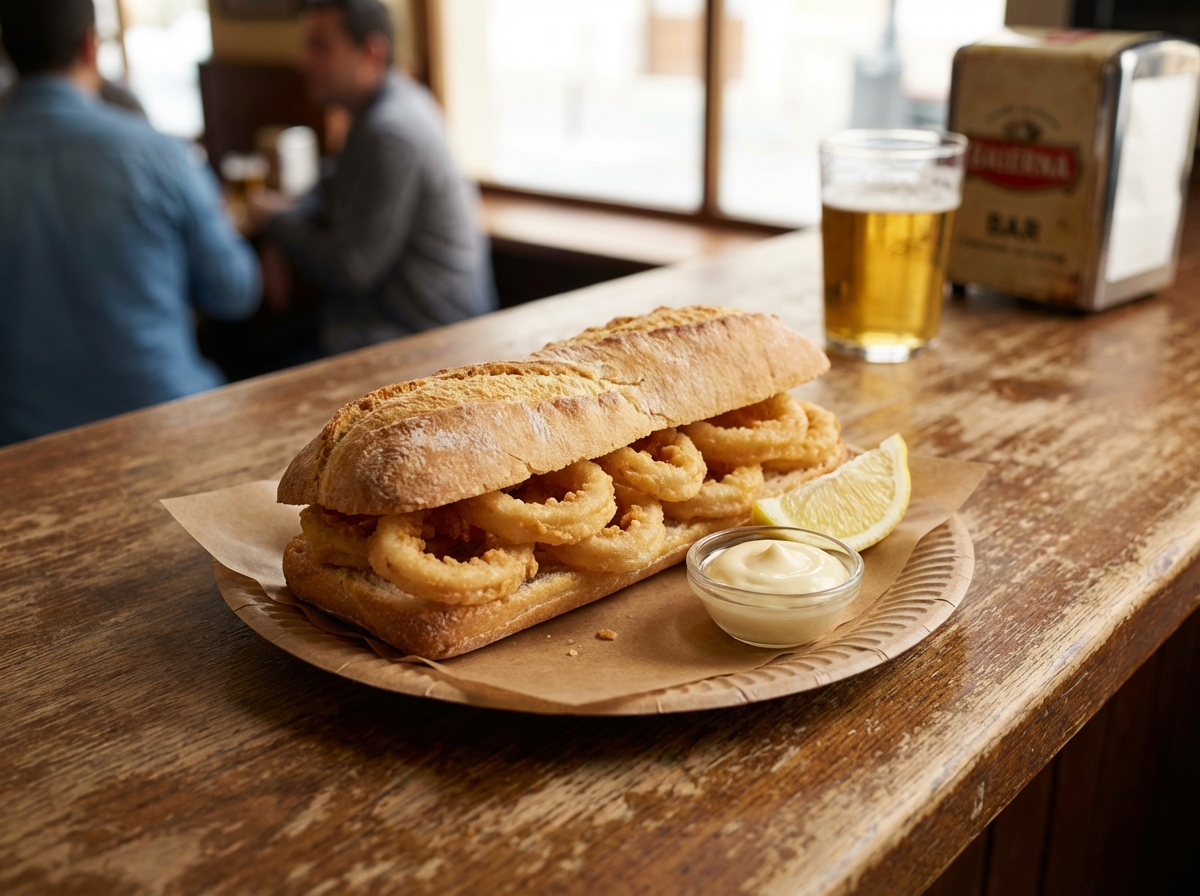
Bocadillo de calamares
Fried squid rings in a crusty baguette. This is Madrid's signature street food, found in bars around Plaza Mayor. Simple, crunchy, perfect with a squeeze of lemon.
How to order
Ponme un bocata de calamares (Give me a squid sandwich). 'Bocata' is the casual word for 'bocadillo.'
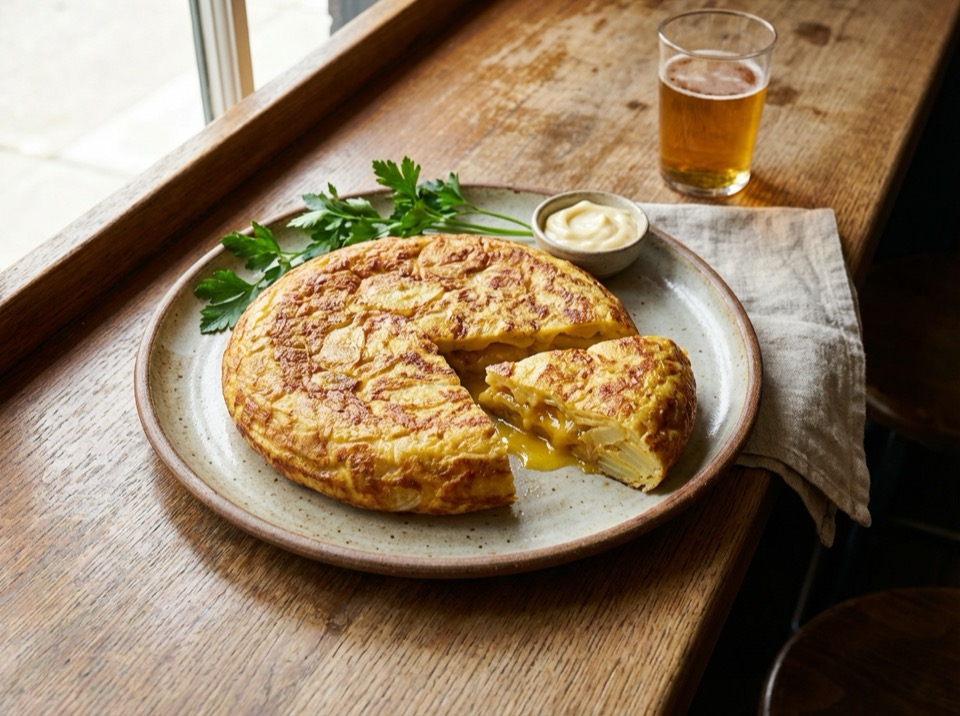
Tortilla española
Spanish potato omelette. The great debate: runny center (poco hecha) or fully set (muy hecha)? Every bar has one under a glass dome on the counter. Best eaten as a tapa or in a sandwich.
How to order
Ponme un pincho de tortilla (Give me a slice of tortilla). Specify: '¿La tienen poco hecha o muy hecha?' (Is it runny or well-done?).
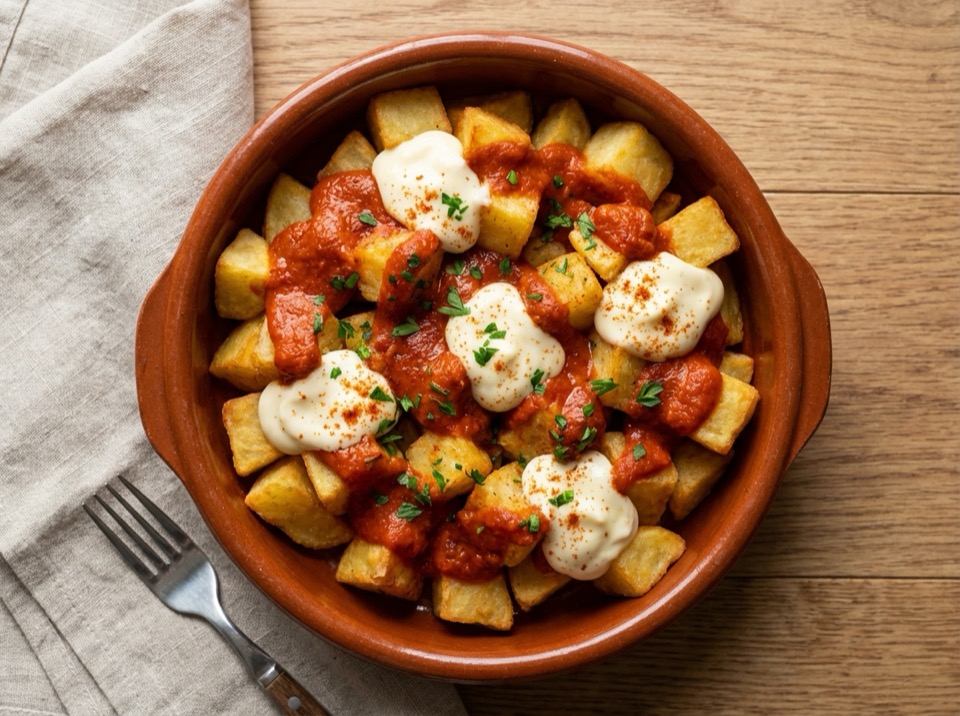
Patatas bravas
Fried potato cubes with spicy brava sauce and sometimes alioli. Every bar has its own version. A must-order with your first caña. This is the universal tapas bar test dish.
How to order
Ponme unas bravas (Give me some bravas). Locals just say 'bravas,' never the full name.
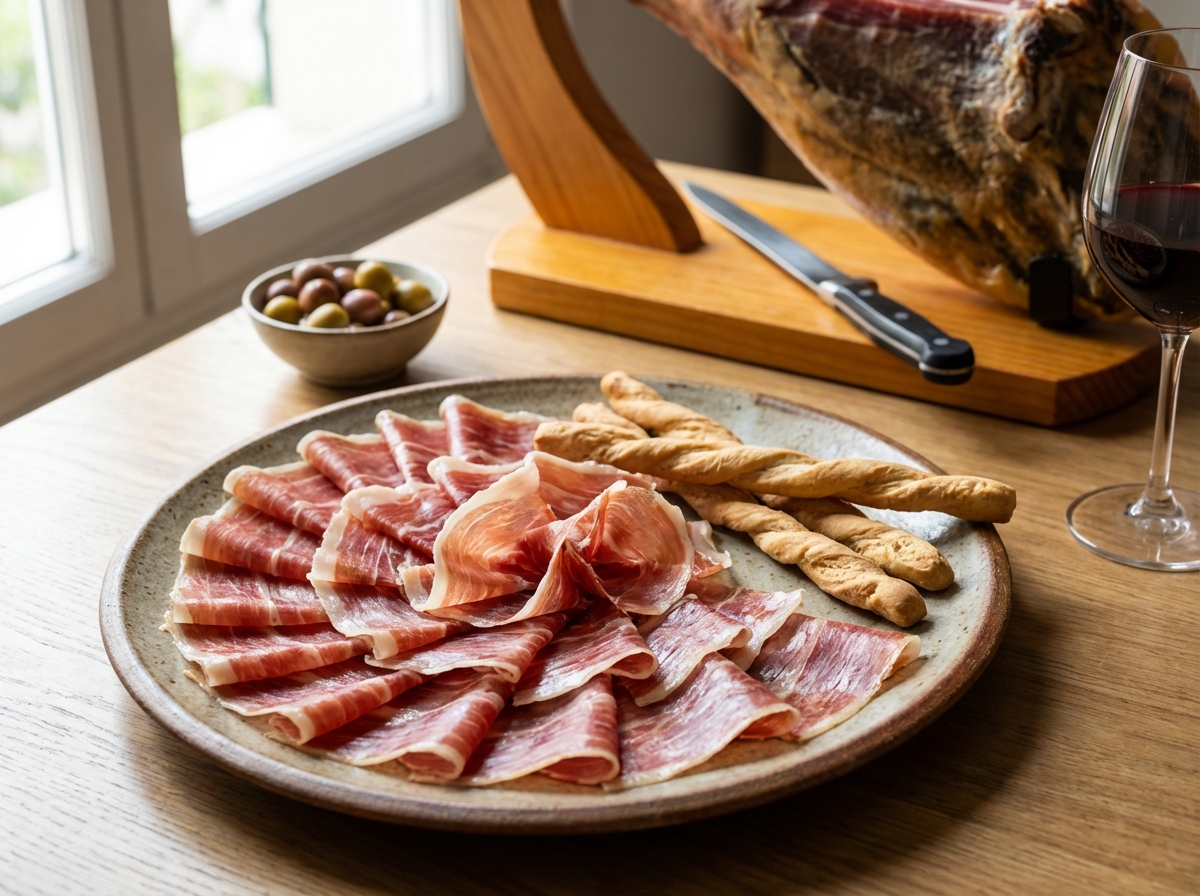
Jamón ibérico
Dry-cured ham from acorn-fed Iberian pigs. The finest ham in the world, sliced paper-thin. Madrid has dedicated jamón bars (jamonerías) where you can taste different grades. Even supermarket jamón here is excellent.
How to order
Ponme una ración de jamón ibérico (Give me a serving of Iberian ham). Ask '¿De bellota?' to check if it is the premium acorn-fed variety.
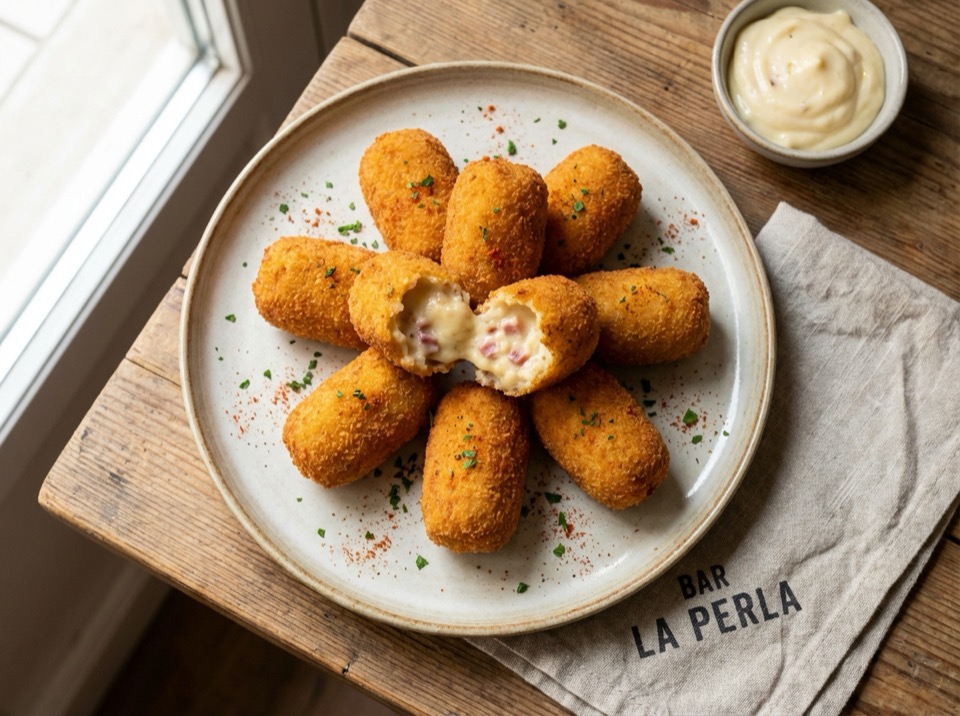
Croquetas
Creamy béchamel-filled, breadcrumb-coated bites. Usually jamón (ham) or bacalao (cod) flavored. Every bar and grandmother in Madrid has their own recipe. A perfect beer companion.
How to order
Ponme unas croquetas de jamón (Give me some ham croquettes). Or ask '¿De qué son las croquetas?' (What flavor are the croquettes?).
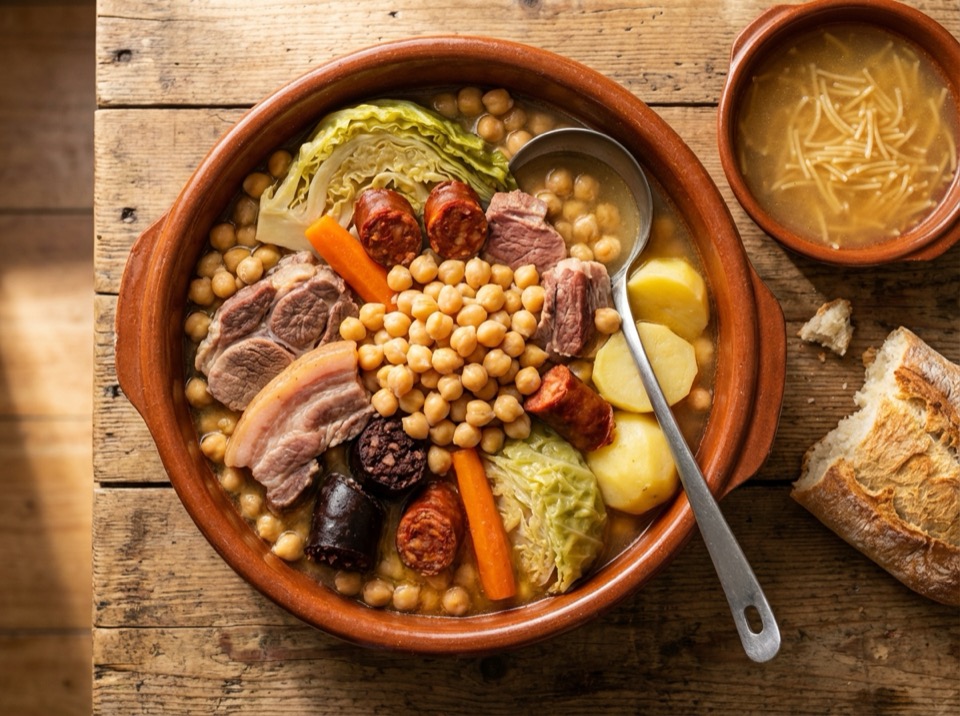
Cocido madrileño
Madrid's signature winter stew. A hearty chickpea-based dish served in stages: first the broth as soup, then the vegetables, then the meats. It is a full meal event, traditionally eaten on Wednesdays.
How to order
El cocido, por favor. Many restaurants serve it only at lunch and only on certain days. Ask '¿Tienen cocido hoy?' (Do you have cocido today?).
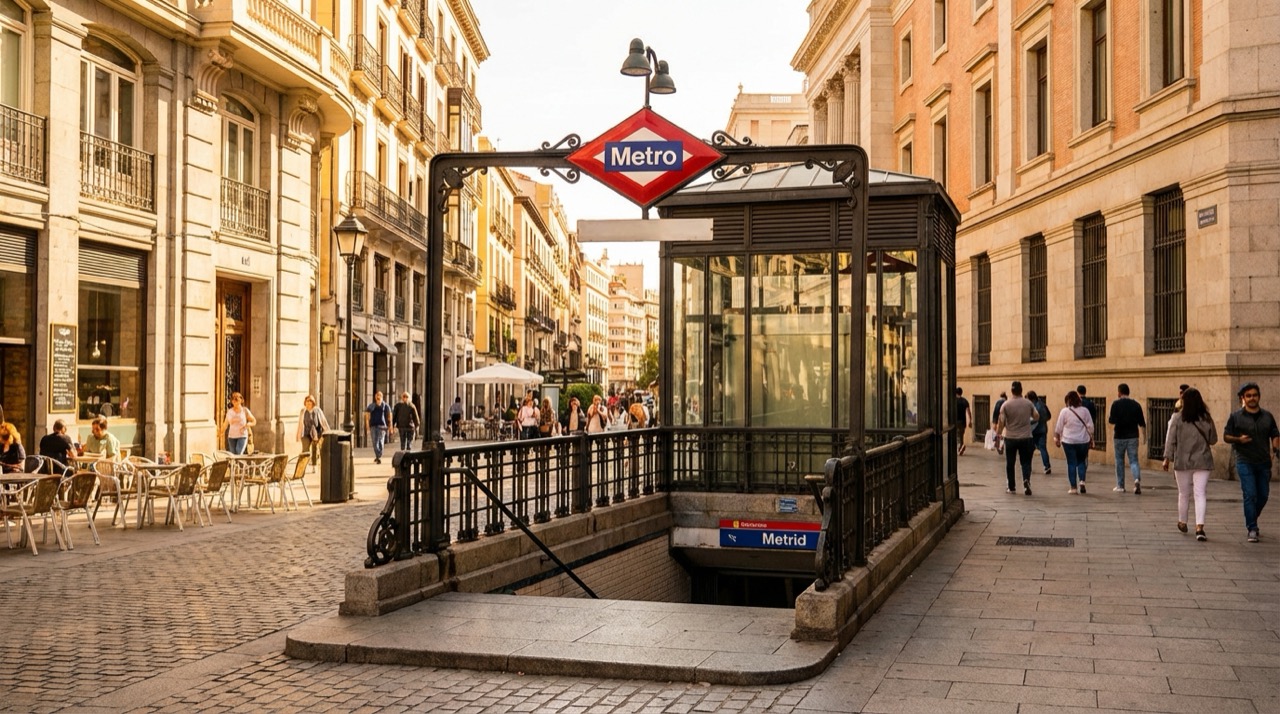
Madrid has an excellent, affordable public transport system. The metro is fast and covers the entire city. Walking between central neighborhoods takes 15 to 20 minutes and is the best way to discover the city. Taxis are reasonably priced and Uber/Cabify both operate here.
Metro
Fast, clean, and runs until 1:30am (later on weekends). 13 lines cover the entire city. A 10-trip Metrobus card works on both metro and buses.
- Buy a rechargeable 'Tarjeta Multi' transport card at any station. Single tickets are wasteful
- Tourist pass (Abono Turístico) covers unlimited travel for 1 to 7 days
- Avoid Line 1 during rush hour (8am-9:30am, 6pm-8pm). It is always packed
- The airport metro supplement costs extra. Check if your tourist pass covers it
Walking
Central Madrid is very walkable. Gran Vía to Sol is 10 minutes, Sol to Retiro is 15 minutes. The best way to explore neighborhoods like Malasaña, La Latina, and Chueca.
- Wear comfortable shoes. Madrid's sidewalks are mostly flat but you will walk far more than expected
- Avoid walking during peak afternoon heat in summer (2pm to 5pm). Madrid hits 40C regularly in July and August
- Most neighborhoods are safe for walking at night, even late. Madrid is a night city
Bus
Extensive bus network that covers areas the metro misses. Night buses (Buhos) run when the metro closes. Same Tarjeta Multi card works.
- Bus route maps are at every stop and on the EMT Madrid app
- Night buses (Buhos) depart from Plaza de Cibeles. Very useful on weekend nights
- Enter through the front door and tap your card. Exit through the middle or rear doors
Taxi / Rideshare
White taxis with a red stripe are everywhere. Uber and Cabify both operate legally. Fixed rate from the airport to the center (30 euros).
- Airport to city center is a flat rate of 30 euros by taxi. Confirm before departing: '¿Es tarifa fija al centro?' (Is it a fixed rate to the center?)
- Short taxi rides within the center cost 5 to 10 euros. Very reasonable
- Cabify is often slightly cheaper than Uber in Madrid
- Tipping taxi drivers is not expected but rounding up is appreciated
Cercanías (Commuter Rail)
Regional trains connecting Madrid to nearby cities and the outskirts. Useful for day trips to Toledo, Segovia, and El Escorial.
- Cercanías is integrated with metro stations at major hubs (Sol, Atocha, Nuevos Ministerios)
- Toledo is about 30 minutes by high-speed AVE from Atocha station
- Your transport card may cover some Cercanías zones. Check the zone map
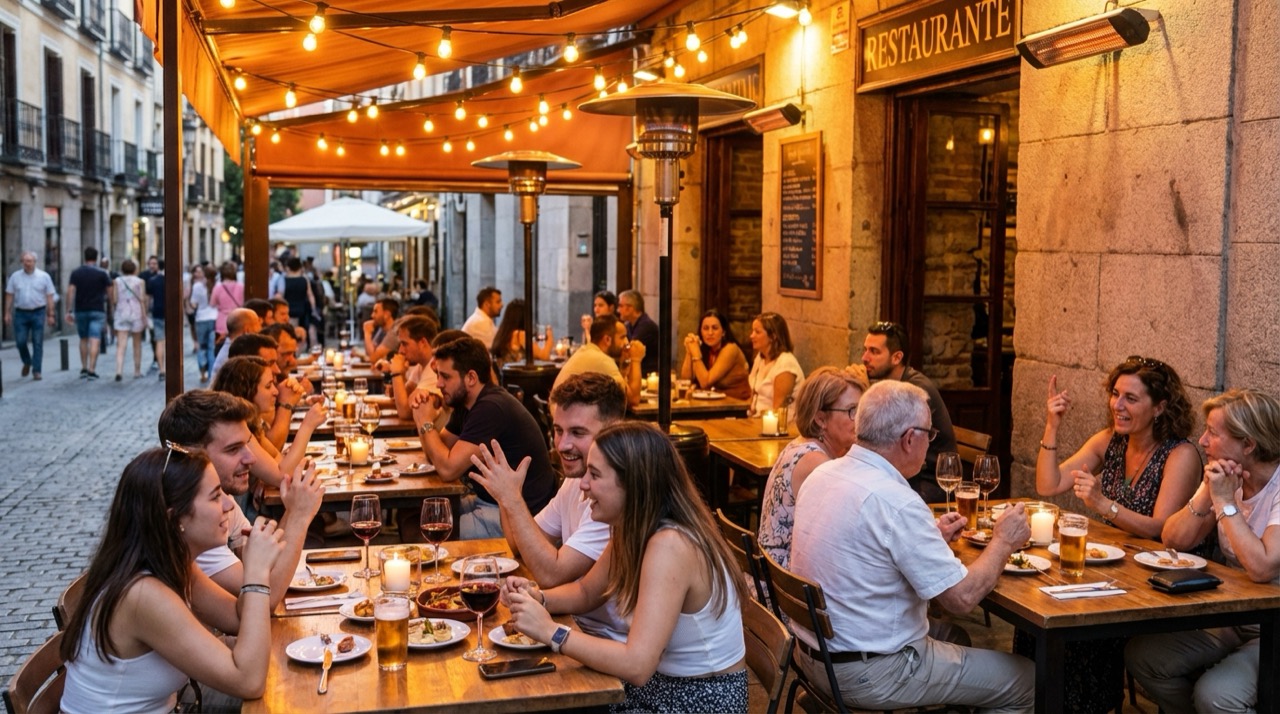
Madrid has a unique rhythm that revolves around late meals, social gatherings, and a genuine love of life. The city truly comes alive after 10pm. Understanding these cultural rhythms will transform your visit from tourist to temporary local.
Do
- Greet everyone. Two kisses on the cheek (right first) is standard when meeting someone through friends. Handshakes for formal introductions.
- Embrace the late schedule. Lunch at 2pm, afternoon coffee at 5pm, dinner at 10pm, drinks at midnight. This is not exaggeration.
- Learn to say '¿Qué tal?' (How are you?) constantly. It is the social lubricant of all Madrid interactions.
- Try speaking Spanish, even badly. Madrileños genuinely appreciate the effort and will warm up to you immediately.
- Explore beyond the tourist center. The real Madrid is in neighborhood bars where the menu is handwritten on a chalkboard.
- Accept that plans in Madrid are fluid. '9pm' might mean 9:30pm or 9:45pm. Relax into it.
- Understand the 'vosotros' form. In Madrid and all of Spain, 'vosotros' (you all) is used constantly. If you only know Latin American Spanish, this is the biggest grammar difference.
Avoid
- Do not eat dinner before 9pm unless you want to sit alone in an empty restaurant
- Do not rush meals. A Madrid lunch can last 2 hours and nobody is checking their watch
- Do not confuse Peninsular and Latin American Spanish pronunciation. In Madrid, 'z' and soft 'c' are pronounced 'th' (as in 'think'). This is distincion, not a lisp
- Do not skip the sobremesa. The post-meal conversation over coffee and maybe a copa is sacred social time
- Do not tip 20% like in the US. Rounding up or 5-10% is generous by Madrid standards
- Do not assume Sunday is quiet. El Rastro flea market, Retiro Park, and La Latina bars are packed every Sunday
- Do not plan tightly. Madrid rewards spontaneity. The best nights start with 'just one caña' and end at 3am
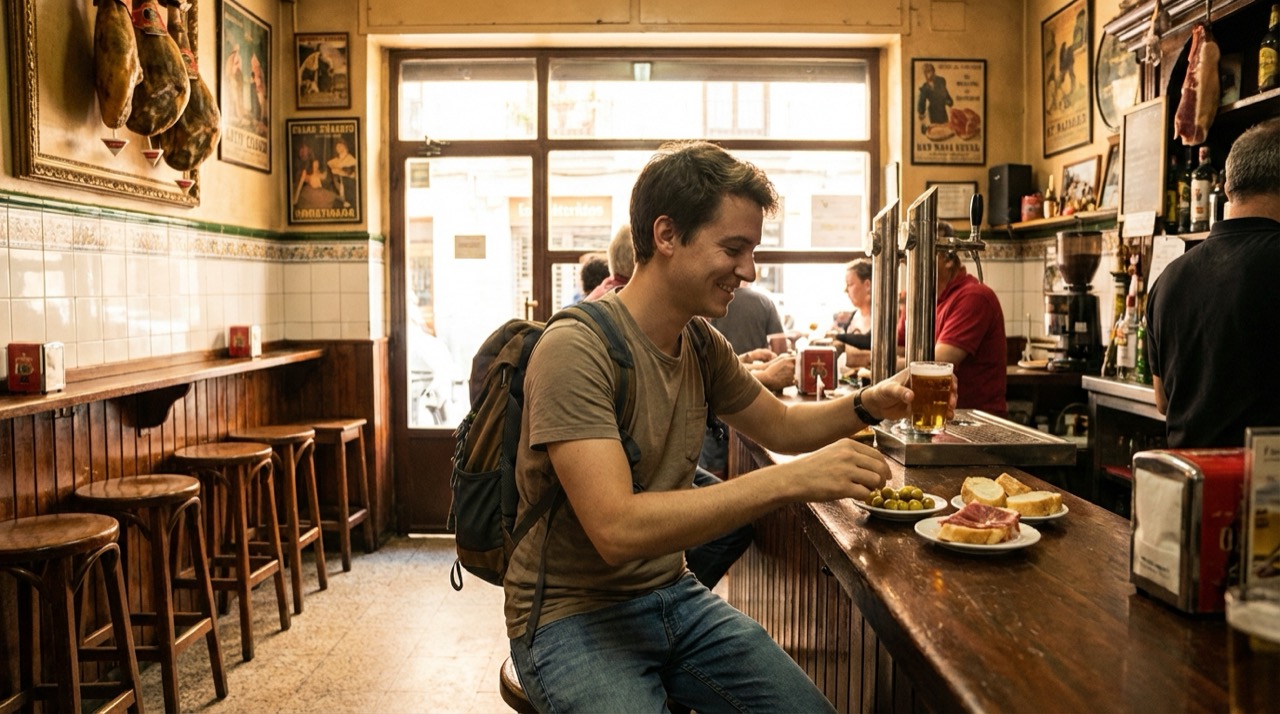
Madrid is one of the most affordable major European capitals. You can eat incredibly well for very little, museums are free at specific times, and public transport is cheap. A smart traveler can experience the best of Madrid on a modest budget.
Typical Prices
Money-Saving Tips
- The 'menu del dia' (daily set menu) at lunch is the best deal in Madrid. Three courses plus bread and a drink for 10-15 euros. Available at most restaurants on weekdays.
- Major museums are free at specific times: Prado (Mon-Sat 6pm-8pm, Sun 5pm-7pm), Reina Sofia (Mon-Sat 7pm-9pm, Sun 12:30pm-2:30pm)
- Many bars in traditional neighborhoods still serve a free tapa with every drink. La Latina and Lavapiés are good bets.
- Tap water is safe and free. Ask for 'agua del grifo' (tap water) at restaurants instead of buying bottled.
- The Tarjeta Multi is much cheaper per ride than single tickets. Load 10 trips and share between travel companions.
- Supermarkets like Mercadona and DIA are excellent for cheap, quality groceries. Good bread, cheese, and jamón for picnics in Retiro.
- BiciMAD (city bike share) costs 2 euros for an annual casual pass plus small per-ride charges. Great for flat central Madrid.
- Free walking tours start daily from Plaza Mayor and Puerta del Sol. Tip-based, so you pay what you think it was worth.
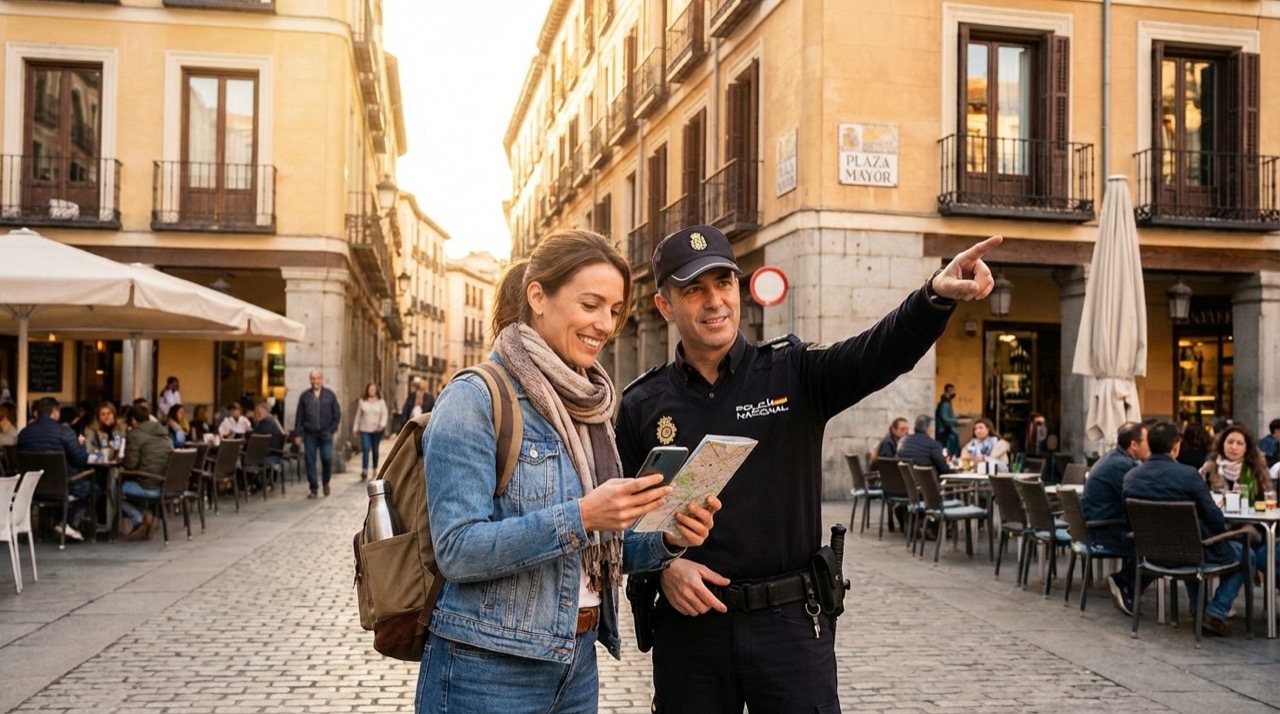
Madrid is generally very safe, even late at night. Violent crime against tourists is extremely rare. The main concern is pickpocketing in crowded tourist areas (Sol, Gran Via, metro). Knowing a few safety phrases and staying aware of your surroundings is all you need.
¡Socorro! / ¡Ayuda!
Help!
/soh-KOH-rroh / ah-YOO-dah/
Socorro is more urgent/dramatic. Ayuda is the general word for help.
Necesito un médico
I need a doctor
/neh-theh-SEE-toh oon MEH-dee-koh/
For non-emergencies, go to a 'centro de salud' (health center). For emergencies, call 112.
Llame a la policía, por favor
Call the police, please
/YAH-meh ah lah poh-lee-THEE-ah, pohr fah-VOHR/
Emergency number is 112 (all services). National Police: 091. Local Police: 092.
Me han robado
I've been robbed
/meh ahn roh-BAH-doh/
File a police report ('denuncia') at any police station. You will need it for insurance claims.
¿Dónde está la farmacia más cercana?
Where is the nearest pharmacy?
/DOHN-deh ehs-TAH lah fahr-MAH-thyah mahs thehr-KAH-nah/
Spanish pharmacies (green cross sign) can provide many medications without a prescription and give basic medical advice.
Soy alérgico/a a...
I'm allergic to...
/soy ah-LEHR-hee-koh/kah ah/
Critical for food allergies. Common ones: 'los frutos secos' (nuts), 'el marisco' (shellfish), 'el gluten' (gluten).
No me encuentro bien
I don't feel well
/noh meh ehn-KWEHN-troh byehn/
A polite way to say you are feeling unwell. People will ask '¿Qué te pasa?' (What's wrong?).
¿Es seguro por aquí de noche?
Is it safe around here at night?
/ehs seh-GOO-roh pohr ah-KEE deh NOH-cheh/
Most of central Madrid is safe at night. Locals can point you away from any sketchy pockets.
Community Tips

Ready to learn Spanish for real?
Take these Madrid phrases with you. Decko uses spaced repetition to make sure you actually remember them when you need them.
Free forever. No credit card required.