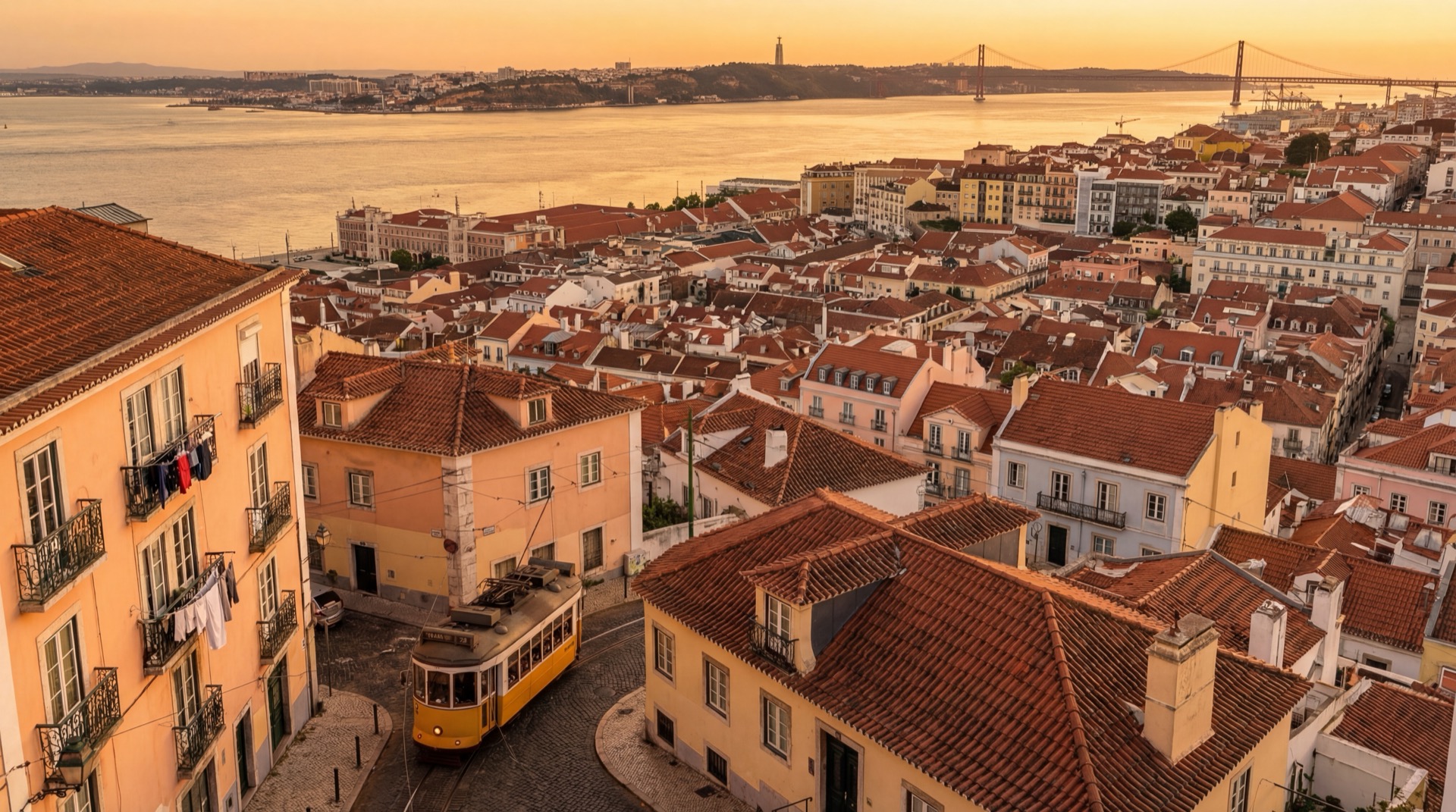
Lisboa
Studying Portuguese? Decko turns these phrases into smart flashcards that adapt to your memory.
Try free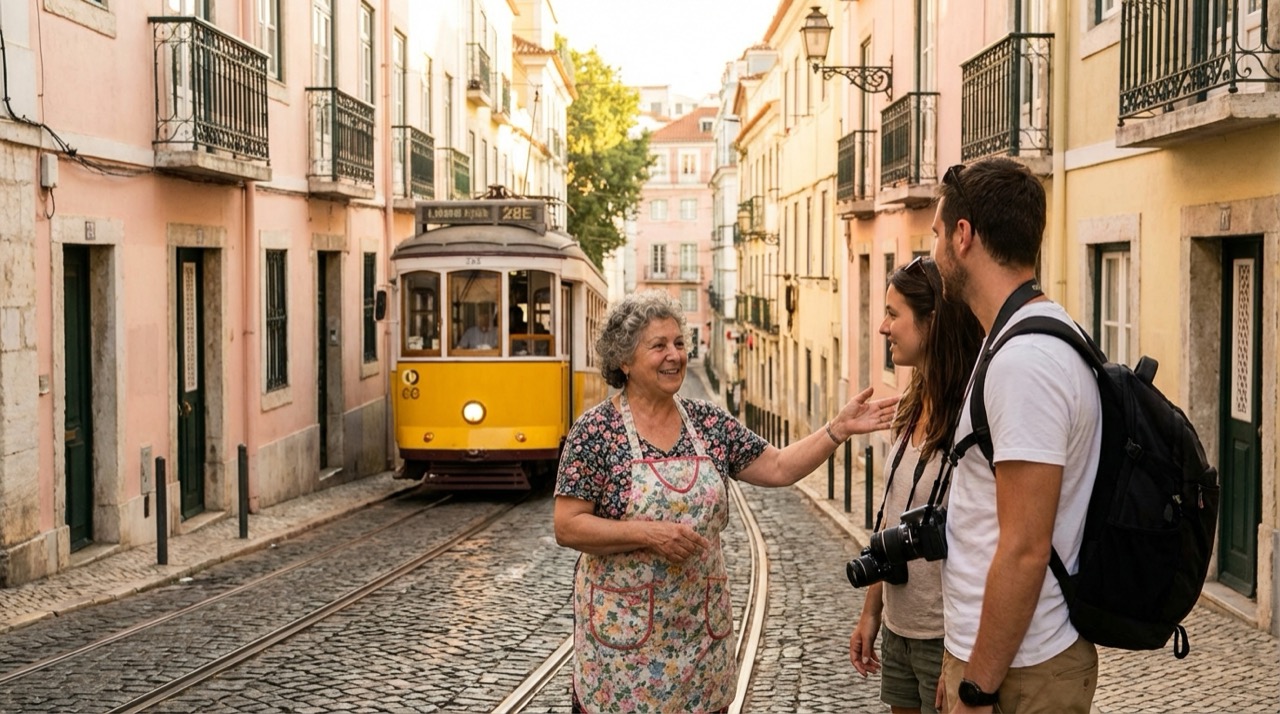
European Portuguese sounds very different from Brazilian Portuguese. Vowels are swallowed, consonants are sharper, and the rhythm is faster and more clipped. Lisboetas appreciate the effort even if you speak with a Brazilian accent. Key difference: 'Por favor' works fine, but 'Faz favor' is more authentically Portuguese. And do not use 'voce' casually. It can sound rude in Portugal. Instead, use 'o senhor/a senhora' or just conjugate the verb without a pronoun.
Bom dia
Good morning
/bom DEE-ah (PT-PT: lips more closed, 'dia' crisp, not 'JEE-ah' like Brazil)/
Same words as Brazilian Portuguese but the pronunciation is noticeably different. In Portugal the vowels are tighter and the 'd' stays a hard 'd', not the soft 'j' sound Brazilians use.
Boa tarde / Boa noite
Good afternoon / Good evening
/BOH-ah TAR-deh / BOH-ah NOY-teh/
Used from about 1pm onward (tarde) and after sunset (noite). A polite way to enter any shop, restaurant, or conversation.
Faz favor
Please / Excuse me
/fahz fah-VOR/
The Portuguese way to say 'please' or to get someone's attention. Used more often than 'por favor' in daily speech. Works in shops, restaurants, and on the street.
Obrigado / Obrigada
Thank you (male / female speaker)
/oh-bree-GAH-doo / oh-bree-GAH-dah/
Same word as Brazil, but the Portuguese accent is crisper. The 'o' at the end is more closed, almost like 'oo' rather than the open Brazilian 'oh'.
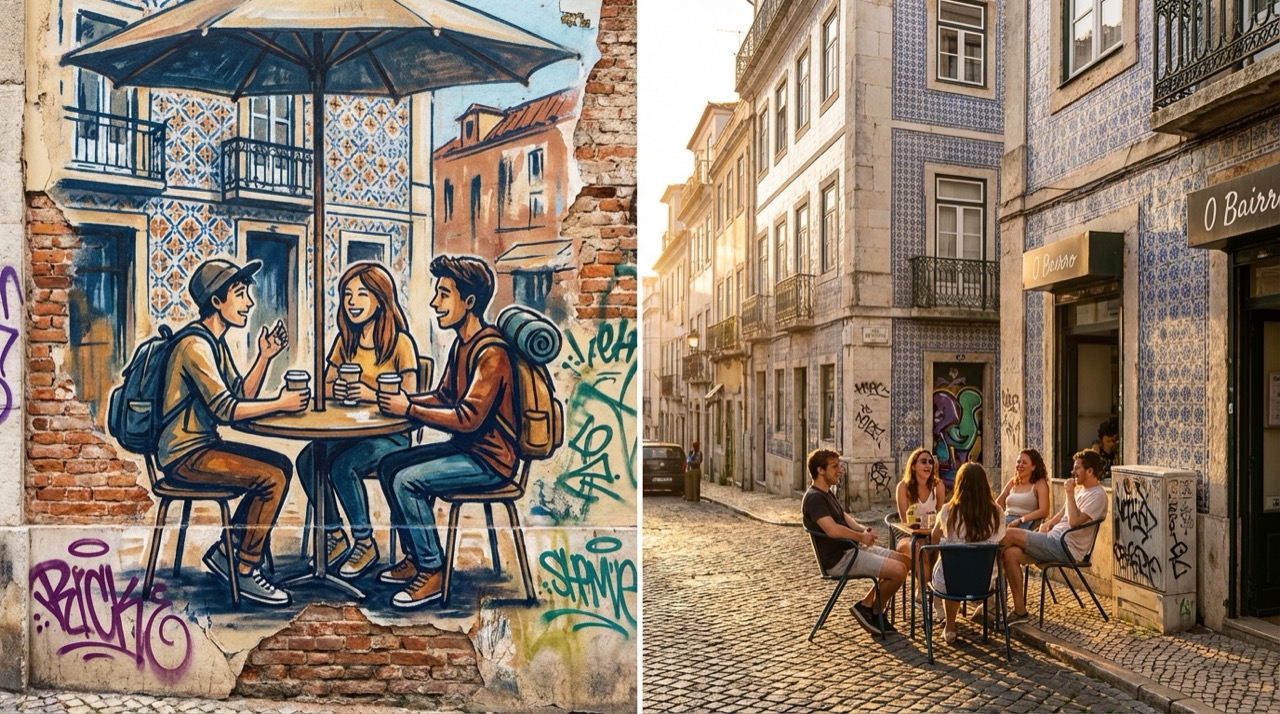
Portuguese slang is very different from Brazilian slang. Words that are common in Brazil may sound odd or even rude in Portugal, and vice versa. Lisbon has its own set of casual expressions that you will hear constantly in cafes, tascas, and on the street. Learning a few will instantly change how locals interact with you.
Fixe!
Cool! / Great! / Awesome!
/FEESH/
The quintessential Portuguese slang word. Used constantly for anything positive. 'O concerto foi fixe!' (The concert was cool!). In Brazil, nobody uses this word.
Giro / Gira
Cute / Cool / Nice (male / female)
/ZHEE-roo / ZHEE-rah/
Can describe a person ('Ela e muito gira' = She is very cute) or a thing ('Que giro!' = How cool!). Very common in everyday speech.
Bue
A lot / Very / So much
/BWEH/
Youth slang that has become mainstream. 'Estou bue cansado' (I am so tired). 'Ha bue gente' (There are loads of people). Originally from Angolan Portuguese.
Pa
Dude / Man (filler word)
/PAH/
Short for 'rapaz'. Used as a filler word in conversation, similar to 'man' or 'dude' in English. 'Eh pa, que fixe!' (Dude, how cool!). You will hear this every 30 seconds in Lisbon.
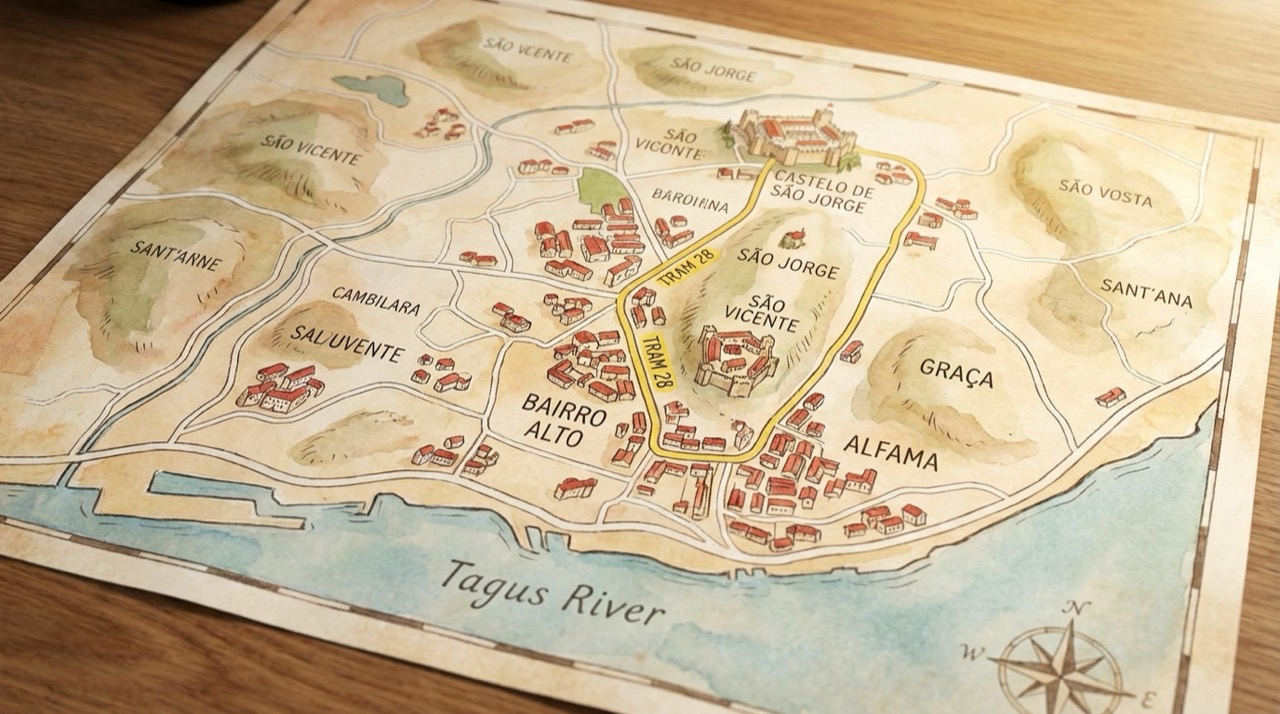
Lisbon is a city of distinct bairros spread across seven hills. Each neighborhood has its own character, from the labyrinthine alleys of Alfama to the grand avenues of Baixa. Walking between them is part of the experience, though the hills will test your legs. Comfortable shoes are essential.
Alfama
Lisbon's oldest neighborhood, a maze of narrow cobblestone alleys, crumbling pastel buildings, and hidden miradouros (viewpoints). This is where fado was born, and you can still hear it drifting from doorways at night. Alfama survived the 1755 earthquake largely intact, giving it a medieval feel unlike anywhere else in the city. Laundry hangs between buildings, cats nap on doorsteps, and elderly residents chat from their windows.
You will hear a lot of European Portuguese vocabulary here that differs from Brazilian. 'Autocarro' (bus, not 'onibus'), 'telemovel' (mobile phone, not 'celular'), 'casa de banho' (bathroom, not 'banheiro'). Older Alfama residents may speak very fast with heavy local pronunciation.
Baixa / Chiado
The elegant downtown core rebuilt in a grid pattern after the 1755 earthquake. Baixa is the flat valley between hills, with grand plazas (Praca do Comercio, Rossio), mosaic sidewalks, and traditional shops. Chiado, just uphill, is Lisbon's cultural and literary heart: bookshops, theaters, the iconic Cafe A Brasileira, and the Bertrand bookshop (the world's oldest, operating since 1732). This is where old Lisbon meets contemporary cool.
In Chiado's cafes, the waiter may ask 'O que vai ser?' (What will it be?) instead of the Brazilian 'O que vai querer?'. Reply with your order followed by 'faz favor'. The traditional 'calcada portuguesa' (mosaic sidewalk) is called 'calçada', not 'calçadao' as in Brazil.
Bairro Alto
Lisbon's nightlife epicenter. By day, a quiet residential neighborhood of narrow streets and indie boutiques. By night, a roaring party district where every other door is a bar and the streets fill with people drinking, talking, and laughing until the early hours. The bars are tiny, so the street becomes the main venue. Also home to excellent restaurants and some of the city's best viewpoints.
Nightlife vocabulary differs from Brazil. 'Ir ao copo' means 'to go for a drink' (not used in Brazil). 'Sair a noite' (to go out at night). In bars, ask 'Tem imperial?' for a draft beer. 'Imperial' is what Lisboetas call a small draft beer (in Porto, it is called 'fino').
Belem
The monumental western district where Portugal's Age of Discovery launched. Home to the Jeronimos Monastery, the Tower of Belem, and the MAAT contemporary art museum. The waterfront promenade stretches along the Tagus, and the famous Pasteis de Belem bakery draws a permanent queue for its legendary custard tarts. Belem feels more spacious and grand than the tight streets of central Lisbon.
At Pasteis de Belem, the staff moves fast. Say 'Meia duzia de pasteis, faz favor' (Half a dozen pasteis, please). Eat them warm with canela (cinnamon) and acucar (sugar) sprinkled on top. The tarts are called 'pasteis de nata' everywhere else, but here they are 'pasteis de Belem'.
LX Factory / Alcantara
A converted industrial complex under the 25 de Abril Bridge that has become Lisbon's creative hub. Old factory buildings now house design studios, independent bookshops, vintage stores, street food vendors, and some of the city's best brunch spots. Weekend markets bring crowds. Alcantara, the surrounding neighborhood, is a mix of old docks and new waterfront restaurants with views of the bridge.
LX Factory is very international, so English is widely spoken here. But in the surrounding Alcantara neighborhood, try Portuguese. At the market stalls: 'Posso ver?' (Can I see?) and 'Quanto e?' (How much?). 'Ler Devagar' (Read Slowly) is the famous bookshop inside, and yes, the name is a philosophy.
Want to actually remember these phrases?
Save them to your flashcard deck and Decko will quiz you at the perfect time using spaced repetition.
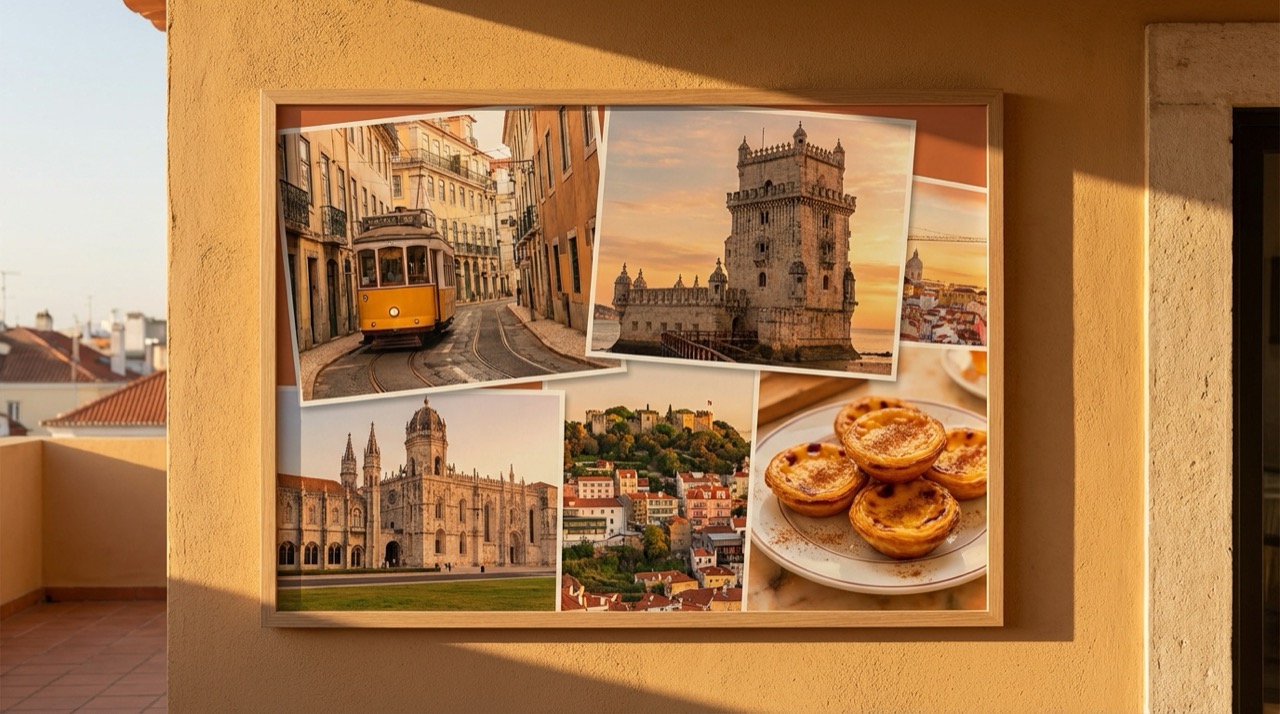
Lisbon's attractions blend centuries of history with a vibrant modern pulse. The city rewards wandering: some of the best moments come from stumbling onto a miradouro with a river view or hearing fado drift from an unmarked doorway. Hit the major landmarks, but leave room for getting lost.
Tram 28 (Electrico 28)
Lisbon's iconic yellow tram rattles through the city's most atmospheric neighborhoods: Graca, Alfama, Baixa, and Estrela. The vintage wooden carriages date from the early 20th century and squeeze through streets so narrow you could touch the buildings from the window. It is a tourist attraction but also a working public transit line. The ride is a masterclass in Lisbon's hills, tight turns, and photogenic chaos.
The tram is called 'electrico' (eh-LEH-tree-koo), not 'bonde' as in Brazil. Say 'O electrico 28 passa aqui?' (Does Tram 28 pass here?). Buy a Viva Viagem card and load it, as paying cash on board is more expensive. Watch for pickpockets on crowded trams.
Torre de Belem
A 16th-century fortified tower on the Tagus riverbank, built to guard the entrance to Lisbon's harbor. A UNESCO World Heritage Site and the quintessential symbol of Portugal's Age of Discovery. The Manueline architecture features intricate stone carvings of ropes, armillary spheres, and a famous rhinoceros gargoyle. Small inside, so queues can be long. Best appreciated from the outside and the surrounding gardens.
At the ticket booth: 'Um bilhete, faz favor' (One ticket, please). Note: in Portugal it is 'bilhete', not 'ingresso' as in Brazil. 'Bilhete' in Brazil means a short note or message, which can cause confusion.
Mosteiro dos Jeronimos
A masterpiece of Manueline Gothic architecture and UNESCO World Heritage Site. Built in 1501 to celebrate Vasco da Gama's voyage to India, funded by the spice trade. The cloisters are breathtaking: two stories of ornate carved stone arches, columns twisted like ropes, and motifs of sea creatures and exotic plants. Also houses the tombs of Vasco da Gama and the poet Luis de Camoes. Allow at least an hour.
In Portugal, 'mosteiro' is a monastery and 'igreja' is a church. Ask 'Qual e o horario de visita?' (What are the visiting hours?). Sundays before 2pm, entry is free for residents, but the queue is long. 'Esta na fila?' (Are you in the queue?) is useful for checking if a group is actually queuing.
Castelo de Sao Jorge
A hilltop fortress with roots going back to the Moors (11th century). The castle walls offer the most panoramic views of Lisbon: all seven hills, the river, the red rooftops, and the 25 de Abril Bridge. The grounds include archaeological ruins, peacocks wandering the gardens, and a camera obscura in one of the towers. Worth the steep walk up from Baixa or Alfama.
Walking up: 'E por aqui para o castelo?' (Is it this way to the castle?). At the top: 'Pode tirar-me uma fotografia?' (Can you take my photo?). Note: in Portugal it is 'fotografia', not 'foto' as commonly used in Brazil. Though 'foto' is increasingly used informally.
Time Out Market (Mercado da Ribeira)
A food hall inside the historic Ribeira Market in Cais do Sodre. Over 40 stalls run by some of Lisbon's best chefs and restaurants, all under one roof. Seafood, petiscos (Portuguese tapas), pastries, wine, and craft beer. Communal seating in the center. Busy and loud, especially on weekends. Great for trying many different Portuguese dishes without committing to a full restaurant meal.
'Petiscos' (peh-TEESH-koosh) are Portuguese small plates, similar to Spanish tapas. Say 'O que recomenda?' (What do you recommend?). The word 'petiscos' does not exist in Brazilian Portuguese. 'Estou so a ver' (I am just looking) is useful when browsing stalls.
Miradouro da Senhora do Monte
The highest viewpoint in Lisbon, offering an unobstructed panorama over the entire city. Less crowded than the famous Miradouro da Graca nearby. Popular with locals for sunset drinks. A small chapel sits at the summit. The view takes in the castle, the river, the bridge, and the Cristo Rei statue across the water. Bring a bottle of wine and some queijo (cheese) for the full Lisbon experience.
'Miradouro' (meer-ah-DOH-roo) means viewpoint. Lisbon has dozens of them. Ask locals: 'Qual e o melhor miradouro?' (Which is the best viewpoint?). They all have a favorite. 'Por do sol' means sunset. 'Vamos ver o por do sol?' (Shall we go watch the sunset?) is a perfect invitation.
Pasteis de Belem
The legendary bakery operating since 1837, producing the original recipe of the pastel de nata created by monks at the nearby Jeronimos Monastery. The recipe remains a closely guarded secret. The queue outside is always long, but it moves fast. Eat them warm, dusted with cinnamon and powdered sugar. The blue-tiled interior is beautiful. Over 20,000 tarts are sold here daily.
'Meia duzia de pasteis para levar, faz favor' (Half a dozen pasteis to take away, please). 'Para levar' means takeaway, 'para comer aqui' means to eat here. Everywhere else in Portugal, these are called 'pasteis de nata'. Only here they are 'pasteis de Belem'. The plural of 'pastel' is 'pasteis', not 'pastels'.
Oceanario de Lisboa
One of the largest aquariums in Europe, located in the Parque das Nacoes district (the former Expo '98 site). The centerpiece is a massive central tank viewable from multiple levels, home to sunfish, sharks, rays, and schools of tropical fish. Separate habitats recreate the Atlantic, Pacific, Indian, and Antarctic oceans. Excellent for families and anyone wanting a break from hills and history.
'Bilhete de adulto' (adult ticket) and 'bilhete de crianca' (child ticket). The surrounding Parque das Nacoes area uses more modern Portuguese vocabulary. A 'telecabine' (cable car) runs along the waterfront. This district feels more international than historic Lisbon.
Elevador de Santa Justa
A neo-Gothic iron elevator built in 1902 that connects the low streets of Baixa to the elevated Largo do Carmo. Designed by a student of Gustave Eiffel, its ornate iron framework looks like it belongs in Paris. The viewing platform at the top has sweeping views over Baixa and the castle. Queues can be extremely long. A tip: walk up through the Convento do Carmo ruins and access the top platform for free.
'Elevador' in Portugal refers to these funicular-style lifts. Lisbon has several: Elevador da Bica, Elevador da Gloria, Elevador da Lavra. Say 'O elevador esta a funcionar?' (Is the elevator working?) as they occasionally close for maintenance.
Sintra (Day Trip)
A fairytale town 30 minutes from Lisbon by train, set in misty forested hills. The colorful Palacio da Pena (a Romanticist castle in bright yellow and red), the mysterious Quinta da Regaleira (with initiation wells and secret tunnels), and the Moorish Castle ruins make Sintra an unmissable day trip. Go early to beat the crowds. The town center has excellent pastry shops serving the local specialty, travesseiros.
At Rossio station: 'Um bilhete de ida e volta para Sintra, faz favor' (A return ticket to Sintra, please). In Sintra, try a 'travesseiro' (truh-veh-SAY-roo), a pillow-shaped almond pastry. Ask 'Onde fica a bilheteira?' (Where is the ticket office?) at each palace.
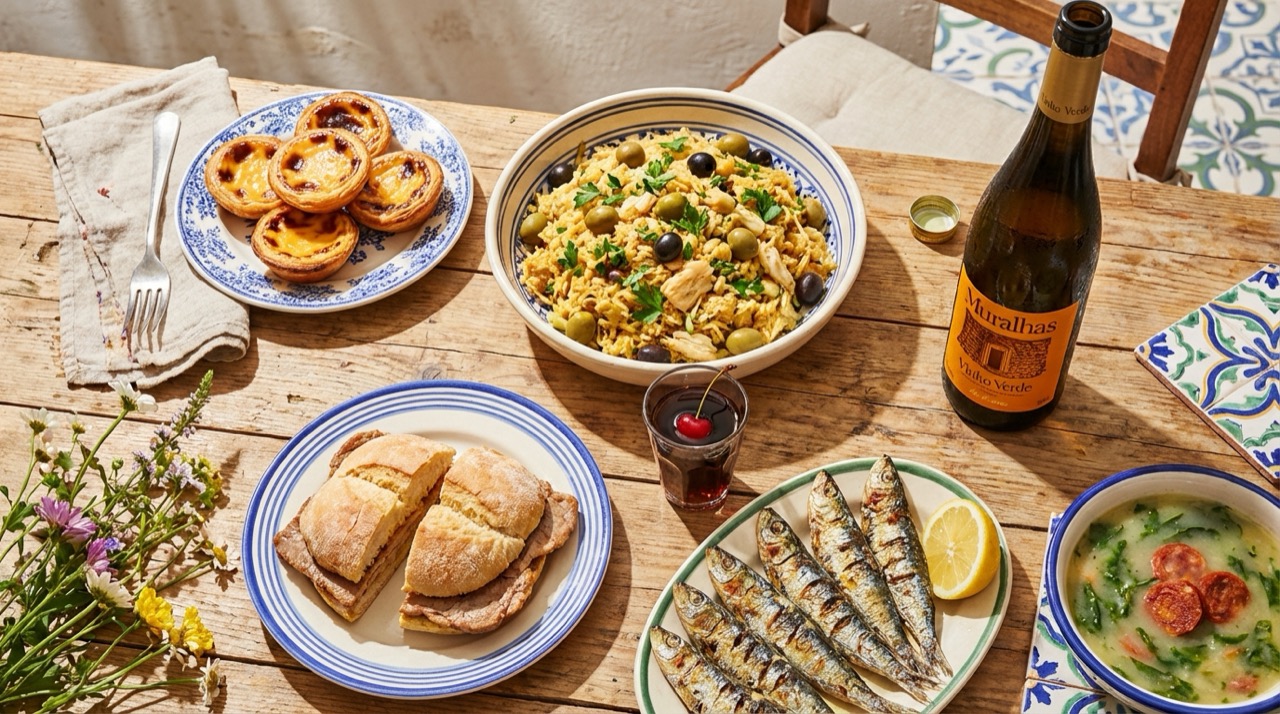
Portuguese food is hearty, unpretentious, and deeply rooted in fresh ingredients. Meals are social events. Lunch (almoco) runs from 12:30 to 2:30pm, dinner (jantar) starts around 8pm or later. When you sit down, the waiter may bring bread, butter, olives, and sometimes cheese or cured meat. These 'couvert' items are not free. If you do not want them, politely say 'Pode levar, obrigado' (You can take it back, thanks). Tipping is not obligatory in Portugal, but rounding up the bill or leaving 5-10% for good service is appreciated.
Dining Etiquette
- The 'couvert' (bread, olives, butter brought to your table) is NOT free. It is charged per item. Say 'Pode levar, obrigado' if you do not want it. This surprises many visitors.
- Tipping is not expected like in Brazil or the US. Rounding up the bill or leaving 5-10% is generous. Many locals just leave coins.
- Meal times are later than in Brazil. Lunch is 12:30-2:30pm, dinner rarely before 8pm. Restaurants may not open for dinner until 7:30pm.
- Portions tend to be generous. A 'meia dose' (half portion) is available at most restaurants and is often plenty for one person.
- Portuguese wine is excellent and affordable. 'Vinho da casa' (house wine) is usually a good bet. Just say 'tinto' (red) or 'branco' (white).
- 'Petiscos' are Portuguese small plates, similar to tapas. Ordering several to share is common and a great way to try many things.
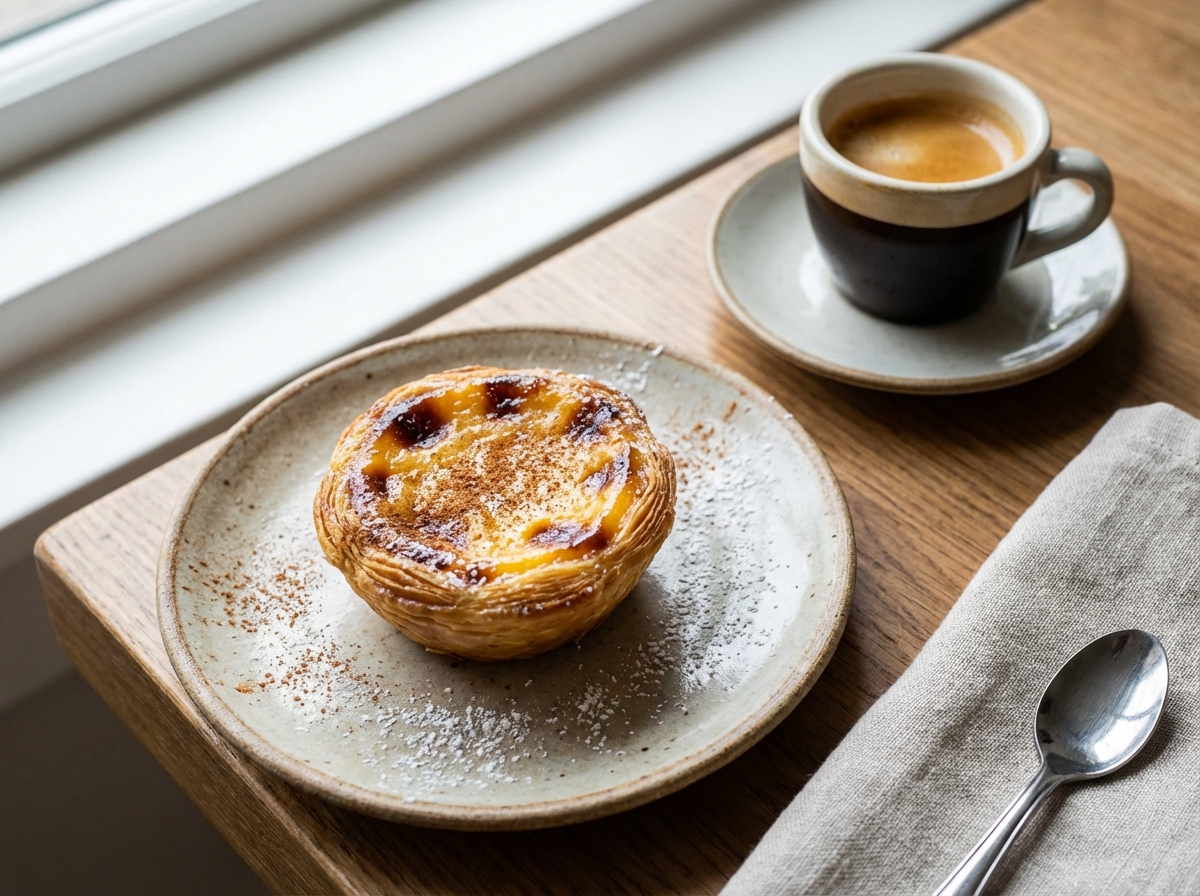
Pastel de nata
Portugal's iconic custard tart: flaky puff pastry filled with rich egg custard, blistered and caramelized on top. Best eaten warm, sprinkled with cinnamon and powdered sugar. Every pastelaria makes them, but Pasteis de Belem and Manteigaria are legendary. Lisboetas eat them for breakfast, as a snack, or after every meal. You will not eat just one.
How to order
'Um pastel de nata e uma bica, faz favor.' (A custard tart and an espresso, please.) For multiples: 'Tres pasteis de nata' (three custard tarts). Note: the plural is 'pasteis', not 'pastels'.
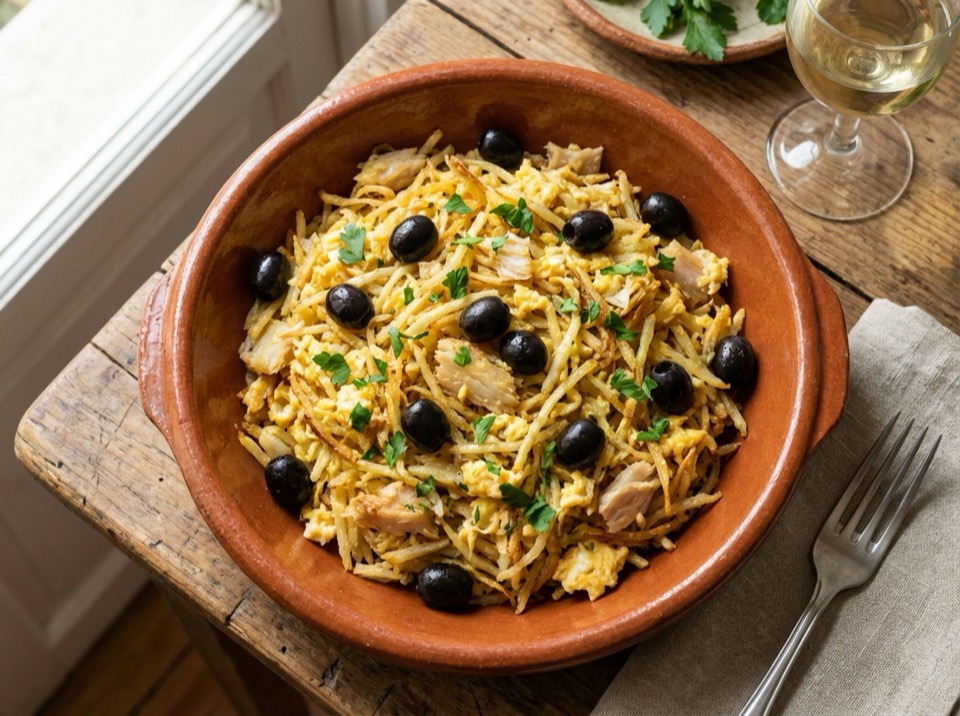
Bacalhau (Salt Cod)
Portugal's national obsession. They say there are 365 ways to cook bacalhau, one for each day of the year. The most popular in Lisbon: Bacalhau a Bras (shredded cod with scrambled eggs and crispy potatoes), Bacalhau com natas (baked with cream), and Pasteis de bacalhau (fried cod fritters). Bacalhau is served at nearly every meal, celebration, and holiday. It is not optional. It is Portugal.
How to order
'Bacalhau a Bras para mim, faz favor.' (Bacalhau a Bras for me, please.) If unsure: 'Qual e o bacalhau do dia?' (What is the cod dish of the day?). For the fried fritters: 'Um pastel de bacalhau, faz favor.' A great starter.
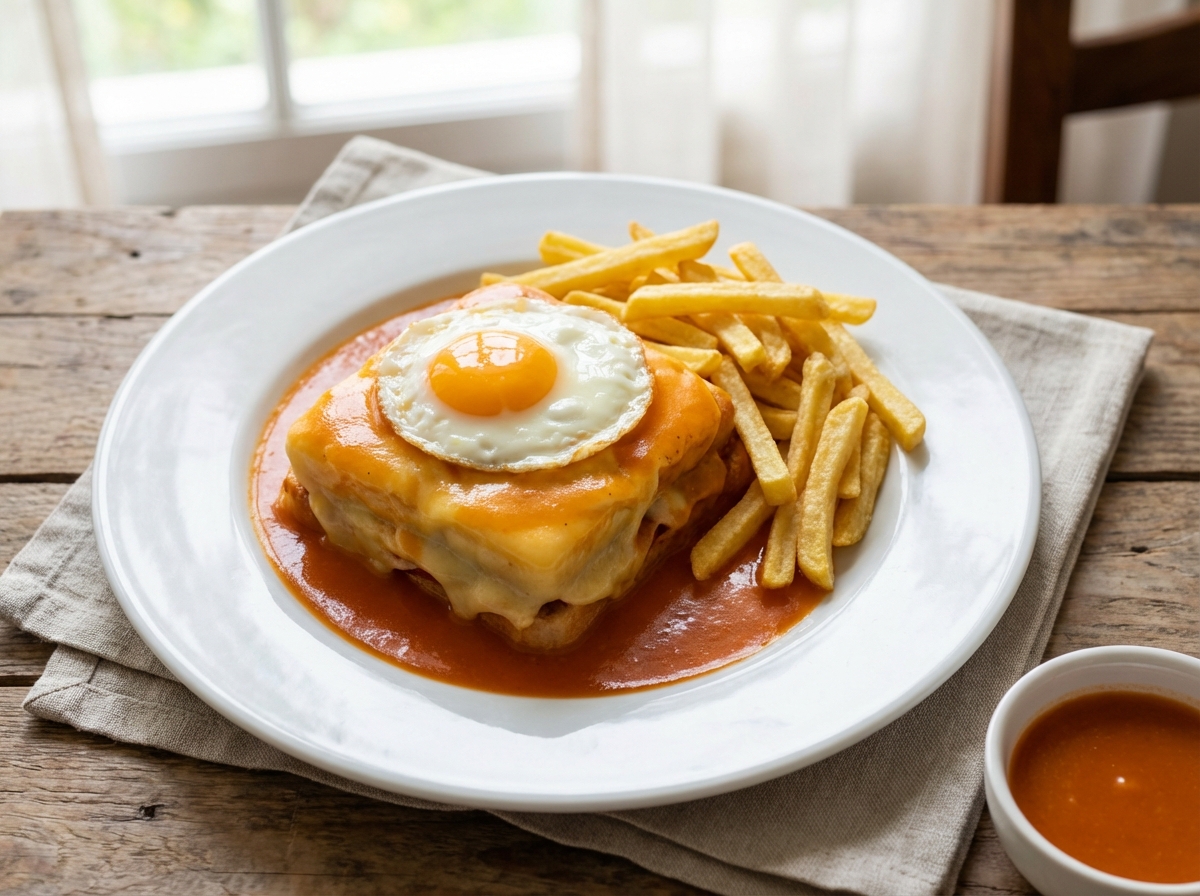
Francesinha
Originally from Porto, but found in Lisbon too. A monstrous sandwich of bread stuffed with ham, linguica, chipolata, steak, and covered in melted cheese, then drenched in a rich tomato and beer-based sauce. Often served with a fried egg on top and a mountain of fries. It is heavy, messy, glorious, and absolutely not health food. One francesinha is a full meal.
How to order
'Uma francesinha com ovo e batatas fritas, faz favor.' (A francesinha with egg and fries, please.) The egg and fries are standard but worth specifying. Ask 'Como e a francesinha aqui?' (How is the francesinha here?) to gauge if it is a specialty of the house.
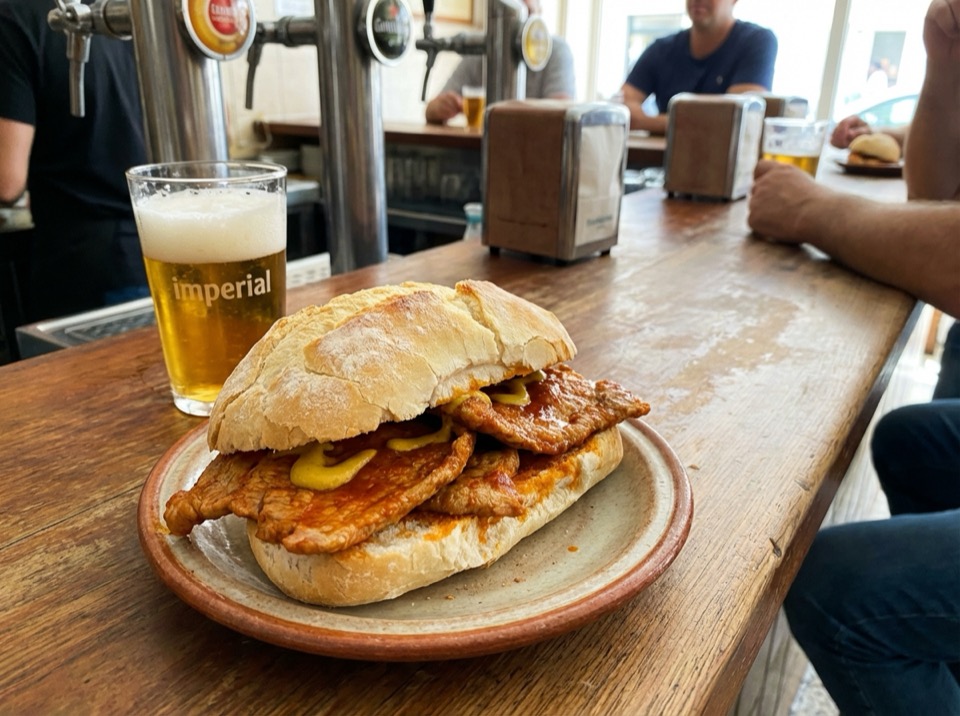
Bifana
A thin marinated pork steak sandwich served on a soft bread roll, seasoned with garlic, white wine, and piri-piri. Simple, cheap, and devastatingly good. Found at every snack bar (cervejaria) and football stadium in the country. The bifana is to Portugal what the hot dog is to New York. Best washed down with an imperial (draft beer).
How to order
'Uma bifana e uma imperial, faz favor.' (A bifana and a draft beer, please.) At a cervejaria or tasca, this is the classic combo. Some places add mustard or piri-piri on the side. Ask: 'Tem molho piri-piri?' (Do you have piri-piri sauce?)
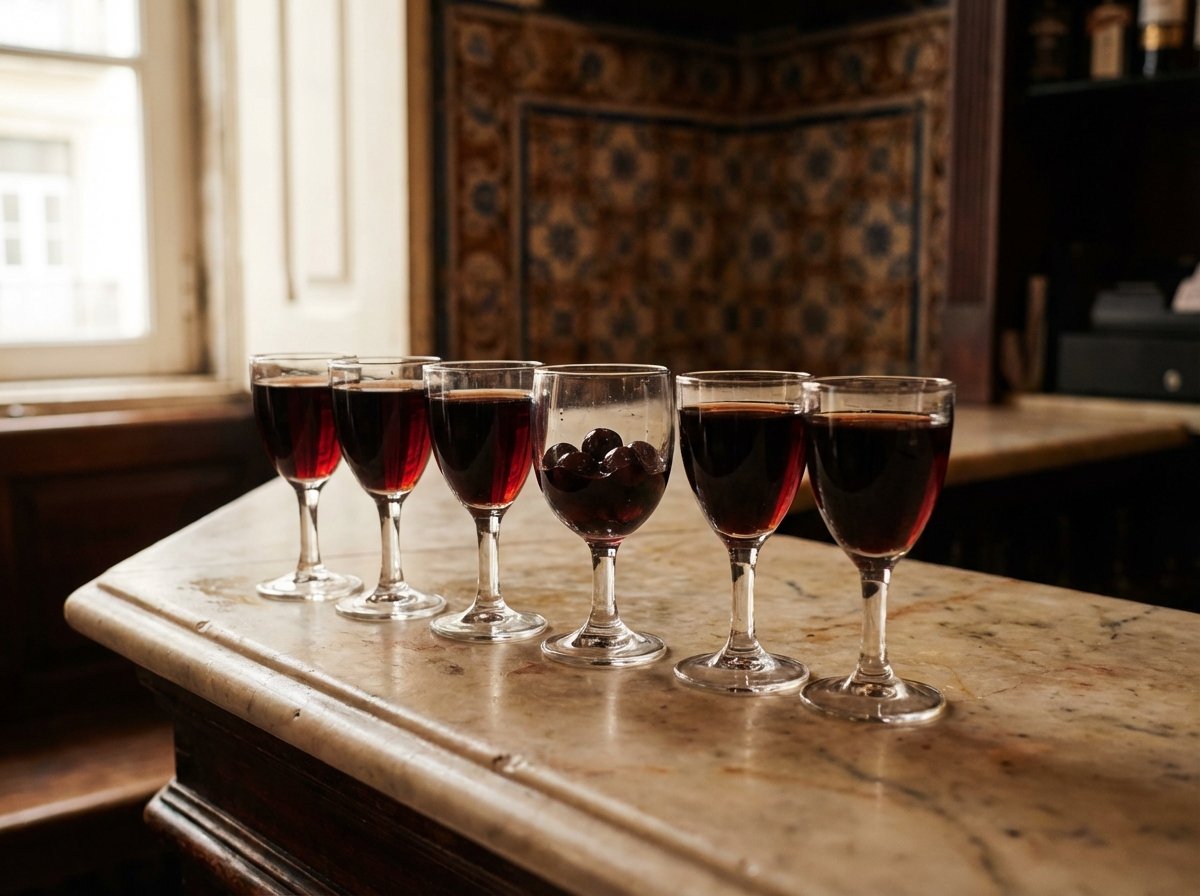
Ginjinha (Ginja)
A sweet cherry liqueur made from sour ginja berries, a Lisbon tradition since the 19th century. Served in tiny cups, sometimes in edible chocolate cups. The most famous spots are A Ginjinha and Ginjinha Sem Rival, both in Rossio. It is a ritual: walk up to the tiny bar, order a shot, drink it in one go, and continue your walk. Available 'com' (with) or 'sem' (without) the cherries.
How to order
'Uma ginjinha com elas, faz favor.' (A ginjinha with the cherries, please.) 'Com elas' means with the cherries at the bottom, 'sem elas' means without. For a chocolate cup: 'Tem em copo de chocolate?' (Do you have it in a chocolate cup?)
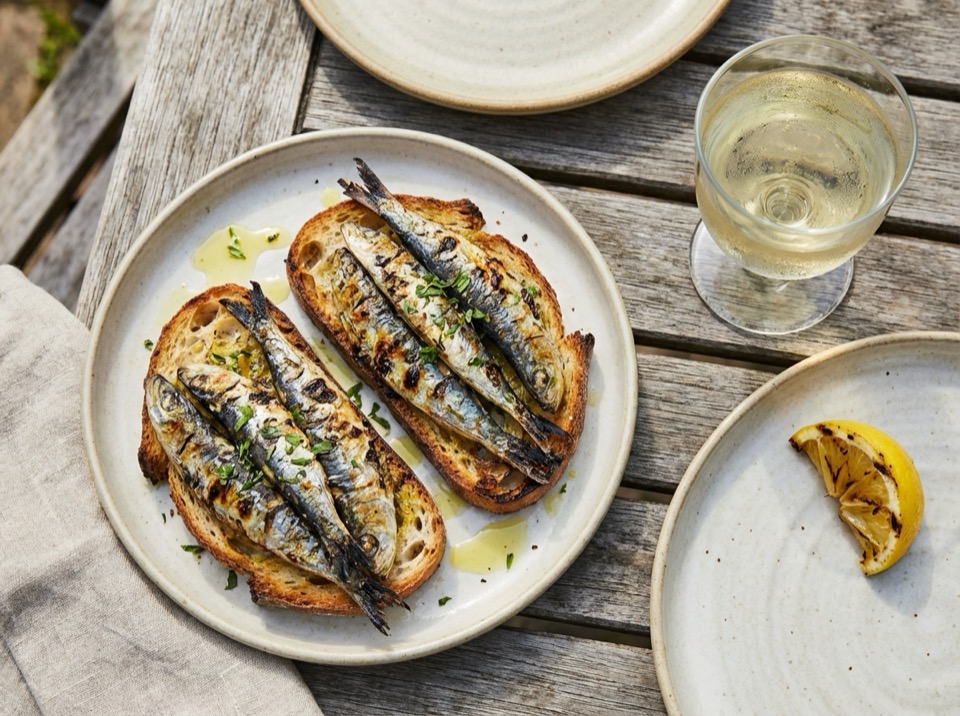
Sardinhas Assadas (Grilled Sardines)
Fresh sardines grilled whole over charcoal, served on thick bread that soaks up the juices. A staple of Lisbon summers, especially during the Santos Populares festival in June when the entire city smells of grilled sardines. Eaten with your hands, bones and all (the small ones are edible). Best on a terrace with a cold vinho verde.
How to order
'Sardinhas assadas, faz favor. E uma garrafa de vinho verde.' (Grilled sardines, please. And a bottle of vinho verde.) Best from June to October when sardines are fattest. Ask: 'As sardinhas sao frescas hoje?' (Are the sardines fresh today?). If the answer is uncertain, order something else.
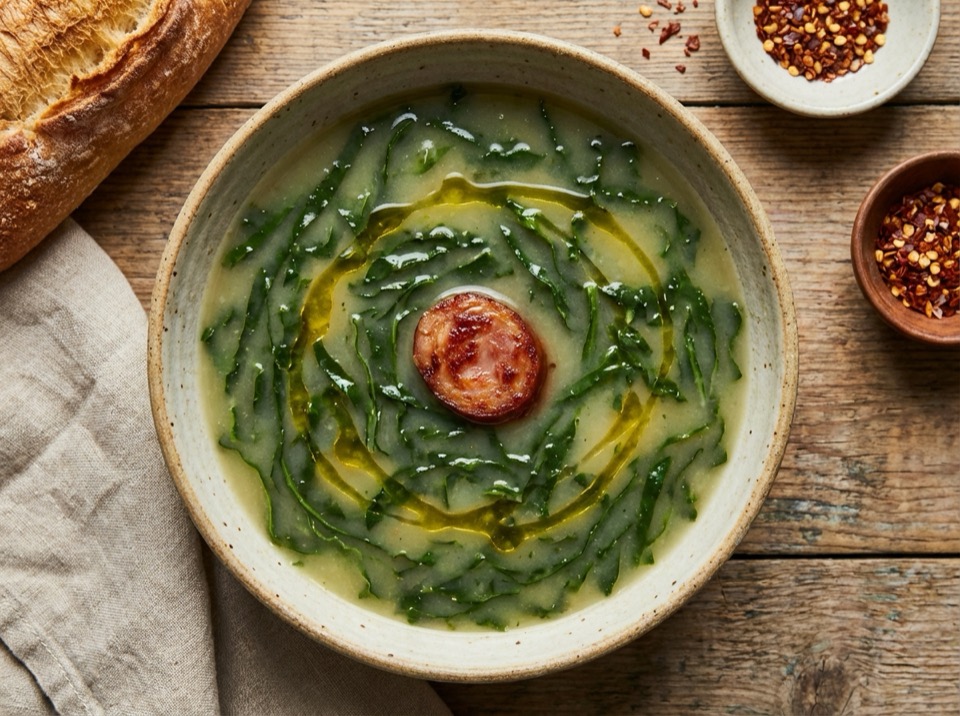
Caldo Verde
A comforting soup of pureed potatoes, shredded couve-galega (collard greens), olive oil, and slices of chourico sausage. Simple, warming, and deeply Portuguese. Served at every tasca, family dinner, and festive celebration. Often the starter or a light meal on its own with thick bread (broa) on the side.
How to order
'Um caldo verde para comecar, faz favor.' (A caldo verde to start, please.) It is nearly always on the menu. A 'broa' (corn bread) on the side is traditional. 'Tem broa?' (Do you have corn bread?) completes the experience.
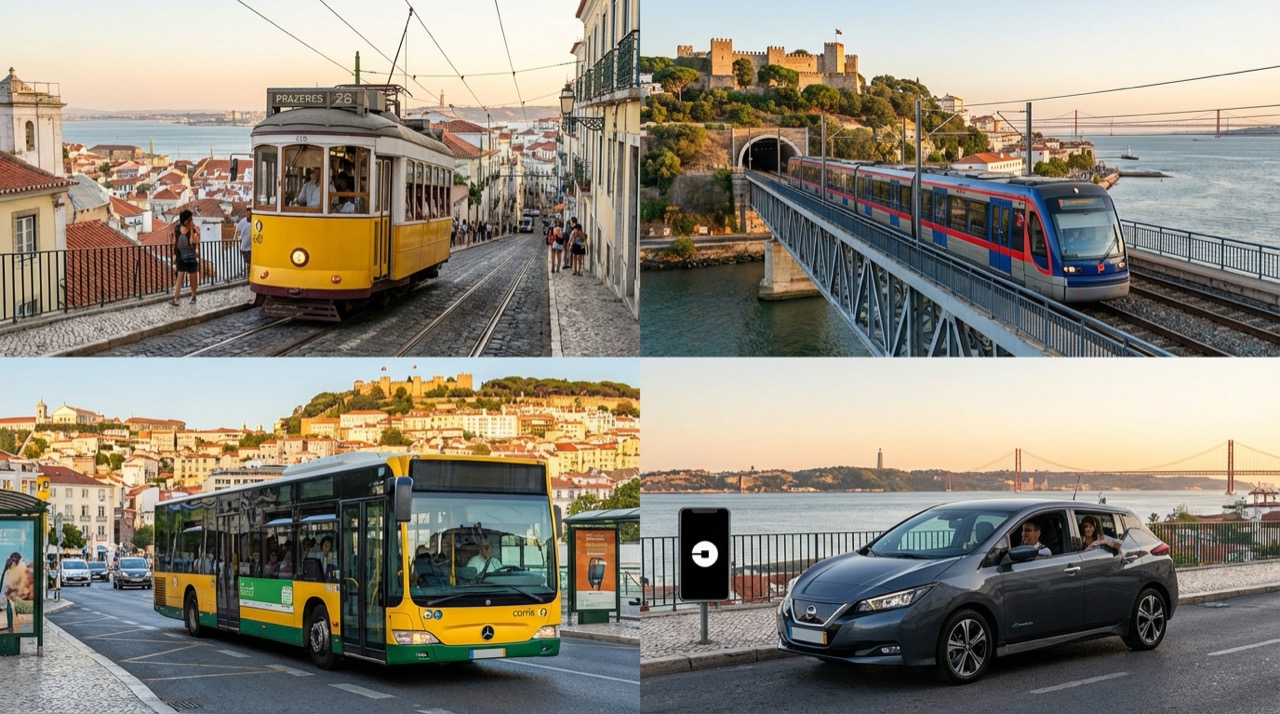
Lisbon is hilly and spread out, so you will use a mix of transport. The Viva Viagem card works on metro, buses, trams, and ferries. Uber is cheap and widely used. Walking is the best way to explore individual neighborhoods, but getting between them on foot means serious hills. A fun fact: 'bica' is Lisbon slang for espresso, not related to transport at all. You will need one after climbing those hills.
Metro
Clean, modern, and efficient with four color-coded lines covering the city center, the airport, and the Parque das Nacoes area. Runs from 6:30am to 1am. The stations feature impressive artwork and tile installations. Buy a reloadable Viva Viagem card at any station.
- Say 'Um cartao Viva Viagem, faz favor' (A Viva Viagem card, please) at any station
- The Blue line connects Baixa to the airport (Aeroporto), very convenient for arrivals
- The Green line runs through central tourist areas: Rossio, Baixa-Chiado, and Cais do Sodre
- Avoid rush hour (8-9:30am, 5:30-7:30pm) when trains are packed
- Keep your card loaded with 'zapping' credit, which gives a discounted flat fare on all Carris (bus/tram) and Metro trips
- 'Com licenca' (excuse me) and 'Posso passar?' (Can I pass?) are essential in crowded cars
Tram (Electrico)
Lisbon's historic trams are both transport and tourist attraction. Tram 28 is the most famous, winding through Graca, Alfama, Baixa, and Estrela. Other useful lines include the 12E (a short loop through Alfama) and the 15E (modern tram to Belem). The vintage trams are charming but small and crowded. Pickpockets target tourists on Tram 28, so keep belongings secure.
- Use your Viva Viagem card. Cash on board costs significantly more
- Tram 28 gets extremely crowded from mid-morning. Ride early (before 9am) or late (after 6pm) for a more pleasant experience
- Board from the front, exit from the back. Say 'Desce na proxima!' (Getting off at the next stop!)
- The 15E tram to Belem is modern and spacious, a much more comfortable ride than the 28
- Hold on tight. The trams lurch and brake sharply on the steep hills. Standing passengers should grip the overhead rails firmly
- Watch for pickpockets on crowded Tram 28. Keep bags in front and phones in inner pockets
Bus (Autocarro)
An extensive network run by Carris covering areas the metro and tram do not reach. Buses are modern with air conditioning. The Viva Viagem card works on all routes. Night buses (designated with 'N') run limited routes after the metro closes. Useful for reaching Belem if you prefer not to take the tram.
- In Portugal, buses are called 'autocarros', not 'onibus' like in Brazil. Ask 'Onde e a paragem de autocarro?' (Where is the bus stop?)
- Flag the bus by extending your arm at the stop, or it may drive past
- Validate your Viva Viagem card on the yellow reader when boarding
- The 714 and 728 bus routes are useful for reaching Belem from Praca do Comercio
- 'Este autocarro vai para Belem?' (Does this bus go to Belem?) is useful to confirm the route before boarding
Uber / Bolt
Both Uber and Bolt (the European alternative to 99) work seamlessly in Lisbon. Rides are affordable, even cheaper than most European capitals. Useful for late-night trips home from Bairro Alto, getting to the airport, or avoiding steep hill climbs with luggage. Most drivers speak basic English, but Portuguese is always appreciated.
- Download both Uber and Bolt. Compare prices as they fluctuate with demand
- From the airport to the city center costs around 10-15 EUR by rideshare, much cheaper than a taxi
- On narrow Alfama streets, the driver may not be able to reach your exact pin. Walk to a nearby wider street for pickup
- Tipping is not expected but rounding up is a kind gesture. 'Pode ficar com o troco' (Keep the change)
- For Bairro Alto on weekend nights, set your pickup on a nearby main road. The pedestrian streets will be blocked by crowds
- Say 'Pode ir pelo GPS, faz favor' (Please follow the GPS) if you prefer the app's route
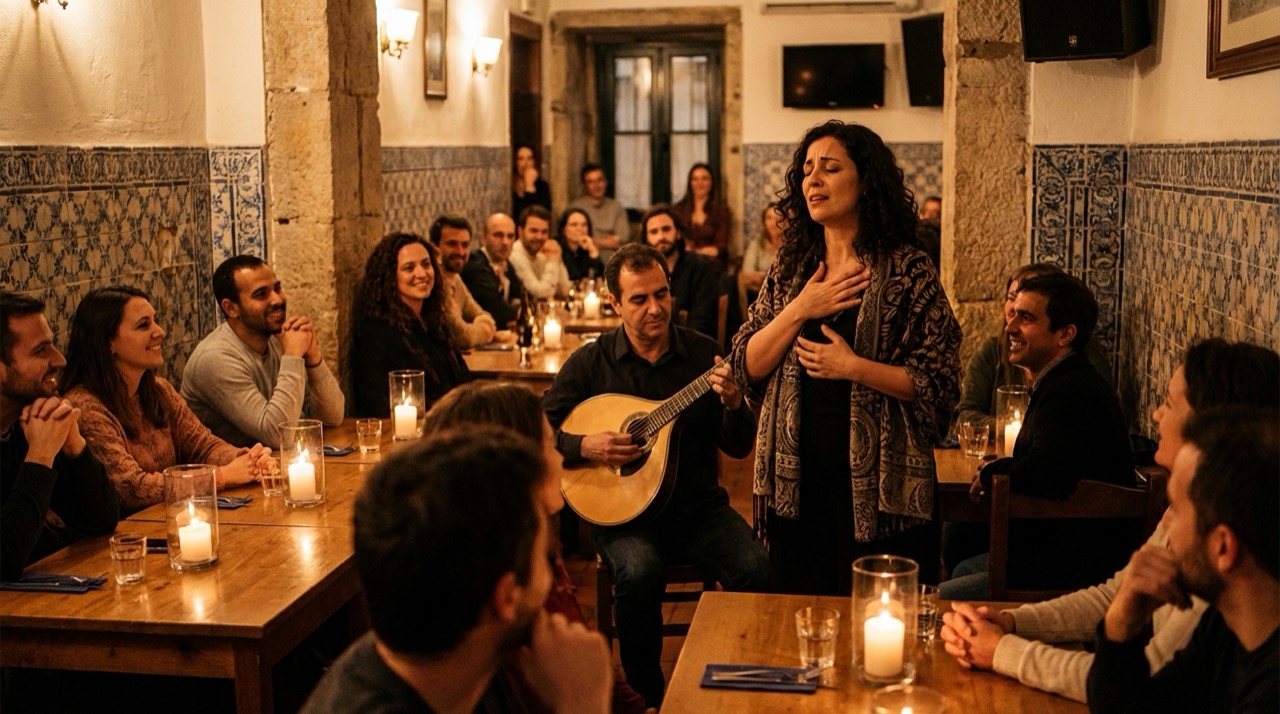
Portuguese culture is warm but more reserved than Brazilian culture. Lisboetas are polite, understated, and deeply proud of their traditions. The concept of 'saudade' (a bittersweet longing for something absent) runs through everything from fado music to daily conversation. Understanding a few cultural norms will deepen your experience enormously.
Do
- Experience fado, Lisbon's soul music. UNESCO-recognized and emotionally powerful. Go to a casa de fado in Alfama or Bairro Alto. Silence during the performance is absolutely essential. Talking during fado is considered deeply disrespectful.
- Understand 'saudade' (sow-DAH-deh). It is an untranslatable feeling of nostalgic longing that is central to Portuguese identity. You will hear it referenced in fado, conversations, and literature. Acknowledging it shows cultural awareness.
- Use 'o senhor' (sir) / 'a senhora' (madam) instead of 'voce' with people older than you or in formal settings. Using 'voce' casually in Portugal is considered rude or overly familiar, unlike in Brazil where it is standard.
- Greet shopkeepers when entering and leaving. A simple 'Bom dia' when entering and 'Obrigado, ate logo' (Thanks, see you soon) when leaving is expected and appreciated.
- Embrace the slower pace. Portugal is not in a hurry. Meals take time, shops may close for lunch, and 'agora' (now) often means 'sometime soon'. This is part of the charm, not a problem to fix.
- Try the local wine. Portugal produces outstanding wines at very reasonable prices. Vinho verde (young, slightly sparkling), Douro reds, Alentejo wines, and of course port and moscatel. House wine at tascas is often excellent.
- Learn the difference between Portuguese and Brazilian Portuguese. Locals notice and appreciate when you use European Portuguese vocabulary: 'autocarro' not 'onibus', 'telemovel' not 'celular', 'pequeno-almoco' not 'cafe da manha'.
- Respect the 'couvert' system. When bread and olives arrive, you can send them back politely. It is not rude to decline, but eating even one olive means you are paying for the whole plate.
Avoid
- Do not use 'voce' with strangers, older people, or in formal situations. In Portugal, 'voce' can sound rude or condescending. Use third person conjugation without a pronoun, or 'o senhor/a senhora'. This is the biggest cultural language difference from Brazil.
- Do not talk during fado performances. Absolute silence is expected. Even whispering will earn you sharp looks. Wait for the pause between songs to speak, drink, or eat.
- Do not assume Portuguese and Spanish are the same language, or that Portugal is 'like Spain'. This is a deep sensitivity. The two countries have distinct identities, histories, and cultures.
- Do not rush meals or flag the waiter impatiently. Portuguese dining is slower-paced. The waiter will come when they come. Enjoy the moment. If you truly need them, a polite 'Faz favor' and eye contact is enough.
- Do not compare Lisbon unfavorably to other cities. Lisboetas have immense pride in their city. Statements like 'In Barcelona they do it better' will not land well.
- Do not neglect sunscreen on Lisbon's many miradouros. The Atlantic sun is deceptive, especially with the breeze. You will burn faster than you expect.
- Do not eat the couvert and then complain about the charge. It is clearly a paid service in Portuguese dining culture. If you do not want it, send it back before touching it.
- Do not skip the smaller neighborhoods for just the big attractions. Graca, Principe Real, Mouraria, and Madragoa are where you find the real Lisbon, with fewer tourists and more character.
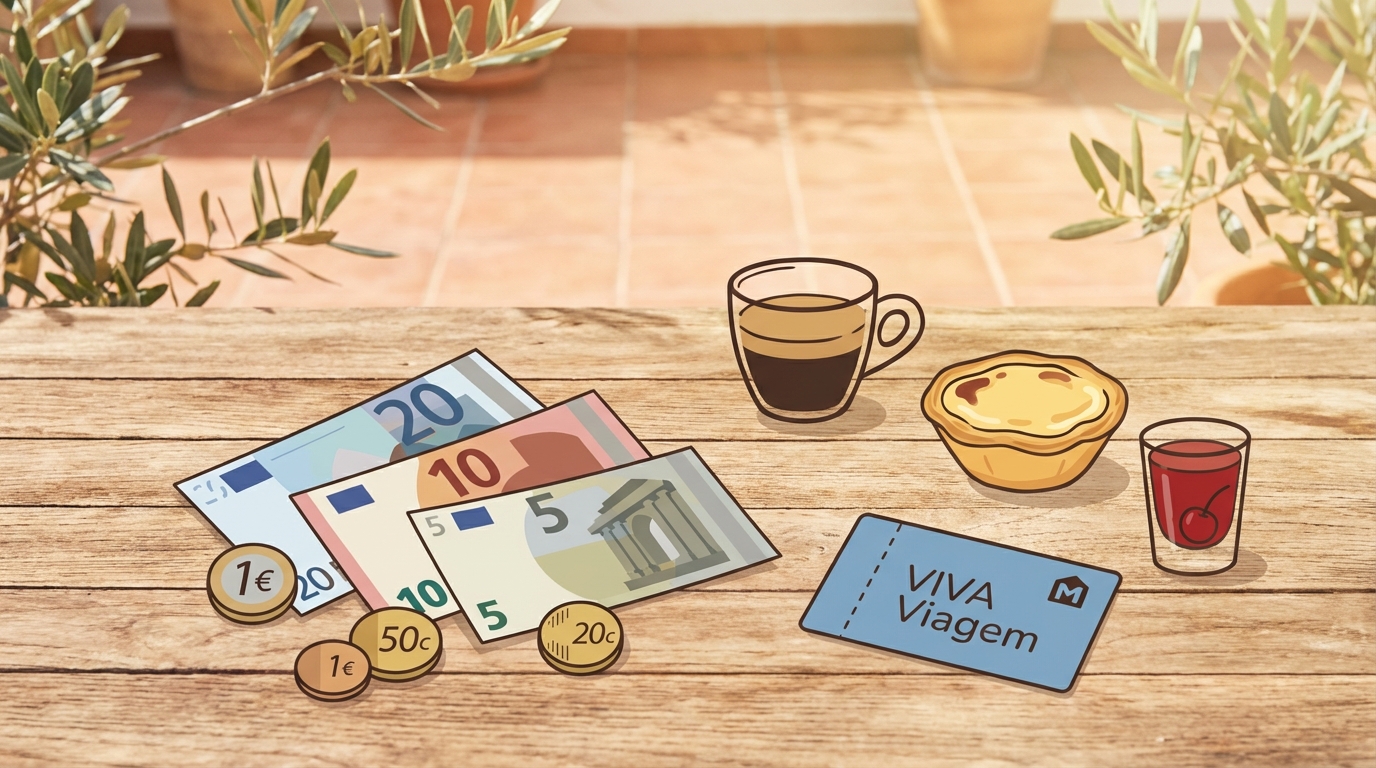
Lisbon is one of Western Europe's more affordable capitals, though prices have risen with tourism. Eating and drinking well on a budget is absolutely possible if you know where to look. Cards are accepted almost everywhere via Multibanco (MB), Portugal's interbank network. Visa and Mastercard work universally. Some smaller tascas and market vendors prefer cash.
Typical Prices
Money-Saving Tips
- Order the 'prato do dia' (dish of the day) or 'menu do dia' (daily menu) at tascas for a full meal (soup + main + drink + coffee) for 8-14 EUR. This is how locals eat affordably.
- A bica costs 0.70-1.20 EUR at the counter. Sitting at a table or on a terrace may cost more (the 'esplanada' surcharge). Drink at the bar to save.
- Request a 'meia dose' (half portion) at restaurants. Portuguese portions are generous and a half portion is often enough for one person at 60-70% of the full price.
- Buy the Lisboa Card if you plan to visit multiple museums. It includes free transport and free or discounted entry to 30+ attractions. The 24-hour card pays for itself with 2-3 museum visits plus transport.
- Supermarkets like Pingo Doce and Continente have excellent prepared food sections. A full meal can cost 3-5 EUR. Great for a quick, cheap lunch.
- Many museums are free on the first Sunday of the month. Plan your visit accordingly for significant savings.
- Wine at tascas is incredibly cheap. A glass of house wine for 2-3 EUR is normal. A full bottle of good Portuguese wine at a restaurant rarely exceeds 15-20 EUR.
- The ferry across the Tagus to Cacilhas costs about 1.30 EUR with a Viva Viagem card and gives you a spectacular view of Lisbon's skyline. Eat grilled fish at the Cacilhas waterfront for less than in the city center.
- Avoid restaurants right on the main tourist squares (Rossio, Praca do Comercio). Walk two streets back for the same quality at 30-40% less.
- Free activities that are worth your time: walking the miradouros, exploring Alfama and Mouraria, the sunset from Miradouro da Graca, and the street art in Bairro Alto.
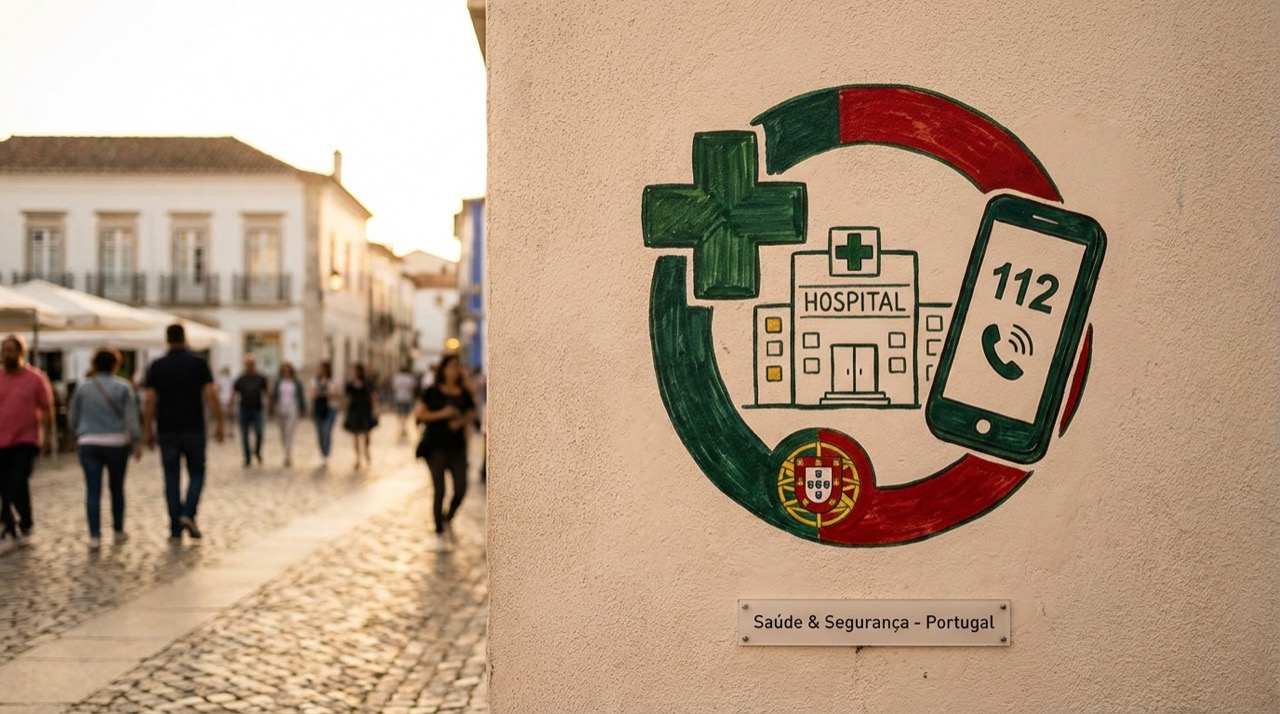
Lisbon is one of the safest capitals in Europe, but petty theft (especially pickpocketing on trams and in tourist areas) is a real concern. Violent crime against tourists is rare. The biggest practical risks are pickpockets on Tram 28, in Alfama, and at crowded viewpoints. Knowing emergency phrases in Portuguese is always wise, as not all emergency responders speak English.
Socorro! / Ajude-me!
Help! / Help me!
/soh-KOH-roo / ah-ZHOO-deh-meh/
Use 'socorro' to call for emergency help. 'Ajude-me' is the European Portuguese form (in Brazil it is 'me ajude' with the pronoun first). Both will be understood immediately.
Preciso de um medico.
I need a doctor.
/preh-SEE-zoo deh oom MEH-dee-koo/
At a hotel, pharmacy, or on the street. Lisbon has excellent hospitals. Centro Hospitalar de Lisboa Central and Hospital de Santa Maria are the major public hospitals.
Onde fica a farmacia mais proxima?
Where is the nearest pharmacy?
/OHN-deh FEE-kah ah far-MAH-see-ah mais PROH-see-mah/
Portuguese pharmacies (farmacias) are well-stocked and pharmacists can recommend treatments for minor issues. Look for the green cross sign. There is always a 'farmacia de servico' (duty pharmacy) open 24 hours.
Chame a policia!
Call the police!
/SHAH-meh ah poo-LEE-see-ah/
Emergency number in Portugal: 112 (European standard). This single number connects police, fire, and ambulance. The PSP (Policia de Seguranca Publica) handles urban policing in Lisbon.
Fui roubado / roubada.
I was robbed. (male / female)
/fwee roh-BAH-doo / roh-BAH-dah/
File a report at a 'esquadra da policia' (police station). The Tourism Police office near Praca dos Restauradores has English-speaking staff. You will need the report for insurance claims.
Roubaram-me a carteira / o telemovel.
They stole my wallet / my phone.
/roh-BAH-rahm-meh ah kar-TAY-rah / oo teh-leh-MOH-vel/
Note: in Portugal, a mobile phone is 'telemovel', not 'celular' as in Brazil. A wallet is 'carteira' in both countries. This phrase uses the European Portuguese pronoun placement (after the verb, not before).
Estou a sentir-me mal.
I am feeling sick / unwell.
/shTOH ah sen-TEER-meh mow/
European Portuguese uses 'estar a + infinitive' for ongoing actions (not the 'estar + gerund' form of Brazil). So 'I am feeling' is 'estou a sentir' not 'estou sentindo'. Either form will be understood, but this is the local way.
Sou alergico / alergica a...
I am allergic to... (male / female)
/soh ah-LEHR-zhee-koo / ah-LEHR-zhee-kah ah/
Common allergens: amendoim (peanuts), marisco (shellfish), gluten (gluten), lactose (lactose). Shellfish is very common in Portuguese cooking, so this phrase is especially important.
Onde fica o hospital mais proximo?
Where is the nearest hospital?
/OHN-deh FEE-kah oo osh-pee-TAL mais PROH-see-moo/
Major hospitals: Hospital de Sao Jose (central Lisbon), Hospital de Santa Maria (largest in Portugal). Urgencias means emergency room. Public hospitals provide emergency care to all, including tourists.
Perdi o meu passaporte.
I lost my passport.
/per-DEE oo mew pah-sah-POR-teh/
Go to the Tourism Police office first, then contact your embassy or consulate. Many embassies are located in the Lapa and Estrela neighborhoods. Keep a photo of your passport on your phone as a backup.
Community Tips

Ready to learn Portuguese for real?
Take these Lisboa phrases with you. Decko uses spaced repetition to make sure you actually remember them when you need them.
Free forever. No credit card required.