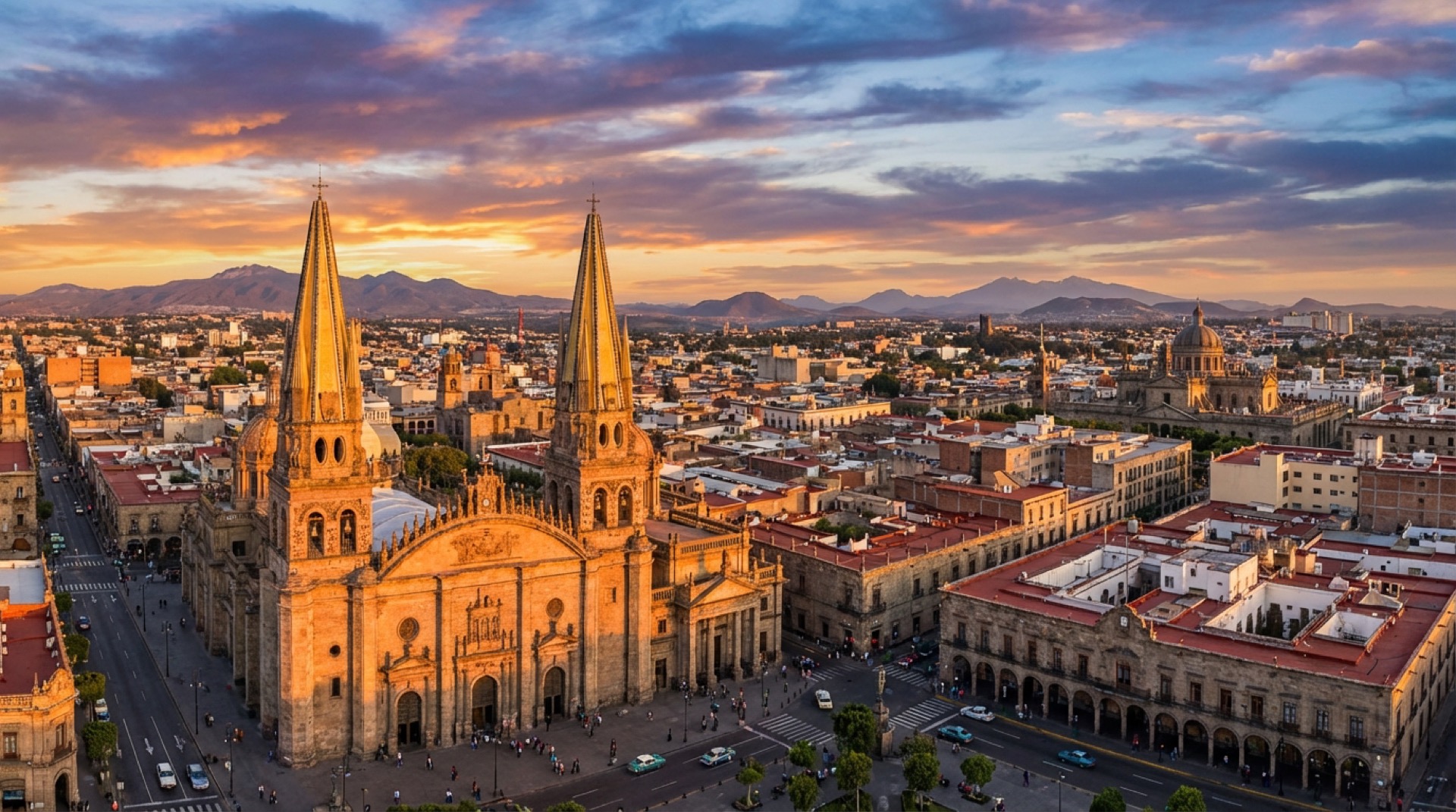
Guadalajara
Studying Spanish? Decko turns these phrases into smart flashcards that adapt to your memory.
Try free
Guadalajara is Mexico's second-largest city but feels more approachable than the capital. Tapatíos (locals) are known for their warmth and hospitality. English is less common here than in tourist-heavy cities like Cancún, so basic Spanish will make your trip significantly smoother. People speak clearly and at a moderate pace, making Guadalajara an excellent place to practice your Spanish.
¿Cómo llego al Centro Histórico?
How do I get to the Historic Center?
/KOH-moh YEH-goh ahl SEHN-troh ees-TOH-ree-koh/
The Centro Histórico is the heart of Guadalajara. Most landmarks, plazas, and museums are concentrated within walking distance of each other.
¿Dónde puedo probar una torta ahogada?
Where can I try a torta ahogada?
/DOHN-deh PWEH-doh proh-BAR OO-nah TOR-tah ah-oh-GAH-dah/
Asking locals for food recommendations is the fastest way to find the best spots. Everyone has a favorite torta ahogada place.
¿Hay un mercado cerca de aquí?
Is there a market near here?
/eye oon mehr-KAH-doh SEHR-kah deh ah-KEE/
Guadalajara has incredible markets. Mercado San Juan de Dios (Mercado Libertad) is the largest indoor market in Latin America.
¿A qué hora empieza el mariachi?
What time does the mariachi start?
/ah keh OH-rah ehm-PYEH-sah el mah-ree-AH-chee/
In Plaza de los Mariachis, musicians start gathering in the late afternoon and play into the night. You can hire a group for a song or a full set.
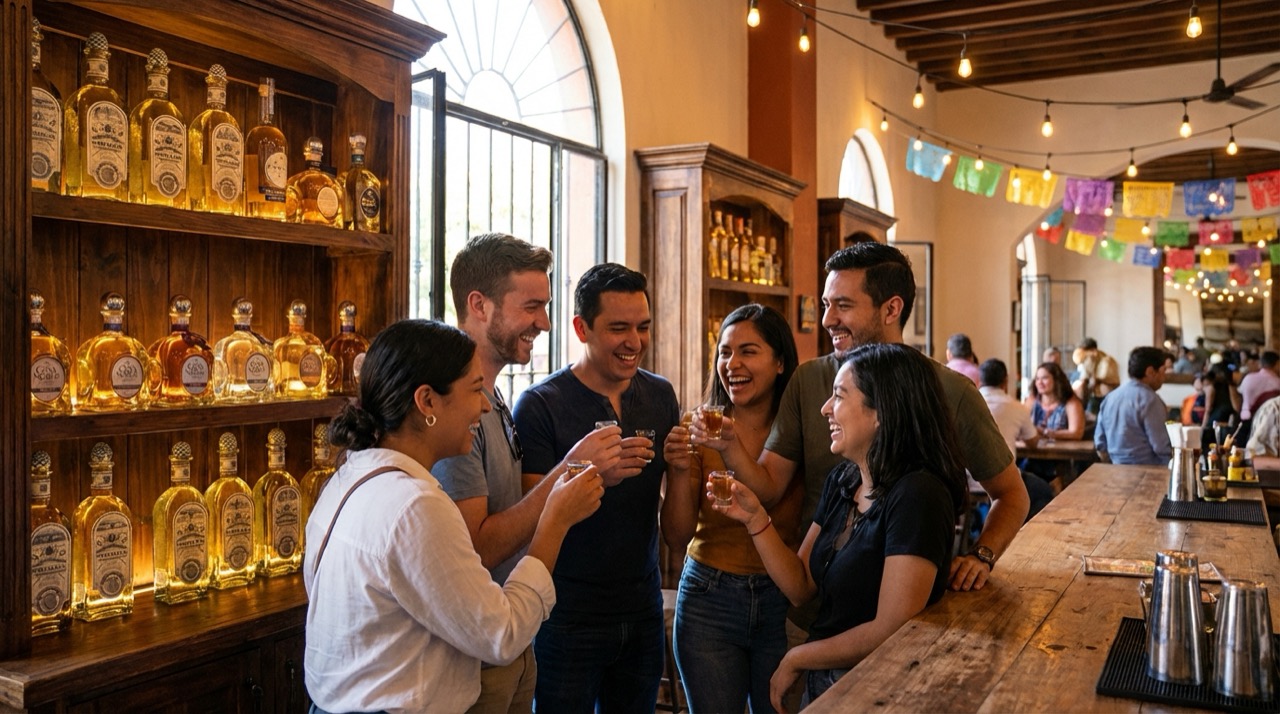
Tapatío slang combines standard Mexican Spanish with regional expressions unique to Jalisco. Guadalajara's dialect is considered one of the 'clearest' in Mexico, which is why many Spanish-language media companies are based here. But locals still have plenty of their own expressions that will mark you as someone who really knows the city.
¿Qué onda, compa?
What's up, buddy?
/keh OHN-dah, KOHM-pah/
'Compa' (short for 'compadre') is the go-to word for 'friend' or 'buddy' in Jalisco. Used constantly between friends.
Está bien perro
That's really awesome / intense
/ehs-TAH byehn PEH-rroh/
'Perro' (literally 'dog') means 'intense' or 'awesome' in Jalisco slang. 'La fiesta estuvo bien perra' = 'The party was wild.'
¡Orale!
Alright! / Let's go! / Wow!
/OH-rah-leh/
The most versatile word in Mexican Spanish. Can mean agreement, surprise, or encouragement depending on tone. Used everywhere in Jalisco.
No hay pedo
No problem / Don't worry about it
/noh eye PEH-doh/
Very informal way to say 'it's fine.' Used among friends. In more formal situations, use 'no hay problema.'
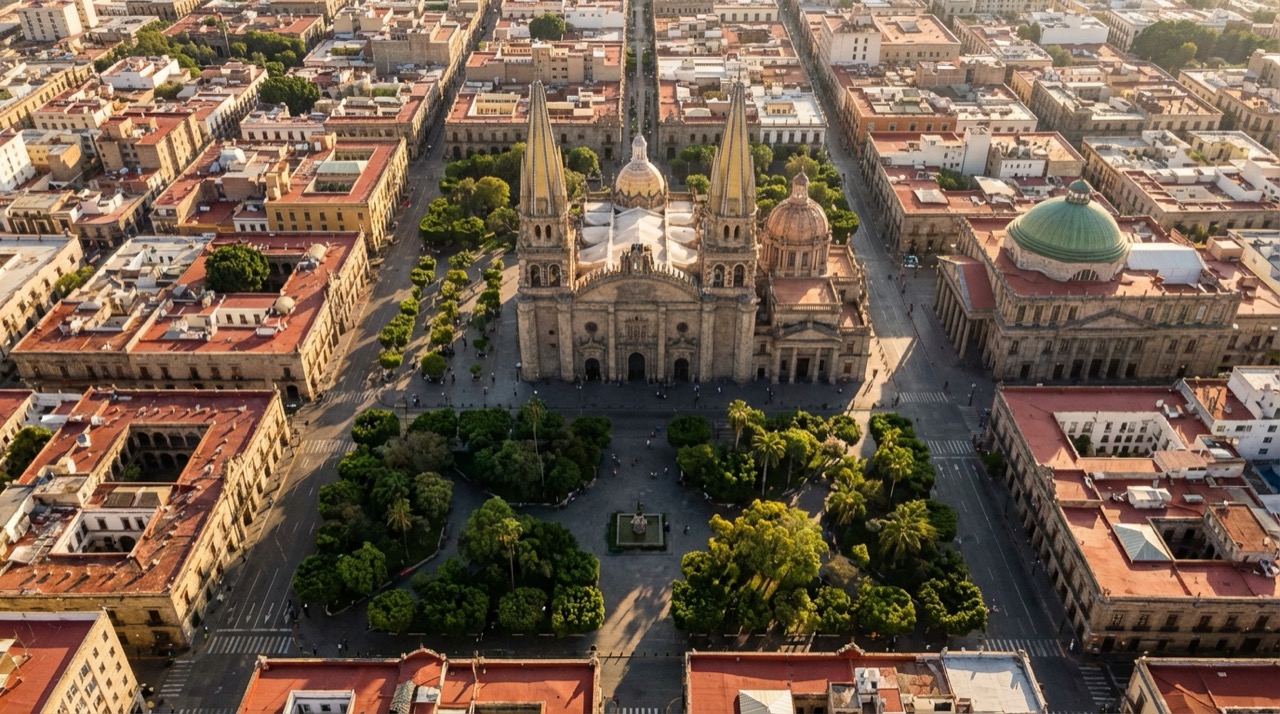
Guadalajara is a city of distinct barrios, each with its own character. The historic center is a walkable grid of plazas, churches, and colonial architecture. The newer western neighborhoods like Chapultepec, Americana, and Providencia offer trendy restaurants and nightlife. And just outside the city, Tlaquepaque and Tequila are essential day trips that feel like stepping into a different world.
Centro Histórico
Four interconnected plazas form a cross shape around the Cathedral, creating one of Mexico's most beautiful urban centers. Home to the Hospicio Cabañas (UNESCO World Heritage Site), the Degollado Theater, and the Rotonda de los Jaliscienses Ilustres. Street performers, food vendors, and centuries of history at every turn.
The four plazas around the Cathedral are called the 'Cruz de Plazas' (Cross of Plazas). Locals simply say 'el Centro' for the entire historic district.
Tlaquepaque
A former independent town now part of the Guadalajara metro area, famous for its artisan workshops, hand-blown glass, pottery, and folk art. The pedestrian-only center has colorful galleries, live mariachi, and some of the best traditional Jalisciense food. El Parián, a massive covered courtyard, is the mariachi epicenter.
Pronounce it 'tlah-keh-PAH-keh.' It comes from Nahuatl meaning 'place above clay land.' Locals call it just 'Tlaque.'
Chapultepec / Americana
The hip, walkable corridor along Avenida Chapultepec. Lined with craft bars, international restaurants, vintage shops, and street art. This is where young tapatíos hang out. On weekends, parts of the avenue close to traffic and fill with pedestrians, food stalls, and live music.
'La Chapu' is the casual name for Avenida Chapultepec. 'Vamos a la Chapu' is how locals suggest going out in this area.
Zapopan
A neighboring municipality with its own distinct identity. The Basilica of Our Lady of Zapopan is one of Mexico's most important pilgrimage sites. The area around the basilica has a charming town center with good food and a quieter pace. The Huichol indigenous art museum here is outstanding.
'Zapopan' comes from Nahuatl meaning 'place of zapotes (tropical fruit).' The October 12 pilgrimage procession to the Basilica draws millions.
Tequila (Town)
The legendary town where tequila was born, about an hour west of Guadalajara. Blue agave fields stretch in every direction (a UNESCO World Heritage landscape). Tour distilleries ranging from artisanal to major brands like José Cuervo. The Jose Cuervo Express train from Guadalajara is a popular way to visit.
'Tequila' likely comes from Nahuatl meaning 'place of work' or 'place of cutting.' Real tequila can only be made in Jalisco and four other designated Mexican states.
Want to actually remember these phrases?
Save them to your flashcard deck and Decko will quiz you at the perfect time using spaced repetition.
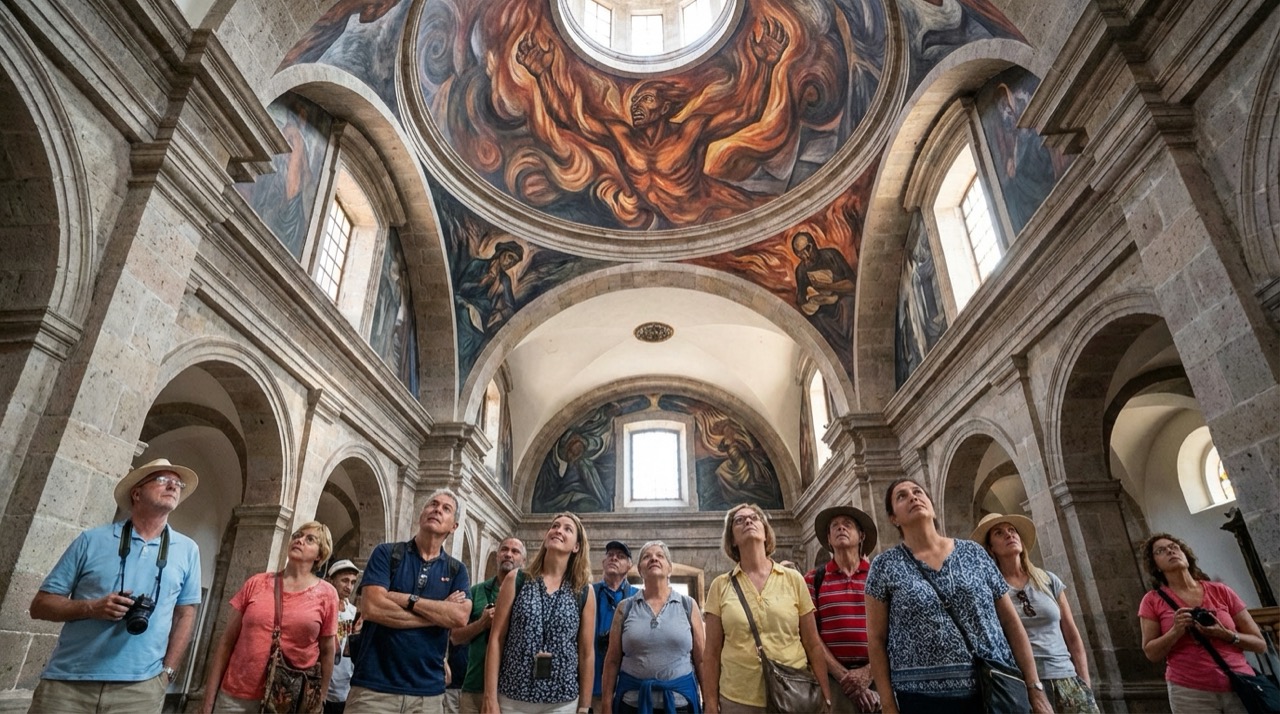
Guadalajara blends colonial grandeur with modern Mexican culture like no other city. It is the birthplace of mariachi, tequila, and the Mexican hat dance (jarabe tapatío). Beyond the iconic attractions, the city rewards wandering through its plazas, markets, and neighborhoods where murals, architecture, and live music create an immersive cultural experience.
Hospicio Cabañas (UNESCO World Heritage Site)
A neoclassical former orphanage housing José Clemente Orozco's masterpiece murals. The ceiling fresco 'The Man of Fire' is considered one of the greatest murals in the Americas. The building itself, with its 23 courtyards, is an architectural marvel. Now a cultural institute with rotating contemporary exhibitions.
Ask for 'el Hospicio Cabañas' or 'el Instituto Cultural Cabañas.' Orozco is Guadalajara's most famous artist. His name comes up often.
Catedral de Guadalajara
The symbol of Guadalajara with its distinctive twin yellow spires visible from across the city. Construction began in 1561 and blends Gothic, Baroque, Moorish, and Neoclassical styles after multiple rebuilds due to earthquakes. The interior holds a painting attributed to the Spanish master Murillo.
'La Catedral' is the landmark everyone uses for directions. 'Está a dos cuadras de la Catedral' (It's two blocks from the Cathedral) is how locals give directions in the center.
Teatro Degollado
A stunning neoclassical theater from 1866, home to the Guadalajara Philharmonic and the city's ballet folklorico performances. The portico features a relief of Apollo and the nine Muses. Interior frescoes depict scenes from Dante's Divine Comedy. Attending a performance here is an unforgettable evening.
'Degollado' is pronounced 'deh-goh-YAH-doh.' Named after Santos Degollado, a 19th-century general. Ask about 'el ballet folklorico' for traditional dance performances.
Mercado San Juan de Dios (Mercado Libertad)
The largest covered market in Latin America, spread over three floors. The ground floor has food stalls serving birria, tortas ahogadas, and fresh juices. Upper floors sell everything from cowboy boots and leather goods to electronics and traditional remedies. Overwhelming, chaotic, and absolutely essential.
Locals call it 'San Juan de Dios' or 'Mercado Libertad' interchangeably. Bargaining is expected on the upper floors, but prices at food stalls are usually fixed.
Guachimontones (Archaeological Site)
Unique circular step pyramids about an hour west of Guadalajara near the town of Teuchitlán. Built by the Teuchitlán tradition (300 BC to 900 AD), these are the only known circular pyramids in Mesoamerica. Less crowded than famous sites, with a museum on-site and stunning views over the valley and lake.
Pronounce it 'gwah-chee-mohn-TOH-nehs.' Combine the visit with a stop in the nearby town of Tequila for a full day trip from Guadalajara.
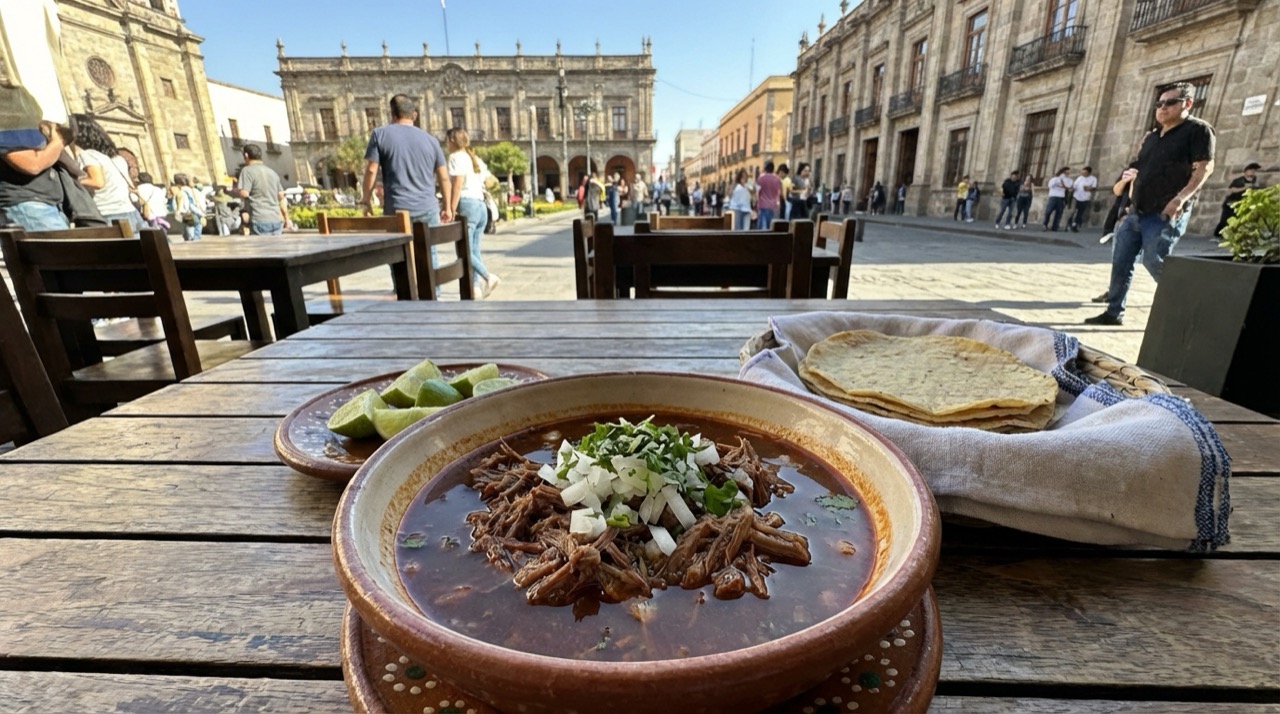
Guadalajara's food scene is legendary, anchored by dishes that have become icons of Mexican cuisine worldwide. Birria, tortas ahogadas, and tequila all originate here. Jalisciense cooking is hearty, bold, and deeply tied to local identity. Tapatíos take enormous pride in their food traditions. The best meals are often found at simple fondas, market stalls, and family-run restaurants that have been perfecting their recipes for generations.
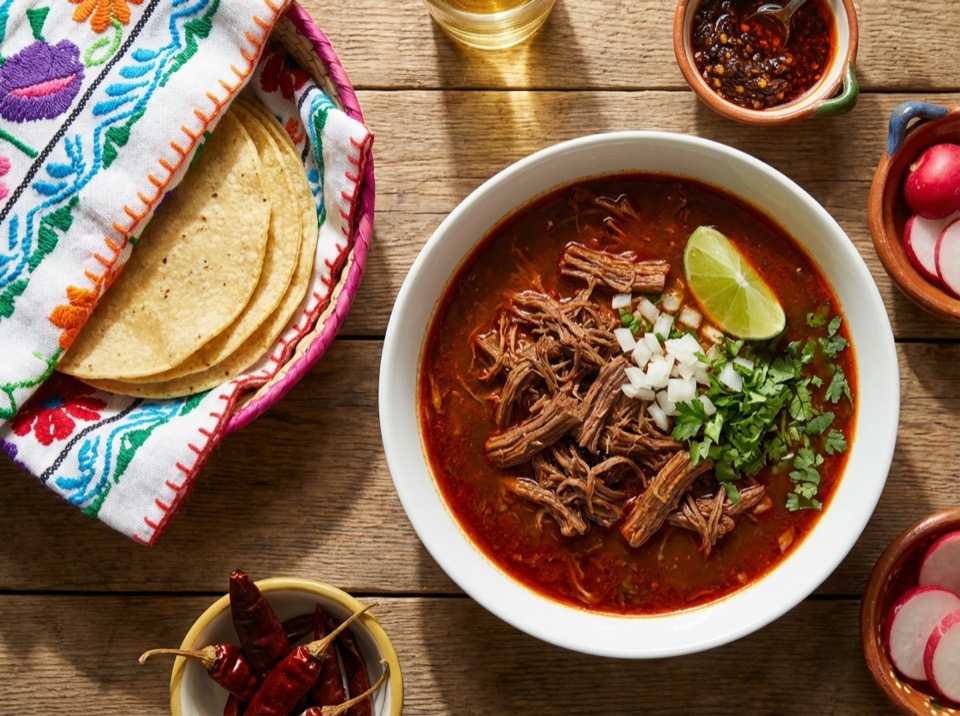
Birria
The pride of Jalisco: slow-cooked goat or beef stewed in a rich, complex chile sauce for hours until falling apart. Served in a bowl with consomé (the flavorful cooking broth), topped with onion, cilantro, and lime. Traditionally a weekend breakfast dish. The source of the viral birria taco trend that swept the world.
How to order
Un plato de birria con consomé aparte y tortillas, por favor. (A plate of birria with broth on the side and tortillas, please.) For tacos de birria, say 'Unos tacos de birria dorados' (crispy birria tacos).
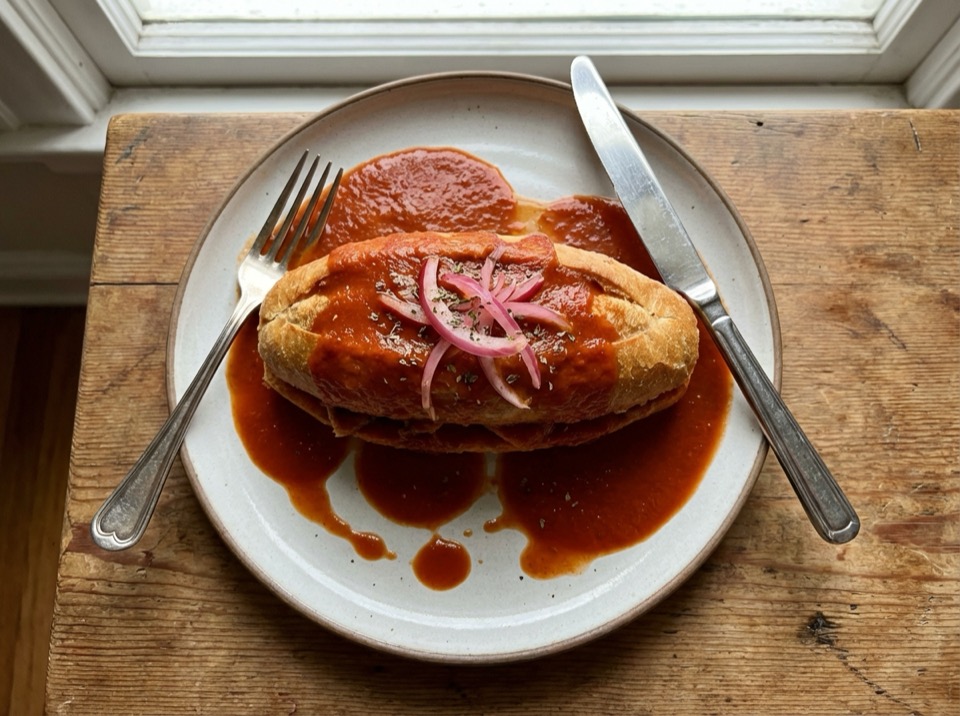
Torta Ahogada
Guadalajara's signature sandwich: a crusty birote bread roll filled with carnitas (slow-cooked pork) and literally 'drowned' in a spicy tomato-chile de arbol sauce. Served with pickled onions and a squeeze of lime. The bread must be the local birote, which has a uniquely hard crust that holds up to the sauce.
How to order
Una torta ahogada, media (half-drowned), por favor. (One drowned torta, half-drowned, please.) 'Media' means half the sauce. Say 'bien ahogada' if you want it fully drowned. Warning: the sauce is very spicy.
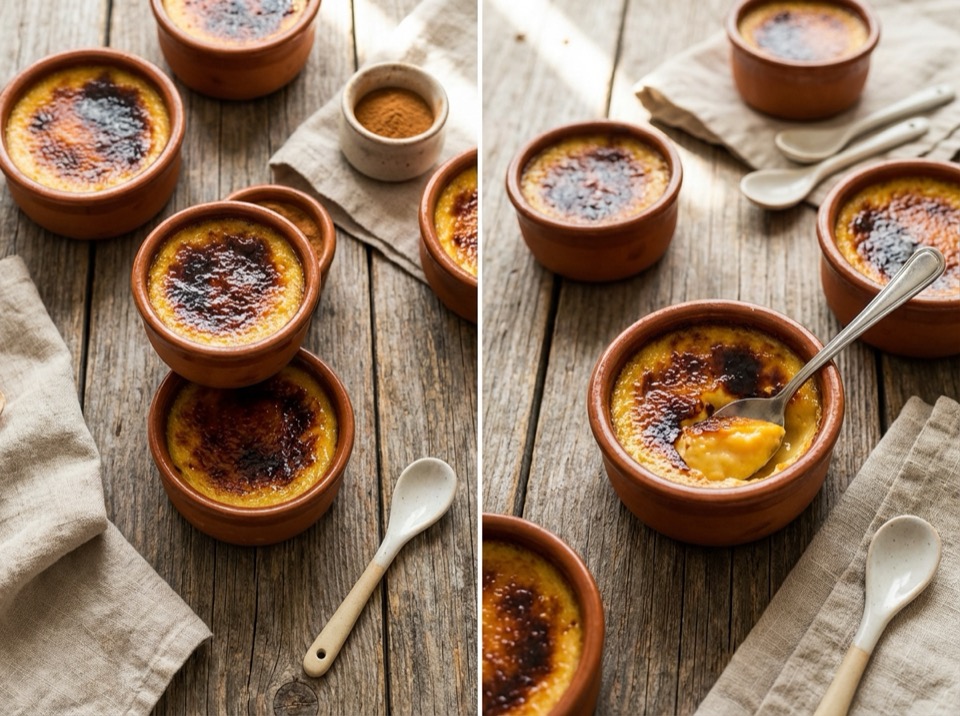
Jericalla
A creamy, caramelized custard dessert unique to Guadalajara, similar to creme brulee but with a distinctive burnt top and lighter texture. Created by nuns at the Hospicio Cabañas in the 19th century to feed the orphans. Served in small clay cups, eaten with a spoon. The burnt top is the best part.
How to order
Una jericalla, por favor. (One jericalla, please.) Found at fondas, markets, and dessert vendors throughout the city. Mercado Libertad has excellent ones.
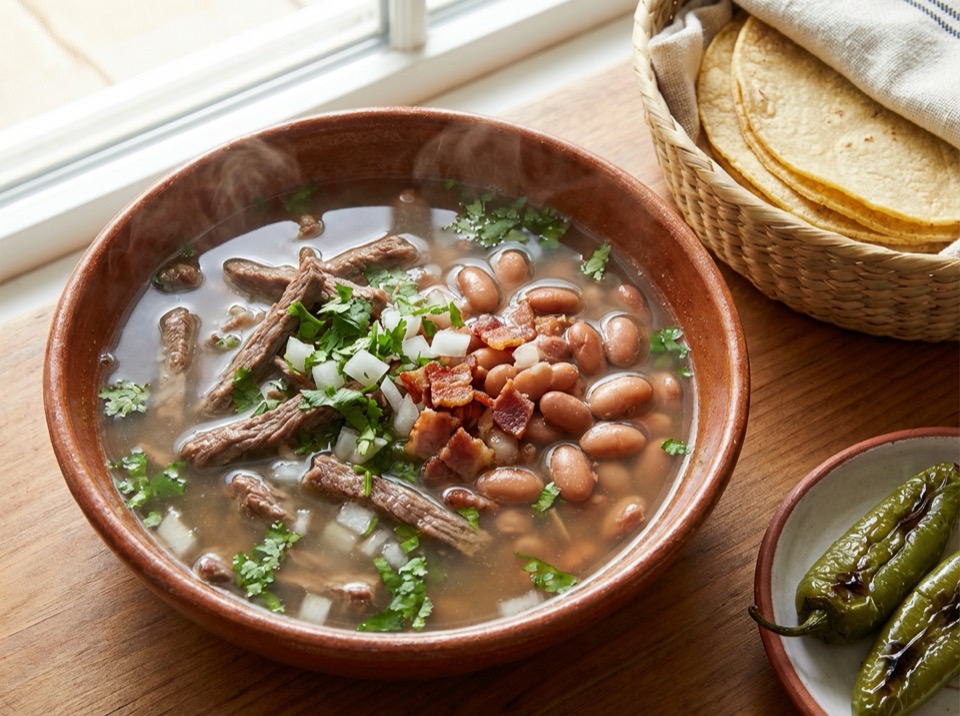
Carne en su Jugo
A hearty bean and bacon soup with thin slices of grilled beef, literally 'meat in its juice.' Topped with whole pinto beans, cilantro, chopped onion, and served with corn tortillas. A Guadalajara original that has spread across Mexico. Perfect for chilly evenings or after a night out.
How to order
Una carne en su jugo, por favor. (One 'meat in its juice,' please.) Most places offer a regular or large size. Say 'chica' for small or 'grande' for large.
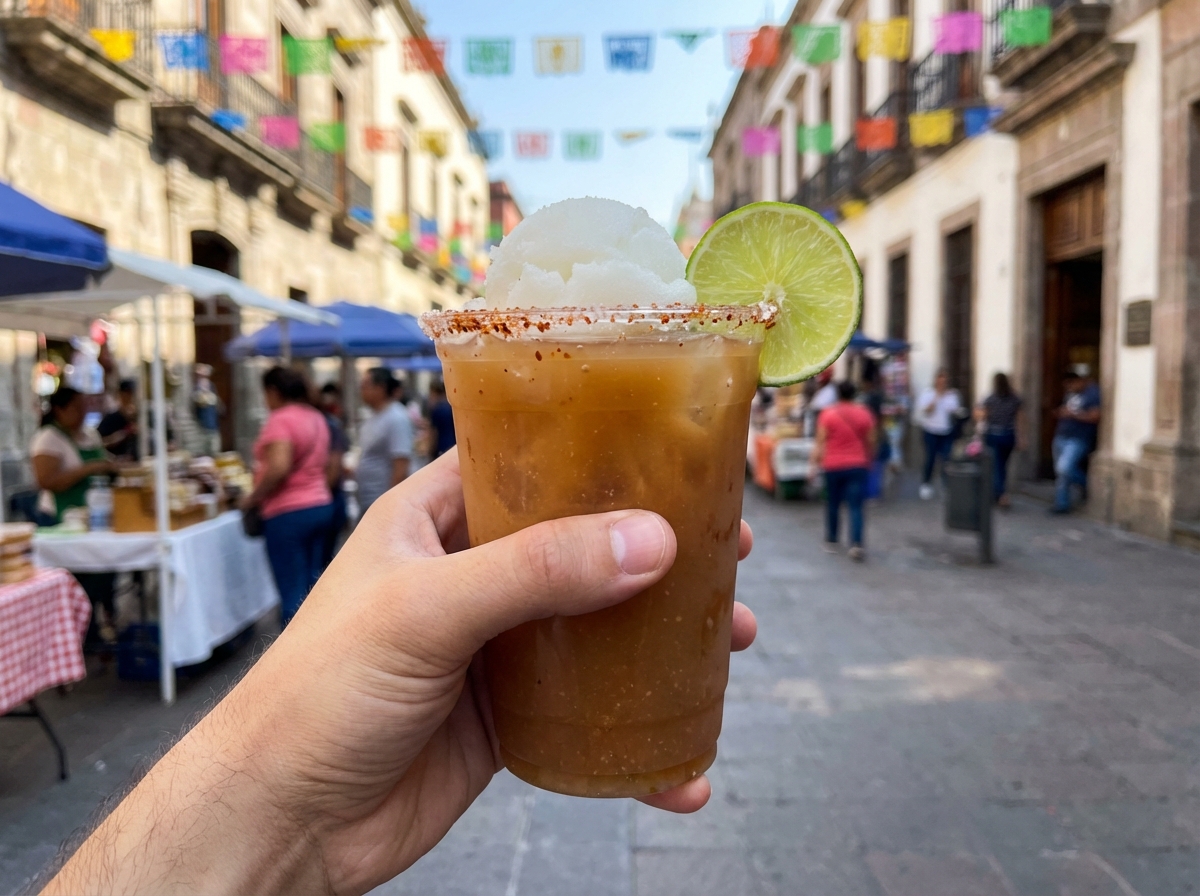
Tejuino
A unique fermented corn drink served ice-cold with lime sorbet, salt, and lime juice. Mildly sweet with a tangy, slightly fermented flavor. Sold from street carts and market stalls, especially in hot weather. It has pre-Hispanic origins and is practically unknown outside Jalisco.
How to order
Un tejuino con nieve de limón, por favor. (One tejuino with lime sorbet, please.) Street vendors prepare it fresh. Some add a dash of hot sauce for an extra kick.
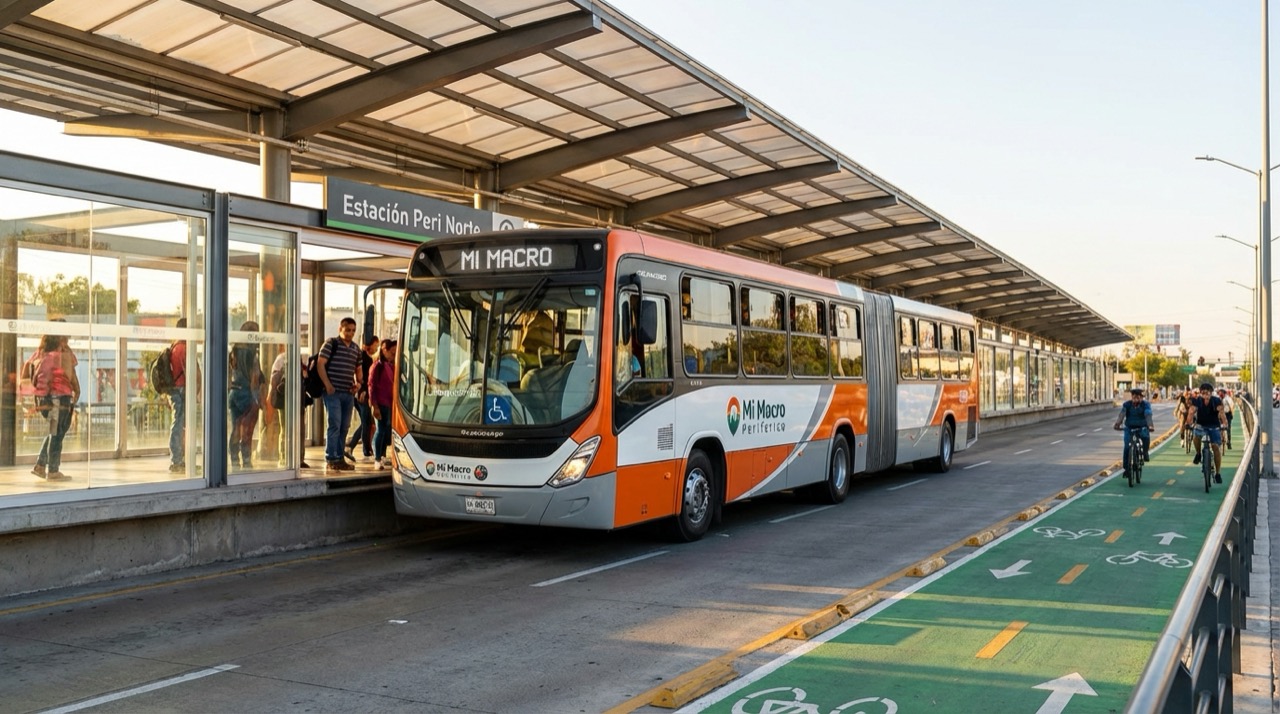
Guadalajara has been investing heavily in public transport with new BRT lines (Macrobús, Mi Macro) and a light rail system. The historic center is very walkable. For reaching outlying attractions like Tlaquepaque, Tequila, or Lake Chapala, combine public transport with ride-sharing apps. Traffic can be heavy during rush hours, so plan accordingly.
Tren Ligero (Light Rail)
Two lines of light rail connecting the city north-south and east-west. Line 1 runs from Periférico Norte to Periférico Sur. Line 3 is the newest addition, connecting Zapopan to Tlaquepaque. Clean, reliable, and cheap at $9.50 MXN per ride.
- Buy a rechargeable Mi Movilidad card at any station for seamless transfers between tren ligero and Macrobús
- Line 1 connects the bus station (Central Camionera) to the city center
- Line 3 is modern and air-conditioned, running between Zapopan and Tlaquepaque
- Trains run every 7-15 minutes depending on the time of day
- The system closes around 11 PM; plan your return trip accordingly
Macrobús / Mi Macro (BRT)
Bus Rapid Transit lines running on dedicated lanes. The Macrobús Line 1 runs along Calzada Independencia through the city center. Mi Macro Periférico circles the city on the ring road. Modern, air-conditioned buses that are faster than regular traffic.
- Uses the same Mi Movilidad card as the tren ligero for easy transfers
- The Macrobús along Calzada Independencia passes near most Centro Histórico attractions
- Mi Macro Periférico is useful for reaching shopping centers and suburbs on the city's ring road
- Dedicated lanes mean reliable travel times even during rush hour
- Stations have platforms at bus floor level for easy boarding
Uber / DiDi / InDriver
All three ride-sharing apps operate in Guadalajara. Uber is the most established, DiDi often offers lower prices, and InDriver lets you negotiate the fare. Much safer and more transparent than street taxis for visitors.
- Uber and DiDi both work well for getting to Tlaquepaque, Zapopan, and other suburban destinations
- InDriver lets you propose your own price, which drivers can accept or counter. Good for longer trips.
- Airport rides should be booked through the app. Official airport taxis are more expensive.
- Rush hour (7-9 AM, 6-8 PM) can double both travel time and ride-sharing prices due to surge pricing
- Cash payment is available in all three apps if you do not have a local payment method linked
Day Trips (Tequila, Lake Chapala)
For Tequila, options include the Jose Cuervo Express train (a tourist train with tequila tasting), regular buses from the Central Camionera, or driving. Lake Chapala, Mexico's largest lake with a large expat community, is about 45 minutes south by car or bus.
- The Jose Cuervo Express train runs weekends and includes tequila tasting, entertainment, and a distillery tour. Book well in advance.
- Regular buses to Tequila leave from the Central Camionera (old terminal) and cost about $100-150 MXN each way
- For Lake Chapala, buses leave from the Central Camionera Sur. The ride is about 45 minutes.
- Renting a car gives you freedom to visit multiple distilleries and the agave fields at your own pace
- Combine Tequila + Guachimontones ruins for a full day trip (they are near each other)
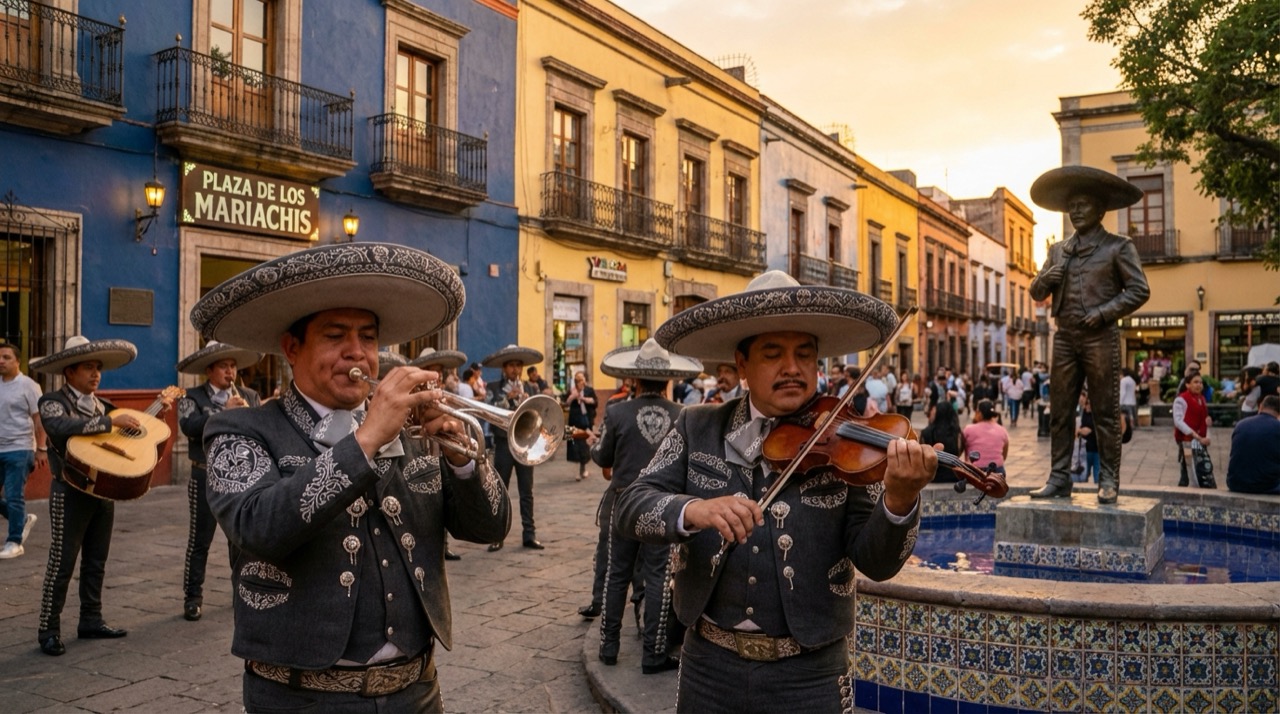
Guadalajara is the cultural capital of western Mexico and the birthplace of many things the world associates with 'Mexican culture': mariachi music, tequila, the charro (cowboy) tradition, and the jarabe tapatío (Mexican hat dance). Tapatíos are proud, friendly, and deeply connected to their traditions. Understanding these cultural roots transforms your visit from sightseeing into genuine connection.
Do
- Hire a mariachi group in Plaza de los Mariachis or El Parián in Tlaquepaque. Agree on the price per song before they start (usually $100-200 MXN per song).
- Visit a tequila distillery and learn the difference between blanco, reposado, and añejo. In Jalisco, tequila is sipped slowly, never slammed.
- Attend a charrería (Mexican rodeo) if possible. It is Mexico's national sport and originated in Jalisco. Lienzo Charro de Jalisco hosts events regularly.
- Explore the art scene. Guadalajara has world-class muralists (Orozco), a thriving contemporary art scene, and an international book fair (FIL) that is the largest in the Spanish-speaking world.
- Try to visit on a weekend. Saturday and Sunday are when markets, plazas, and cultural events come alive. Avenida Chapultepec closes to cars on Sundays.
- Support local artisans in Tlaquepaque and Tonalá. Hand-blown glass, Talavera pottery, and papel picado are authentic Jalisciense crafts.
- Say 'Soy de [your country]' when asked where you are from. Tapatíos are genuinely curious about visitors and love making connections.
Avoid
- Do not call tequila 'liquor' or treat it like a party drink. In Jalisco, tequila is an artisanal spirit with the same reverence as wine in France.
- Do not confuse Guadalajara with Mexico City culture. Tapatíos have a distinct regional identity and subtle rivalry with chilangos (Mexico City locals).
- Do not skip Tlaquepaque for the Centro Histórico only. Tlaquepaque is essential for understanding Jalisciense craft, food, and mariachi traditions.
- Do not wear a Club América jersey in Guadalajara. The rivalry between Chivas and América is one of the fiercest in Mexican soccer.
- Do not leave without trying birria, torta ahogada, and jericalla. These are non-negotiable Guadalajara food experiences.
- Do not be stingy with tequila tastings. When someone offers you a sip of their special bottle, accept. Refusing is seen as cold.
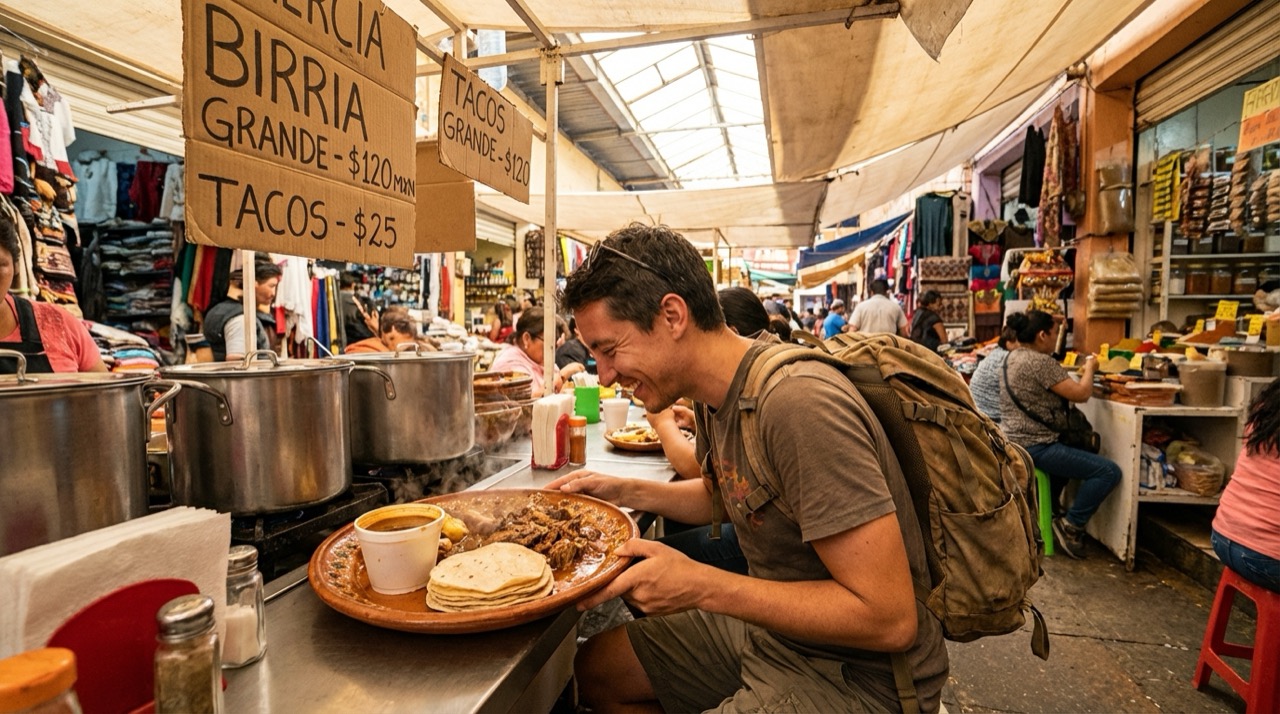
Guadalajara offers outstanding value compared to Mexico City, Cancún, or popular beach destinations. It is a major Mexican city with world-class food, culture, and nightlife at very accessible prices. The best experiences (wandering plazas, listening to mariachi, exploring markets) are free or nearly free. Eating where locals eat and using public transport keeps your budget in great shape.
Typical Prices
Money-Saving Tips
- Eat at Mercado San Juan de Dios (Mercado Libertad) for the best birria, carne en su jugo, and tortas ahogadas at market prices.
- Most museums in Guadalajara are free or very cheap. The Hospicio Cabañas is $75 MXN. Many offer free entry on certain days.
- Listening to mariachi in Plaza de los Mariachis costs nothing if you just sit and enjoy. You only pay if you hire a group to play for you.
- Use the tren ligero and Macrobús (both $9.50 MXN) instead of taxis. The Mi Movilidad card works on both systems.
- Visit the Tequila town by regular bus ($100-150 MXN round trip) instead of the Jose Cuervo Express train ($2,500+ MXN).
- Sunday is the cheapest day for activities. Avenida Chapultepec closes to traffic and becomes a free pedestrian festival.
- Buy tejuino from street carts ($20-30 MXN) for an authentic, refreshing, and incredibly cheap local drink.
- The free walking tours of Centro Histórico (tip-based) are excellent and run daily. Find them at the Rotonda de los Jaliscienses Ilustres.
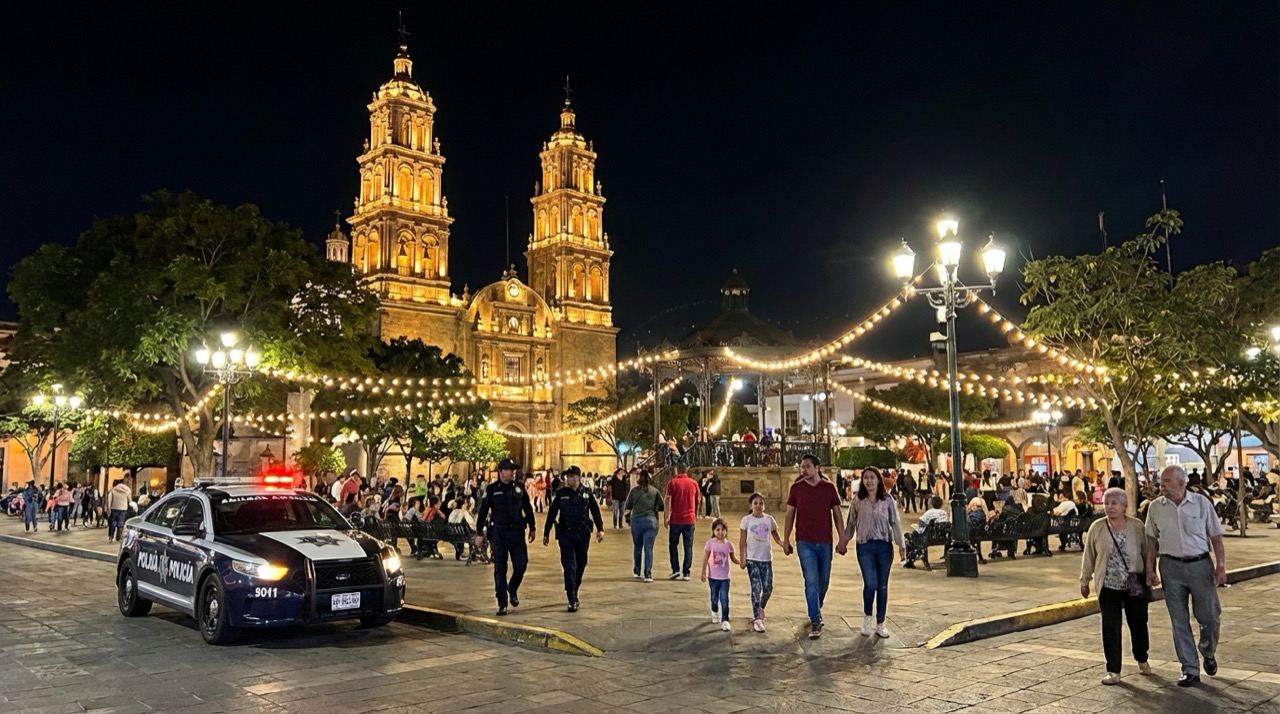
Guadalajara's tourist areas (Centro Histórico, Tlaquepaque, Chapultepec, Zapopan) are generally safe during the day and evening. As with any large city, stay aware of your surroundings, avoid isolated areas at night, and use ride-sharing apps instead of hailing random taxis. The biggest practical concern for most visitors is petty theft in crowded markets, not violent crime.
¡Ayuda! Llame al 911
Help! Call 911
/ah-YOO-dah! YAH-meh ahl nweh-veh oon-seh/
911 is the emergency number in Mexico, same as the US. It works for police, ambulance, and fire department.
Me siento mal, ¿hay una clínica cerca?
I feel sick, is there a clinic nearby?
/meh SYEHN-toh mahl, eye OO-nah KLEE-nee-kah SEHR-kah/
Farmacias Similares have attached doctors' offices (consultorio) where you can see a doctor for $40-60 MXN. Good for minor issues.
¿Esta zona es segura de noche?
Is this area safe at night?
/EHS-tah SOH-nah ehs seh-GOO-rah deh NOH-cheh/
Ask your hotel staff or restaurant servers. They will give you honest, practical advice about where to go and where to avoid.
Necesito hablar con mi consulado
I need to speak with my consulate
/neh-seh-SEE-toh ah-BLAR kohn mee kohn-soo-LAH-doh/
Several countries have consulates in Guadalajara, including the US and Canada. Keep the phone number saved in your contacts.
Me están siguiendo
Someone is following me
/meh ehs-TAHN see-GYEHN-doh/
Walk into the nearest open business (restaurant, store, pharmacy) and ask for help. You can also call 911 from any phone.
No traigo efectivo, solo tarjeta
I don't have cash, only card
/noh TRAH-ee-goh eh-fehk-TEE-voh, SOH-loh tar-HEH-tah/
A useful phrase if approached by anyone asking for money or trying to sell something you do not want. Many vendors will simply move on.
¿Dónde puedo guardar mis cosas con seguridad?
Where can I store my things safely?
/DOHN-deh PWEH-doh gwar-DAR mees KOH-sahs kohn seh-goo-ree-DAHD/
Ask at your hotel or hostel for a locker or safe. Avoid carrying all your valuables when visiting crowded markets like Mercado Libertad.
¿Puede llamar un taxi seguro?
Can you call a safe taxi?
/PWEH-deh yah-MAR oon TAK-see seh-GOO-roh/
Restaurants and hotels can call a 'taxi de sitio' (registered taxi from a stand) which is safer than hailing one on the street.
Community Tips

Ready to learn Spanish for real?
Take these Guadalajara phrases with you. Decko uses spaced repetition to make sure you actually remember them when you need them.
Free forever. No credit card required.