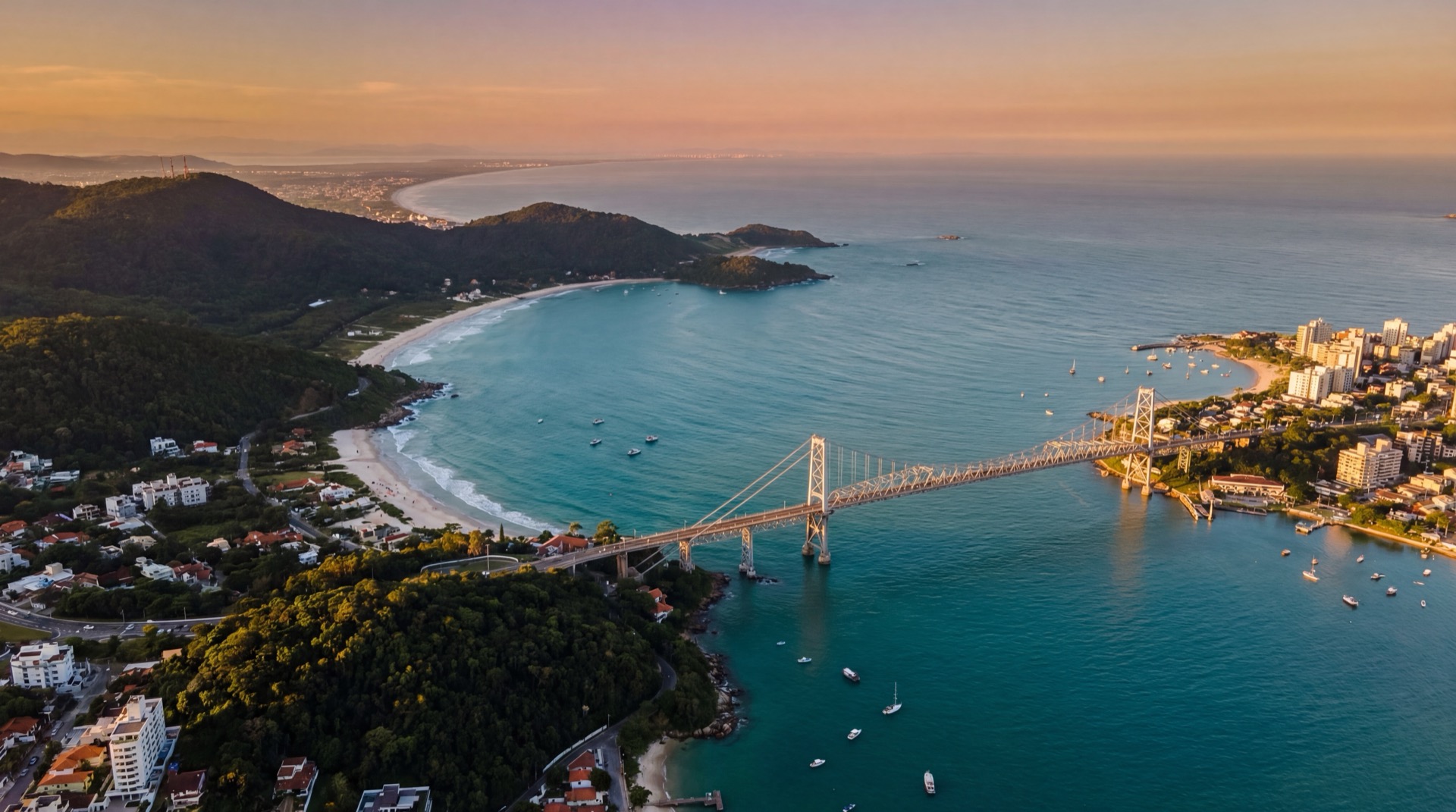
Florianópolis
Studying Portuguese? Decko turns these phrases into smart flashcards that adapt to your memory.
Try free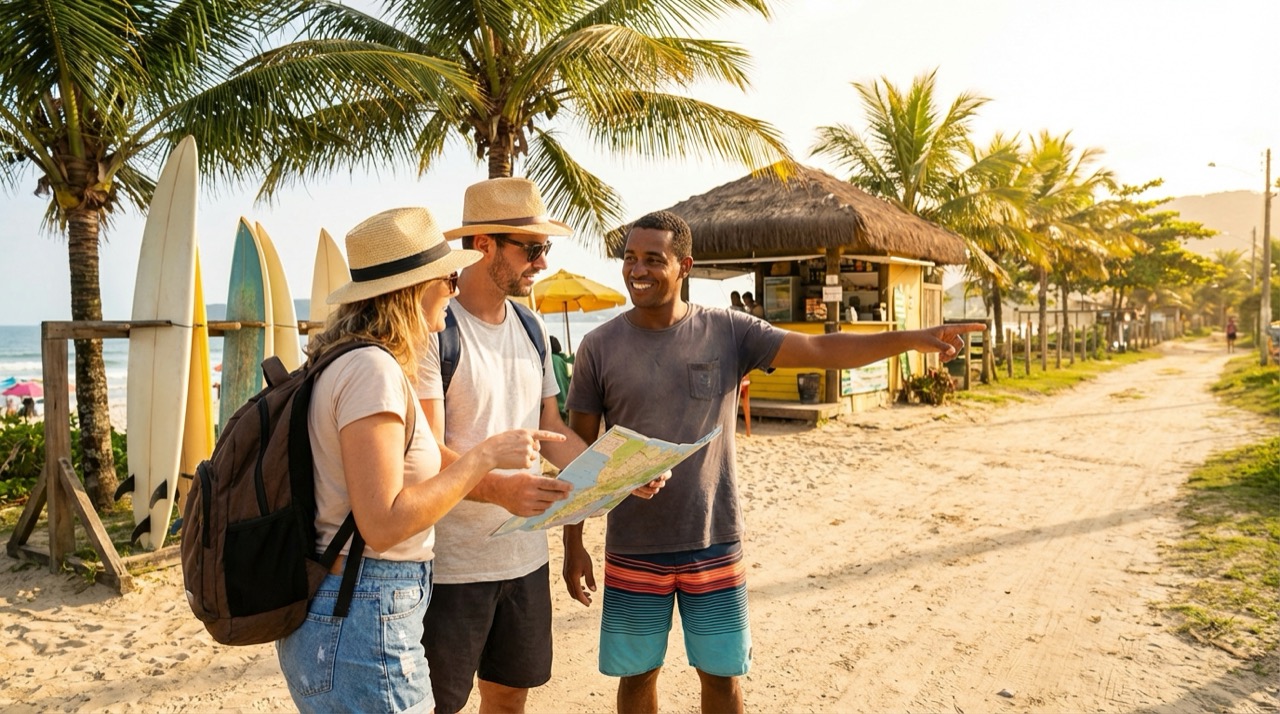
Florianópolis is a beach-lover's paradise spread across an island and a small mainland strip. These phrases will help you navigate the beaches, trails, and seafood restaurants that make the city special.
Qual é a praia mais tranquila hoje?
Which is the calmest beach today?
/kwow eh ah PRY-ah mice tran-KWEE-lah OH-jee/
Wind and swell change daily, so locals always know which coast is sheltered.
O mar tá bom pra banho?
Is the sea good for swimming?
/oo mar TAH bom prah BAN-yoo/
Important to ask because some beaches have strong currents, especially Joaquina and Mole.
Tem chuveiro na praia?
Is there a shower at the beach?
/teng shoo-VAY-roo nah PRY-ah/
Most popular beaches have public showers to rinse off the sand and salt.
Quanto custa o aluguel de prancha?
How much is it to rent a surfboard?
/KWAN-too KOOS-tah oo ah-loo-GEL jee PRAN-shah/
Surfboard rentals are available at Joaquina, Mole, and Campeche beaches.
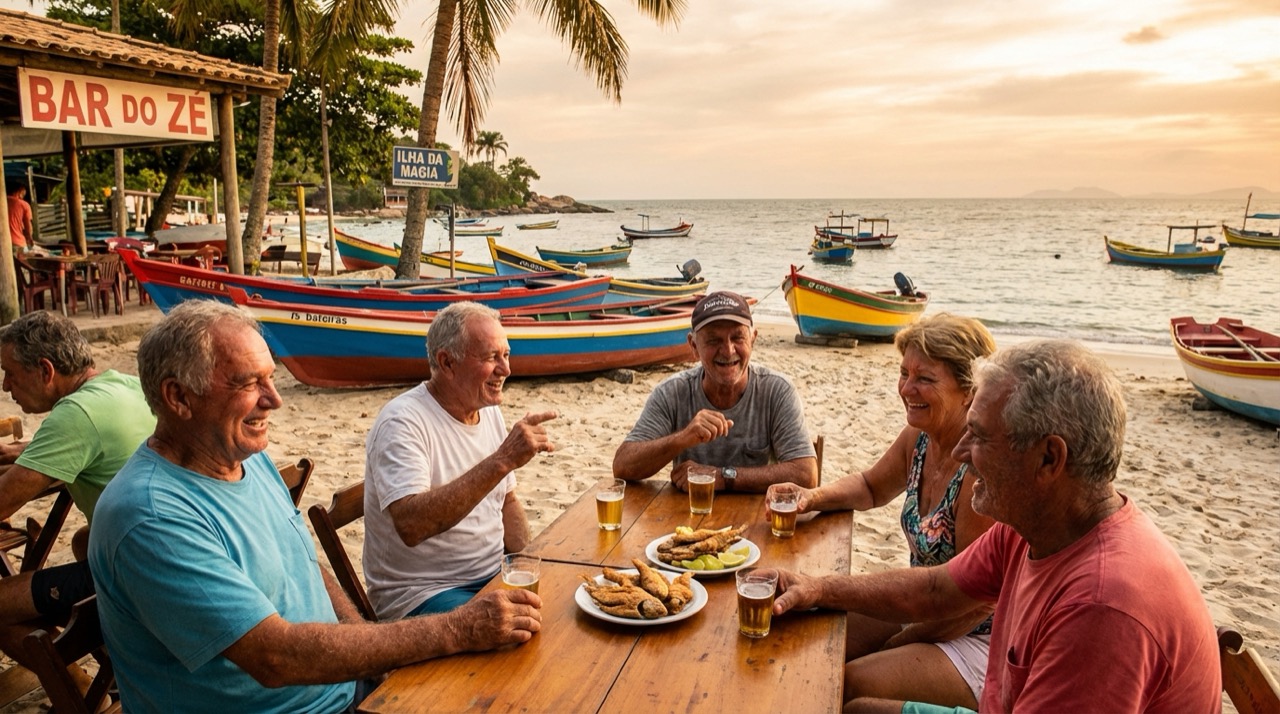
Florianópolis has a unique dialect influenced by Azorean Portuguese settlers. Locals are called 'manezinhos da ilha' and their speech has distinctive sounds and expressions you won't hear in São Paulo or Rio.
Ó, meu!
Hey, dude! / Look here!
/OH meh-oo/
The classic manezinho exclamation, used to start sentences or get attention.
Tá de boas?
You good? / Everything alright?
/tah jee BOH-ahs/
Casual greeting among friends, very common in southern Brazil.
Ranço
Annoyance / pet peeve / grudge
/HAN-soo/
Used throughout southern Brazil. 'Tenho ranço disso' means 'I can't stand that.'
Mas bah, tchê!
Wow! / No way! (southern exclamation)
/mahz BAH tcheh/
Borrowed from gaúcho dialect. Floripa sits at the cultural crossroads of Santa Catarina and Rio Grande do Sul.
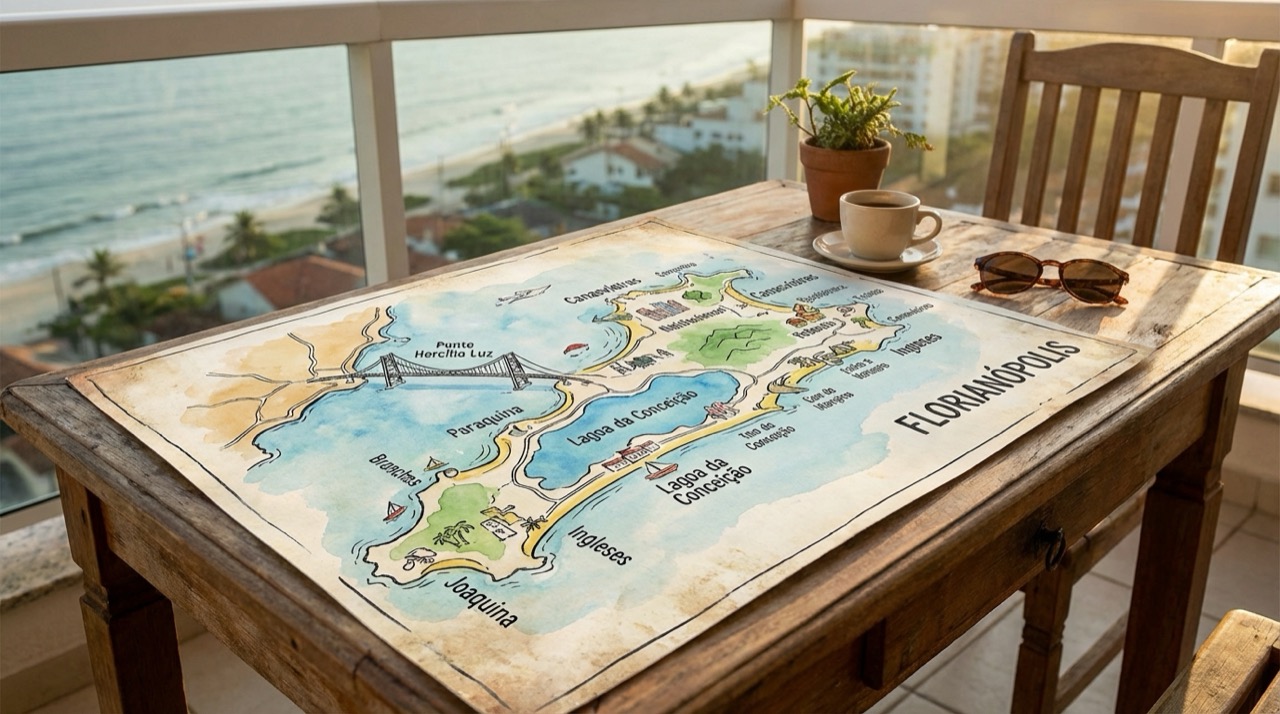
Florianópolis is spread across an island connected to the mainland by bridges. Each neighborhood has its own vibe, from bohemian Lagoa to upscale Jurerê. Getting between them takes 20 to 50 minutes by car.
Lagoa da Conceição
The beating heart of Floripa's social scene. A large lagoon surrounded by bars, restaurants, and shops. The area connects to the east coast beaches via a winding road through the dunes. Nightlife, kitesurfing on the lagoon, and a strong bohemian/surfer culture define this neighborhood.
'Lagoa' (lah-GOH-ah) means lagoon. Locals just say 'vou pra Lagoa' (I'm going to the Lagoon) and everyone knows where.
Centro
The mainland-adjacent downtown area with the historic Mercado Público (public market), the cathedral, and the bus terminal (TICEN) that connects routes across the island. More urban and practical than scenic, but the market is a must-visit for local food and culture.
'Mercado Público' (mer-KAH-doo POO-blee-koo) is the public market. Say 'Vou pro Mercado' to tell your driver.
Jurerê
Split into 'Jurerê Tradicional' (family-friendly, calmer) and 'Jurerê Internacional' (upscale beach clubs, boutique hotels, designer stores). The international side is where the wealthy crowd parties in summer. Beautiful calm beaches with warm, shallow water.
Pronounce it 'zhoo-reh-REH.' If someone says 'Jurerê Inter,' they mean the fancy side.
Campeche
A laid-back beach neighborhood on the southeast coast with a wide sandy beach, consistent surf, and a growing local food scene. The nearby Ilha do Campeche (Campeche Island) is a protected nature reserve with indigenous rock carvings and crystal-clear water, reachable by boat.
'Ilha do Campeche' (EEL-yah doo kam-PEH-shee) is the island offshore. Ask about 'passeio de barco' (boat trip) to visit it.
Santo Antônio de Lisboa
The most charming and historically preserved village on the island. Azorean colonial architecture, cobblestone streets, artisan shops, and waterfront restaurants famous for oysters. The best sunset spot in Floripa, looking west across the bay toward the mainland mountains.
Locals shorten it to 'Santo Antônio.' This is where you'll hear the strongest Azorean-influenced accent on the island.
Want to actually remember these phrases?
Save them to your flashcard deck and Decko will quiz you at the perfect time using spaced repetition.
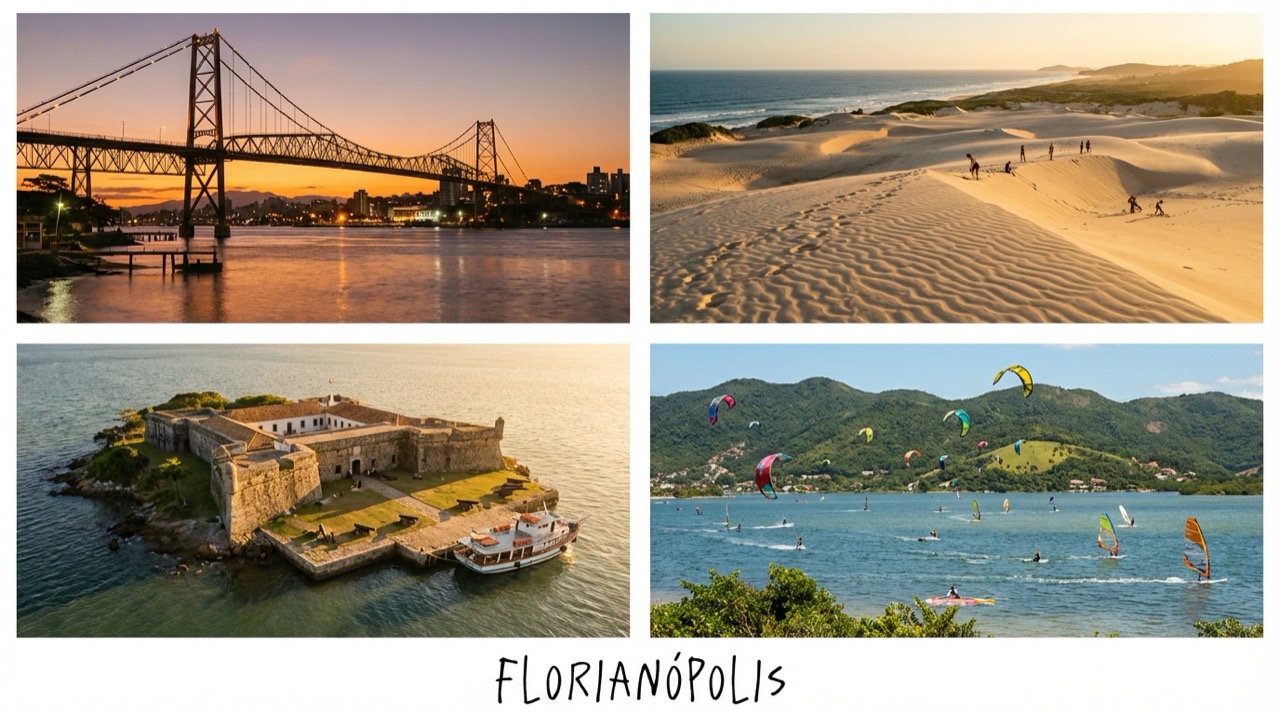
Florianópolis blends natural beauty with Azorean colonial heritage. From iconic bridges and fortresses to pristine beaches and massive sand dunes, the island packs an impressive variety of experiences into a compact area.
Ponte Hercílio Luz
The iconic suspension bridge connecting the island to the mainland. Built in 1926, it was closed for decades for restoration and reopened to pedestrians in 2020. Walking across at sunset is a quintessential Floripa experience. The bridge is beautifully lit at night and has become the city's most recognizable symbol.
Say 'Quero ir até a Ponte Hercílio Luz' (I want to go to the Hercílio Luz Bridge). Locals call it simply 'a Ponte' (the Bridge).
Lagoa da Conceição
A large saltwater lagoon in the center of the island, surrounded by hills, restaurants, and nightlife. Popular for kitesurfing, stand-up paddleboarding, and kayaking. The eastern shore connects to Praia Mole and Joaquina via the dunes. At night, the Lagoa strip comes alive with bars and live music.
'Vamos pra Lagoa?' (Let's go to the Lagoon?) is how locals suggest heading there. No need to say the full name.
Praia da Joaquina
One of Brazil's most famous surf beaches, known for powerful waves, golden sand, and the dramatic sand dunes that border it. Home to international surf competitions and sandboarding on the dunes. The beach faces east and catches open-ocean swells, making it one of the most consistent surf spots in southern Brazil.
'Joaquina' is pronounced 'zhoh-ah-KEE-nah.' Ask 'Tá dando onda na Joaquina?' (Are there waves at Joaquina?) to check conditions.
Praia do Campeche
A long, wide beach on the southeast coast with consistent surf and stunning views of Ilha do Campeche offshore. Less crowded than Joaquina, with a more local feel. The island offshore is a protected ecological reserve with pre-colonial rock inscriptions, accessible by fishermen's boats in summer.
'Quero fazer o passeio pra Ilha do Campeche' (I want to do the trip to Campeche Island). Boats leave from the beach in the morning.
Mercado Público
The historic public market in Centro, originally built in 1899. A lively hub of seafood restaurants, bars, spice shops, and local crafts. Box 32 is the most famous bar inside, where politicians and poets have drunk side by side for decades. Try fresh oysters and a cold beer at the market stalls.
'Box' (pronounced 'BOH-kee' in local Portuguese) refers to the numbered stalls inside the market. 'Vamos pro Box 32' is a classic local invitation.
Dunas da Joaquina
Massive sand dunes stretching between the Lagoa da Conceição and Praia da Joaquina. Popular for sandboarding (you can rent boards at the top) and hiking. The dunes offer panoramic views of the lagoon on one side and the ocean on the other. Best visited in the late afternoon when the light is golden.
'Sandboard' is used as-is in Brazilian Portuguese. Ask 'Onde aluga sandboard?' (Where do you rent a sandboard?).
Barra da Lagoa
A charming fishing village on the east coast where the lagoon meets the sea through a narrow channel. Known for its wooden boardwalk trail along the channel, fresh seafood restaurants, and the natural pools at Prainha da Barra. A quieter, more authentic alternative to the busier surf beaches nearby.
'Barra' (BAH-hah) means the bar or mouth where a river or lagoon meets the sea. 'Vou pra Barra' is enough for locals to understand.
Fortaleza de São José da Ponta Grossa
An 18th-century Portuguese fortress on the northern tip of the island, part of a defensive triangle built to protect the bay. Well-preserved with cannons still in position, offering spectacular views over the sea. One of three historic forts in Florianópolis (along with Santa Cruz de Anhatomirim and Santo Antônio de Ratones).
'Fortaleza' (for-tah-LEH-zah) means fortress. You can also say 'forte' (FOR-chee) informally. Ask 'Como chego na Fortaleza?' (How do I get to the fortress?).
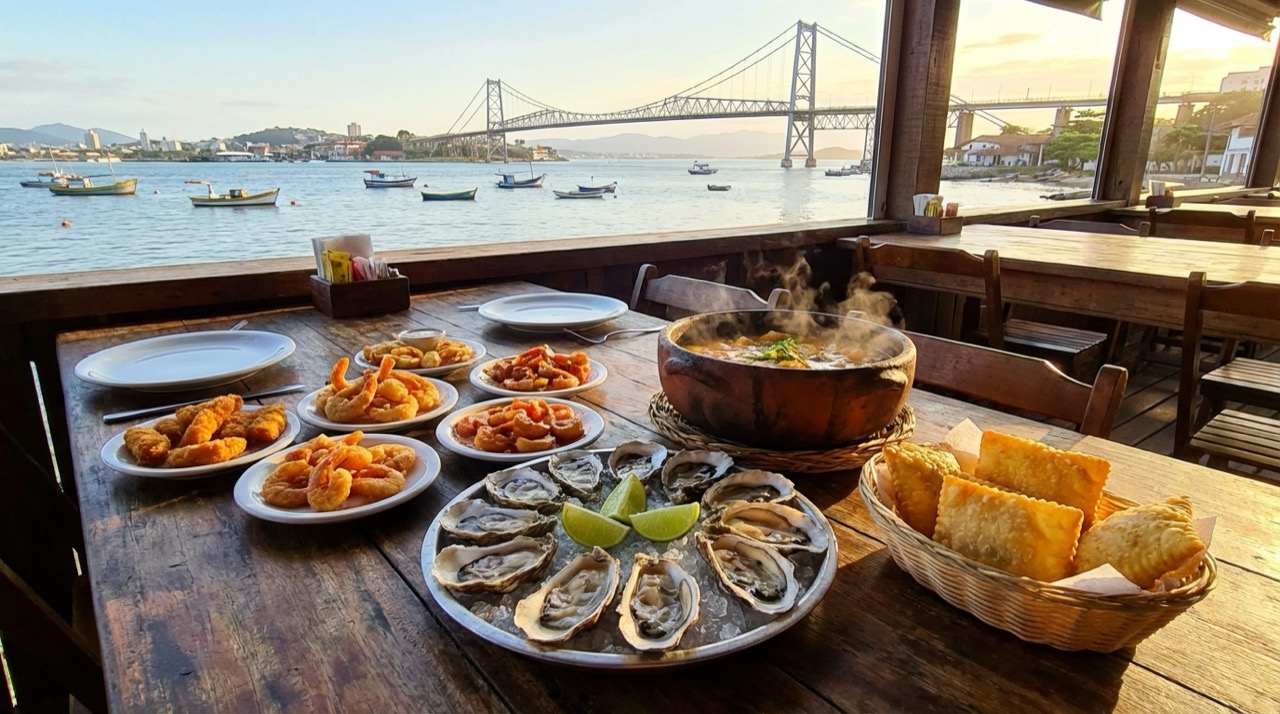
Florianópolis is the oyster capital of Brazil, producing over 70% of the country's farmed oysters. Seafood dominates the local cuisine, with Azorean and southern Brazilian influences. Ribeirão da Ilha and Santo Antônio de Lisboa are the go-to neighborhoods for the freshest catches.
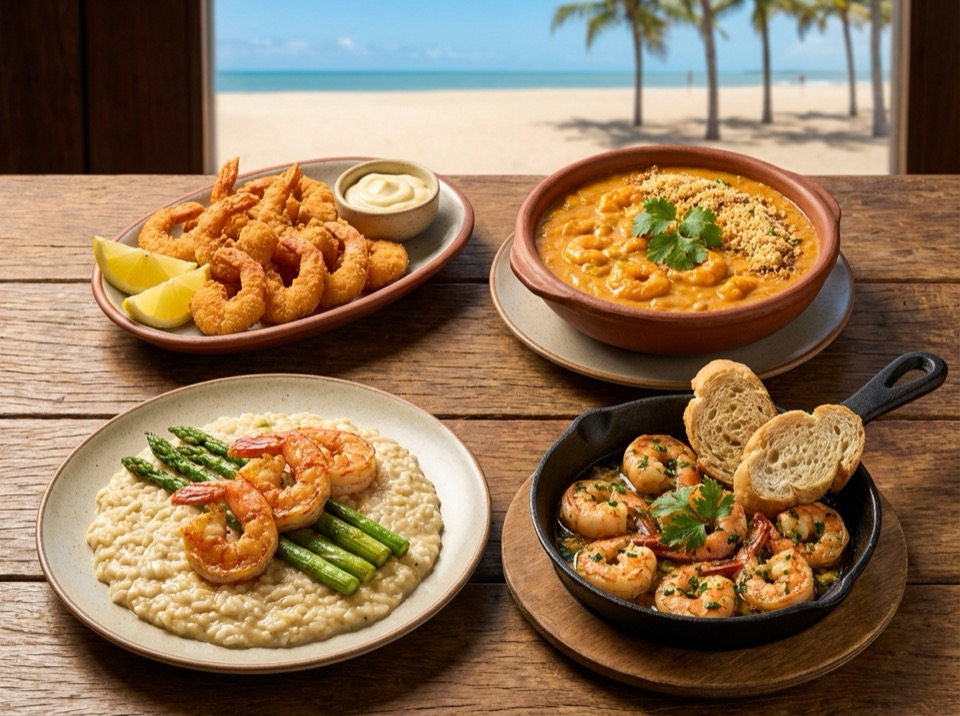
Sequência de Camarão
An all-you-can-eat parade of shrimp dishes served in sequence: shrimp cocktail, fried shrimp, shrimp risotto, shrimp in garlic sauce, shrimp bobó (creamy cassava stew), and more. Each dish arrives one after another until you surrender. A Floripa tradition, especially popular at beachside restaurants.
How to order
Say 'Quero a sequência de camarão pra dois' (I want the shrimp sequence for two). It's usually priced per person and meant for sharing.
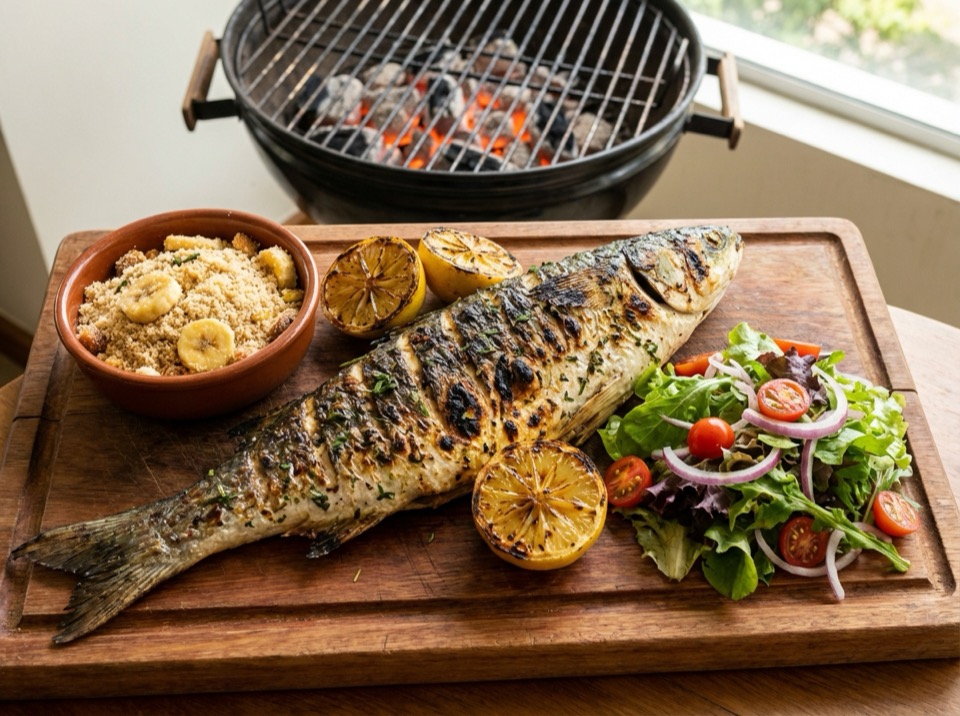
Tainha
Mullet fish, a deeply traditional dish tied to the annual tainha season (May to July) when the fish migrate along the southern coast. Locals grill it whole over charcoal, scaled and stuffed with coarse salt. During the season, the entire island celebrates with tainha festivals. The roe (ova de tainha) is considered a delicacy.
How to order
Say 'Tem tainha hoje?' (Do you have mullet today?). It's seasonal, so availability depends on the time of year. Ask for 'tainha na brasa' (charcoal-grilled mullet).
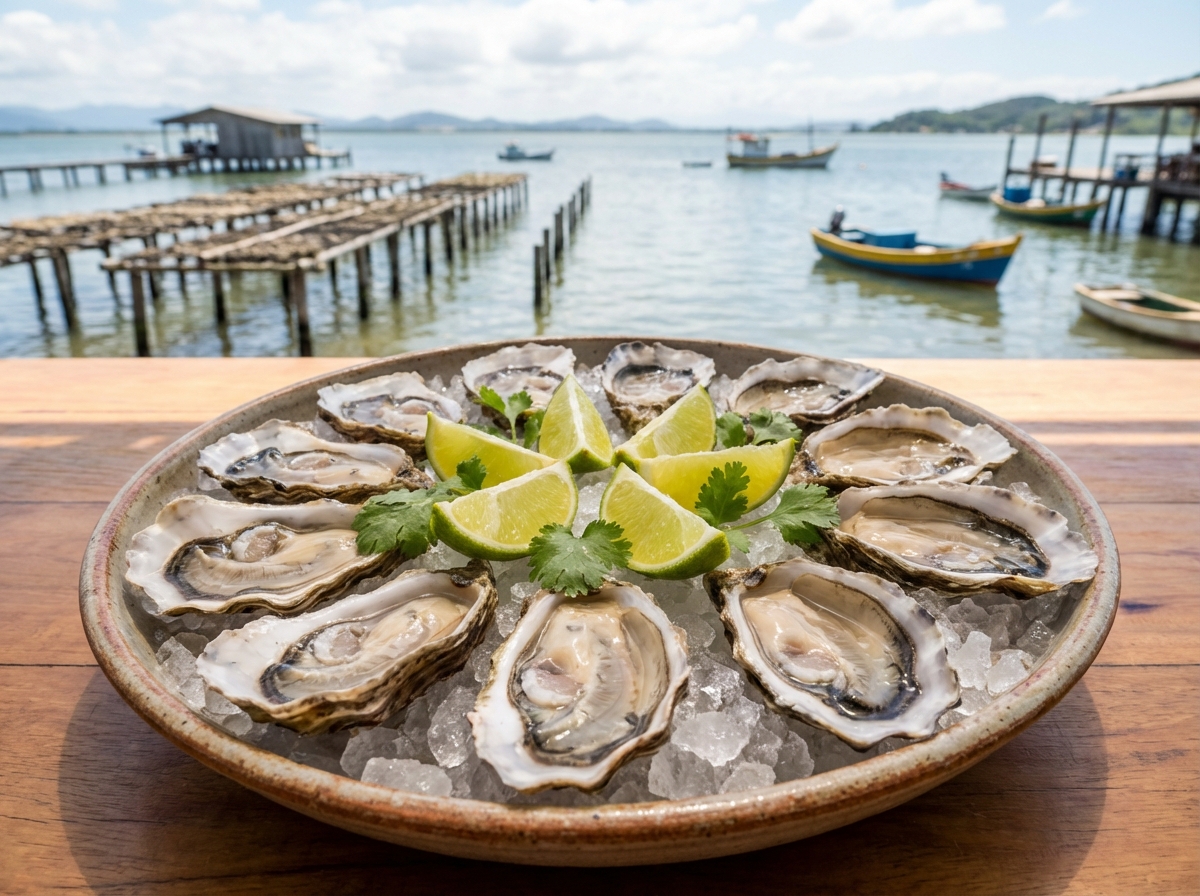
Ostras Frescas
Floripa is Brazil's oyster capital, and Ribeirão da Ilha is ground zero. Oysters are farmed in the calm western bay and served fresh at waterfront restaurants, often with lime, vinaigrette, or gratinéed with cheese. The annual Fenaostra (oyster festival) in October/November is a major event.
How to order
Say 'Uma dúzia de ostras, por favor' (A dozen oysters, please). Ask 'Tem ostra gratinada?' for the baked/cheese version. 'Ao natural' means raw.
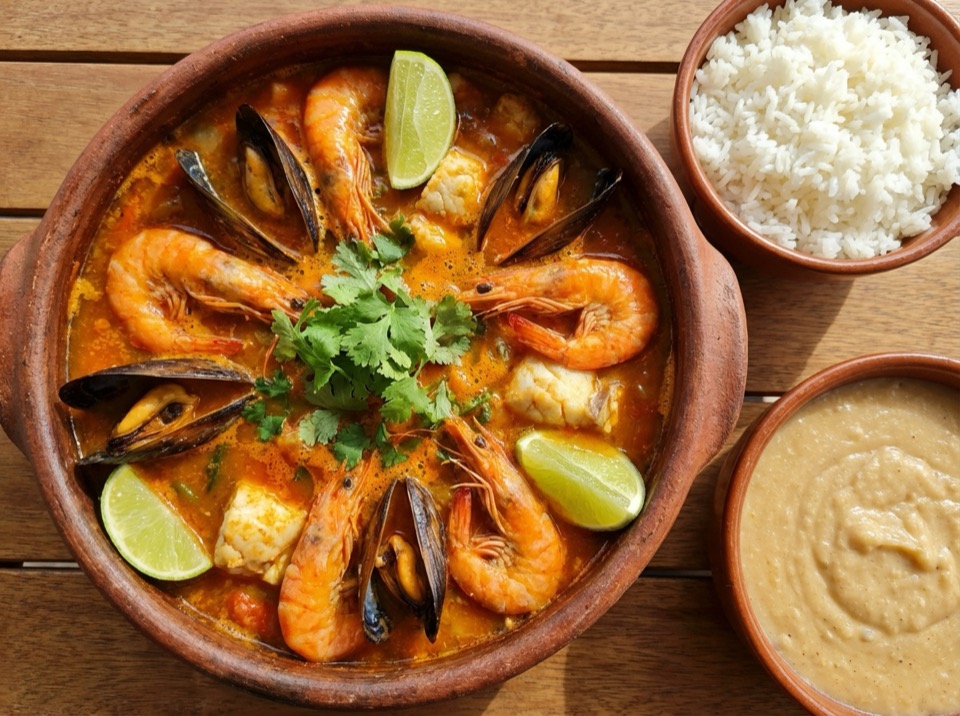
Caldeirada de Frutos do Mar
A rich seafood stew with fish, shrimp, mussels, squid, and crab in a tomato and coconut broth, seasoned with cilantro and palm oil. Served bubbling in a clay pot with white rice and pirão (a thick fish broth paste). It's the Azorean-Brazilian fusion dish that defines Floripa's culinary identity.
How to order
Say 'Quero a caldeirada' (I want the seafood stew). Ask 'Serve quantas pessoas?' (How many people does it serve?) since it's often for 2 or more.
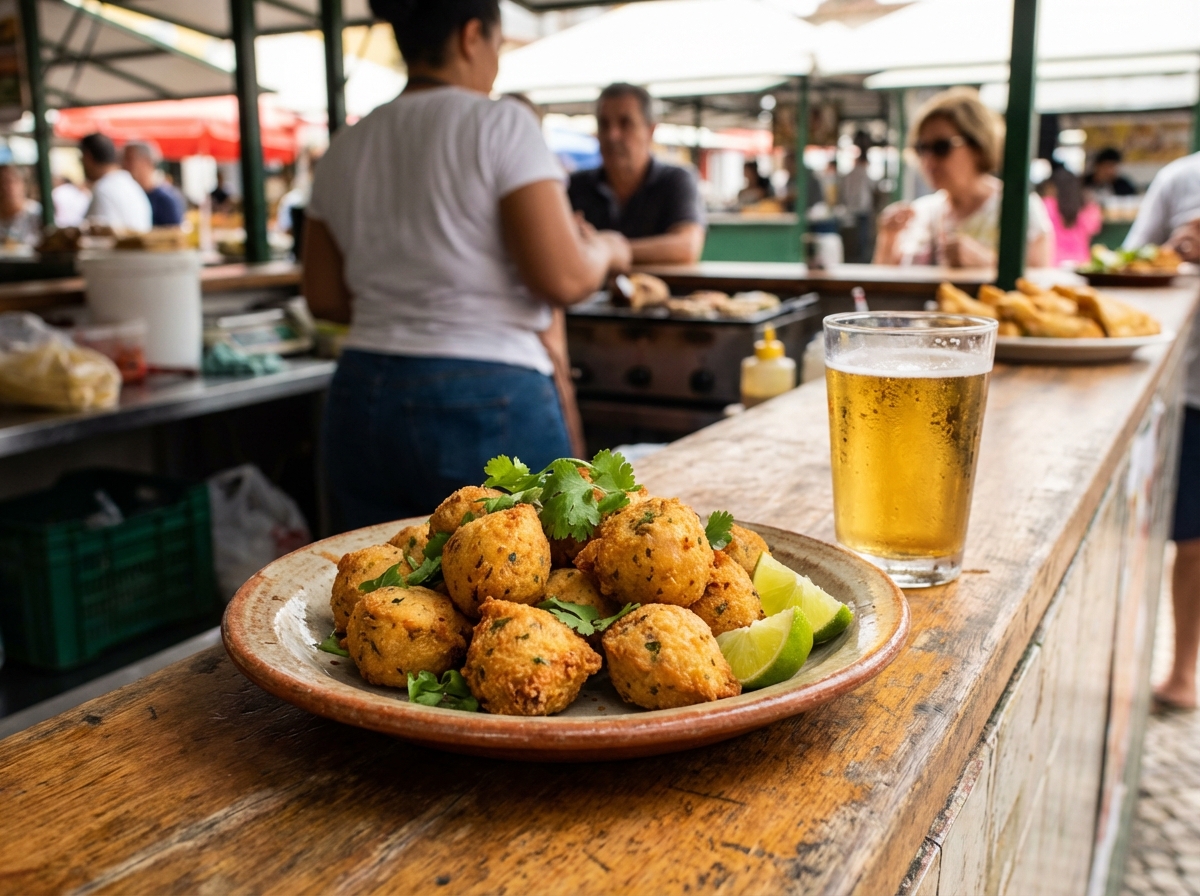
Pastel de Berbigão
A deep-fried pastry filled with berbigão (cockles/small clams) harvested from the local mangroves. Crispy on the outside, savory and briny on the inside. This is Floripa's signature street food snack, found at the Mercado Público and beach stands. Often served with a squeeze of lime.
How to order
Say 'Dois pastéis de berbigão, por favor' (Two cockle pastéis, please). At the Mercado Público, just point and say 'berbigão.'
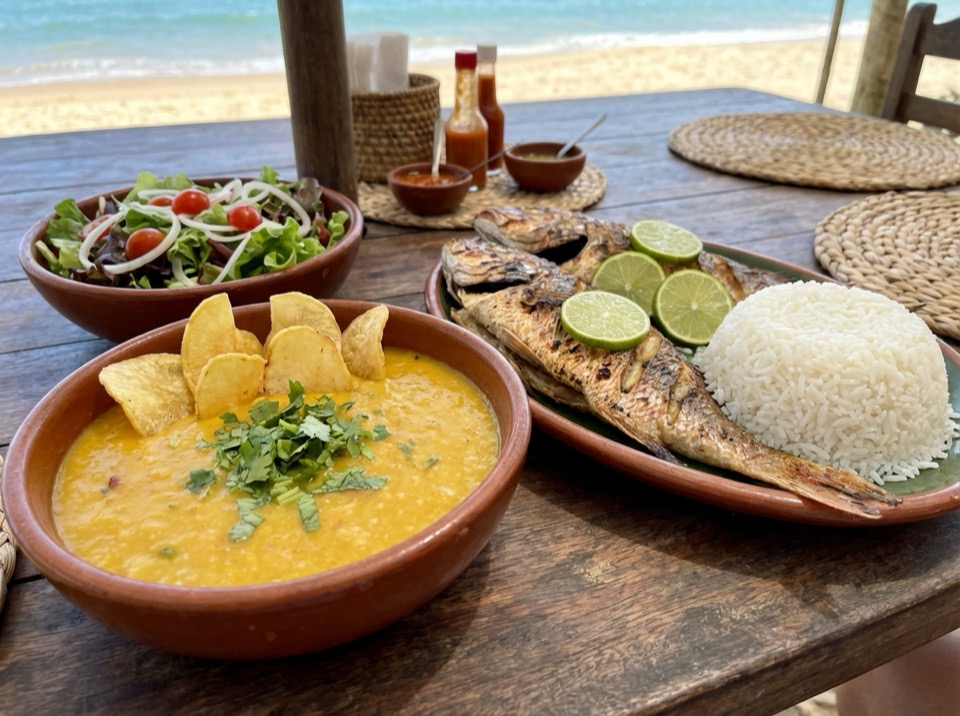
Pirão
A thick, creamy paste made from fish broth and cassava flour, traditionally served as a side dish with grilled fish or seafood stews. It has the consistency of polenta and absorbs the flavors of whatever it accompanies. A true Azorean heritage dish that has become inseparable from Floripa's coastal cooking.
How to order
Pirão usually comes included with fish dishes. If not, ask 'Vem com pirão?' (Does it come with pirão?). You can also request 'pirão à parte' (pirão on the side).
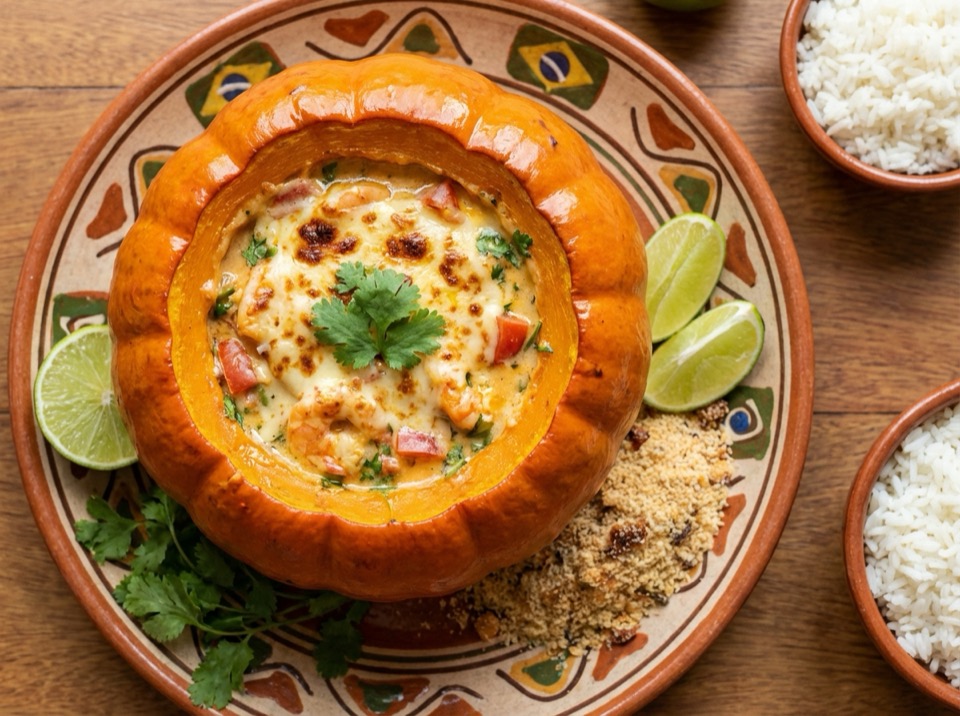
Camarão na Moranga
Creamy shrimp stew baked inside a hollowed-out pumpkin (moranga). The pumpkin flesh mixes into the rich cream sauce as you eat, adding sweetness and texture. A showpiece dish popular at sit-down restaurants, especially for special occasions or romantic dinners.
How to order
Say 'Quero o camarão na moranga' (I want the shrimp in pumpkin). Ask 'Serve pra quantos?' (Serves how many?) since it's usually for 2 to 3 people.
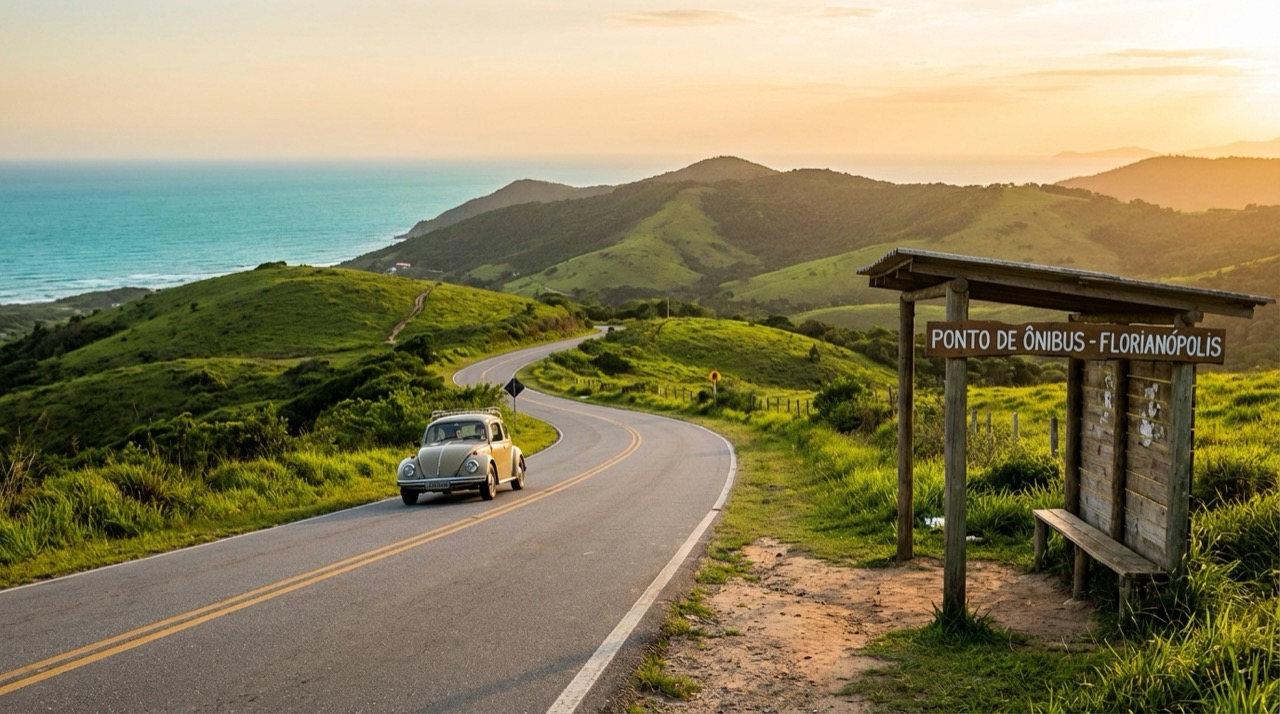
Florianópolis is spread across a large island with beaches on all sides. Distances between neighborhoods are significant, and public transit is limited. Having your own wheels makes a huge difference, especially in summer when traffic gets heavy.
Car Rental
By far the most practical way to explore the island. Many beaches and viewpoints are only accessible by car, and ride-hailing can be expensive for longer distances. Rental agencies are at the airport and downtown. Summer traffic is notorious, so leave early for popular beaches.
- Book well in advance for December to February (prices double in peak summer)
- A compact car is fine since most roads are paved, though some beach access roads are narrow
- Parking at popular beaches fills up by 10 AM in summer, so arrive early or go late afternoon
- Keep change handy for parking attendants ('flanelinhas') who watch your car for tips
- Say 'Quero alugar um carro' (I want to rent a car) at the rental desk
Bus (SIT/TICEN)
The public bus system connects most neighborhoods through the central terminal TICEN in Centro. Affordable but slow, with limited schedules on weekends and outside peak season. You'll need a 'cartão SIT' (transit card) or exact change. Some beach routes only run in summer.
- Major routes: 360 (Lagoa da Conceição), 410 (Campeche/Armação), 330 (Canasvieiras/Jurerê)
- Say 'Esse ônibus vai pra Lagoa?' (Does this bus go to Lagoa?) to confirm with the driver
- Buses run roughly every 20 to 40 minutes on main routes, less frequently on weekends
- The TICEN terminal in Centro is where you transfer between most routes
- Google Maps has decent bus routing for Floripa, so check before heading out
Uber / 99
Ride-hailing apps work well in Floripa, though wait times increase outside Centro and Lagoa. Both Uber and 99 (a Brazilian competitor) are available. Good for nights out or when you don't want to worry about parking, but costs add up for cross-island trips.
- A ride from Centro to Lagoa da Conceição costs roughly R$25 to R$40
- Cross-island trips (Centro to Jurerê) can run R$50 to R$80
- Surge pricing hits hard on summer weekends and after midnight
- Say 'Pode me buscar no ponto de encontro?' (Can you pick me up at the meeting point?) if the pin is tricky
- Have a backup plan since drivers sometimes cancel for distant beach pickups
Bike
Growing bike infrastructure, especially around Lagoa da Conceição and the central areas. Some beaches are connected by bike paths, and it's a great way to explore at a relaxed pace. E-bike rentals are becoming more popular. Not practical for cross-island distances due to steep hills.
- Bike rental shops cluster around Lagoa da Conceição and Centro
- The path around the lagoon is flat and scenic, perfect for casual cycling
- Hills between neighborhoods are steep, so consider an e-bike for longer rides
- Say 'Tem bicicleta pra alugar?' (Do you have bikes to rent?) at shops or hostels
- Always lock your bike securely, even at the beach
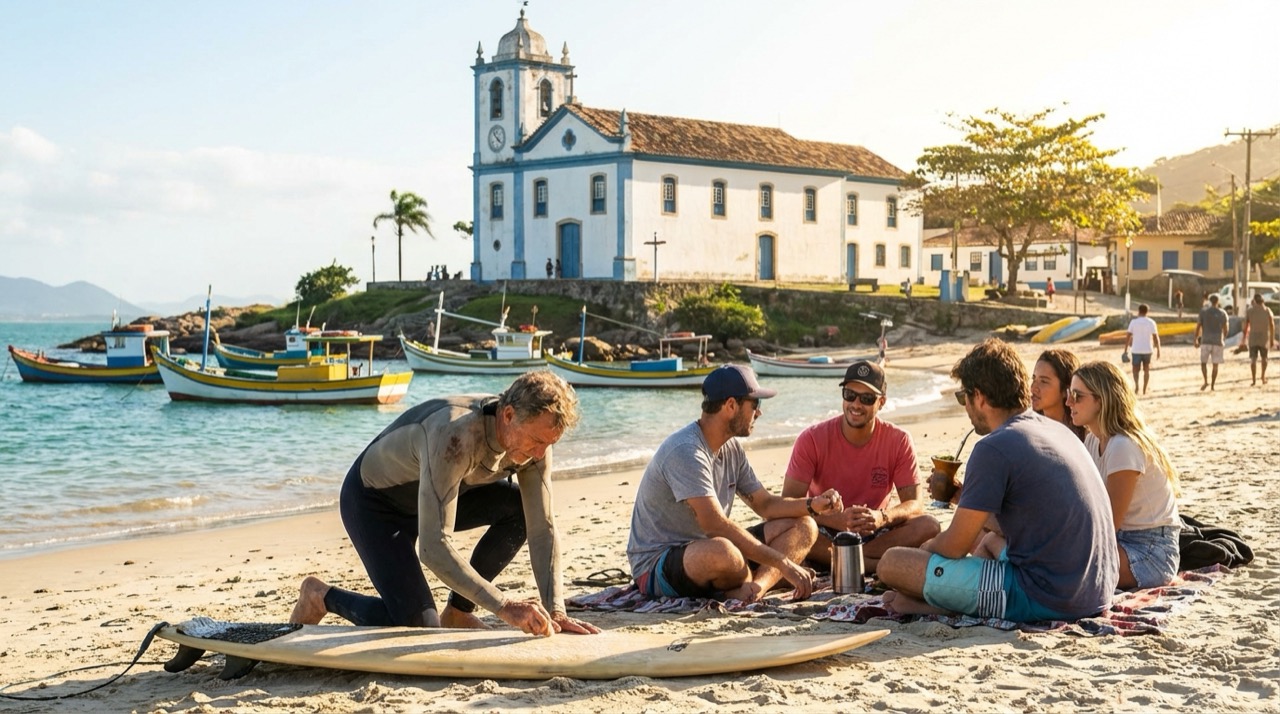
Florianópolis has a unique cultural identity shaped by Azorean Portuguese immigration, indigenous heritage, southern Brazilian gaúcho influence, and modern surf culture. Understanding these layers will deepen your experience on the island.
Do
- Accept chimarrão (mate tea) if offered by a local. It's shared from a single gourd and is a sacred social ritual in southern Brazil. Declining is considered rude.
- Respect the surf lineup. Wait your turn, don't drop in on someone already riding a wave, and be friendly to locals who surf the same break daily.
- Visit the Azorean heritage sites: Santo Antônio de Lisboa, Ribeirão da Ilha, and the fortress circuit. These villages preserve traditions dating back to the 1700s.
- Try the local oysters at Ribeirão da Ilha, where you can eat them right next to the oyster farms in the bay.
- Check wind and swell forecasts before choosing a beach. East-facing beaches get waves, west-facing beaches are calm. Wind can ruin or make a beach day.
- Learn a few manezinho expressions. Locals love when visitors make an effort with the local dialect.
- Carry cash for beach vendors, parking attendants, and smaller restaurants that may not accept cards.
- Wear sunscreen and reapply often. The southern sun is deceptively strong, and the reflection off sand and water intensifies exposure.
Avoid
- Don't call it 'Floripa' in formal contexts. Locals use 'Floripa' casually, but the full name shows respect when speaking with older residents.
- Don't leave valuables unattended on the beach. Keep belongings minimal and within sight while swimming.
- Don't drive to popular beaches without a parking plan in summer. Traffic jams on the island can turn a 20-minute drive into 90 minutes.
- Don't assume every beach is safe for swimming. Always check for warning flags and ask locals about currents, especially at Joaquina, Mole, and Brava.
- Don't skip the west coast. Most tourists only visit east coast surf beaches, but the calm bay side has the best restaurants, sunsets, and cultural heritage.
- Don't litter on the beaches or trails. Floripa locals are proud of their natural environment and eco-consciousness is growing.
- Don't expect things to move fast. Island time is real. Restaurants, shops, and services operate at a relaxed pace, especially outside summer.
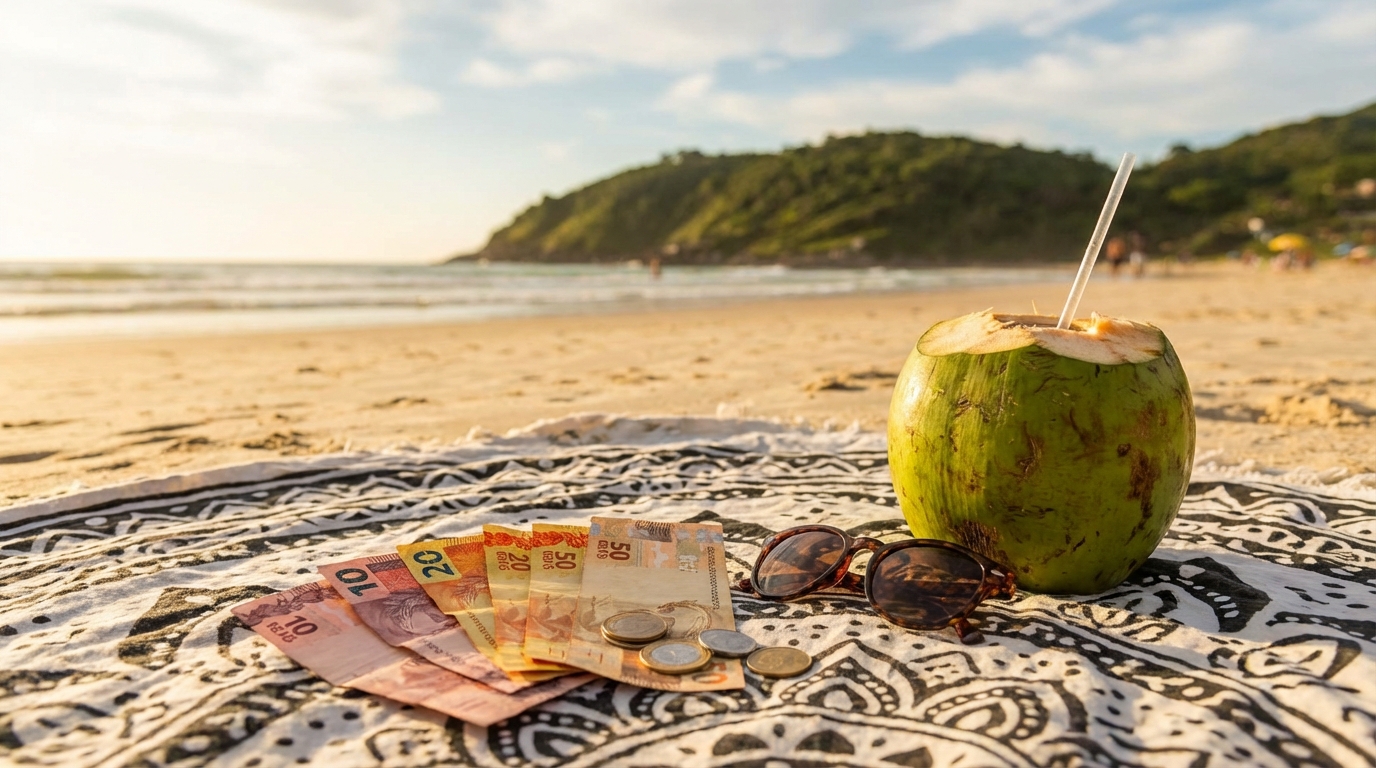
Florianópolis is a seasonal city. Prices swing dramatically between the packed summer months (December to March) and the quieter off-season (April to November). Planning around these seasons can save you a significant amount.
Typical Prices
Money-Saving Tips
- Visit in April, May, October, or November for the best balance of decent weather and low prices. Accommodation can be 50-60% cheaper than summer.
- Eat at 'por quilo' (pay-by-weight) restaurants for affordable, varied meals. They're everywhere and offer great value with salads, grilled meats, rice, and beans.
- Fresh oysters in Ribeirão da Ilha are surprisingly affordable. A dozen with lime at a waterfront stall costs less than a cocktail at Jurerê.
- The Mercado Público in Centro is great for a cheap lunch. Pastéis de berbigão and a cold beer for under R$30.
- Free activities are abundant: hiking trails (Lagoinha do Leste, Barra da Lagoa boardwalk), beach days, and walking across Ponte Hercílio Luz cost nothing.
- Avoid Jurerê Internacional beach clubs if you're on a budget. Cover charges and drink prices are steep. The traditional side of Jurerê is much cheaper.
- Buy sunscreen and beach supplies at a pharmacy (farmácia) or supermarket, not at the beach. Tourist markup can be 2 to 3 times higher.
- Summer rental prices peak from December 20 to February 15. Booking just outside these dates can cut costs significantly.
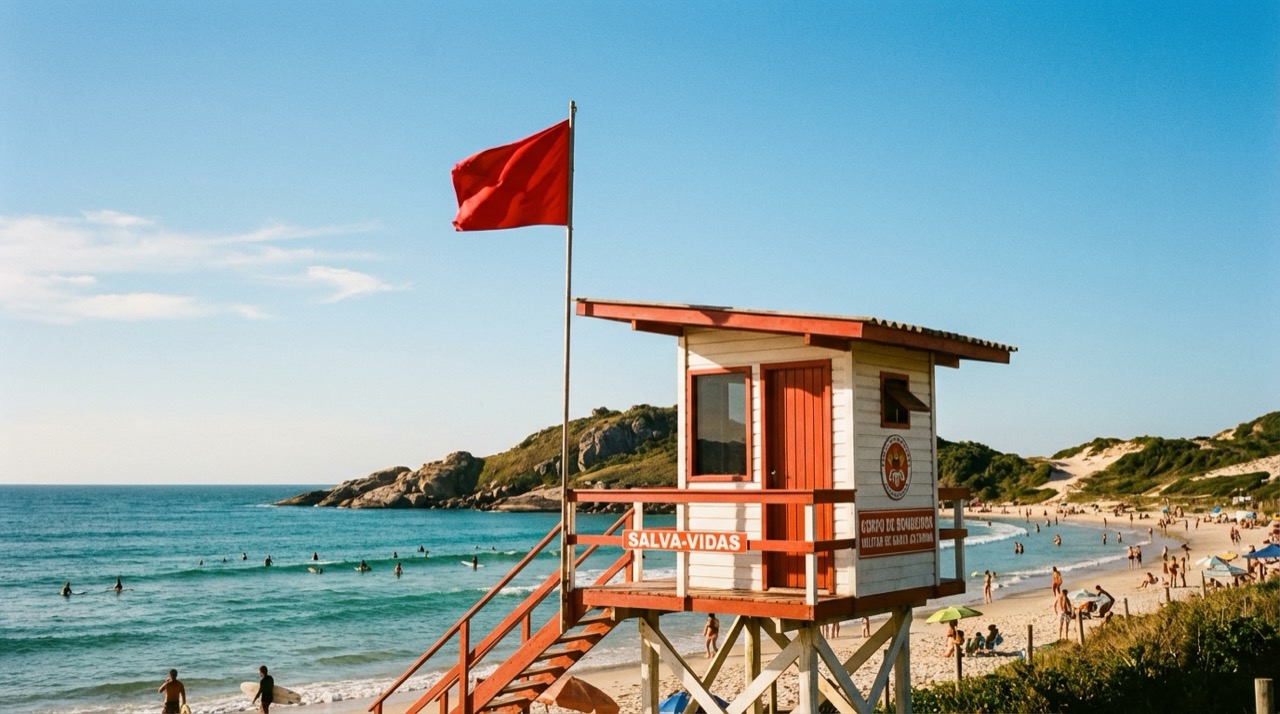
Florianópolis is generally safe for tourists, but standard precautions apply. Ocean currents are the biggest physical risk, and petty theft can occur at crowded beaches. These phrases will help you in common safety situations.
Socorro! Preciso de ajuda!
Help! I need help!
/soh-KOH-hoo! preh-SEE-zoo jee ah-ZHOO-dah/
Emergency phrase. Shout this to attract attention in any urgent situation.
Tem salva-vidas nessa praia?
Is there a lifeguard at this beach?
/teng SOW-vah VEE-dahs NEH-sah PRY-ah/
Not all beaches have lifeguards. Major beaches (Joaquina, Campeche, Ingleses) usually do in summer.
A corrente tá forte aqui?
Is the current strong here?
/ah koh-HEN-chee tah FOR-chee ah-KEE/
Always ask before swimming at unfamiliar beaches. Rip currents are common on east-facing beaches.
Fui roubado. Onde fica a delegacia?
I was robbed. Where is the police station?
/fwee hoh-BAH-doo. ON-jee FEE-kah ah deh-leh-gah-SEE-ah/
File a police report (boletim de ocorrência / B.O.) for insurance claims. The tourist police station is in Centro.
Pode chamar uma ambulância?
Can you call an ambulance?
/POH-jee shah-MAR OO-mah am-boo-LAN-see-ah/
SAMU (emergency medical service) responds to calls at 192. Hospitals are on the mainland side.
Perdi meus documentos.
I lost my documents.
/per-JEE meh-ooz doh-koo-MEN-tooz/
Carry copies of your passport and keep originals locked up. Report lost documents to the tourist police.
Essa área é segura à noite?
Is this area safe at night?
/EH-sah AH-reh-ah eh seh-GOO-rah ah NOY-chee/
Ask at your hotel or hostel. Lagoa and Centro are generally fine at night, but avoid isolated beaches after dark.
Não tô me sentindo bem.
I'm not feeling well.
/now toh mee sen-CHIN-doo beng/
Useful at a pharmacy (farmácia) or when you need to explain feeling unwell. Sunstroke and dehydration are common.
Onde tem uma farmácia?
Where is there a pharmacy?
/ON-jee teng OO-mah far-MAH-see-ah/
Pharmacies in Brazil sell many medications over the counter. There are 24-hour pharmacies in most neighborhoods.
Cuidado com a água-viva!
Watch out for the jellyfish!
/kwee-DAH-doo kong ah AH-gwah VEE-vah/
Jellyfish occasionally appear on Floripa beaches, especially in warmer months. Vinegar helps with stings.
Community Tips

Ready to learn Portuguese for real?
Take these Florianópolis phrases with you. Decko uses spaced repetition to make sure you actually remember them when you need them.
Free forever. No credit card required.