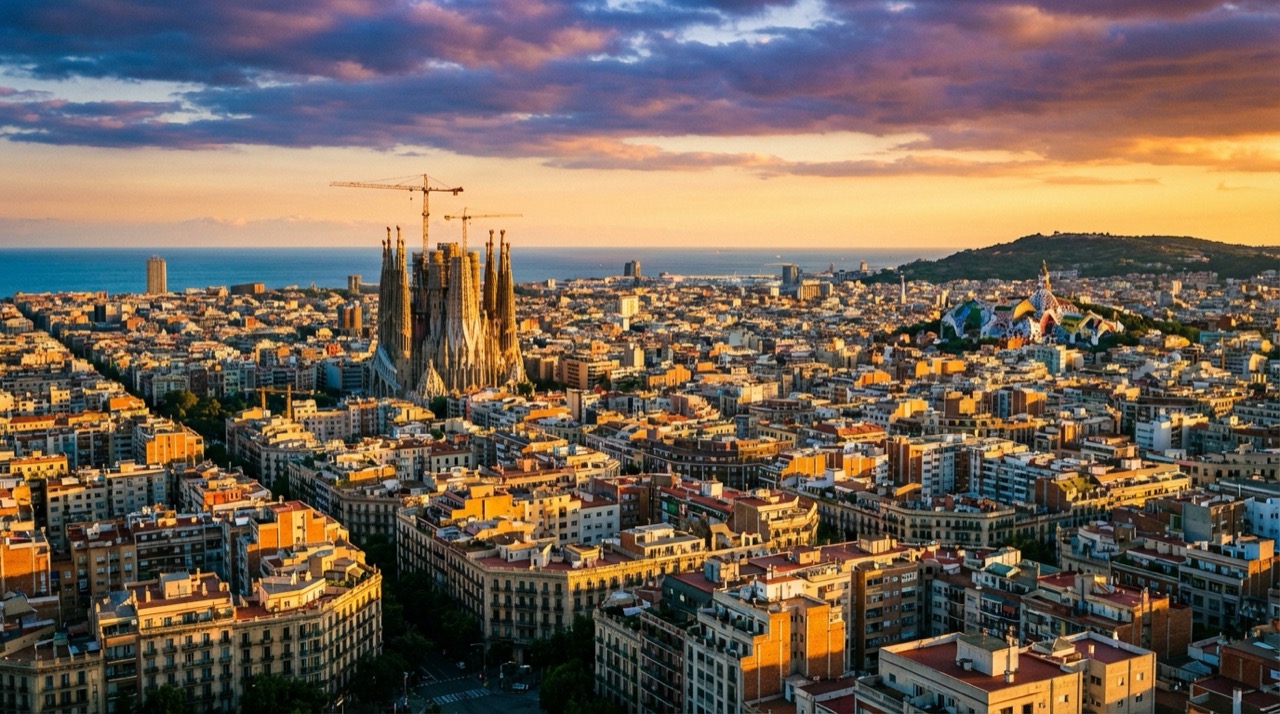
Barcelona
Studying Spanish? Decko turns these phrases into smart flashcards that adapt to your memory.
Try free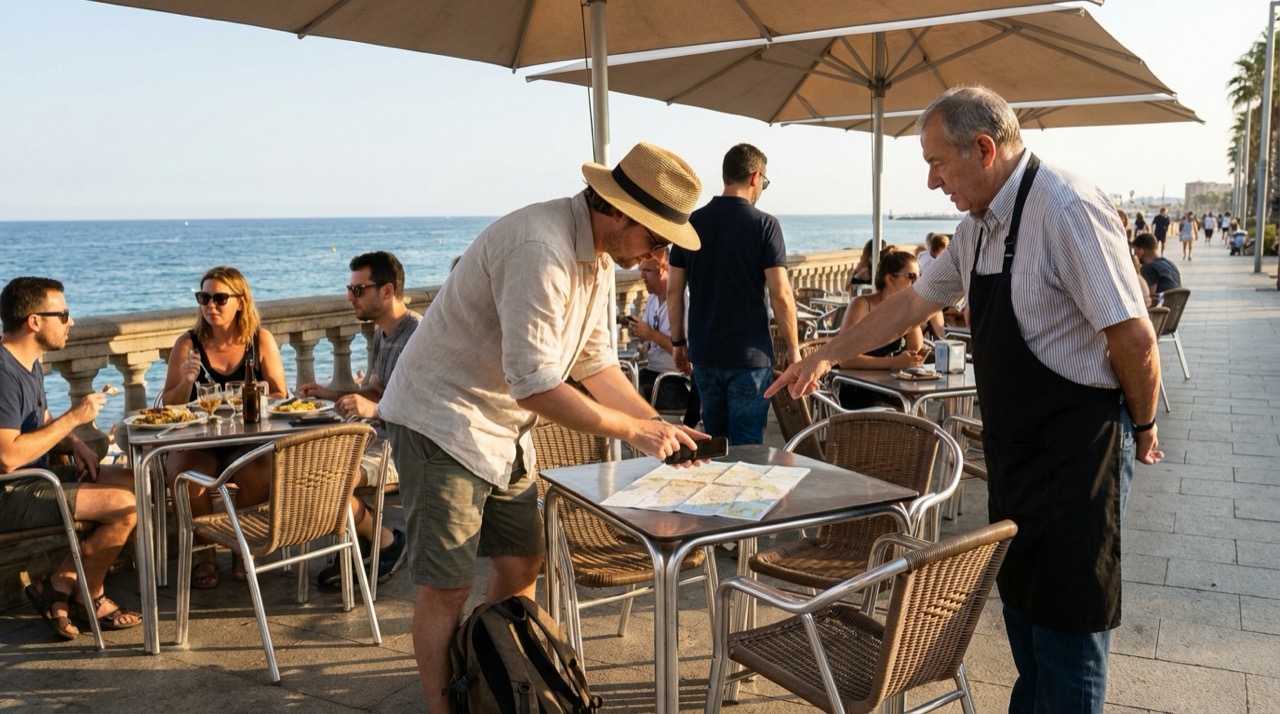
Barcelona is a bilingual city where Catalan and Spanish coexist everywhere. Street signs, metro announcements, and menus often appear in Catalan first. While everyone speaks Spanish perfectly, knowing a few Catalan basics shows respect and opens doors. Here are essential phrases in both languages to help you navigate.
Hola, buenos días
Hello, good morning
/OH-lah, BWEH-nohs DEE-ahs/
Works in Spanish everywhere. The Catalan equivalent is 'Bon dia.' Either is welcomed.
Perdona, ¿hablas español?
Excuse me, do you speak Spanish?
/pehr-DOH-nah, AH-blahs ehs-pah-NYOHL/
Useful if someone addresses you in Catalan and you do not understand. Everyone will happily switch.
Bon dia / Bona tarda / Bona nit
Good morning / Good afternoon / Good evening (Catalan)
/bohn DEE-ah / BOH-nah TAHR-dah / BOH-nah neet/
Basic Catalan greetings you will see on signs and hear in shops. Using them earns instant goodwill.
Gràcies / Moltes gràcies
Thank you / Thank you very much (Catalan)
/GRAH-syehs / MOHL-tehs GRAH-syehs/
The single most useful Catalan word. Drop it at shops, restaurants, and metro stations.
Barcelona's language landscape is unique. Spanish and Catalan blend together in daily conversation, and locals often switch between both mid-sentence. You will encounter Catalan on all public signage, menus, and official communications. Here is a mix of local Spanish slang and essential Catalan words every visitor should know.
Sortida
Exit (Catalan)
/sohr-TEE-dah/
You will see this on every metro, train, and building. The Spanish 'salida' appears too, but Catalan is usually first.
Carrer
Street (Catalan)
/kah-RREHR/
All street signs in Barcelona say 'Carrer' (C/) instead of 'Calle.' 'Carrer de Ferran' not 'Calle de Ferran.'
Plaça
Square/Plaza (Catalan)
/PLAH-sah/
Maps and signs use 'Plaça' instead of 'Plaza.' 'Plaça de Catalunya' is the central square.
Nen / Nena
Kid / Girl (Barcelona casual address)
/nehn / NEH-nah/
Like Madrid's 'tio/tia' but more Barcelona-flavored. Used casually between friends. Catalan origin.
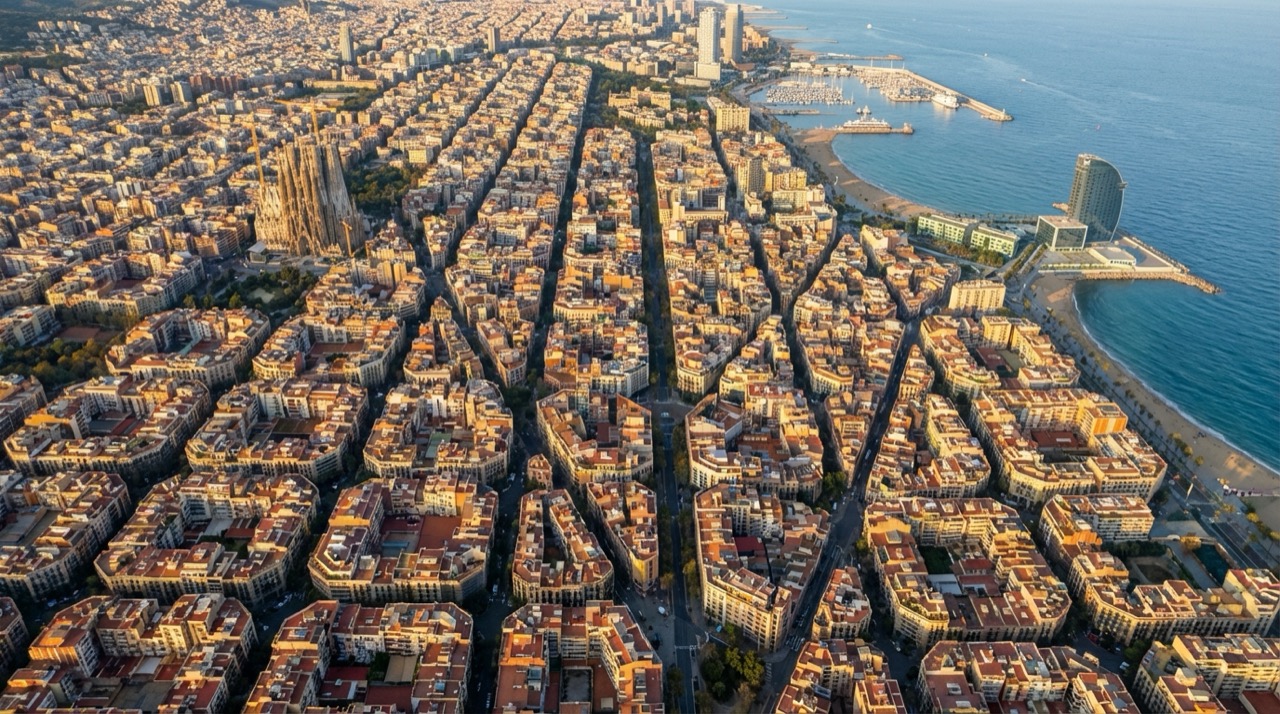
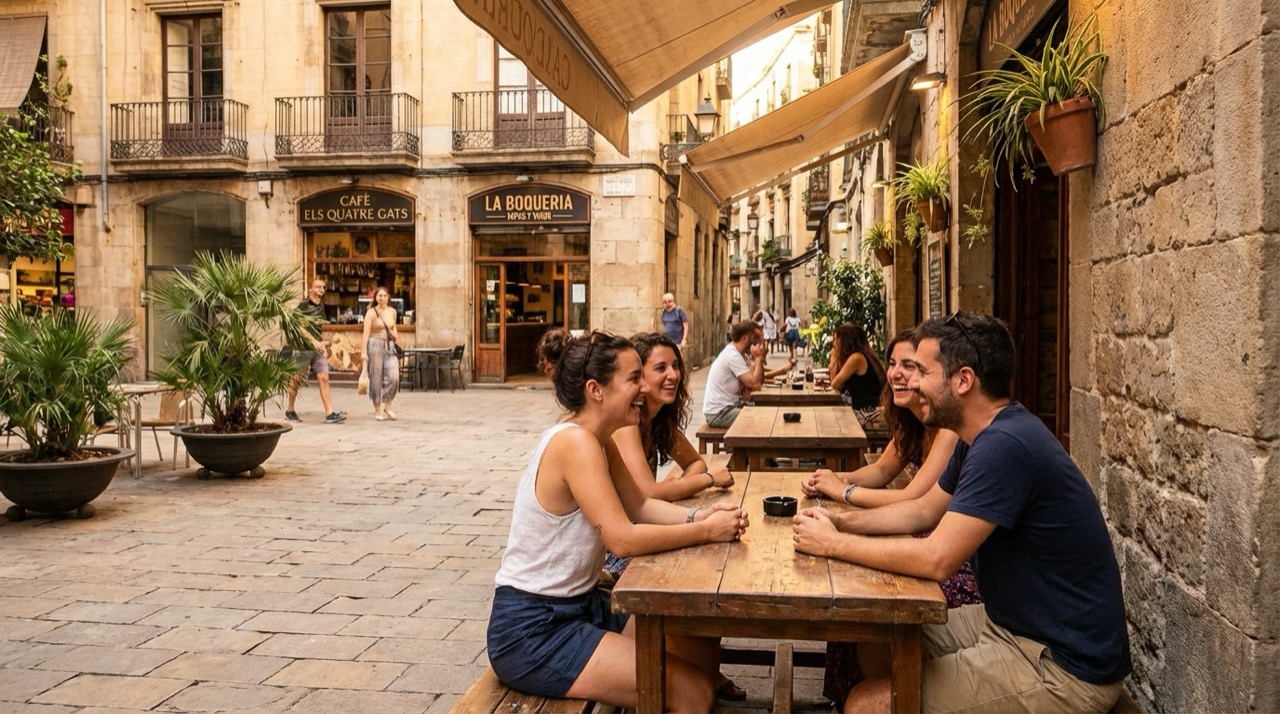
Barcelona's neighborhoods (called 'barris' in Catalan) each have a distinct personality. The compact old city is walkable, while the grid-like Eixample spreads out with wide avenues. Where you base yourself determines whether you get the touristy or the authentic Barcelona.
Barri Gotic (Gothic Quarter)
The medieval heart of Barcelona. A maze of narrow stone streets, hidden plazas, and buildings dating back to Roman times. The Cathedral of Barcelona and Placa Reial are here. Atmospheric but very touristic on the main paths. The magic is in the side streets.
'Barri' is Catalan for 'barrio' (neighborhood). You will see it on all maps. 'Gotic' is pronounced 'GOH-teek.'
El Born (Sant Pere, Santa Caterina i la Ribera)
The trendy-but-historic neighborhood next to the Gothic Quarter. Narrow streets packed with boutique shops, cocktail bars, art galleries, and the stunning Basilica de Santa Maria del Mar. The Picasso Museum is here. More local-feeling than the Gothic Quarter.
Officially called 'Sant Pere, Santa Caterina i la Ribera' but everyone says 'El Born.' The 'El' is important.
El Raval
Barcelona's most multicultural and edgy neighborhood. Home to MACBA (contemporary art museum), amazing international food, and a gritty energy. Gentrifying fast but still keeps its character. Great for cheap eats and nightlife that is not pretentious.
'El Raval' comes from the Arabic 'arrabal' (suburb). It was historically outside the city walls. Pronunciation: 'el rah-VAHL.'
Eixample
The wide grid-like district designed by Ildefons Cerda in the 19th century. Famous for its octagonal block corners and modernist architecture by Gaudi, Domenech i Montaner, and Puig i Cadafalch. Split into Esquerra (left) and Dreta (right). This is where you find Casa Batllo and La Pedrera.
'Eixample' is Catalan for 'extension' (Spanish: 'Ensanche'). Pronounced 'ay-SHAHM-pleh.' Locals never use the Spanish name.
Gracia
A former independent village absorbed by Barcelona, and it still feels like its own small town. Narrow streets, local squares (placas) where neighbors gather, independent shops, and the best vermouth bars. The August Festa Major de Gracia is one of Barcelona's most colorful festivals.
Gracia's plazas ('places' in Catalan) are the social hubs. 'Placa del Sol' and 'Placa de la Virreina' are the most popular for afternoon drinks.
Barceloneta
The old fishing quarter turned beach neighborhood. Narrow streets with balconies full of laundry open onto Barcelona's most famous beach. Great seafood restaurants line the waterfront, though the best ones are hidden in the back streets away from the boardwalk.
'Barceloneta' is a diminutive meaning 'little Barcelona.' For good seafood, ask locals: '¿Donde se come buen pescado por aqui?' (Where can you eat good fish around here?).
Want to actually remember these phrases?
Save them to your flashcard deck and Decko will quiz you at the perfect time using spaced repetition.
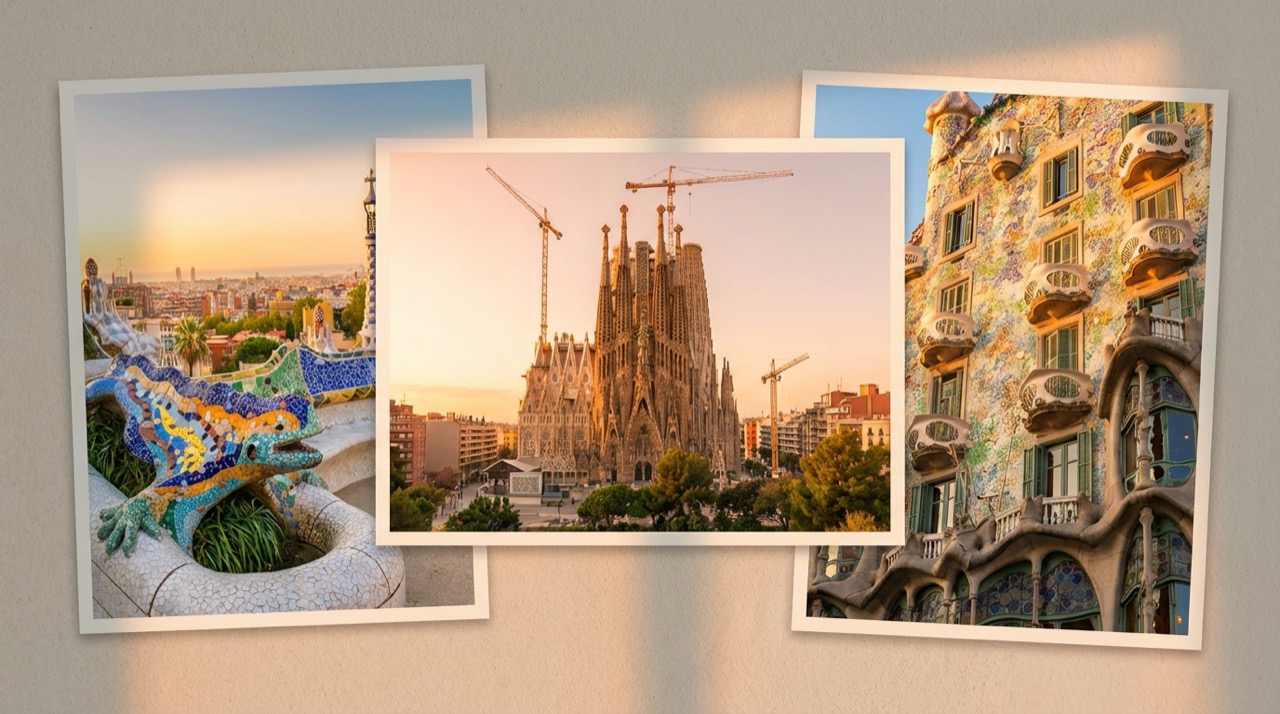
Barcelona is a city where architecture alone is worth the trip. Gaudi's masterpieces are everywhere, and the combination of Gothic, Modernist, and contemporary buildings creates a visual feast. Book tickets in advance for the major sites, as they sell out quickly, especially Sagrada Familia and Park Guell.
Sagrada Familia
Gaudi's unfinished masterpiece, under construction since 1882. Even incomplete, it is staggering. The interior is designed as a forest of branching columns, and the stained glass creates a light show that changes with the time of day. Expected completion around 2026.
Book online weeks in advance. Say 'Tengo reserva' (I have a reservation) at the entrance. Morning light on the Nativity facade is best.
Park Guell
Gaudi's mosaic-covered park on a hillside with panoramic city views. The famous mosaic salamander ('el drac') guards the entrance steps. The monumental zone requires tickets, but the surrounding park is free and has equally beautiful views.
'Guell' is pronounced 'goo-EHL' (Catalan). The park is named after Eusebi Guell, Gaudi's patron. Book timed entry online.
La Rambla
Barcelona's most famous boulevard, stretching 1.2km from Placa de Catalunya to the waterfront. Lined with flower stalls, street performers, and cafes. Extremely touristy and a pickpocket hotspot, but worth one walk-through. The side streets hold the real treasures.
Locals say 'Les Rambles' (Catalan plural, as it is technically several connected streets). Never say 'Las Ramblas' if you want to sound like a local.
Casa Batllo
Gaudi's wildest residential building, nicknamed the 'House of Bones' for its skeletal balconies. The augmented reality tour brings Gaudi's vision to life. The rooftop with its dragon-spine tiles is extraordinary. On Passeig de Gracia in the Eixample.
'Batllo' is pronounced 'BAT-lyoh' in Catalan (the double L makes a 'ly' sound). Evening visits include a rooftop drink.
La Boqueria Market
A massive covered market on La Rambla, operating since 1217. Fresh fruit, seafood, jamón, juice bars, and prepared food stalls. Go early in the morning (before 10am) for the real market experience. After noon it becomes a tourist obstacle course.
Full name is 'Mercat de Sant Josep de la Boqueria.' Just say 'La Boqueria.' Catalan 'mercat' = Spanish 'mercado' (market).
Montjuic
The hill overlooking Barcelona's port. Home to the 1992 Olympic stadium, Fundacio Joan Miro, the Magic Fountain, botanical gardens, and a castle with sweeping harbor views. Take the teleferic (cable car) up and walk down through the gardens.
'Montjuic' means 'Jewish mountain' (Catalan: 'mont' + 'juic'). Pronounced 'mohn-joo-EEK.' The Magic Fountain light show runs on weekends, free.
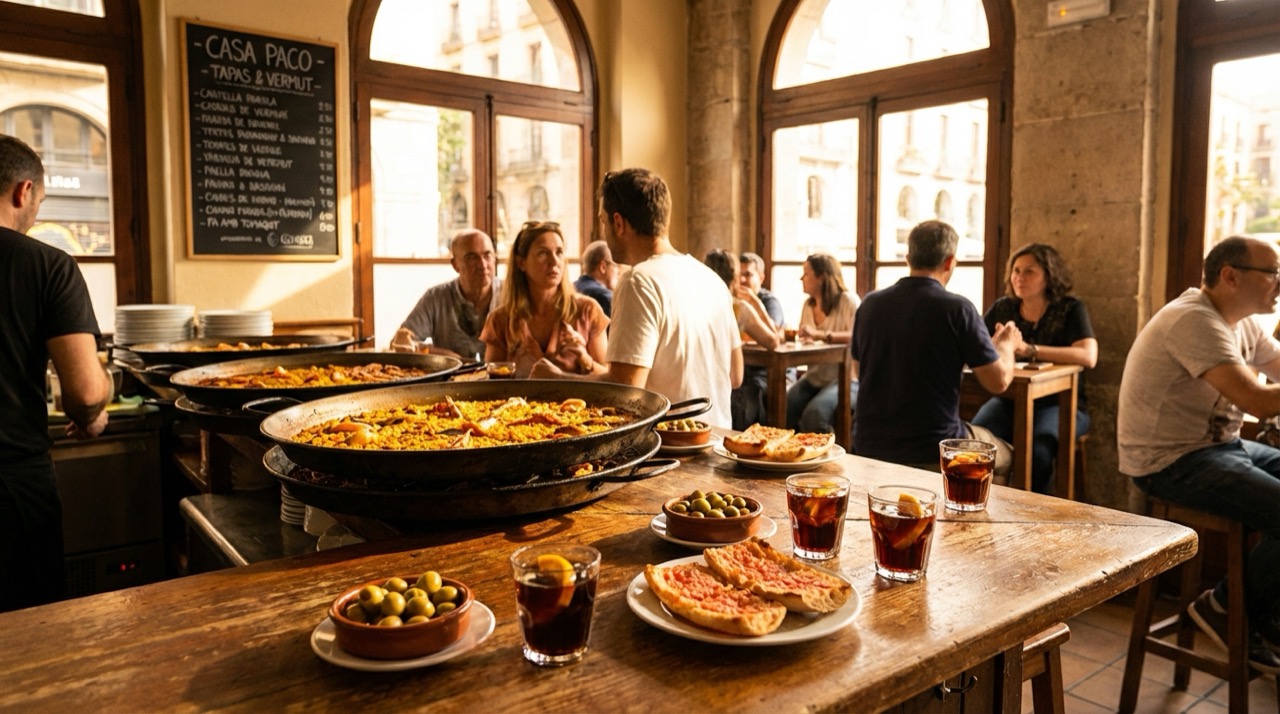
Barcelona food is Catalan cuisine with Mediterranean flavors: fresh seafood, tomatoes, olive oil, and bold combinations of sweet and savory. Menus are often in Catalan first with Spanish translations. The food culture is distinct from Madrid: vermouth instead of canas, pa amb tomaquet instead of plain bread, and rice dishes reign supreme.
Dining Etiquette
- Tipping is not expected. Rounding up or leaving small change is standard. 5-10% for excellent service is generous
- Lunch is 1:30pm to 3:30pm, dinner is 9pm to 11pm. Slightly earlier than Madrid but still late by northern European standards
- Menus in tourist areas are in multiple languages. In local spots, the menu may be Catalan only. Ask 'Tienen la carta en espanol?' if needed
- Vermouth hour (la hora del vermut) on weekends is typically 12pm to 2pm, before lunch. It is a social ritual, not just a drink
- Avoid eating on La Rambla. Walk one block in any direction for better food at half the price
- Water: tap water in Barcelona is safe but tastes strongly of chlorine. Most people order bottled. Ask for 'agua con gas' (sparkling) or 'agua sin gas' (still)
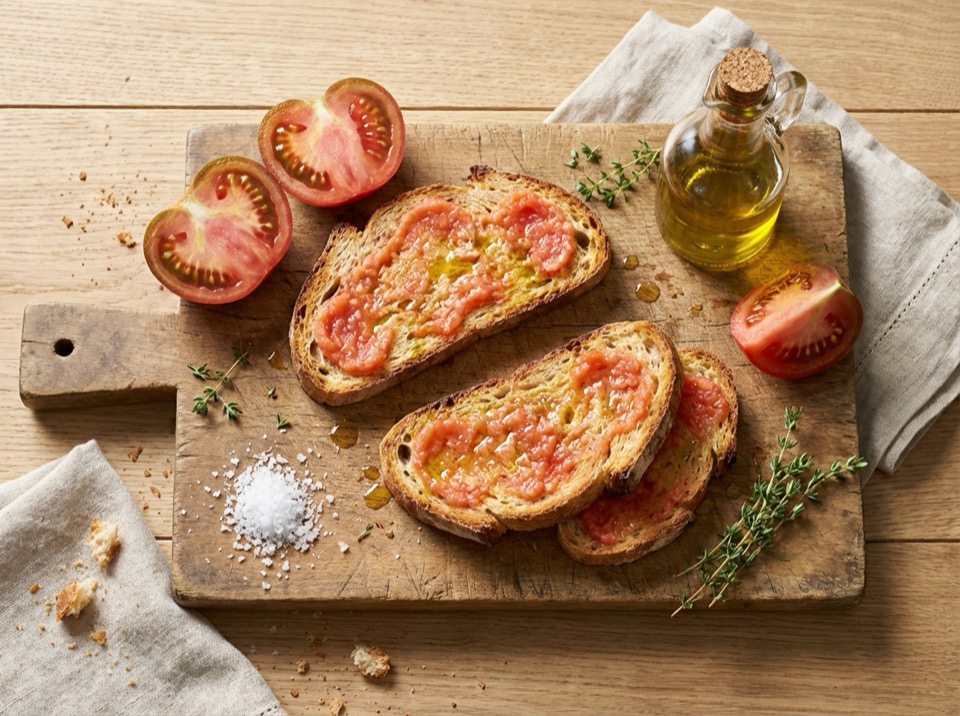
Pa amb tomaquet
Toasted bread rubbed with ripe tomato, drizzled with olive oil, and sprinkled with salt. The foundation of every Catalan meal. It sounds simple, but the quality of ingredients makes it extraordinary. Often served alongside everything else you order.
How to order
Pa amb tomaquet, si us plau (Catalan) or Pan con tomate, por favor (Spanish). It comes automatically at many places, but ask if it does not.

Fideuà
Like paella but made with short noodles (fideos) instead of rice. A Catalan coastal specialty, usually made with seafood. Served with alioli on the side. Many locals prefer it over paella.
How to order
Una fideuà para dos, por favor (One fideuà for two, please). Like paella, it is meant for sharing and takes 20 to 30 minutes to prepare.
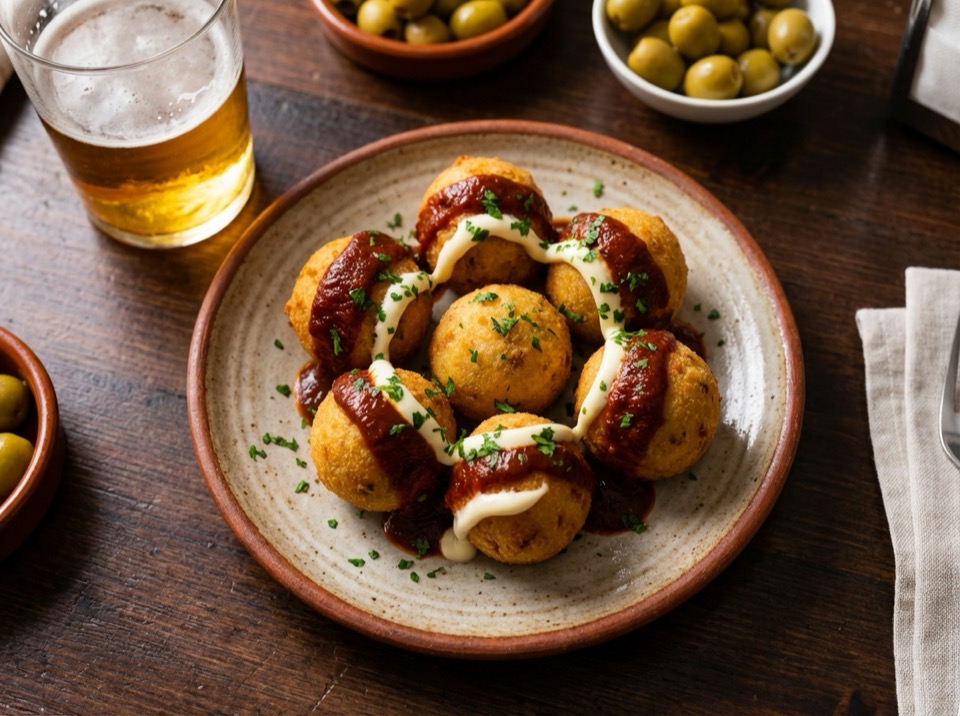
Bombas
Barcelona's signature tapa: a fried potato ball stuffed with meat, topped with spicy sauce and alioli. Invented at La Cova Fumada bar in Barceloneta. Crispy outside, creamy inside, perfectly messy.
How to order
Ponme unas bombas (Give me some bombas). Every Barceloneta bar has them. La Cova Fumada is the original.
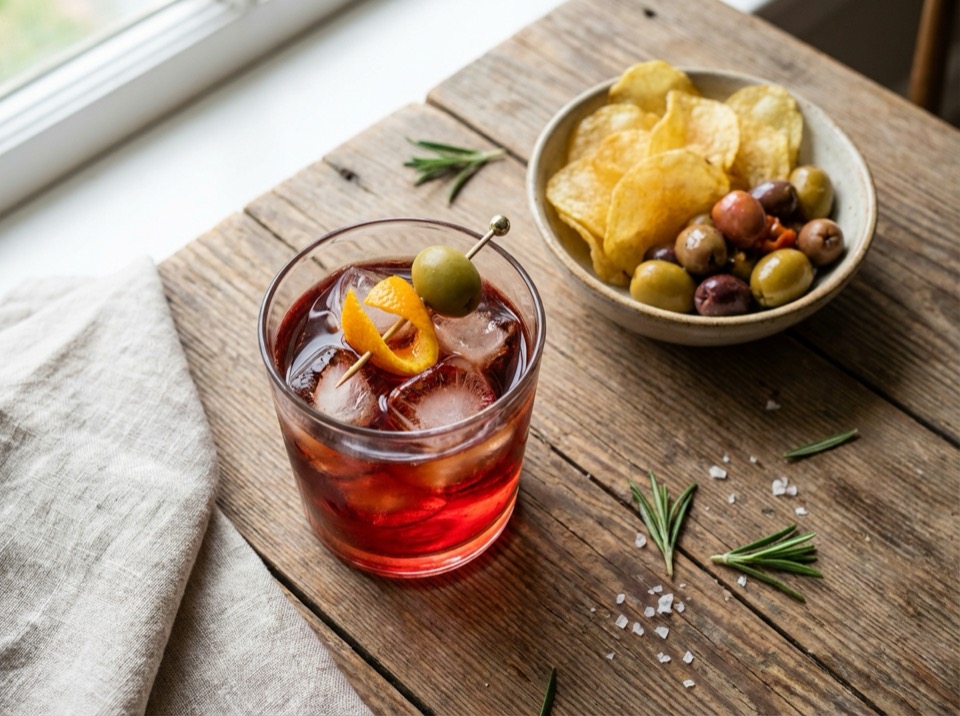
Vermouth (Vermut)
The pre-lunch ritual in Barcelona. Served on ice with an olive, orange slice, or siphon of soda. The 'hora del vermut' (vermouth hour) on weekend late mornings is sacred. Gracia and El Born have the best vermouth bars.
How to order
Un vermut, por favor. Or go Catalan: Un vermut, si us plau. Weekend mornings around noon is the proper time.
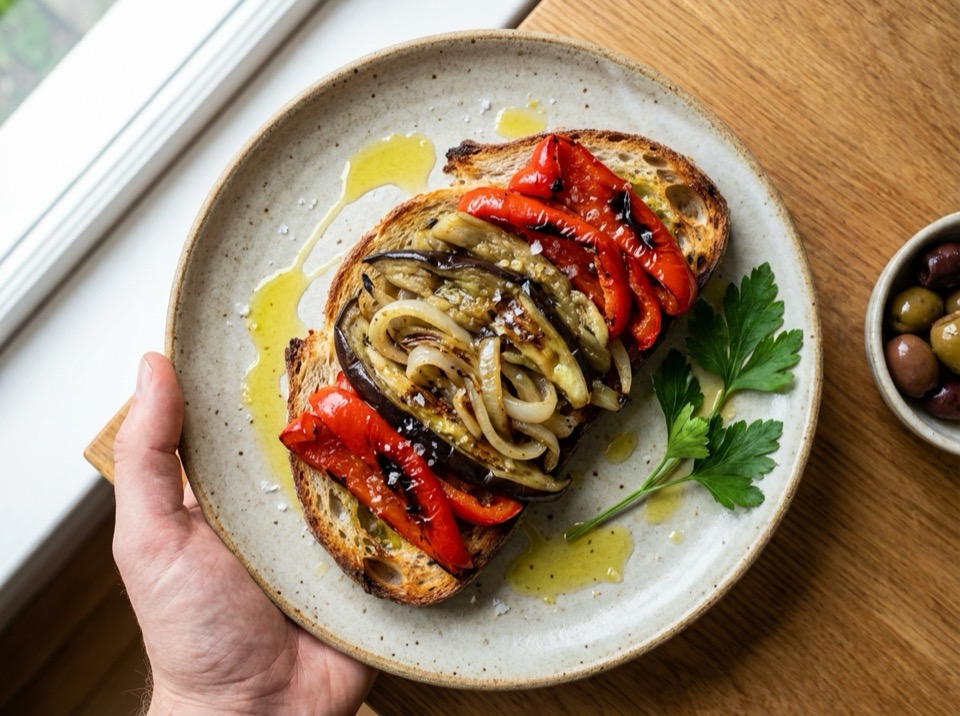
Escalivada
Roasted and peeled eggplant, red peppers, and onions, dressed with olive oil. A classic Catalan vegetable dish, served cold or at room temperature. Simple, smoky, and deeply flavorful. Often on top of pa amb tomaquet.
How to order
Una escalivada, por favor. Pronounced 'ehs-kah-lee-VAH-dah.' Great as a starter or light meal.
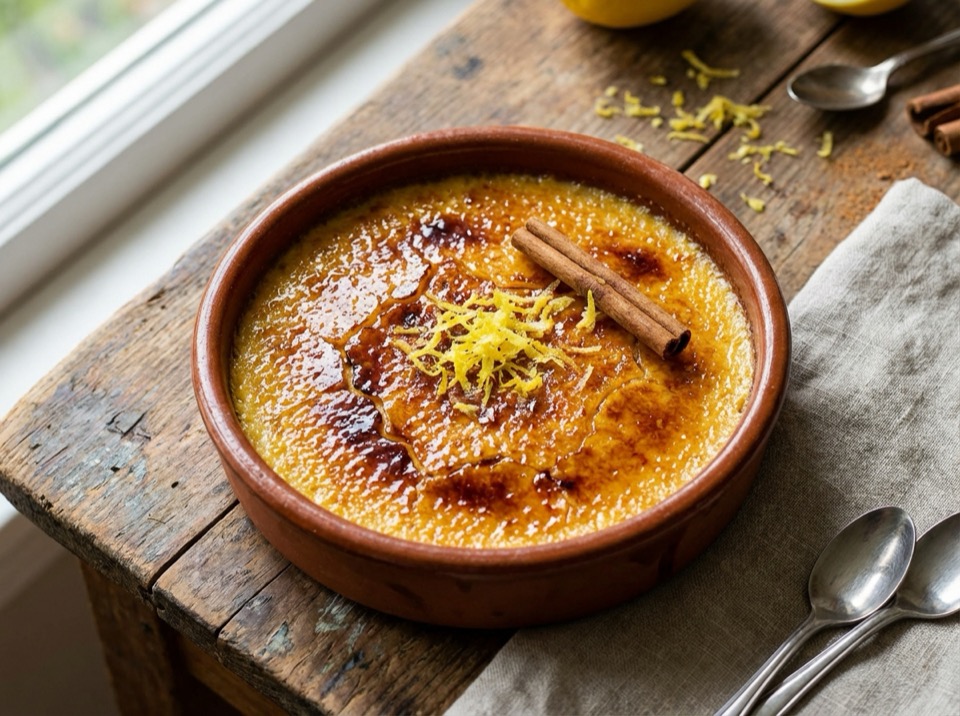
Crema catalana
The Catalan ancestor of creme brulee. Custard flavored with lemon zest and cinnamon, topped with a caramelized sugar crust. Catalans will firmly tell you this came before the French version. Lighter and more citrusy than its cousin.
How to order
Una crema catalana de postre (A crema catalana for dessert). Available everywhere. The clay dish is traditional.
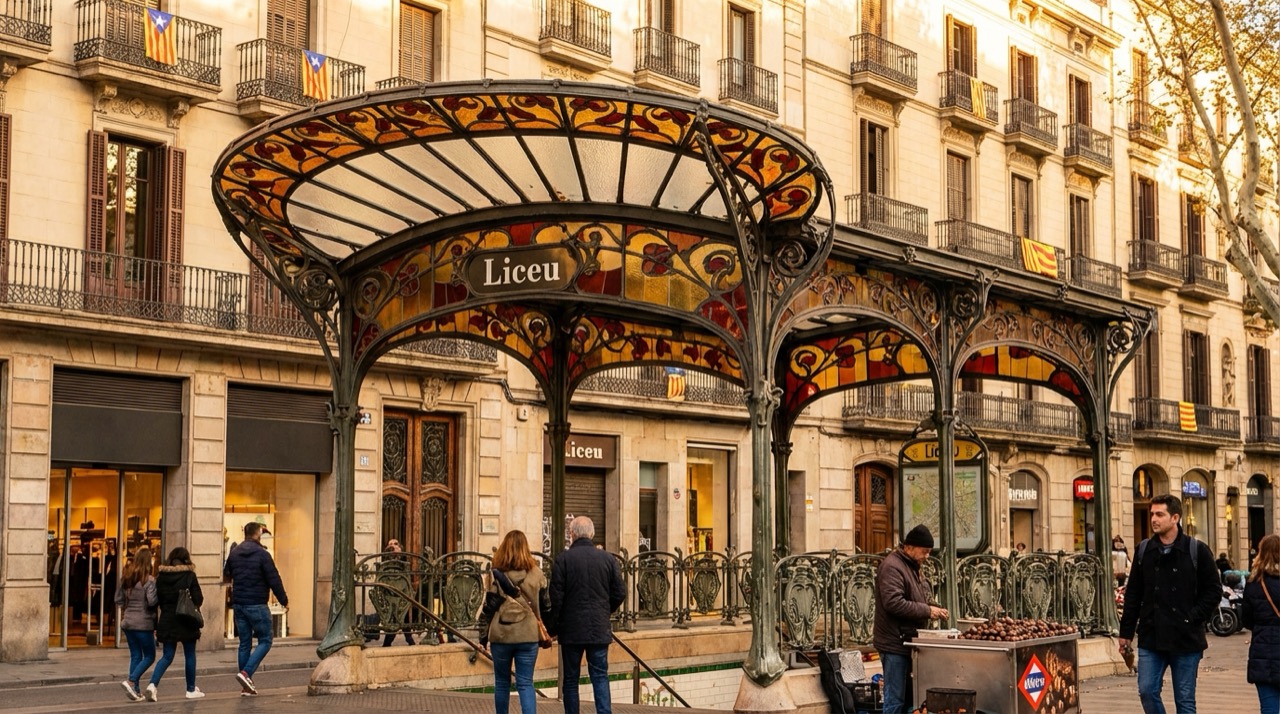
Barcelona is a walkable city with excellent public transport. The metro, bus, and tram network covers everywhere you need to go. The grid layout of the Eixample makes orientation easy. Walking the old city is the best way to explore, while the metro handles longer distances efficiently.
Metro
Clean, efficient, and runs until midnight on weekdays, 2am on Fridays, and 24 hours on Saturdays. 12 lines cover the entire city. The T-Casual card gives 10 trips across all public transport.
- Buy a T-Casual card (10 trips, about 11.35 euros) at any station. It works on metro, bus, tram, and FGC trains within Zone 1
- The airport metro (L9 Sud) requires a special ticket or Hola BCN card. Regular T-Casual does not work
- L3 (green line) and L4 (yellow line) cover most tourist spots. Learn these two and you can reach almost everything
- Watch for pickpockets on L3 between Liceu and Passeig de Gracia. Keep bags in front
Walking
The old city (Ciutat Vella) is small and best explored on foot. From Placa Catalunya to Barceloneta beach is about 20 minutes. The Eixample grid makes it hard to get lost.
- The Eixample blocks look uniform but they are big. Walking four blocks takes longer than you expect
- Wear comfortable shoes for the Gothic Quarter. The stone streets are uneven and can be slippery
- Walking La Rambla end to end takes about 20 minutes. But budget more time for people-watching
- Montjuic is best accessed by cable car or bus, then walked downhill. The hill is steeper than it looks
Bus
Extensive bus network including the red tourist bus. The V-lines (vertical, sea to mountain) and H-lines (horizontal, coast-parallel) are the most useful for visitors. Night buses (Nitbus) run when metro closes.
- The same T-Casual card works on buses. Enter through the front and tap your card
- Route 46 goes directly from the airport (T1 and T2) to Placa Espanya for just a single T-Casual trip
- Night buses run from about midnight to 5am. Most depart from or pass through Placa Catalunya
- The Bus Turistic (hop-on hop-off) is actually decent value if you plan to hit multiple sights in one day
Taxi / Rideshare
Black and yellow taxis are everywhere. Uber does not operate in Barcelona, but Cabify and FreeNow do. Taxis are metered and reasonably priced.
- Airport to city center costs about 39 euros (flat rate to most central areas)
- Short rides in the center cost 7 to 12 euros. Fair and transparent metering
- Uber does not work in Barcelona. Use Cabify or FreeNow for rideshare
- Taxis accept card payments but it is good to ask first: '¿Puedo pagar con tarjeta?' (Can I pay by card?)
Bicing / Scooter
Bicing is the city bike share (locals only, requires a local address). Visitors can use Donkey Republic or other rental bikes. Electric scooters from various companies are abundant.
- Bicing is resident-only. Tourists should use Donkey Republic bikes or rental shops near the beach
- Barcelona has excellent bike lanes, especially along the waterfront and through the Eixample
- Electric scooters are everywhere. Ride in bike lanes, not on sidewalks (fines are real)
- The waterfront bike path from Barceloneta to the Olympic Port is flat and beautiful
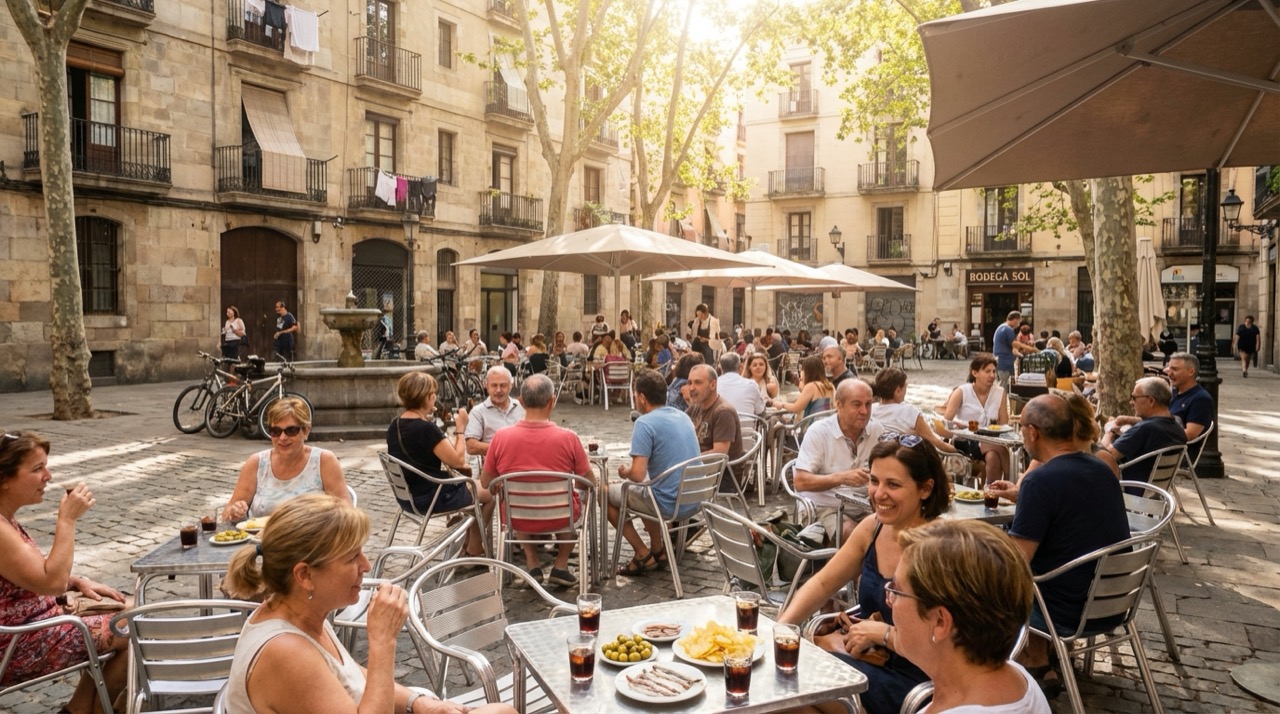
Barcelona has a distinct identity that is proudly Catalan, Mediterranean, and cosmopolitan. Understanding the bilingual culture, the Catalan independence context, and the local rhythms will help you connect with the city beyond its tourist surfaces. Barcelonins are welcoming but value respect for their culture.
Do
- Learn a few Catalan words. Even a simple 'gracies' (thank you) or 'bon dia' (good morning) shows respect and is deeply appreciated by locals
- Embrace the vermouth ritual. Weekend mornings at a terrace with a vermouth, olives, and chips before a late lunch is quintessential Barcelona
- Book major attractions in advance. Sagrada Familia, Park Guell, and Casa Batllo sell out days or weeks ahead
- Explore beyond the tourist zone. Gracia, Poble Sec, and Sant Antoni are where locals actually spend their time
- Understand the bilingual reality. Street signs, metro announcements, and official signage are in Catalan. This is normal and intentional
- Respect the siesta window. Many small shops close from 2pm to 5pm. Plan shopping and errands around this
- Visit markets in the morning. La Boqueria, Santa Caterina, and local neighborhood markets are best before 11am
Avoid
- Do not refer to Barcelona as a 'Spanish city' in a way that ignores its Catalan identity. It is in Spain, but it is Catalan. The distinction matters to locals
- Do not walk slowly in groups on narrow Gothic Quarter streets. Step aside to let people pass. Locals live and work here
- Do not eat or drink on La Rambla (overpriced, low quality). Walk one block east or west for dramatically better options
- Do not ignore Catalan independence symbols (yellow ribbons, estelada flags) or mock them. It is a deeply felt issue regardless of your opinion
- Do not wear beachwear away from the beach. Barcelona has a surprisingly stylish local dress code, especially in Eixample and Gracia
- Do not leave valuables visible or bags unattended. Petty theft and pickpocketing are real problems in tourist areas and on the metro
- Do not only see Gaudi. Barcelona has incredible Romanesque, Gothic, and contemporary architecture. The Cathedral, Santa Maria del Mar, and the Pavilion Mies van der Rohe are extraordinary
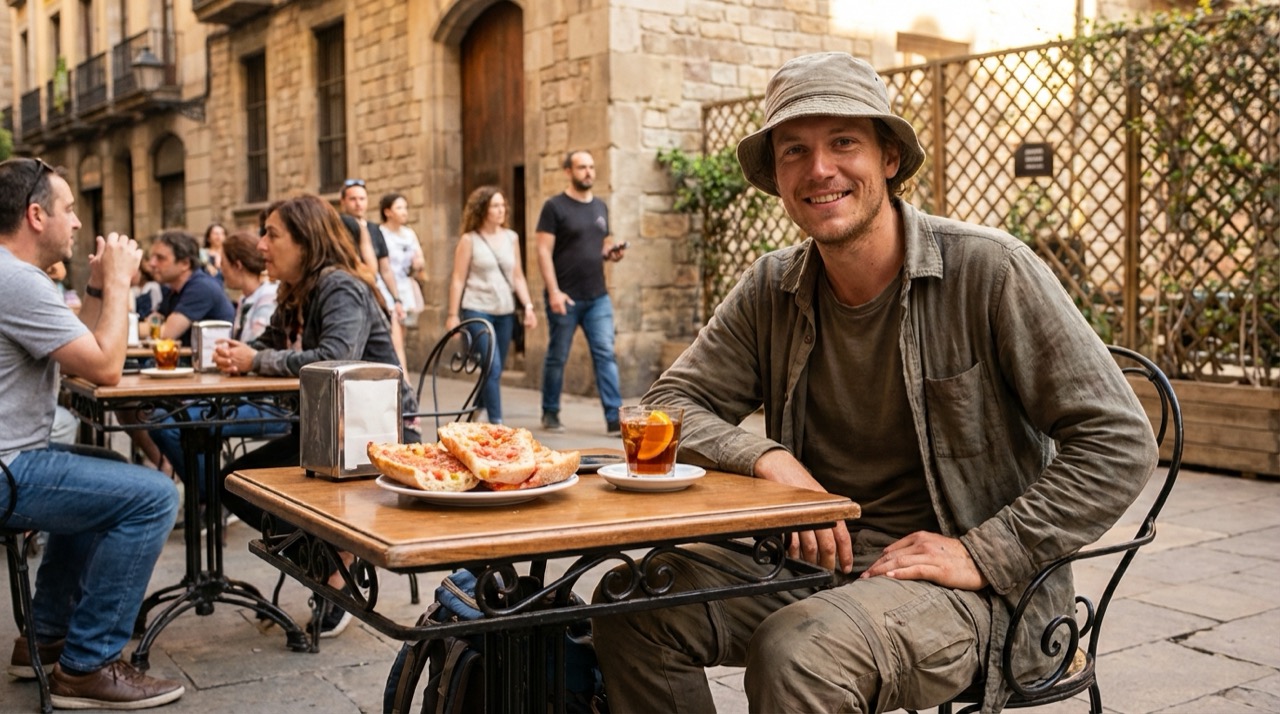
Barcelona is pricier than Madrid and most Spanish cities, but smart travelers can still eat well and see everything without overspending. The key is eating where locals eat, using the T-Casual transport card, and taking advantage of free museum days and outdoor attractions.
Typical Prices
Money-Saving Tips
- The 'menu del dia' (set lunch menu) is the best-value meal. Available 1pm-4pm at most non-tourist restaurants. Three courses, bread, drink, and often coffee for 11-16 euros.
- Free museum days: Picasso Museum (first Sunday of the month and every Thursday 5pm-8pm), MNAC (Saturdays after 3pm), MACBA (Saturdays 4pm-8pm)
- The beach is free and beautiful. Bring supplies from a supermarket and have a beach picnic instead of paying waterfront restaurant prices
- Tap water is safe and free but tastes of chlorine. Buy a 5L jug at any supermarket for under 1 euro if the taste bothers you
- T-Casual 10-trip card is dramatically cheaper than single tickets. Each trip costs about 1.14 euros vs 2.40 for a single ticket
- Skip the overpriced La Boqueria tourist stalls. Mercat de Santa Caterina and neighborhood markets have the same quality at local prices
- Many of Barcelona's best experiences are free: walking the Gothic Quarter, watching sunset from Bunkers del Carmel, strolling the waterfront, people-watching in Gracia's plazas
- The Hola BCN travel card (unlimited transport for 2-5 days, from 16.40 euros) includes the airport metro. If you plan to use the metro heavily, it pays for itself fast
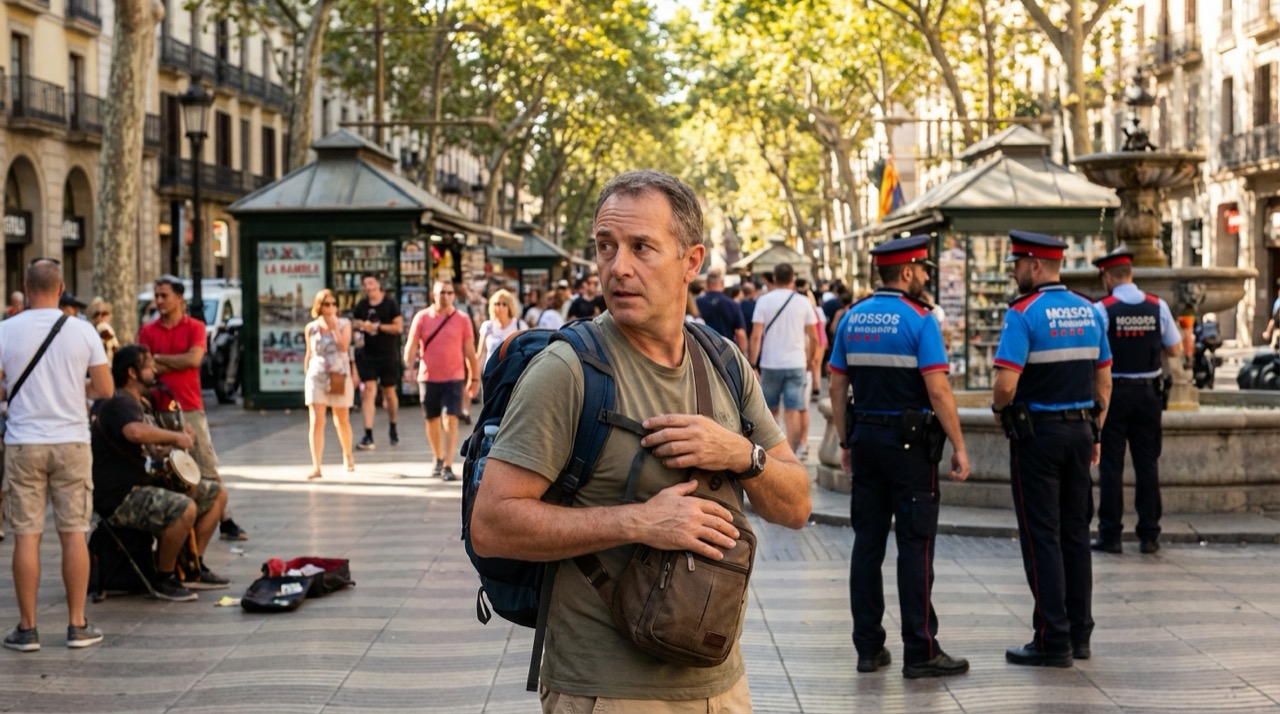
Barcelona is safe in terms of violent crime, but it has a well-known pickpocketing problem in tourist areas and on public transport. La Rambla, the metro (especially L3), and crowded squares are hotspots. Stay aware, keep valuables hidden, and know these phrases in case something goes wrong.
¡Socorro! / ¡Ayuda!
Help!
/soh-KOH-rroh / ah-YOO-dah/
Same as the rest of Spain. In Catalan: 'Ajuda!' (ah-ZHOO-dah), though Spanish works everywhere.
Necesito un médico
I need a doctor
/neh-theh-SEE-toh oon MEH-dee-koh/
For emergencies call 112. For non-emergencies, go to a CAP (Centre d'Atencio Primaria) or farmacia.
Me han robado la cartera / el movil
My wallet / phone has been stolen
/meh ahn roh-BAH-doh lah kahr-TEH-rah / el MOH-beel/
Report to the Mossos d'Esquadra (Catalan police) or at a police station. You can also file a report online at denunciaonline.cat.
¿Donde esta la comisaria mas cercana?
Where is the nearest police station?
/DOHN-deh ehs-TAH lah koh-mee-sah-REE-ah mahs thehr-KAH-nah/
There is a tourist-focused police station on Carrer Nou de la Rambla specifically for theft reports.
¡Cuidado, es un carterista!
Watch out, that's a pickpocket!
/kwee-DAH-doh, ehs oon kahr-teh-REES-tah/
Pickpockets work in teams on La Rambla and the metro. Warning others is encouraged.
¿Donde esta la farmacia de guardia?
Where is the on-duty pharmacy?
/DOHN-deh ehs-TAH lah fahr-MAH-thyah deh GWAHR-dyah/
Pharmacies rotate 24-hour duty. Check the sign on any pharmacy door for the nearest open one.
Soy alergico/a a...
I'm allergic to...
/soy ah-LEHR-hee-koh/kah ah/
Common allergens: 'los frutos secos' (nuts), 'el marisco' (shellfish), 'el gluten' (gluten), 'los lacteos' (dairy).
No me siento bien, necesito sentarme
I don't feel well, I need to sit down
/noh meh SYEHN-toh byehn, neh-theh-SEE-toh sehn-TAHR-meh/
Barcelona heat in summer can cause issues. Find shade, drink water, and locals will help you.
Community Tips

Ready to learn Spanish for real?
Take these Barcelona phrases with you. Decko uses spaced repetition to make sure you actually remember them when you need them.
Free forever. No credit card required.